

Ethical silver sourcing explained: what to check and why
Ethical silver sourcing means obtaining silver whose environmental impact, labour conditions and chain of custody have been independently verified at each stage of the supply chain. For consumers and jewellers in the UK, that verification is the difference between a claim and a credential.
Before reading further, run this quick check on any supplier:
- Certification present? Look for Fairmined, Fairtrade (precious metals), or a third-party recycled-content certificate.
- Chain-of-custody statement? The supplier should be able to name the refiner and country of origin.
- Independent assurance? Ask whether an external auditor has verified the claim, not just the supplier itself.
- Hallmark and assay records? A UK assay office hallmark confirms purity but not provenance. Both matter.
- LBMA Good Delivery refiner? If the silver comes via a commercial refiner, check whether it appears on the LBMA Good Delivery List and has published its Responsible Silver Guidance (RSG) assurance report.
Green flag: named refiner, published assurance report, third-party certificate. Red flag: “sustainably sourced” with no named certifier, no audit, no country of origin.
Key takeaways
Ethical silver sourcing requires independent verification across three pillars: environmental impact, labour standards and chain of custody. A hallmark alone is not enough.
| Point | Details |
|---|---|
| Definition | Ethical silver sourcing means independently verified environmental, labour and provenance standards at each supply-chain stage. |
| Top certifications | Fairmined, Fairtrade (precious metals) and LBMA RSG are the credible standards; recycled claims need a third-party certificate to be meaningful. |
| Verification steps | Ask for the refiner’s name, LBMA RSG assurance report, and any Fairmined, Fairtrade or recycled-content certificate before purchasing. |
| Structural challenges | Silver’s by-product status and lower margins make full traceability harder and certified ethical silver rarer than gold equivalents. |
| Britishchains | Supplies hallmarked 925 sterling silver and provides provenance information on request for consumers and jewellers who need it. |
Table of Contents
- What does ‘ethical’ actually cover for silver?
- Key certifications and standards: what each one actually guarantees
- Practical sourcing options compared: which route fits your needs?
- How to spot greenwashing in silver sourcing claims
- How to verify suppliers: questions to ask and documents to request
- Why ethical silver sourcing is genuinely difficult
- UK context: what the LBMA Responsible Silver Guidance requires
- Step-by-step: how to buy ethical silver in the UK
- Britishchains’s view on provenance and hallmarking
- Britishchains: hallmarked sterling silver with provenance you can ask about
- Sources
What does ‘ethical’ actually cover for silver?
Three pillars define whether silver sourcing is genuinely ethical. Treat any claim that addresses only one as incomplete.
Environmental impact covers how the silver was extracted or recovered. Large-scale mining (LSM) can involve cyanide leaching, habitat destruction and significant water use. Artisanal and small-scale mining (ASM) often relies on mercury amalgamation, which contaminates rivers and soil. Recycled silver sidesteps extraction entirely, though its footprint depends on how the scrap was collected and processed. A silver ring described as “eco-friendly” should specify which of these routes it came from and what environmental controls applied.
Labour and community standards address who mined or processed the metal and under what conditions. Human Rights Watch has documented community displacement, environmental contamination and rights disputes linked to mining operations. Fairmined and Fairtrade certifications set minimum standards for wages, safe working conditions and community premiums, but they cover only a fraction of global silver production.
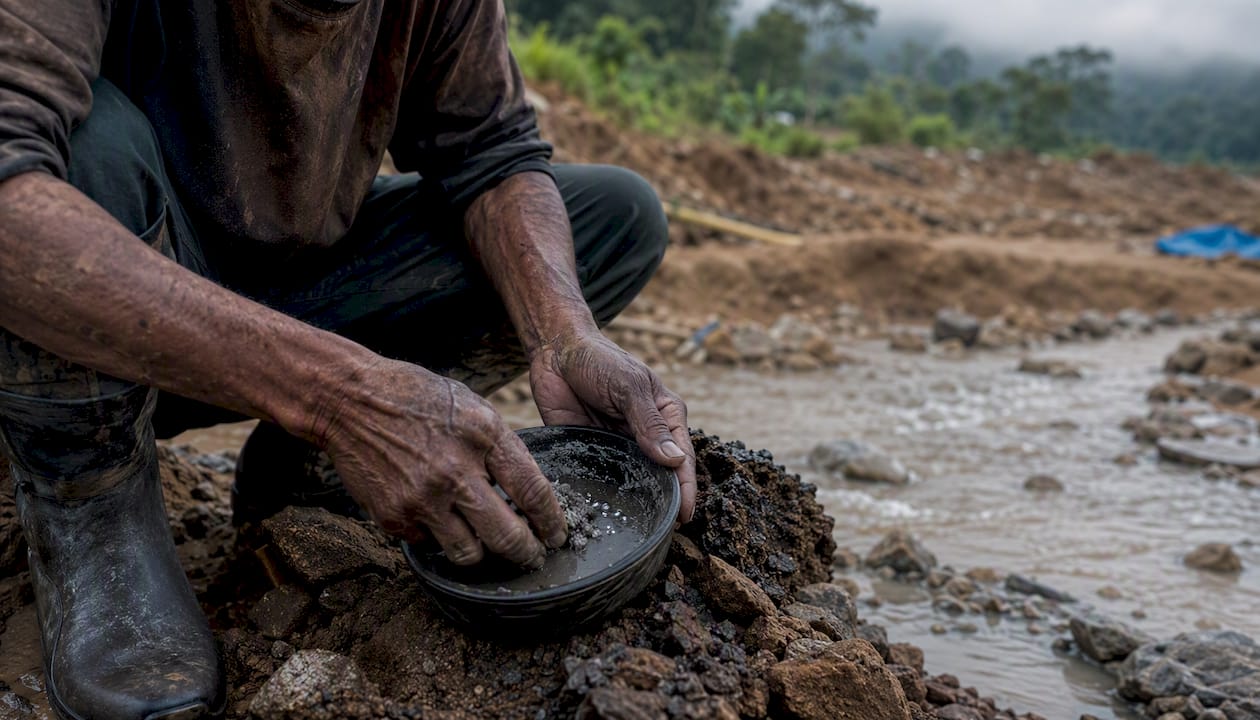
Traceability and chain of custody is the pillar most often missing. Even silver that was mined responsibly can lose its provenance once it enters the global scrap or refining system. Recycled silver is a particular blind spot: scrap flows from dozens of countries, industries and collection points before reaching a refiner, and without a documented chain of custody, “recycled” tells you very little about where the metal actually came from. The Ethical Making guidance is direct on this: recycled claims vary widely and need certification to be credible.
Key certifications and standards: what each one actually guarantees
| Scheme | What it verifies | Audit cadence | Silver-specific limitations |
|---|---|---|---|
| Fairmined | Labour standards, environmental controls, community premium, traceability from ASM mine to refiner | Annual third-party audit | Silver volumes are limited because silver is frequently a by-product of gold or lead/zinc mining |
| Fairtrade (precious metals) | Similar to Fairmined; covers ASM community standards and a Fairtrade premium | Annual third-party audit | Same volume constraint; fewer licensed silver suppliers than gold |
| LBMA Responsible Silver Guidance (RSG) | Refiner-level due diligence: sourcing by country, volume and material type; OECD Annex II risk assessment; independent annual assurance | Annual independent assurance, public report | Covers the refiner tier only, not the mine or ASM community directly |
| Responsible Jewellery Council (RJC) | Covers the full supply chain from mine to retail on human rights, labour, environment and business ethics | Three-yearly certification audit | Broad scope but does not guarantee specific sourcing routes for silver |
| Recycled-content certification (e.g. SCS Global, Veriflux) | Confirms percentage of post-consumer or post-industrial recycled content | Varies by certifier | Does not verify origin of scrap or conditions under which it was collected |
The LBMA RSG is the most relevant standard for commercial silver entering the UK market. Refiners on the Good Delivery List must adopt OECD Annex II due diligence, implement traceability systems and engage in capacity building with upstream suppliers, including legitimate ASM actors. That does not make it a substitute for Fairmined or Fairtrade, which operate at the mine level. The two approaches are complementary, not interchangeable.
Practical sourcing options compared: which route fits your needs?
Understanding the four main routes helps you match your sourcing choice to your budget, values and practical constraints.
Recycled silver
- Pros: Widely available, no new extraction, often the most affordable certified option, suits high-volume production.
- Cons: “Recycled” is not a single standard. Without a third-party recycled-content certificate, the claim is unverifiable. Lifecycle assessments often start at the scrap processor, not the original source.
- Best for: Jewellers and consumers who want to avoid new mining and can obtain a recycled-content certificate from their supplier.
- Availability: High. Most major UK bullion dealers and silver suppliers offer recycled silver, though certified recycled silver with independent assurance is less common.
One underused source worth knowing: silver recovered from medical X-ray film and industrial processes. Because the origin of this scrap is documented and narrow, its chain of custody is cleaner than mixed post-consumer scrap. Some UK-based recyclers specialise in exactly this kind of circular-economy silver, where provenance is traceable to a specific industrial stream rather than an anonymous global scrap pool.
Fairtrade precious metals silver
- Pros: Independently audited, community premium paid to ASM miners, clear labour and environmental standards.
- Cons: Limited licensed suppliers in the UK; higher premium than recycled silver; not all jewellery styles are available.
- Best for: Bespoke and artisanal jewellers who want mine-level assurance and are willing to pay a premium and plan ahead on lead times.
- Availability: Low to moderate. A handful of UK suppliers hold Fairtrade precious metals licences.
Fairmined silver
- Pros: Rigorous third-party audit, full traceability from ASM mine to refiner, community and environmental standards.
- Cons: Silver volumes are constrained because silver is typically a by-product of gold mining. Supply can be inconsistent.
- Best for: Jewellers making bespoke or limited-edition pieces where provenance is a selling point and supply uncertainty is manageable.
- Availability: Very limited. Fairmined silver is rarer than Fairmined gold; plan for longer lead times and higher premiums.
LBMA-compliant refined silver
- Pros: Widely available, covers the refiner tier with independent annual assurance, publicly reported.
- Cons: Assurance sits at the refiner level, not the mine. Does not guarantee fair wages or community benefits at source.
- Best for: Commercial jewellers and manufacturers who need volume and want refiner-level due diligence as a baseline.
- Availability: High. Most commercial silver in the UK market passes through LBMA Good Delivery refiners.
How to spot greenwashing in silver sourcing claims
Greenwashing in silver is common precisely because the supply chain is complex and most buyers lack the tools to check claims quickly. Six red flags to watch for:
- Vague “recycled” or “eco” labels with no certifier named. If a supplier cannot name the third-party body that verified the recycled content, the claim is self-declared and unverifiable.
- No independent audit. Supplier self-assessments are not assurance. Ask who conducted the audit and when.
- Double-counting recycled content. Some suppliers count in-house workshop scrap (off-cuts, sprues) as “recycled silver” in their marketing. That is not the same as post-consumer recycled metal.
- Opaque supplier tiers. A retailer may claim ethical sourcing but be unable to name the refiner, let alone the mine. Transparency should extend at least to the refiner level.
- Unsupported price premiums. A higher price does not indicate ethical sourcing. Equally, a supplier who claims certified ethical silver at commodity prices without explanation deserves scrutiny.
- “Conflict-free” without a mechanism. This phrase has no agreed definition in silver. Ask what due diligence process sits behind it.
Documents to request: a third-party recycled-content certificate (e.g. from SCS Global or equivalent), an LBMA RSG public assurance report for the named refiner, a Fairmined or Fairtrade licence number, or a chain-of-custody record showing material type and country of origin.
A typical misleading claim: “Our silver is 100% recycled and sustainably sourced.” To verify, ask for the recycled-content certificate and the name of the certifying body. If the supplier cannot produce either within a reasonable timeframe, the claim is marketing copy, not a verified fact.
How to verify suppliers: questions to ask and documents to request
A structured verification process takes less than an hour and filters out most dubious claims before you commit to a purchase.
- Who is your silver refiner, and are they on the LBMA Good Delivery List? This is your baseline. A named refiner you can look up is the first sign of a traceable supply chain.
- Can you provide the refiner’s most recent LBMA RSG assurance report? These are publicly available for compliant refiners. If the supplier cannot point you to one, ask why.
- What is the country of origin for the silver you supply? A credible supplier can answer this at least to the refiner’s declared sourcing region.
- Is the silver certified recycled, Fairmined, or Fairtrade? Ask for the certificate number and the certifying body’s name so you can verify independently.
- Who conducted the independent audit, and when was it last completed? Self-assessments do not count. Look for a named third-party auditor.
- Do you hold a chain-of-custody record for each lot? For recycled silver, this should trace the scrap from collection point to refiner.
- What is the material type breakdown? LBMA RSG requires refiners to report by type: large-scale mine, ASM, recycled, grandfathered stocks.
- Are any of your sourcing regions flagged as high-risk or conflict-affected? A supplier who has thought about this will have an answer; one who has not is a concern.
- Can you provide assay office records or a hallmark certificate for the finished piece? Hallmarking confirms sterling silver purity but not provenance. Both documents serve different purposes.
- What is your policy if a sourcing concern is raised after purchase? A supplier with genuine ethical commitments will have a process; one without will deflect.
Hallmarking versus provenance documentation: a UK assay office hallmark (from the London, Birmingham, Edinburgh or Sheffield assay offices) confirms that the metal meets the 92.5% silver standard for sterling. It says nothing about where the silver was mined or how workers were treated. Provenance documentation, by contrast, traces the metal’s journey from source to finished piece. You need both for a complete picture. For a deeper look at how British jewellery grading works, the assay and hallmarking process is explained in detail.
Why ethical silver sourcing is genuinely difficult
Silver presents structural challenges that gold does not, and buyers should understand them before expecting the same level of certification availability.
- Silver is mostly a by-product. Around 59% of silver demand is industrial, and a large proportion of mined silver comes as a by-product of copper, lead and zinc extraction. That means the economics of the primary operation, not silver’s value, drive decisions about labour standards and environmental controls.
- Lower margins make traceability expensive. Silver’s price per troy ounce is a fraction of gold’s. The cost of implementing a full chain-of-custody system, paying for independent audits and absorbing a community premium is proportionally much harder to justify. Industry commentary notes that silver is often treated as an afterthought compared with gold precisely because the economics of traceability are tougher.
- ASM and mercury use. Artisanal and small-scale mining accounts for a significant share of silver production in parts of Latin America and Africa. Mercury amalgamation, documented by UNODC as a major environmental and health risk, remains widespread in informal ASM operations. Certifying these miners is possible but resource-intensive.
- Recycled scrap opacity. Global scrap flows aggregate metal from dozens of countries and industries before it reaches a refiner. Without a documented chain of custody, recycled silver can mask origin as effectively as any other route.
The consequence for buyers: genuinely certified ethical silver, whether Fairmined, Fairtrade or independently verified recycled, is rarer and typically carries a premium over commodity silver. That premium reflects real costs: audits, community payments, traceability systems. A supplier offering certified ethical silver at standard commodity prices without explanation is worth questioning.
UK context: what the LBMA Responsible Silver Guidance requires
The LBMA RSG is the most significant industry-level standard affecting silver that enters the UK market through commercial refiners. Understanding what it does and does not cover helps buyers use it correctly.
What refiners must disclose under the RSG: total silver sourced by material type (large-scale mine, ASM, recycled, grandfathered stocks), sourcing by country, volumes refined, and, where applicable, the identity of local exporters in high-risk locations. Refiners must commission annual independent assurance of this report and make it publicly available. The LBMA Good Delivery List is the mechanism: refiners lose accreditation if they fail to comply.
How to find a refiner’s assurance report: go to the LBMA website, navigate to the Good Delivery List, locate the refiner by name, and look for their published RSG assurance report. These are typically PDF documents updated annually. Check the date, the name of the assurance provider, and whether the report covers silver specifically (some refiners are listed for gold only).
What to look for in the report: sourcing geography, percentage of recycled versus mined material, any flagged high-risk sourcing regions, and the assurance provider’s conclusion. A report that lists only “various countries” without further breakdown is less informative than one that names specific sourcing regions.
Pro Tip: The LBMA RSG covers the refiner tier. It does not replace Fairmined or Fairtrade certification, which operate at the mine and community level. Use the RSG report as your commercial baseline, then ask whether any of the silver is additionally certified at source.
| Standard | Operates at | What it verifies | Complements |
|---|---|---|---|
| LBMA RSG | Refiner | Due diligence, sourcing disclosure, independent assurance | Fairmined / Fairtrade at mine level |
| Fairmined / Fairtrade | ASM mine and community | Labour, environment, community premium, traceability | LBMA RSG at refiner level |
The Goldsmiths’ Centre guidance for UK jewellers and silversmiths recommends asking suppliers for traceable, auditable certification and treating the three responsible sourcing options (Fairtrade, Fairmined and 100% certified recycled) as the credible routes available to the UK trade.
Step-by-step: how to buy ethical silver in the UK
Follow these steps whether you are a consumer buying a single piece or a jeweller specifying silver for production.
- Screen your supplier. Check whether the supplier names their refiner and whether that refiner appears on the LBMA Good Delivery List. This takes under five minutes online.
- Request the relevant certificate or assurance report. For recycled silver, ask for the recycled-content certificate and certifying body. For Fairmined or Fairtrade silver, ask for the licence number. For LBMA-compliant silver, ask for the refiner’s most recent RSG assurance report.
- Verify independently. Cross-check the certificate number or licence with the certifying body’s public database. Fairmined and Fairtrade both maintain searchable registries of licensed operators.
- Check the hallmark. For finished jewellery in the UK, confirm the piece carries a UK assay office hallmark. This confirms purity. Pair it with the provenance documentation from step 2 for a complete picture. A quality checklist for UK silver buyers covers what to look for on the piece itself.
- Agree purchase terms in writing. Include a clause that the silver supplied meets the stated certification standard. If the supplier declines, treat that as a red flag.
- Budget for the premium. Certified ethical silver costs more than commodity silver. Factor in a realistic premium and treat any supplier who cannot explain their pricing as a concern.
Sample email to request provenance information:
On lead times: Fairmined and Fairtrade silver may require two to four weeks’ additional lead time compared with commodity silver, particularly for smaller quantities. Budget accordingly if you are working to a production schedule.
Britishchains’s view on provenance and hallmarking
At Britishchains, hallmarking is not optional. Every piece of sterling silver we sell carries a UK assay office hallmark confirming 925 purity, and we are transparent about the standards our silver meets. We know that for many buyers, the question of provenance goes beyond the hallmark, and we welcome those questions.
If you are buying a piece as a gift or for a specific ethical reason, we are happy to provide provenance information on request. Our commitment to premium silver standards means we take sourcing seriously, and we believe buyers deserve straight answers rather than vague sustainability language. Contact us directly with any provenance query and we will respond with the specific documentation we hold.
Britishchains: hallmarked sterling silver with provenance you can ask about
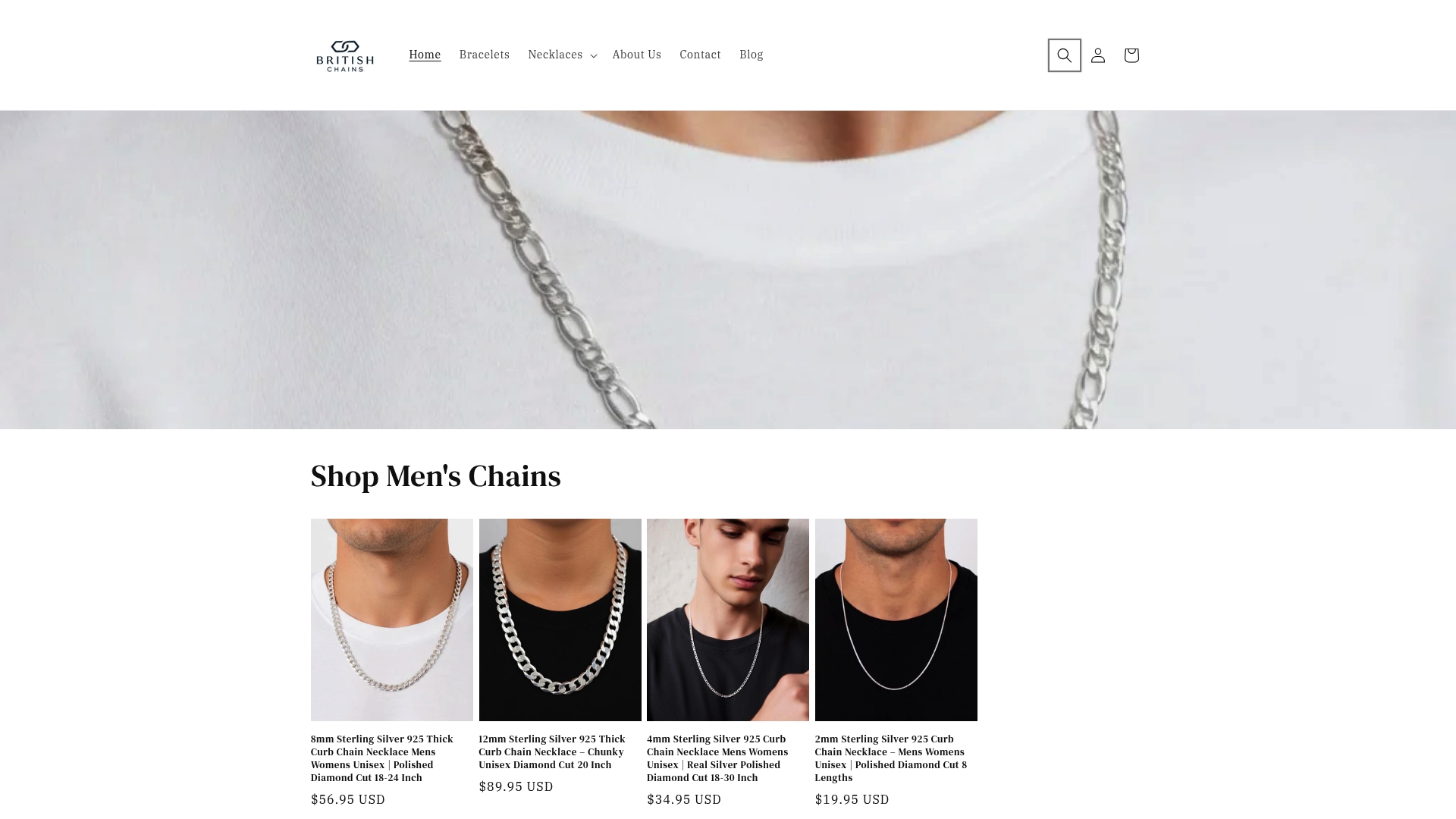
Britishchains sells hallmarked 925 sterling silver chains and necklaces direct to UK consumers and gift buyers, with no intermediary markup and no vague sustainability language. Every piece, from the 8mm thick curb chain to the 2mm Figaro necklace, carries a UK assay office hallmark confirming purity. If you want to know more about the silver behind a specific piece, contact us and we will tell you what we know, plainly and in writing. Browse the full range, including the 12mm chunky curb chain, at Britishchains and ask us your provenance question at checkout or via our contact page.
Sources
- Precious Metals — Ethical Making
- Fairmined
- Silver’s growth brings back ethical questions that tarnish its shine | Financial Times


