

Silver jewelry return policy checklist: a buyer's guide
A silver jewelry return policy checklist is a set of criteria you verify before buying, covering return windows, condition rules, exclusions, refund methods, and fees. Getting this right before you purchase protects you from losing money on a piece that does not fit, arrives damaged, or simply is not what you expected. Return windows commonly range from 7 to 30 days, with some retailers extending to 90 days. The start date of that window, whether it counts from purchase, dispatch, or delivery, can shift your deadline by up to two weeks. Knowing your checklist items upfront is the single most effective way to shop silver jewelry online without regret.
1. What is a silver jewelry return policy checklist?
The industry term for this process is a “pre-purchase return policy review,” though most shoppers simply call it a return policy checklist. Both terms describe the same practice: reading and recording the exact conditions under which a retailer accepts returns before you hand over payment. Clear, consistent policies across a retailer’s FAQ, product pages, and footer signal a trustworthy brand. Discrepancies between those sections are a warning sign worth taking seriously. Britishchains, for example, publishes its terms consistently across its site, which is the standard every silver jewelry buyer should expect.

2. How long are typical return windows, and why does the start date matter?
Return windows for online jewelry typically range from 7 to 30 days, with some premium retailers offering up to 90 days. That range sounds straightforward, but the start date is where most buyers get caught out.
Three different triggers are common:
- Purchase date: The clock starts the moment you pay. This is the least favourable option for buyers, since delivery can consume several of those days before you even open the parcel.
- Dispatch date: The window begins when the seller ships the order. Still not ideal, as transit time eats into your review period.
- Delivery date: The window starts when the parcel arrives with you. This is the most consumer-friendly trigger and the one to look for when comparing retailers.
Return windows starting on delivery date give you the full advertised period to inspect and decide. That distinction matters most when buying silver jewelry as a gift, since the recipient may not open it for days after it arrives. Some retailers extend their windows around holidays and milestone events precisely for this reason.
Pro Tip: Save your order confirmation email and your delivery notification the moment each arrives. Screenshot both and store them in a dedicated folder. These two documents establish your exact deadline if a dispute arises.
3. What condition and documentation requirements affect silver jewelry returns?
Most retailers require returned silver jewelry to be unworn, undamaged, and in its original packaging, with all tags, certificates, and the original invoice included. Meeting these conditions is non-negotiable for most sellers.
Here is what you need to preserve:
- Original packaging: Boxes, pouches, and tissue paper must be intact. Crushed or missing packaging is grounds for rejection at many retailers.
- Hallmark certificates and authenticity cards: For sterling silver, a 925 hallmark certificate is often part of the product documentation. Losing it can void your return.
- Security tags: Removing security tags immediately voids the return eligibility at most retailers. Inspect the piece thoroughly before cutting anything.
- Invoice or receipt: The original proof of purchase must accompany the return. A screenshot of your order confirmation usually suffices if the paper copy is missing.
- Unboxing video: Unboxing videos serve as crucial proof for damaged or missing items in transit. Record one every time you open a silver jewelry delivery.
Hygiene rules apply particularly to earrings. Once the packaging is opened, many retailers class pierced earrings as non-returnable for health reasons. Check this before purchasing earrings online.
Pro Tip: Film a short, uninterrupted unboxing video for every silver jewelry order. Show the sealed parcel, the postmark, and the full unboxing in one take. This single habit resolves most transit damage disputes quickly.
4. Which silver jewelry items are commonly excluded from returns?
Certain categories of silver jewelry are almost always final sale, regardless of the retailer’s general return window. Knowing these exclusions before you buy prevents an unpleasant surprise after the fact.
Common non-returnable categories include:
- Personalised and engraved pieces: Customised or personalised items are generally non-refundable because they cannot be resold. This applies to name necklaces, monogrammed chains, and any piece altered to your specification.
- Final sale and clearance items: Discounted stock is frequently excluded from return eligibility. The lower price reflects the absence of a return option.
- Pierced earrings: Hygiene regulations mean that opened earring packaging typically renders the item non-returnable. Some retailers extend this to any body jewelry.
- Resized or altered jewelry: Any piece that has been resized, polished, or otherwise modified after purchase loses its return eligibility immediately.
- Estate and antique silver jewelry: These pieces often carry stricter limitations because their condition is inherently variable and pre-existing wear is expected.
Policies that list non-returnable items explicitly upfront are a sign of a retailer operating in good faith. If a retailer’s exclusion list is buried or absent, treat that as a red flag. When buying authentic sterling silver online, always read the exclusions section before adding anything to your basket.
5. How do refund methods, restocking fees, and shipping charges affect your return?
The financial side of a return is where many buyers discover costs they did not anticipate. Understanding these before you buy is part of any thorough jewelry return checklist.
Refund versus store credit
Exchanges often limit you to store credit rather than a refund to your original payment method. This is a meaningful distinction. Store credit ties your money to one retailer, whereas a full refund returns it to your bank or card. Always confirm which option applies before purchasing.
Restocking fees
Restocking fees typically range from 5% to 20% of the item’s value, deducted from your refund before it is processed. On a £150 silver chain, a 15% restocking fee costs you £22.50. That is not a trivial sum, and it rarely appears prominently in a retailer’s marketing.
Return shipping costs
Return shipping is often the buyer’s responsibility unless the seller provides a prepaid, insured, trackable label. For silver jewelry, insured shipping is not optional. If the parcel is lost or damaged in transit without insurance, the loss falls on you. Return shipping costs can exceed the perceived value of lower-priced pieces if not prepaid by the seller.
Processing times and original shipping fees
Refund processing typically takes 5–7 business days after the retailer inspects the returned item. Factor this into your timeline if you are expecting funds back quickly. Original shipping fees and taxes are frequently non-refundable, so confirm this before assuming you will receive the full purchase price back.
Key questions to ask before buying:
- Is the refund returned to my original payment method, or as store credit?
- Are there restocking fees, and what percentage applies?
- Who pays for return shipping, and is a prepaid label provided?
- Are original shipping costs and taxes refundable?
6. What practical steps protect you before and during a return?
Preparation before you buy is far more effective than scrambling to gather documents after a problem arises. These steps apply whether you are returning a Figaro chain or a thick curb necklace.
- Screenshot the return policy at purchase time. Retailers can update their policies. A screenshot dated to your purchase day is evidence of the terms you agreed to.
- Save all order and delivery confirmations. These establish your purchase date, dispatch date, and delivery date, all of which may be relevant to your return window.
- Obtain a return authorisation number before sending anything back. Most retailers require a Return Merchandise Authorisation (RMA) number. Sending a parcel without one risks it being refused or lost in the retailer’s warehouse.
- Use prepaid, insured, and trackable shipping for your return. If the retailer does not provide a label, purchase tracked and insured postage yourself. This protects you if the parcel goes missing.
- Package the item securely with all original documentation. Wrap the jewelry in its original box and pouch, include the invoice and any certificates, and add protective padding. Damage during return transit is your liability until the retailer confirms receipt.
- Keep your postage receipt until the refund clears. This is your proof of dispatch if the retailer claims the parcel never arrived.
Pro Tip: If the retailer offers an in-store return option for click-and-collect orders, use it. Physical store returns eliminate shipping costs and typically resolve faster than postal returns.
Keeping your silver jewelry in pristine storage conditions between delivery and your decision to keep or return it also helps. Tarnish or surface marks that develop through improper storage can affect whether a retailer accepts the return.
Key takeaways
A thorough silver jewelry return policy review before purchase is the most reliable way to avoid unexpected costs, missed deadlines, and rejected returns.
| Point | Details |
|---|---|
| Confirm the return window start date | Delivery-based windows give you the full period to inspect; purchase-based windows can cost you days before the parcel arrives. |
| Preserve all original packaging and documentation | Missing tags, certificates, or packaging are the most common reasons retailers reject returns. |
| Check for restocking fees and shipping costs | Fees of 5–20% and return postage can significantly reduce the amount you actually receive back. |
| Identify exclusions before buying | Personalised, engraved, and final sale items are almost always non-returnable regardless of the general policy. |
| Record unboxing videos and save policy screenshots | These two habits resolve the majority of transit damage and policy disputes quickly and without stress. |
What I have learned from reading dozens of silver jewelry return policies
Most shoppers read a return policy the way they read terms and conditions: quickly, if at all. That habit is expensive. The policies that cost buyers the most money are not the obviously bad ones. They are the ones that look generous on the surface but bury a 15% restocking fee in paragraph four, or define “return window” as starting from the purchase date rather than delivery.
The detail that surprises buyers most consistently is the exchange versus refund distinction. Consumers often confuse exchanges with refunds, assuming an exchange means they can get their money back if the replacement also disappoints. Many policies do not work that way. An exchange gives you a different item or store credit, not a return to your original payment method. Reading that clause carefully before buying a silver chain as a gift can save a genuinely awkward conversation later.
I am also cautious about policies that promise “free returns” without defining what that covers. Hidden costs such as restocking fees and third-party charges often reduce the actual refund even when the headline says free. A policy that spells out every fee, every exclusion, and every timeline in plain language is worth more than one that leads with generous-sounding marketing and qualifies everything in the small print.
The 925 sterling silver standard is well established in the industry, and reputable retailers who sell to that standard tend to back their products with equally clear return terms. That correlation is not a coincidence. Retailers confident in their product quality have less reason to make returns difficult.
My honest recommendation: read the return policy before you read the product description. If the policy is clear, consistent, and easy to find, the product is probably worth your time. If it is not, no chain is worth the risk.
— British
Britishchains sterling silver chains: quality you can buy with confidence
Britishchains designs and sells premium 925 sterling silver chains and necklaces crafted in the UK, covering styles from curb and Figaro to rope, snake, and herringbone. Every piece carries hallmarked British quality, and the return and exchange terms are clearly stated so you know exactly where you stand before you buy.
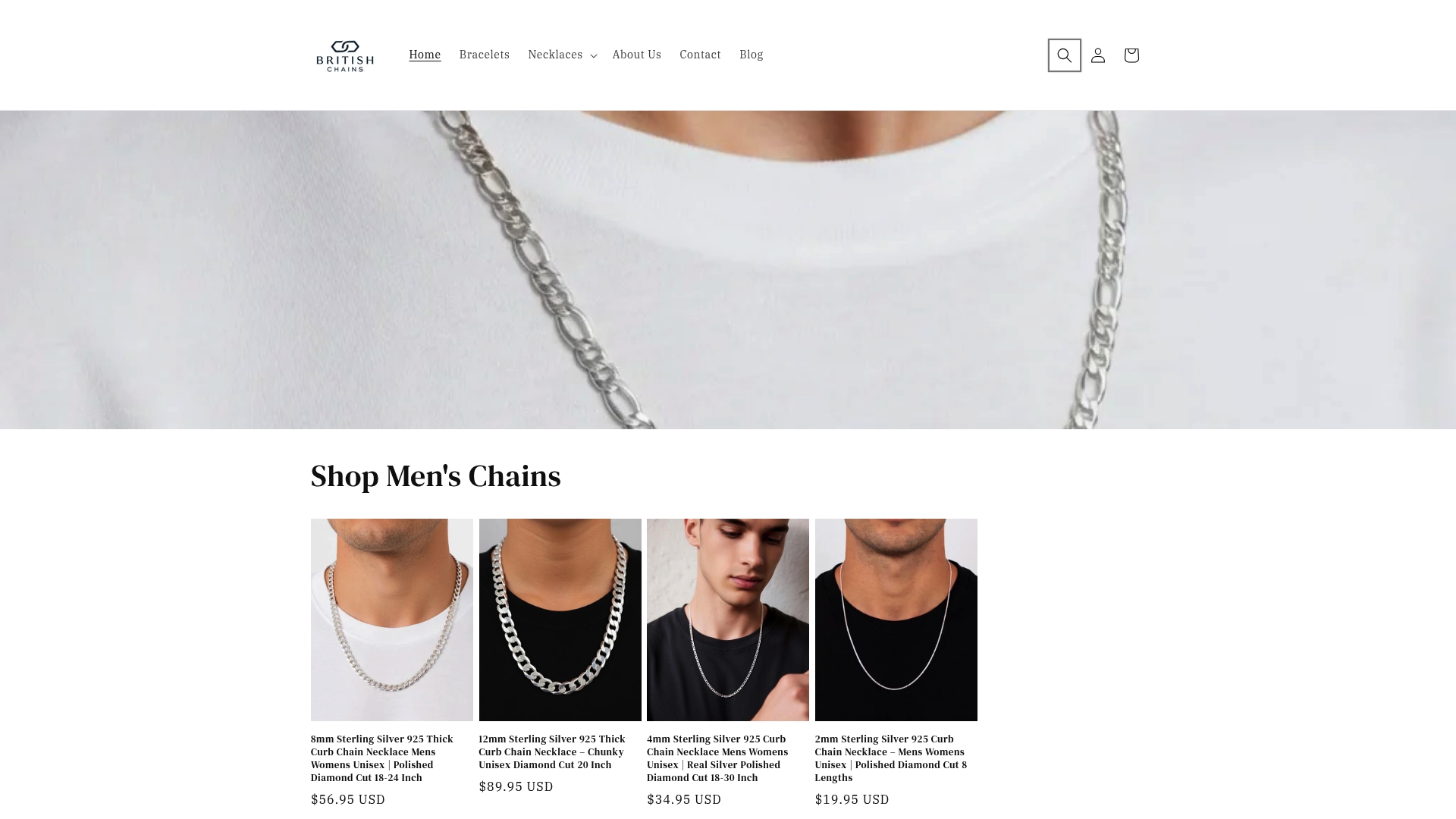
Whether you are after a bold 8mm curb chain necklace or a finer 2mm Figaro chain for everyday wear, Britishchains offers a range built for both men and women. Transparent policies, hallmarked silver, and direct-to-consumer pricing make it a straightforward choice for shoppers who want quality without the guesswork that comes with unclear return terms.
FAQ
What is a standard return window for silver jewelry?
Return windows typically range from 7 to 30 days, with some retailers offering up to 90 days. Delivery-based windows are the most consumer-friendly option.
Can I return personalised or engraved silver jewelry?
Personalised and engraved pieces are almost always final sale and non-refundable. Confirm this exclusion before purchasing any customised silver item.
Who pays for return shipping on silver jewelry?
Return shipping is frequently the buyer’s responsibility unless the retailer provides a prepaid, insured label. Always clarify this before purchasing, as shipping costs can exceed the item’s value for lower-priced pieces.
What is the difference between a refund and an exchange?
A refund returns money to your original payment method, while an exchange typically provides store credit or a replacement item. Many policies limit repeated exchanges and do not guarantee a cash refund.
How long does a silver jewelry refund take to process?
Refund processing typically takes 5–7 business days after the retailer inspects the returned item. Factor in additional time for your bank or card provider to post the credit.


