

Why sterling outperforms silver-plated online: the full guide
Sterling silver is defined as an alloy containing 92.5% pure silver by weight throughout every millimetre of the piece. Silver-plated jewellery, by contrast, carries only a thin silver coating over a base metal such as copper, brass, or nickel. That single compositional difference explains why sterling outperforms silver-plated online and in every jeweller’s display case. Hallmarks such as “925” and the British Lion Passant confirm sterling’s authenticity at a glance, giving buyers a reliable quality signal that plated items simply cannot match.
Why does sterling silver outperform silver-plated jewellery for durability?
Sterling silver’s solid alloy structure is the reason it outlasts plated alternatives by years, sometimes decades. Because the 92.5% silver content runs through the entire piece, scratches and scuffs only affect the surface. A jeweller can polish sterling repeatedly to restore its bright finish without ever reaching a different material underneath.
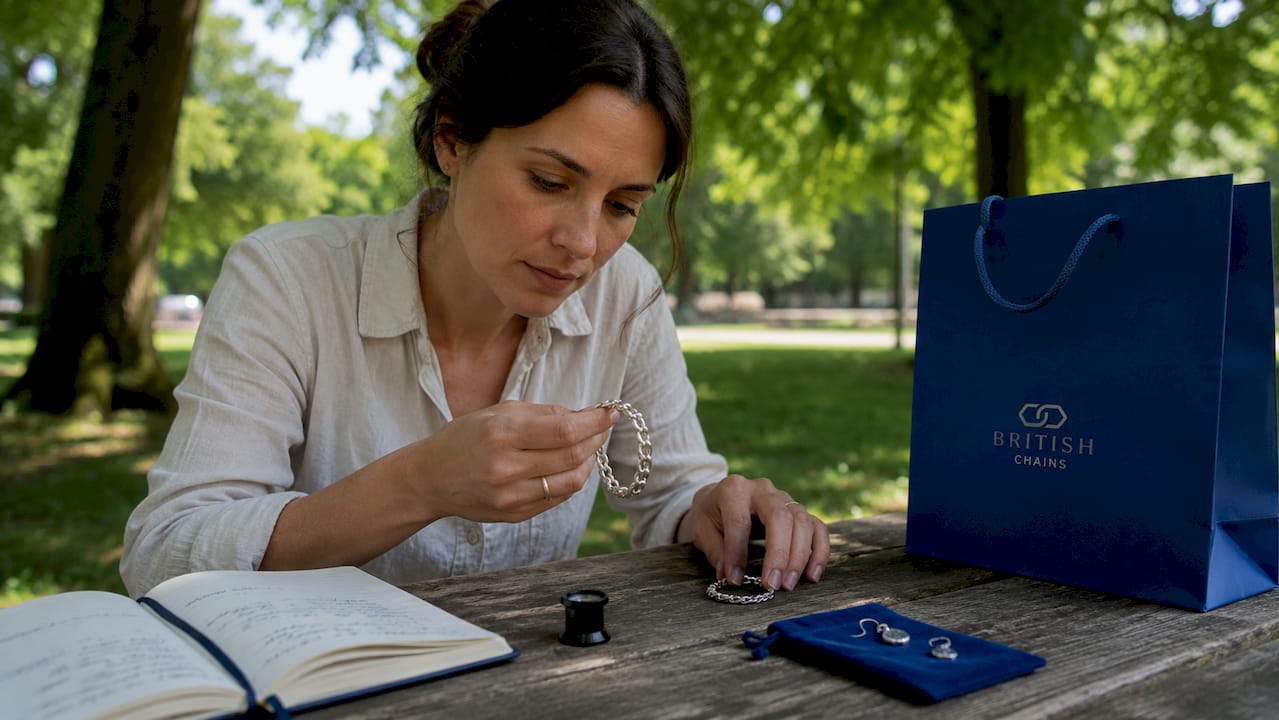
Silver-plated jewellery tells a different story. The silver layer is typically 0.5–5 microns thick over the base metal. Friction, moisture, and regular polishing wear through that layer quickly. Once it goes, the base metal is exposed and tarnishes in a completely different way to silver, leaving the piece looking patchy and worn.
The most telling sign of plating failure is what jewellers call “bleed.” At high-contact areas such as chain links and clasps, base metals like brass or copper become visible as a yellowish or reddish tint. This cannot be fixed with a polishing cloth. The only remedy is re-plating the entire piece, which adds cost and is rarely worth doing on a low-value item.
Sterling silver, on the other hand, develops an even patina over time and responds consistently to polishing. That repairability is what makes sterling the right choice for jewellery intended to last. Britishchains builds every chain from hallmarked 925 sterling silver precisely because the material holds up to daily wear in a way that plating cannot.
- Sterling silver can be polished repeatedly without exposing a different metal beneath.
- Silver plating wears through at friction points, particularly clasps and chain links.
- Base metal bleed on plated items is permanent without full re-plating.
- Sterling silver’s polishing durability far exceeds that of any plated piece.
- Repair and restoration options are far greater with solid sterling.
Pro Tip: Store your sterling silver in an airtight pouch when not wearing it. Reducing air exposure slows tarnish formation and means less polishing over time.
How do you identify sterling silver versus silver-plated items?
Knowing what to look for protects you from paying sterling prices for plated goods, especially when shopping online where you cannot handle the piece directly.
Reading hallmarks correctly
Hallmarks are the most reliable authentication method. Sterling silver carries stamps such as “925,” “Sterling,” or official assay marks including the British Lion Passant. The Edinburgh hallmark and other British assay office marks add a further layer of verified authenticity. Silver-plated items use entirely different marks: “EP” (electroplated), “EPNS” (electroplated nickel silver), or simply “Silver Plate.” If you see any of those abbreviations, the piece is not sterling.
Physical tests that work at home
- Check for bleed at wear points. Examine clasps, chain links, and any area that rubs against skin or clothing. A yellowish or reddish tint signals base metal exposure and confirms plating.
- Try the Ice Cube Test. Place the piece on a block of ice. Sterling silver has exceptional thermal conductivity, causing the ice to melt noticeably faster than it would under a plated or base metal item. This test works because no common base metal conducts heat as efficiently as silver.
- Use a magnet, but carefully. A strong magnet will attract ferrous metals, ruling them out immediately. However, brass and copper used in plated jewellery are also non-magnetic, so a negative magnet result does not confirm sterling. Combine this test with hallmark checks for a reliable verdict.
- Look for wear patterns. Sterling silver wears uniformly across the surface. Plated items show uneven wear concentrated at contact points, often revealing a different colour beneath.
- Check the product listing carefully. Reputable online retailers list the metal content, hallmark details, and purity standard. Vague descriptions such as “silver tone” or “silver coloured” almost always mean plated.
Pro Tip: When buying online, zoom into product photos and look for a hallmark stamp on the clasp or a flat section of the chain. Legitimate sterling silver retailers photograph their hallmarks because it is a selling point, not an afterthought.
How does sterling silver’s value compare to silver-plated jewellery?
Sterling silver holds genuine financial value because it contains a measurable quantity of a precious metal. Silver-plated jewellery holds mainly decorative value. That distinction matters whether you are buying for yourself, as a gift, or as a long-term investment.
Sterling pieces can cost from £100 to over £10,000, reflecting both the intrinsic melt value of the silver content and any maker or collector premiums. Silver-plated items typically fall in the £10–£200 range and carry little resale worth beyond their appearance. The table below shows how the two materials compare across key value factors.
| Factor | Sterling silver | Silver-plated |
|---|---|---|
| Intrinsic metal value | Yes, based on silver content | Negligible |
| Resale potential | Moderate to high | Low |
| Hallmark authentication | Yes (“925,” Lion Passant) | No equivalent |
| Repair and restoration | Fully repairable | Limited, requires re-plating |
| Heirloom suitability | High | Low |
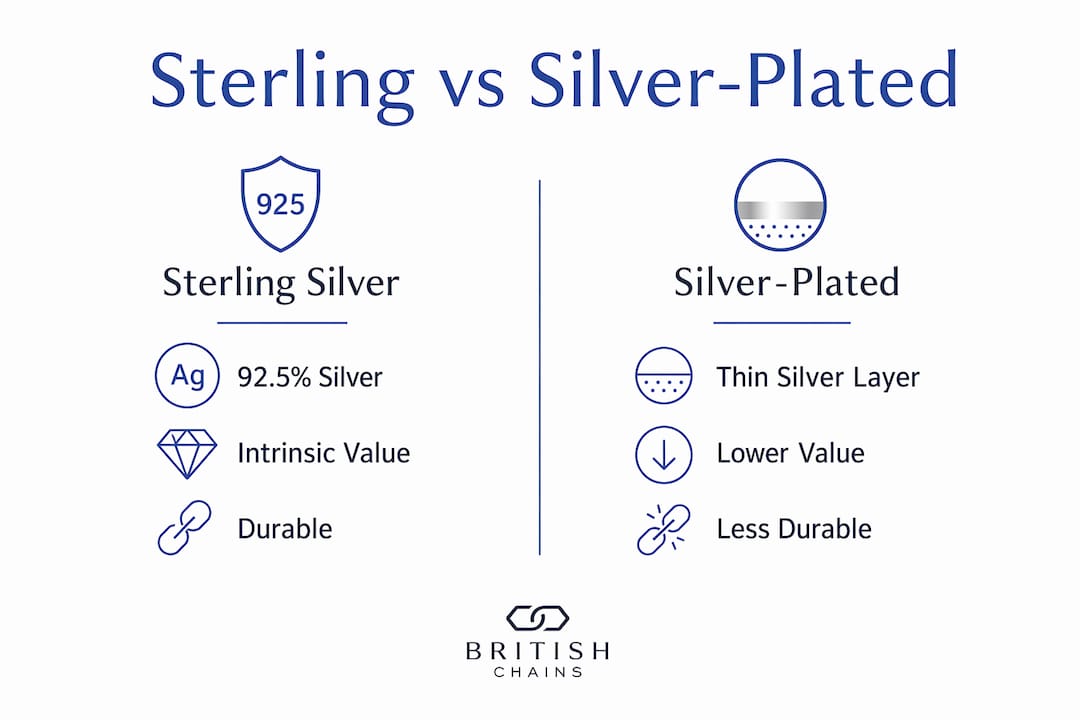
Condition and provenance significantly affect sterling silver’s resale price. A well-maintained piece from a known British maker commands a premium above melt value. Trend-driven plated items, by contrast, depreciate quickly once the style passes. Choosing sterling silver is the right call for jewellery intended as an heirloom or for long-term wear. Plated pieces suit budget-conscious fashion purchases where longevity is not the priority.
What should buyers check when buying sterling silver online?
Online shopping removes the ability to handle a piece, which makes knowing what to look for even more important. The following points give you a reliable framework for buying with confidence.
- Verify the hallmark is listed explicitly. Product descriptions for genuine sterling silver state “925” or “Sterling Silver 925” clearly. Britishchains lists hallmark details on every product page because authenticity is the foundation of the brand.
- Read the metal content, not just the name. “Silver chain” and “sterling silver chain” are not the same thing. Look for the purity standard in the description, not just the product title.
- Assess price against silver content. A sterling silver chain priced at £8 should raise questions. Genuine sterling carries a cost floor based on the silver it contains. Prices well below market rate usually indicate plating.
- Check the jewellery care guide. Reputable retailers provide care instructions specific to sterling silver. Generic “wipe clean” advice is a sign the retailer is not working with solid precious metal.
- Look at customer reviews for wear reports. Buyers of genuine sterling rarely report colour changes or peeling. If reviews mention yellowing or a different colour appearing after a few months, the item is almost certainly plated.
- Understand when plated is acceptable. If you want a piece for a single occasion or to follow a short-term trend, silver-plated jewellery at a lower price point is a rational choice. The value for money calculation changes when you want something to wear daily or pass on.
- Buy from retailers with clear returns and authentication policies. A seller confident in their sterling silver will offer straightforward returns and will not obscure metal content in vague language.
Key takeaways
Sterling silver outperforms silver-plated jewellery because its 92.5% silver composition runs throughout the piece, giving it durability, repairability, and intrinsic value that a thin plated coating cannot replicate.
| Point | Details |
|---|---|
| Composition is the core difference | Sterling silver is 92.5% pure silver throughout; plating is 0.5–5 microns thick over base metal. |
| Hallmarks confirm authenticity | Look for “925,” “Sterling,” or the British Lion Passant to verify genuine sterling silver. |
| Plating failure is irreversible | Base metal bleed at clasps and links cannot be polished away and requires full re-plating. |
| Sterling holds real financial value | Sterling silver carries intrinsic melt value and resale potential; plated items do not. |
| Online buyers need extra vigilance | Check explicit hallmark listings, metal content descriptions, and price against silver content. |
Sterling silver: what years of wearing it actually taught me
Most buyers discover the difference between sterling and plated the hard way. They buy a chain that looks identical to a sterling piece, wear it for three months, and then notice a reddish tint creeping in at the clasp. By that point, the money is spent and the piece is effectively finished.
The mistake is almost always the same: trusting the word “silver” in a product title without checking for a purity mark. I have seen this happen with chains bought from market stalls, fashion retailers, and even some online marketplaces where listings are not moderated for accuracy. The word “silver” in jewellery retail is not a protected term. “Sterling silver” with a “925” hallmark is.
What I find genuinely underappreciated is the repairability argument. People focus on the initial price difference and overlook the fact that a sterling chain can be polished back to showroom condition after years of daily wear. A plated chain cannot. Over a five-year period, the sterling piece almost always costs less per wear, and it still has resale value at the end.
The heirloom point is also worth taking seriously. Jewellery passed between generations is almost always sterling or higher. There is a reason for that. The material survives. It holds its appearance with basic care, and it carries the hallmark that tells the next owner exactly what they have. Plated jewellery rarely makes it to a second owner in presentable condition.
If you are buying a chain to wear regularly, the sterling vs silver-plated question has one answer. Buy sterling, verify the hallmark, and follow a proper care routine. The piece will outlast any plated alternative by years.
— British
Britishchains sterling silver: hallmarked quality, built to last
Britishchains designs and sells hallmarked 925 sterling silver chains and necklaces made in the UK. Every piece carries the “925” purity mark, giving you the authentication that separates genuine sterling from plated alternatives before the chain even arrives.
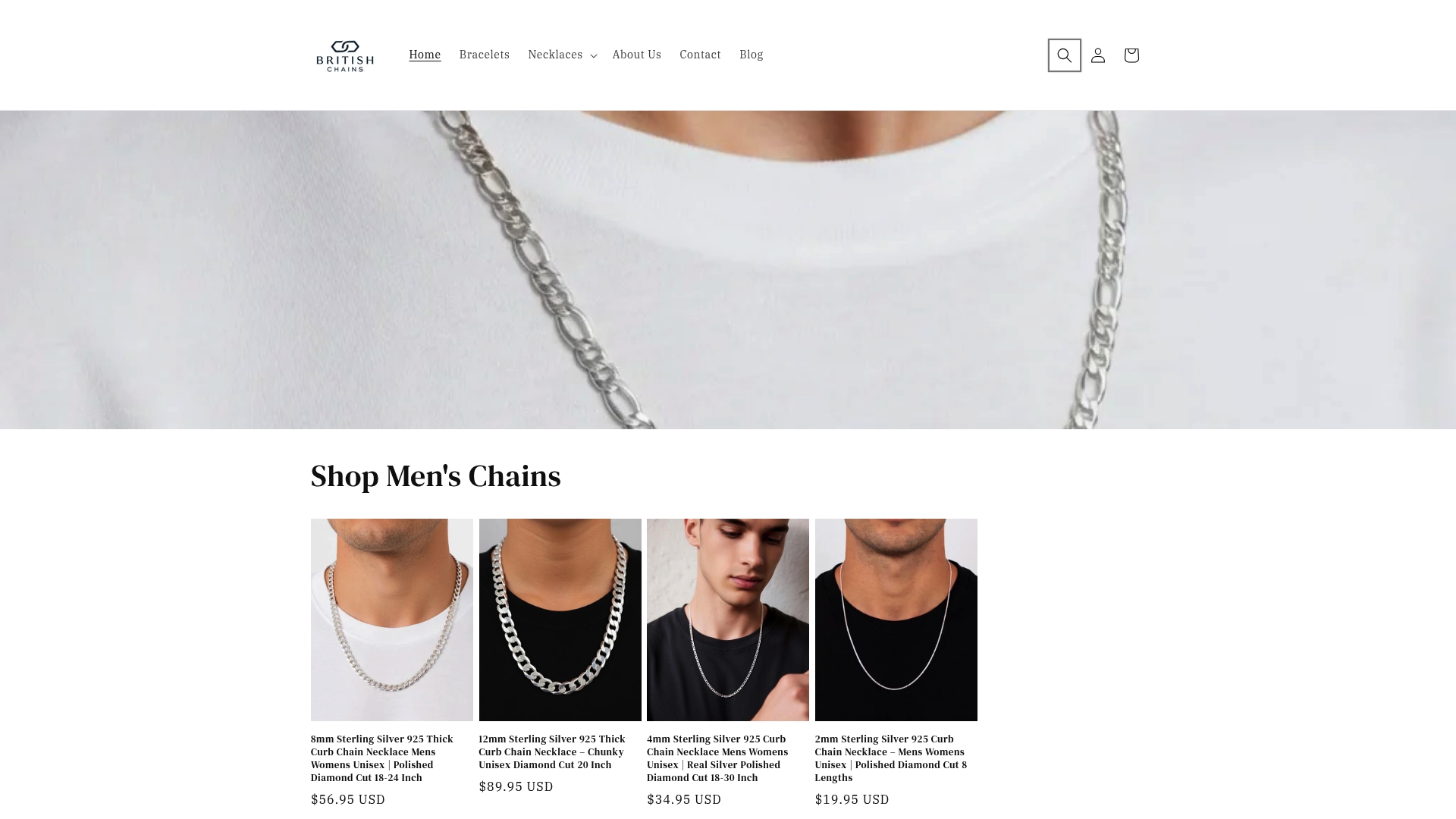
The range covers curb, rope, Figaro, box, and herringbone styles in multiple widths and lengths, from the 8mm polished curb chain to finer everyday pieces. Whether you want a 2mm Figaro necklace for daily wear or a chunky statement chain, every option is solid sterling silver with no plating involved. Britishchains also provides a full care guide so your chain stays in excellent condition for years.
FAQ
What is the difference between sterling silver and silver-plated?
Sterling silver is an alloy of 92.5% pure silver throughout the entire piece. Silver-plated jewellery has only a thin silver coating, typically 0.5–5 microns thick, over a base metal such as copper or brass.
How do I know if a chain is sterling silver when buying online?
Look for “925” or “Sterling Silver 925” stated explicitly in the product description, and check for hallmark photographs. Vague terms like “silver tone” or “silver coloured” indicate plating, not solid silver.
Does sterling silver tarnish?
Sterling silver does tarnish over time due to its copper content reacting with air. Unlike plated jewellery, it can be polished repeatedly to restore its original finish without exposing a different metal beneath.
Is sterling silver worth more than silver-plated jewellery?
Sterling silver carries intrinsic melt value based on its silver content, plus potential maker and collector premiums. Silver-plated jewellery holds mainly decorative value and has little resale worth.
What does the “925” hallmark mean on a silver chain?
The “925” hallmark confirms the piece contains 92.5% pure silver, meeting the standard definition of sterling silver. It is the most reliable mark to look for when verifying authenticity on any silver jewellery purchase.


