

Edinburgh hallmark silver meaning: a collector's guide
The Edinburgh hallmark on silver is defined as a series of official assay marks confirming that a piece of silver was tested in Edinburgh, Scotland, and meets the required standard of purity. These marks are applied by the Edinburgh Assay Office and together certify the metal’s origin, composition, and maker. For collectors, researchers, and jewellery enthusiasts, understanding the Edinburgh hallmark silver meaning is the difference between confident attribution and costly misidentification. The system has operated continuously since 1485, making it one of the oldest quality guarantees in British manufacturing.
What do the symbols in the Edinburgh hallmark represent?
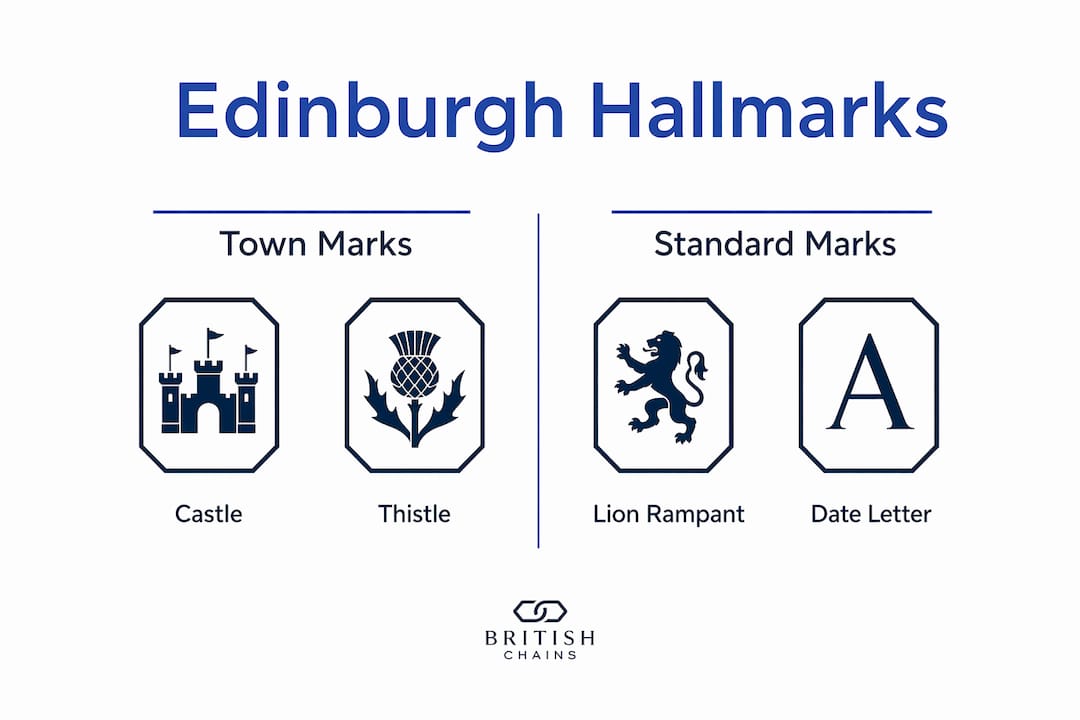
The Edinburgh hallmark consists of four distinct marks: the town mark, the standard mark, the sponsor’s mark, and the date letter. Each mark carries a specific meaning, and together they form a complete record of the piece’s origin, purity, maker, and year of assay.
The three-towered castle
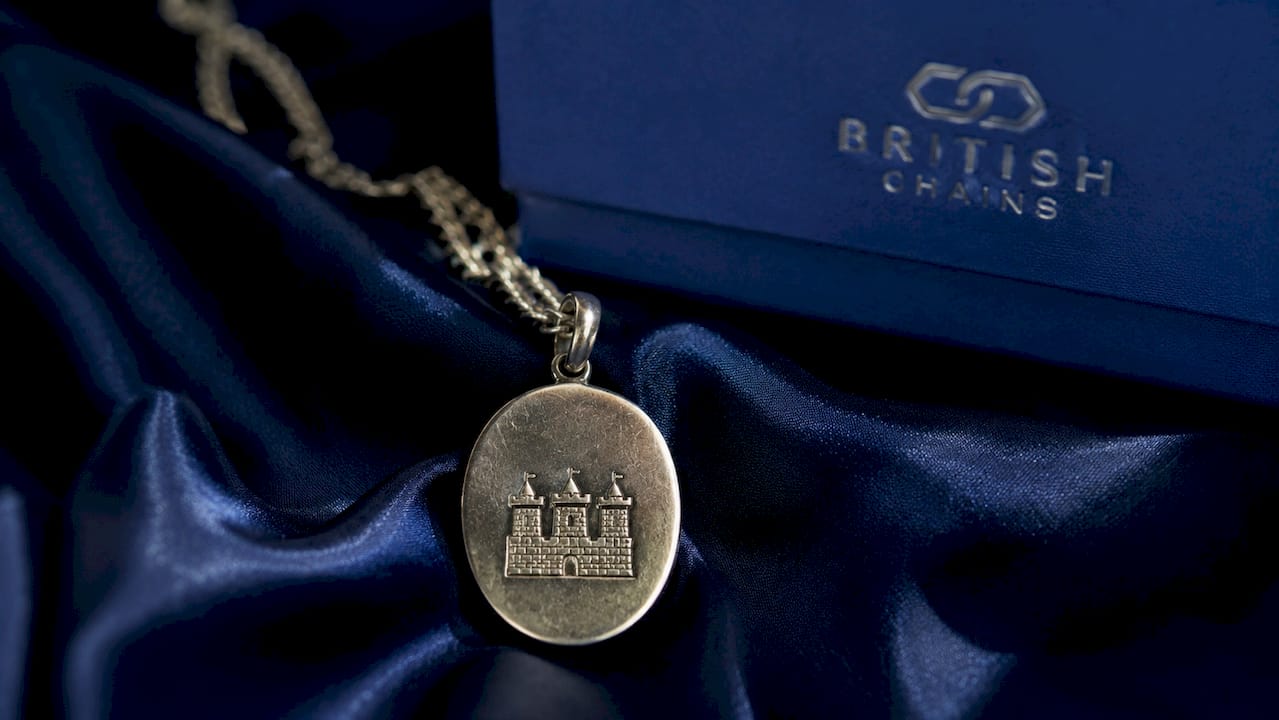
The three-towered castle is the town mark for the Edinburgh Assay Office and has been used continuously since 1485. It appears within a shield-shaped punch and confirms that the item was assayed in Edinburgh. This mark is one of the oldest in British hallmarking and carries significant weight for collectors dating Scottish silver.
The thistle and the lion rampant
The Scottish thistle served as Edinburgh’s sterling silver standard mark from 1759 to 1975. Its presence on a piece confirms the silver meets the sterling standard of 92.5% pure silver. After 1975, the lion rampant replaced the thistle to align Edinburgh’s marks with the UK-wide numeric system introduced by the Hallmarking Act 1973. The lion rampant performs the same function as the thistle but belongs to the modern era of British hallmarking.
Date letters and maker’s marks
The date letter is an alphabetical code that changes annually, allowing collectors to pinpoint the year a piece was assayed. The sponsor’s mark, also called the maker’s mark, identifies the manufacturer or silversmith who submitted the piece. These two marks complete the picture, turning a hallmark from a simple quality stamp into a traceable historical record.
Pro Tip: When examining a piece, look for all four marks together. A genuine Edinburgh silver piece will carry the castle, a standard mark (thistle or lion rampant), a date letter, and a sponsor’s mark. Missing any one of these warrants closer scrutiny.
| Mark | Symbol | Period of use |
|---|---|---|
| Town mark | Three-towered castle | 1485 to present |
| Standard mark (historical) | Scottish thistle | 1759–1975 |
| Standard mark (modern) | Lion rampant | 1975 to present |
| Date letter | Alphabetical code | Annual rotation |
| Sponsor’s mark | Maker’s initials or device | Continuous |
How has the Edinburgh hallmark evolved over time?
The Edinburgh Assay Office was chartered in 1485 by James III of Scotland, making it one of the oldest assay institutions in the world. The three-towered castle mark has appeared on silver ever since, providing an unbroken thread of quality assurance across more than five centuries. Few manufacturing standards anywhere in the world can claim that kind of continuity.
The key milestones in the Edinburgh hallmark’s history are:
- 1485: Edinburgh Assay Office established by royal charter. The castle mark introduced as the town mark.
- 1759: The Scottish thistle adopted as the sterling silver standard mark, replacing earlier arrangements and giving Edinburgh silver a distinctly Scottish identity.
- 1973: The Hallmarking Act passed by the UK Parliament, harmonising standards across all four British assay offices.
- 1975: The lion rampant replaced the thistle as the standard mark, bringing Edinburgh into line with the UK-wide numeric system.
- Present: Edinburgh remains one of four active UK assay offices, alongside London, Birmingham, and Sheffield.
The 1973 Hallmarking Act is the single most significant legal change in the history of Edinburgh silver marking. It simplified identification for modern buyers but created a knowledge gap for collectors of antiques. Anyone researching pieces made before 1975 must understand the legacy marks, particularly the thistle, to date and attribute them correctly. The Act also replaced the older fineness fractions with numeric standards, so 925 now appears on modern sterling silver in place of the thistle.
The archival day books maintained by the Edinburgh Assay Office are a remarkable resource that most collectors overlook. These handwritten records link every hallmarked object to its precise testing date, stretching back centuries. They transform a hallmark from a static stamp into a living document, connecting a piece of silver jewellery to a specific day in history.
How to identify authentic Edinburgh silver hallmarks
Identifying genuine Edinburgh silver requires a methodical approach. Forgeries exist, and honest misattribution is common among beginners. The following steps will help you read Edinburgh marks with confidence.
-
Locate the castle mark. The three-towered castle appears within a shield-shaped punch. It is the primary identifier of Edinburgh assay. If the castle is absent, the piece was not assayed in Edinburgh.
-
Identify the standard mark. A thistle confirms the piece dates from 1759 to 1975. A lion rampant places it after 1975. The numeric mark 925 also appears on modern sterling silver.
-
Read the date letter. Date letters follow a cyclical alphabetical system. Cross-referencing the letter with published date letter tables gives you the precise year of assay. Several reputable reference books and online databases cover Edinburgh date letters in full.
-
Check the sponsor’s mark. This is usually the maker’s initials within a shaped cartouche. Identifying the sponsor’s mark can significantly increase a piece’s provenance and value.
-
Rule out other Scottish offices. Silver pieces bearing marks such as a bird, tree, fish, or bell originate from the now-defunct Glasgow Assay Office, not Edinburgh. Confusing the two is one of the most common errors among new collectors of Scottish silver.
Pro Tip: Cross-reference the date letter with the Edinburgh Assay Office’s archival records or a published reference such as Jackson’s Silver and Gold Marks. The day books held by the Edinburgh Assay Office can confirm exact assay dates, which is particularly valuable for pieces submitted by known silversmiths.
The symbols on Edinburgh silver reflect a deep Scottish cultural identity. The castle and the thistle are not arbitrary design choices. They were selected to differentiate Edinburgh silver from English hallmarking traditions, and that distinctiveness still carries meaning for collectors today.
What does the Edinburgh hallmark reveal about silver quality and collector value?
The Edinburgh hallmark is a legal guarantee of silver purity. Sterling silver carries a minimum of 92.5% pure silver, confirmed by the standard mark on every hallmarked piece. That figure is not a manufacturer’s claim. It is a verified result from an independent assay office.
For collectors, the hallmark does several things at once:
- Confirms purity. The 92.5% sterling standard is non-negotiable for hallmarked pieces. No hallmarked Edinburgh silver can legally fall below this threshold.
- Establishes provenance. The combination of town mark, date letter, and sponsor’s mark creates a traceable record. Archival day books link hallmarks to exact assay dates, adding a layer of verifiable history.
- Supports valuation. A fully marked piece with a legible date letter and identifiable sponsor’s mark commands a premium over unmarked or partially marked silver.
- Signals authenticity. The presence of all four marks together is the strongest indicator of genuine Edinburgh silver. Partial marks or marks that do not align with known date letter cycles are red flags.
| Attribute | What the hallmark confirms |
|---|---|
| Purity | Minimum 92.5% silver (sterling standard) |
| Origin | Assayed at Edinburgh Assay Office |
| Age | Confirmed by annual date letter |
| Maker | Identified by sponsor’s mark |
Understanding legacy marks is particularly important for antique silver. A piece bearing the thistle was made before 1975. A piece bearing the lion rampant or the numeric 925 mark is post-1975. Getting this distinction wrong leads to misdating, which affects both academic research and market value. Collectors who invest time in learning the full sequence of Edinburgh date letters gain a significant advantage when assessing pieces at auction or in private sales. The jewellery care guide from Britishchains also covers how to maintain hallmarked sterling silver once you own it.
Key takeaways
The Edinburgh hallmark is the definitive guarantee of silver purity, Scottish origin, and traceable provenance, combining the castle mark, standard mark, date letter, and sponsor’s mark into a single verifiable record.
| Point | Details |
|---|---|
| Castle mark is the core identifier | The three-towered castle confirms Edinburgh assay and has appeared on silver since 1485. |
| Thistle vs lion rampant matters | The thistle dates a piece to 1759–1975; the lion rampant places it after 1975. |
| Date letters enable precise dating | Cross-referencing date letters with published tables gives the exact year of assay. |
| Archival records add provenance | Edinburgh Assay Office day books link hallmarks to specific testing dates, increasing collector value. |
| Glasgow marks are distinct | Bird, tree, fish, and bell marks indicate Glasgow origin, not Edinburgh. |
Why Edinburgh hallmarks matter more than most collectors realise
Most people who buy antique silver focus on the object itself: the weight, the form, the condition. The hallmarks get a cursory glance, if that. I think that is a significant mistake, and one that costs collectors real money.
The Edinburgh castle mark is not decorative. It is a legal record, backed by centuries of institutional documentation. The day books held by the Edinburgh Assay Office are genuinely extraordinary. They are handwritten ledgers that connect a piece of silver to a specific date, a specific maker, and a specific moment in Scottish history. No other form of documentation comes close to that level of specificity for antique metalwork.
The thistle mark is where I see the most confusion. Collectors regularly misread it as a general Scottish symbol rather than a precise date indicator. The thistle tells you the piece was made between 1759 and 1975. That is a 216-year window. The date letter narrows it to a single year. Using both together is not optional if you are serious about attribution.
Forgeries and misattributed pieces are more common than the trade likes to admit. The most reliable defence is knowing what a complete, genuine Edinburgh hallmark looks like and being suspicious of anything that deviates from it. The symbols reflect Scottish cultural pride, yes. But their real value is forensic.
— British
Britishchains sterling silver: hallmarked quality you can trust
Every piece in the Britishchains collection is crafted from 925 sterling silver and meets the same purity standard that Edinburgh hallmarking has guaranteed for centuries.
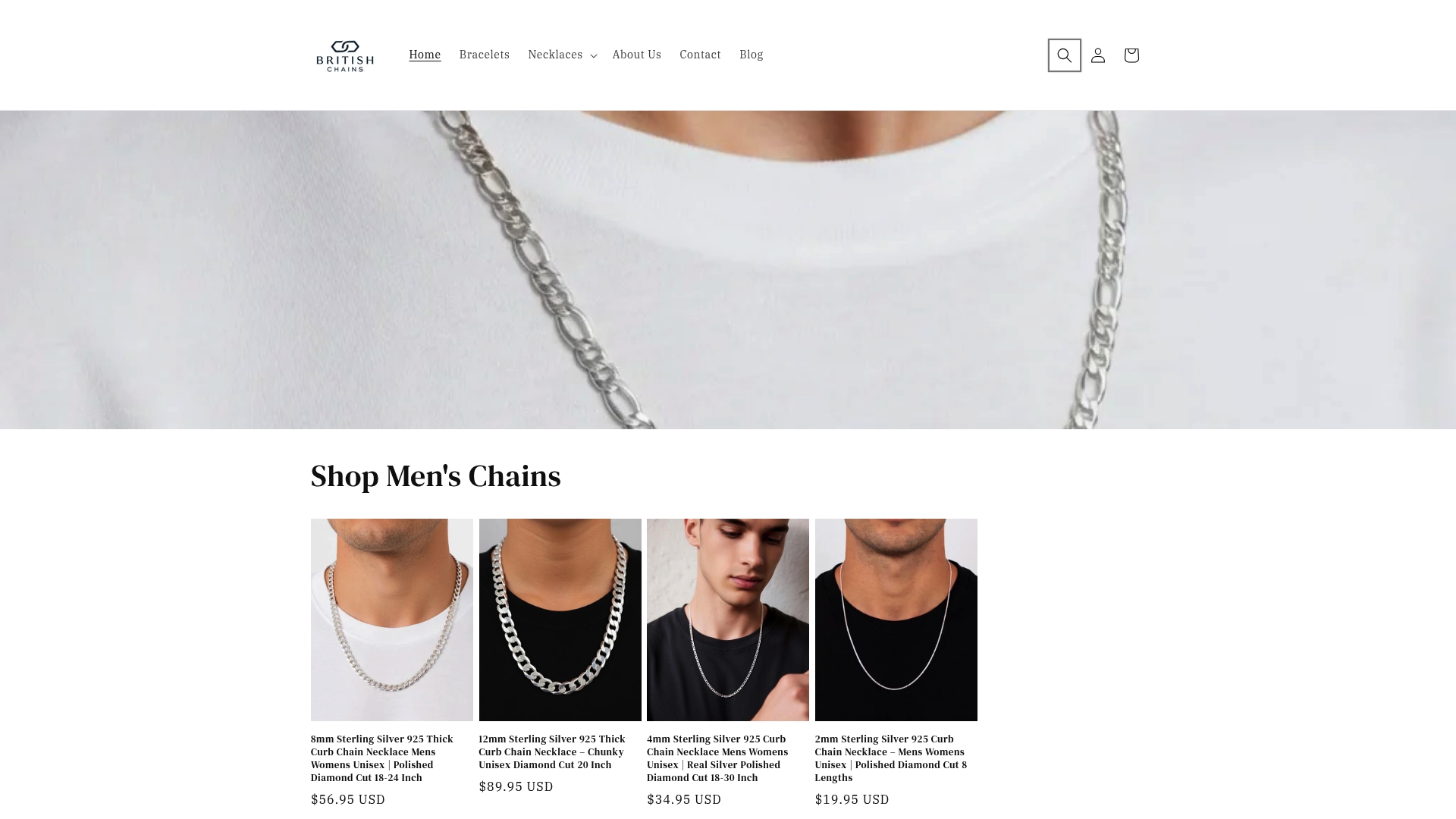
Whether you are drawn to a classic 4mm curb chain or the refined drape of a herringbone necklace, every piece carries the 925 mark that confirms genuine sterling silver. Britishchains designs and retails its pieces direct to customers, with no intermediary diluting the quality assurance. For collectors and jewellery enthusiasts who have just spent time understanding what a hallmark truly means, buying from a brand that takes that standard seriously is the logical next step. Browse the full silver necklaces collection to find a piece that carries that guarantee.
FAQ
What is the Edinburgh hallmark on silver?
The Edinburgh hallmark is a group of official marks applied by the Edinburgh Assay Office to confirm that a silver piece meets the sterling standard of 92.5% purity. The marks include the three-towered castle, a standard mark, a date letter, and a sponsor’s mark.
What does the castle mark on silver mean?
The three-towered castle is the town mark of the Edinburgh Assay Office and confirms the piece was assayed in Edinburgh. It has been used continuously since 1485 and is one of the oldest marks in British hallmarking.
What is the difference between the thistle and the lion rampant on Edinburgh silver?
The thistle was Edinburgh’s sterling silver standard mark from 1759 to 1975. The lion rampant replaced it after the Hallmarking Act 1973 came into effect, aligning Edinburgh with the UK-wide numeric system. Both marks confirm 92.5% silver purity.
How do I date a piece of Edinburgh silver?
Read the date letter alongside the castle and standard marks. Each date letter corresponds to a specific year of assay, and published reference tables cover the full Edinburgh date letter sequence. The Edinburgh Assay Office’s archival day books can confirm exact assay dates for significant pieces.
How is Edinburgh silver different from Glasgow silver?
Edinburgh silver carries the three-towered castle as its town mark. Glasgow silver bears a different set of symbols including a bird, tree, fish, and bell. The Glasgow Assay Office is now closed, so all active Scottish assaying takes place in Edinburgh.


