

How British jewellery grading works: the complete guide
British jewellery grading is defined as a legally mandated hallmarking system that provides independent, scientifically verified certification of precious metal purity and origin. Governed by the Hallmarking Act 1973, this system requires every qualifying item of gold, silver, or platinum above designated weight thresholds to carry official marks applied by one of four UK assay offices. Understanding how British jewellery grading works matters whether you are buying a sterling silver chain, assessing a vintage piece, or verifying an import. The hallmark is not decoration. It is legal proof.
How British jewellery grading works: mandatory hallmarks explained
A legally compliant British hallmark must contain three components: a sponsor’s mark, a fineness mark, and an assay office mark. All three marks are mandatory under UK law. A date letter is optional but appears on many pieces, particularly antique and prestige items.
The sponsor’s mark identifies the maker or importer. It consists of registered initials inside a shield-shaped cartouche. Every business submitting jewellery for hallmarking must register a unique sponsor’s mark with an assay office. This mark creates a direct line of accountability from the piece back to its commercial origin.
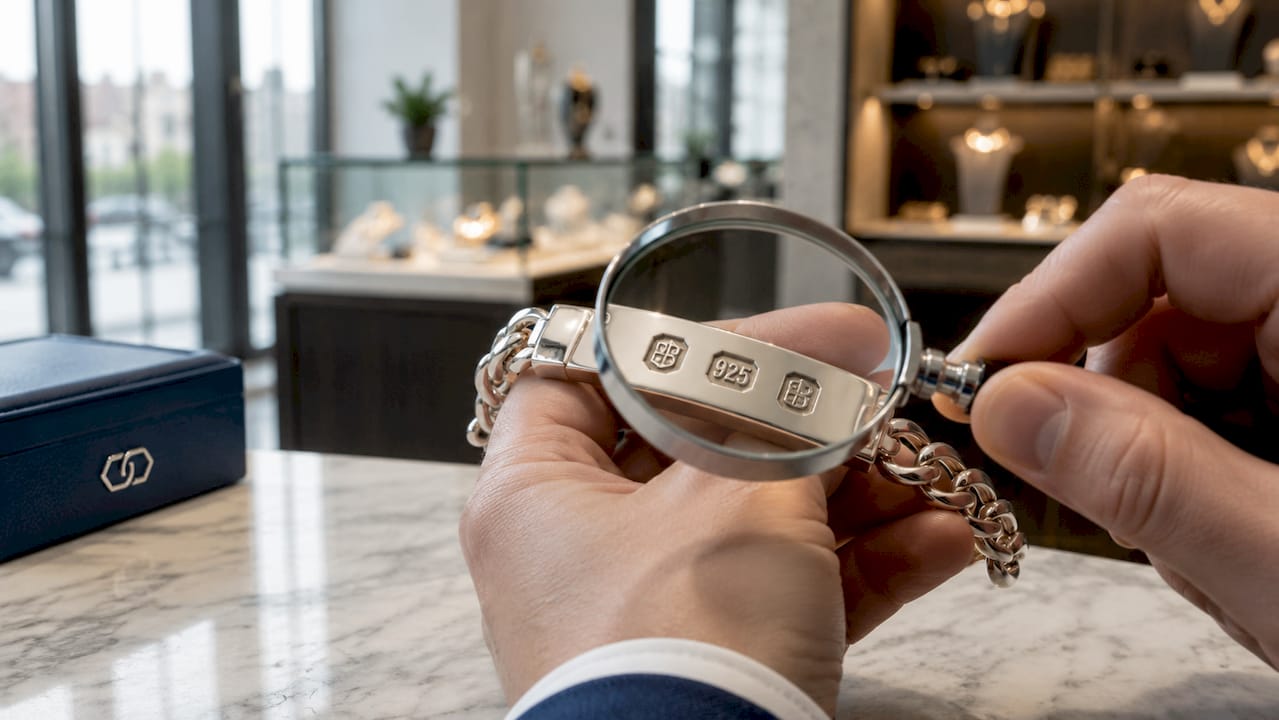
The fineness mark states the metal’s purity in parts per thousand. Sterling silver carries the mark 925, meaning 925 parts of silver per 1,000. Gold fineness marks include 375 (9ct), 585 (14ct), and 750 (18ct). Platinum is marked 950. These numbers tell you exactly what you are buying, with no room for ambiguity.
The assay office mark confirms which official body tested and certified the piece. Each office uses a distinct symbol: a leopard’s head for London, an anchor for Birmingham, a rose for Sheffield, and a castle for Edinburgh. The assay and hallmarking process involves scientific testing followed immediately by stamp application by the same authority. That inseparability of testing and certification is what makes the British system uniquely trustworthy.
- Sponsor’s mark: registered initials in a shield; identifies maker or importer
- Fineness mark: purity in parts per thousand (e.g., 925 for sterling silver)
- Assay office mark: symbol of the certifying office (leopard, anchor, rose, or castle)
- Date letter: optional; indicates year of hallmarking; common on antique pieces
Pro Tip: Always check for all three mandatory marks before purchasing. A number-only stamp like “925” without a sponsor’s mark and assay office symbol is not a legally compliant British hallmark. It is a manufacturer’s self-declaration only, which carries no independent verification.
Which UK assay offices certify jewellery?
The four UK assay offices each carry centuries of history and a distinct regional identity. Knowing which office certified a piece adds genuine provenance context, particularly for collectors.
| Assay office | Symbol | City | Notable characteristic |
|---|---|---|---|
| London | Leopard’s head | London | Oldest office; preferred for prestige and high-value pieces |
| Birmingham | Anchor | Birmingham | Highest volume of hallmarking in the UK |
| Sheffield | Rose | Sheffield | Strong heritage in cutlery and silverware |
| Edinburgh | Castle | Edinburgh | Scotland’s sole assay office; serves Scottish makers |
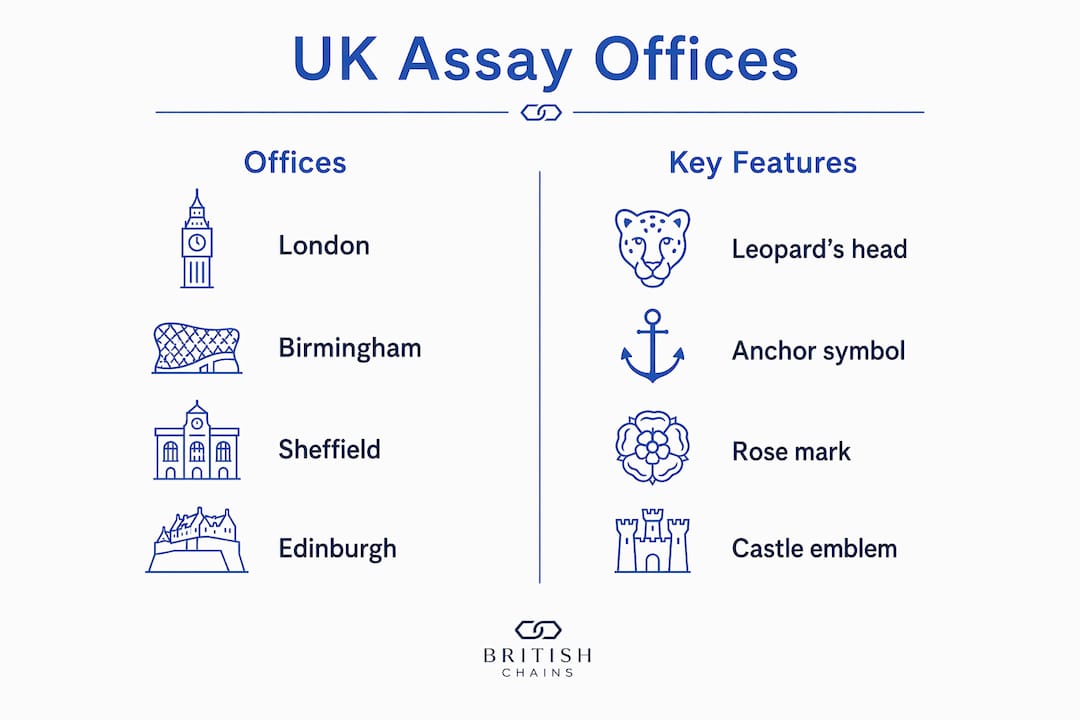
The London Assay Office is the oldest, with roots stretching back to the 14th century. Its leopard’s head mark carries strong associations with prestige items and high-value commissions. Birmingham’s anchor mark is the most commonly encountered on modern British jewellery, reflecting the city’s industrial-scale production heritage. Sheffield’s rose mark appears frequently on silverware and flatware, a legacy of the city’s cutlery trade. Edinburgh’s castle mark is the definitive mark for Scottish-made pieces, and collectors use it as a provenance clue linking pieces to Scottish metalworking traditions.
Pro Tip: If you own or are considering a piece with an Edinburgh castle mark, the Edinburgh hallmark collector’s guide at Britishchains provides detailed context on what that mark means for value and authenticity.
Each office operates independently and applies its hallmark only after completing its own assay. No office can apply another’s symbol. That independence is what prevents conflicts of interest between the maker and the certifier.
What are the weight thresholds for hallmarking in the UK?
The Hallmarking Act 1973 sets clear weight thresholds above which hallmarking becomes legally mandatory for commercial sale. These thresholds exist because applying a full hallmark to extremely small items risks damaging them.
- Gold: items weighing more than 1 gram must be hallmarked before sale as precious metal.
- Silver: items weighing more than 7.78 grams require a full hallmark.
- Platinum: items weighing more than 0.5 grams must carry a hallmark.
Items below these thresholds are exempt from mandatory hallmarking, as are certain specific categories such as some wedding rings. However, an exempt item cannot legally be described or sold as a precious metal article without a hallmark if it falls above the threshold. Describing an unhallmarked item above the weight limit as gold, silver, or platinum is a criminal offence under UK law.
Imported jewellery faces the same rules. Precious metal imports not bearing recognised Convention marks must be submitted to a UK assay office for hallmarking before they can be sold in Britain. This requirement closes the loophole that allows foreign manufacturers to sell substandard metal under misleading descriptions.
Repairs to existing jewellery are treated differently. Work that does not create a new article may not require re-hallmarking, which provides a practical exception for restoration and alteration work. The key legal test is whether the repair constitutes a new piece or a modification of an existing hallmarked one.
Modern hallmarking methods have also evolved. Laser engraving now replaces traditional punch hallmarking on delicate pieces, causing less structural damage while maintaining full legal validity. UK assay offices authorise laser marks, so the method of application does not affect the hallmark’s legal standing.
How do British jewellery standards compare with international ones?
British hallmarking is the strongest legally backed guarantee of precious metal purity available anywhere in the world. The contrast with other national systems is significant.
In the United States, precious metal marking is largely voluntary. A manufacturer can stamp “14K” on a piece without independent verification. There is no legal requirement for a third party to test the metal before that mark appears. British law requires the opposite: an independent assay office must test and certify every qualifying piece before any purity claim reaches the consumer.
The minimum gold standard in the UK is 9ct gold, marked 375, meaning 375 parts of gold per 1,000. Germany recognises 8ct gold (333) as a valid standard, which is lower than the UK minimum. France and Italy use 18ct (750) as their most common standard, which is higher. These differences matter when buying imported pieces, because a foreign purity mark does not automatically meet UK legal requirements.
The Vienna Convention on the Control of Articles of Precious Metals provides a partial bridge. The UK accepts Convention hallmarks from member countries as equivalent to British hallmarks for import purposes. Jewellery bearing a recognised Convention mark does not need re-hallmarking before UK sale. Jewellery from non-Convention countries does. Buyers purchasing online from international retailers should verify whether the piece carries a Convention mark or a full British hallmark before assuming legal compliance.
Pro Tip: When buying silver jewellery online, look for the 925 authenticity verification steps outlined by Britishchains to confirm you are receiving a genuinely hallmarked piece rather than a self-declared purity stamp.
The purity marks on silver jewellery carry legal weight in the UK that voluntary systems abroad simply cannot match. That is the core distinction between British jewellery certification and most international alternatives.
Key takeaways
British jewellery grading is a legally enforced hallmarking system requiring three mandatory marks applied by one of four independent UK assay offices, making it the most reliable precious metal certification system in the world.
| Point | Details |
|---|---|
| Three mandatory marks | Every compliant British hallmark must include a sponsor’s mark, fineness mark, and assay office mark. |
| Weight thresholds apply | Gold above 1g, silver above 7.78g, and platinum above 0.5g all require mandatory hallmarking for UK sale. |
| Four assay offices | London, Birmingham, Sheffield, and Edinburgh each apply a distinct symbol after independent scientific testing. |
| UK sets higher minimums | The UK minimum gold standard is 9ct (375), stricter than some international equivalents. |
| Number-only stamps are not hallmarks | A “925” or “750” stamp alone is a manufacturer’s declaration, not a legally valid British hallmark. |
Why hallmarking knowledge protects every buyer
Most people buying jewellery focus on design and price. The hallmark is an afterthought. That is a mistake I have seen cost buyers real money.
The most common error is treating a number-only stamp as a full hallmark. A piece stamped “925” with nothing else has not been independently tested. The seller is simply telling you what the metal is. A full British hallmark, with all three components, means an independent laboratory tested the metal and a government-authorised office certified the result. Those are entirely different levels of assurance.
Assay office marks also matter more than most buyers realise. A London leopard’s head on a Georgian silver piece is not just a quality mark. It is a provenance document. It tells you where the piece was certified, which narrows down its likely origin and connects it to a specific regional tradition. Collectors who understand this use assay office marks to authenticate pieces that lack other documentation.
The international comparison is where the gap becomes most visible. British hallmarking remains the strongest legally backed guarantee worldwide, contrasting with voluntary marking systems in countries like the United States. When you buy a hallmarked British piece, you are not trusting the seller’s word. You are relying on an independent institution with centuries of legal authority behind it.
My advice: learn to read the three marks before you buy. Check the sponsor’s mark, the fineness number, and the assay office symbol. If any one of them is missing, the piece does not carry a legally compliant British hallmark. That knowledge alone will protect you from the most common forms of mislabelling in the jewellery market.
— British
Hallmarked sterling silver chains from Britishchains
Every chain sold by Britishchains carries a full 925 sterling silver hallmark, verified to British legal standards. That means you receive independent certification of metal purity, not a manufacturer’s self-declaration.
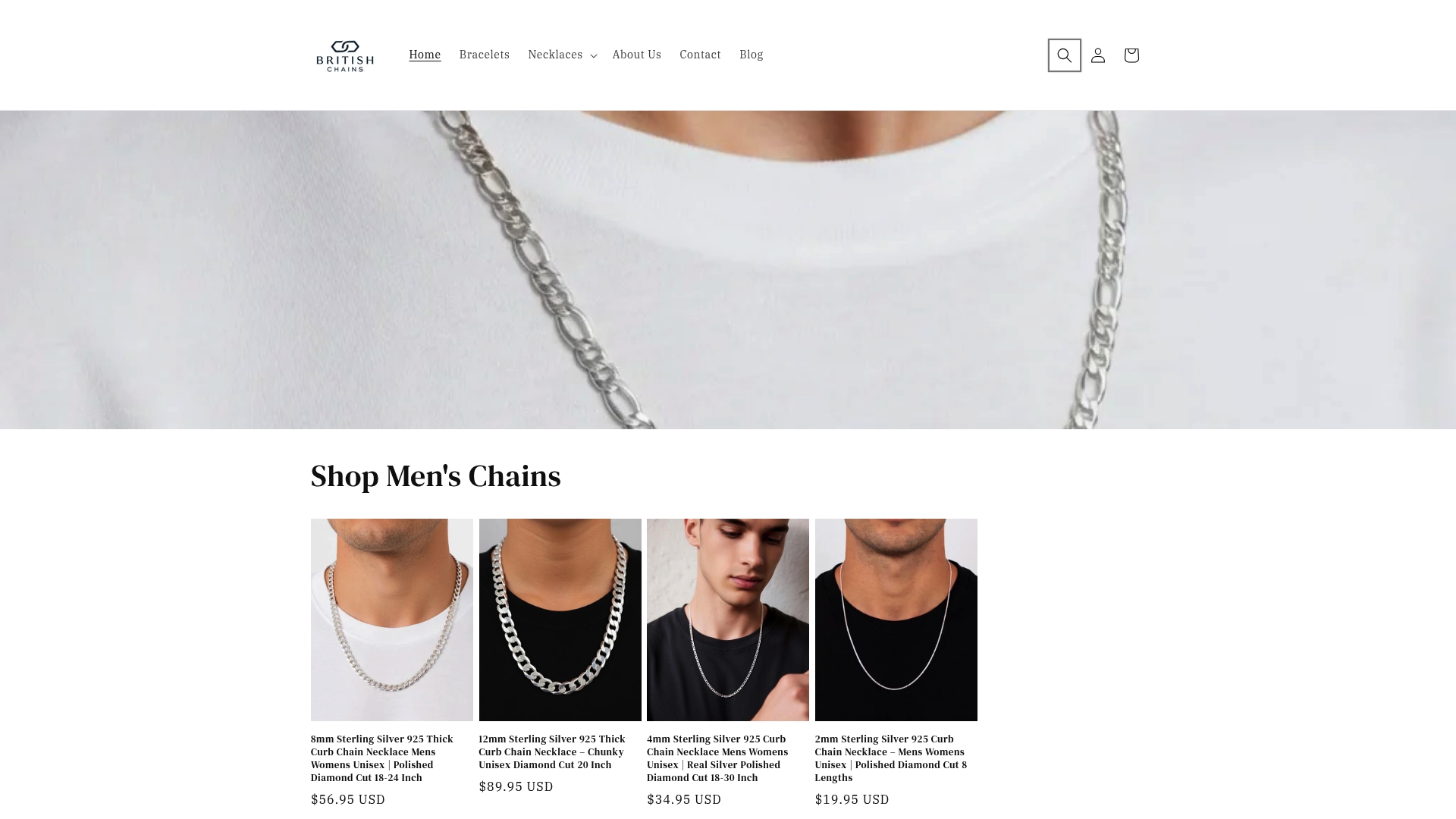
Britishchains offers a wide range of hallmarked sterling silver styles, including the 8mm Figaro chain, the 2mm curb chain, and the 4mm twisted rope chain, all available in multiple lengths. Each piece is crafted in the UK and sold with the assurance that comes from genuine British hallmarking standards. If you want silver you can trust, the hallmark is where that trust begins.
FAQ
What is a British hallmark?
A British hallmark is a set of three legally required marks applied by an official UK assay office: a sponsor’s mark, a fineness mark, and an assay office symbol. Together, they certify the metal’s purity and origin independently of the seller.
What does 925 mean on British silver jewellery?
The mark 925 is the fineness mark for sterling silver, indicating 925 parts of silver per 1,000. On a fully hallmarked British piece, this number appears alongside a sponsor’s mark and an assay office symbol.
Is hallmarking mandatory in the UK?
Yes. The Hallmarking Act 1973 makes hallmarking mandatory for gold items above 1 gram, silver items above 7.78 grams, and platinum items above 0.5 grams sold commercially in the UK.
How does the UK hallmark differ from international marks?
The UK requires independent third-party testing and official certification before any purity mark is applied. Many countries, including the United States, use voluntary manufacturer declarations with no mandatory independent verification.
Can I trust a number-only stamp like “750” as a British hallmark?
No. A number-only stamp is a manufacturer’s self-declaration and carries no independent legal verification. A compliant British hallmark requires all three mandatory marks: sponsor, fineness, and assay office symbol.


