

Role of purity marks on silver jewellery explained
Purity marks on silver are official stamps that certify the metal’s silver content and guarantee its quality to the buyer. Known formally as hallmarks in the British system, these marks are the oldest form of consumer protection in metal commerce, functioning as independent verification rather than a manufacturer’s claim. The role of purity marks on silver goes far beyond decoration: they tell you exactly what you are buying, who made it, and where it was tested. Understanding silver purity levels, from the sterling standard of 925 to the Britannia standard of 958, gives you the knowledge to buy with confidence and avoid costly mistakes.
What do silver purity marks signify?
Silver purity marks certify the proportion of pure silver in a metal alloy, expressed in parts per thousand. Sterling silver contains 92.5% pure silver, which is why it carries the stamp ‘925’. The remaining 7.5% is typically copper, added to improve durability without compromising the silver’s appearance.
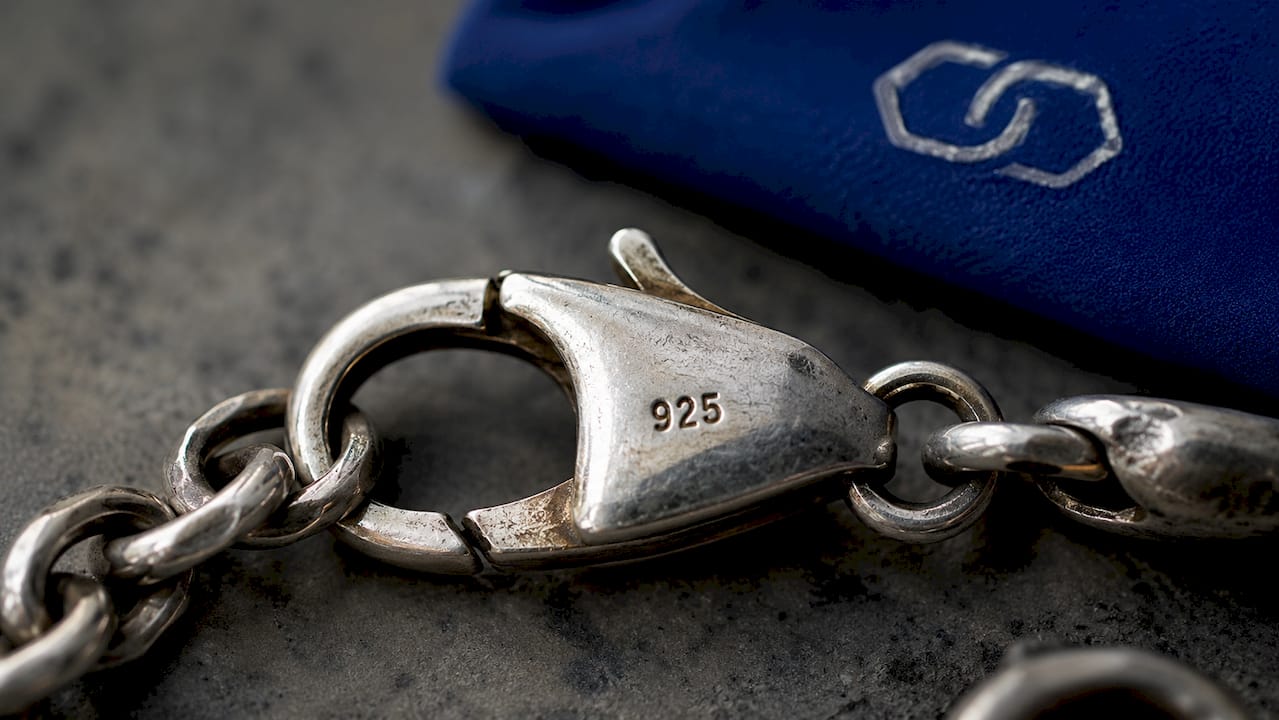
The Britannia standard sits higher, at 95.8% pure silver, stamped as ‘958’. Britannia silver is softer than sterling and less common in everyday jewellery, but it commands a premium for its higher metal content. Both standards are legally recognised in the UK and carry distinct symbols alongside their numeric stamps.
Common British silver purity marks
- 925 (sterling silver): The most widely used standard for jewellery and chains. Marked with the numeric stamp ‘925’ and, traditionally, the lion passant symbol, which has been in use since 1544.
- 958 (Britannia silver): Marked with the Britannia figure or the numeric stamp ‘958’. Less common in modern retail jewellery.
- 999 (fine silver): Nearly pure silver, too soft for most jewellery applications. Rarely seen on chains or necklaces.
How purity marks differ from plating marks
Purity marks apply only to solid silver items. A silver-plated piece carries a thin layer of silver over a base metal, and its marks indicate plating quality, not silver content. Sterling silver holds three to eight times more intrinsic value than a silver-plated equivalent. That gap is significant when you are assessing resale value or buying as an investment.
| Mark | Type | Silver content | Intrinsic value |
|---|---|---|---|
| 925 | Solid sterling silver | 92.5% | High |
| 958 | Solid Britannia silver | 95.8% | High |
| 999 | Fine silver | 99.9% | High |
| EPNS | Electroplated nickel silver | Trace layer only | Negligible |
| A1 | Plating grade | Trace layer only | Negligible |
How does the British hallmarking system work?
British hallmarks are applied by government-authorised assay offices, not by manufacturers. This distinction is the foundation of the system’s credibility. A manufacturer cannot stamp their own silver as hallmarked. The item must be submitted to an independent assay office, which tests it and applies the marks.
The UK’s four active assay offices are the London Assay Office (leopard’s head), the Birmingham Assay Office (anchor), the Sheffield Assay Office (rose), and the Edinburgh Assay Office (castle). Each applies its own symbol as part of the hallmark set, so you can trace exactly where a piece was tested.
The components of a full British hallmark
- Sponsor’s mark (maker’s mark): The initials or symbol of the manufacturer or retailer who submitted the piece. This identifies who is responsible for the item.
- Purity mark (fineness mark): The numeric stamp showing silver content, such as ‘925’ or ‘958’. Since 1999, UK law requires the assay office mark, numeric fineness mark, and sponsor’s mark as the three mandatory components.
- Assay office mark: The symbol of the office that tested and certified the piece. Absence of this mark means the item lacks a legal guarantee under UK law.
- Date letter (optional post-1999): A letter indicating the year of hallmarking. Traditionally changed annually, the date letter allows precise dating of antique and vintage pieces.
- Traditional symbols (optional post-1999): The lion passant for sterling silver and the Britannia figure for 958 silver remain popular inclusions, though they are no longer legally required.
Full British hallmark sets allow a piece to be traced back to its maker, testing location, and year of manufacture. That provenance can add collectible and monetary value well beyond the metal content alone.
Pro Tip: When buying antique silver, look for all five marks: sponsor, purity, assay office, date letter, and traditional symbol. A complete set significantly increases both the item’s provenance value and your confidence in its authenticity.
What are the common misconceptions about silver marks?
The most widespread confusion in silver buying is mistaking plating grades for purity marks. Marks such as A1, EPNS (electroplated nickel silver), and EPBM (electroplated Britannia metal) are plating quality indicators, not silver content certifications. They tell you how thick or durable the plating is, not how much silver the item contains.
Manufacturers sometimes use internal markings or marketing terms that visually resemble legal hallmarks. These do not legally certify purity and carry negligible scrap value compared to official marks like the lion passant. Paying sterling silver prices for an EPNS item is a costly error that happens more often than most buyers realise.
How to spot the difference
- Genuine purity marks are numeric (925, 958, 999) or carry recognised British symbols (lion passant, Britannia figure, assay office mark).
- Plating marks use letter codes (EPNS, EPBM, A1) or descriptive terms. They appear on the base metal, not as a certified assay stamp.
- Wear points reveal the truth. On plated items, the silver layer wears through at contact points such as clasps, chain links, and edges, exposing the base metal beneath. Solid sterling silver shows consistent colour throughout.
Confusing purity marks with plating grades is a widespread consumer issue that leads to overpayment for items with no intrinsic silver value. The financial difference is not trivial: a sterling silver chain holds real metal value, while a plated chain of the same weight is worth a fraction of the price.
Pro Tip: If a piece is labelled ‘silver’ but carries no numeric purity stamp or recognised assay mark, treat it as plated until proven otherwise. Ask the seller for the hallmark details before purchasing.
How to use purity marks when buying silver jewellery
Checking purity marks before buying is the single most effective step you can take to protect your purchase. Look for the numeric fineness stamp (925 or 958) and the assay office symbol on the piece itself, not just on the packaging or a certificate. Marks on the item are the legal guarantee; marks on a box are not.
Understanding scrap value differences matters when you are buying silver as a store of value. A 4mm sterling silver 925 curb chain carries genuine metal value that a plated equivalent simply does not. If you ever need to sell or recycle the piece, only solid silver with a recognised purity mark commands a meaningful return.
When hallmarks are worn or unclear on antique pieces, XRF testing provides a non-destructive way to verify silver content. XRF (X-ray fluorescence) measures elemental composition without damaging the item, making it the preferred method for appraisers and auction houses. For everyday retail purchases, a clear ‘925’ stamp alongside an assay office mark is sufficient verification.
Pro Tip: Use a jeweller’s loupe (a small magnifying glass) to read hallmarks clearly. Stamps on chains are often tiny and placed on the clasp or a small tag attached to the chain. Check both locations before concluding a mark is absent.
Key takeaways
Silver purity marks are legally certified stamps applied by independent assay offices, and the ‘925’ sterling silver standard remains the most trusted benchmark for jewellery quality in the UK.
| Point | Details |
|---|---|
| Purity marks certify silver content | Numeric stamps like 925 and 958 confirm the percentage of pure silver in a piece. |
| British hallmarks require three mandatory marks | Since 1999, UK law requires the sponsor’s mark, fineness mark, and assay office mark. |
| Plating marks are not purity marks | EPNS, A1, and EPBM indicate plating quality only and carry negligible intrinsic value. |
| Provenance adds value beyond metal | A full British hallmark set can increase an item’s collectible value beyond its silver content. |
| XRF testing verifies worn marks | Non-destructive XRF analysis confirms silver content when hallmarks are unclear or damaged. |
Why purity marks matter more than most buyers realise
Most buyers glance at a ‘925’ stamp and move on. I understand why: the mark looks official, the chain looks silver, and the price seems right. But the stamp alone is only part of the story. What separates a genuinely protected purchase from a gamble is the assay office mark sitting alongside it.
I have seen pieces sold as sterling silver that carried a ‘925’ stamp applied by the manufacturer, with no independent assay office mark in sight. Under UK law, that piece is not legally hallmarked. The manufacturer’s stamp is a declaration, not a certification. The assay office mark is the certification. That distinction is worth understanding before you spend money.
The British hallmarking system is genuinely one of the best consumer protections in any retail category. It has been operating in some form since the 14th century, and the independence of the assay offices is its greatest strength. No manufacturer can hallmark their own silver. That single rule eliminates a category of fraud that plagues silver markets in countries without equivalent systems.
My advice is straightforward: always check for the assay office symbol alongside the numeric purity mark. Read the jewellery care guide for your pieces so you understand what you own and how to maintain it. And if a seller cannot point to both marks on the item itself, walk away.
— British
Sterling silver chains with verified purity from Britishchains
Britishchains designs and sells premium sterling silver chains crafted in the UK, with every piece carrying the ‘925’ purity mark that confirms genuine silver content.
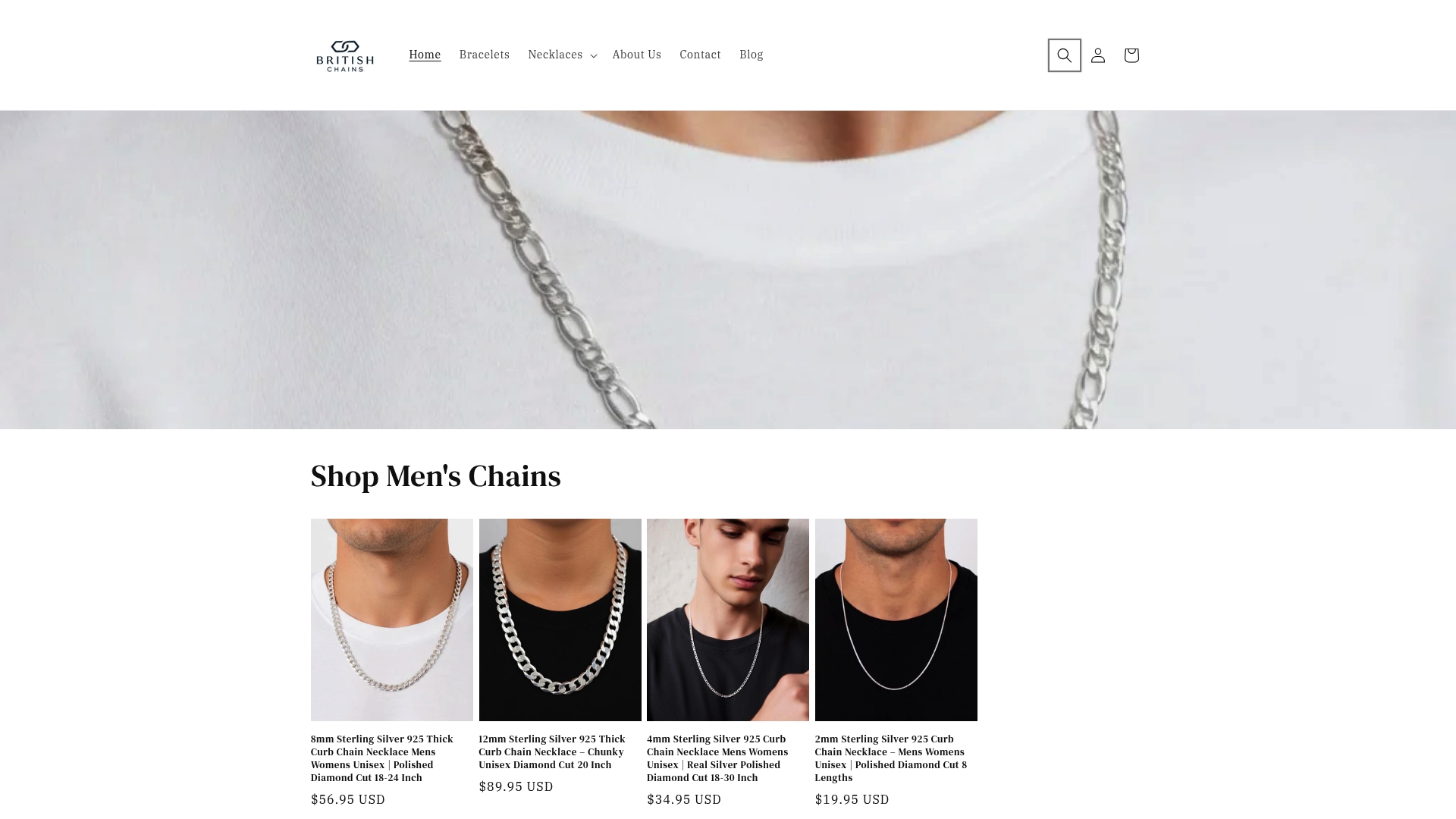
Each chain in the Britishchains collection is made to British quality standards, giving buyers the confidence that comes from a clearly marked, properly certified piece of silver jewellery. The 8mm Figaro chain and the 4mm twisted rope chain are both stamped ‘925’ and built to last. If you want silver jewellery where the purity mark is not a marketing claim but a verifiable fact, Britishchains is the place to start.
FAQ
What does the 925 stamp mean on silver?
The 925 stamp means the item contains 92.5% pure silver, meeting the sterling silver standard. It is the most common purity mark on silver jewellery in the UK.
Is a lion passant mark still required on British silver?
Since 1999, the lion passant is optional rather than mandatory on British hallmarked silver. The three required marks are the sponsor’s mark, the numeric fineness mark, and the assay office symbol.
How do I tell solid silver from silver-plated items?
Look for a numeric purity stamp (925, 958, or 999) alongside an assay office mark. Plated items carry codes like EPNS or A1, which indicate plating quality, not silver content.
What is the difference between 925 and 958 silver?
Sterling silver (925) contains 92.5% silver and is the standard for most jewellery. Britannia silver (958) contains 95.8% silver, making it purer but softer and less common in everyday pieces.
Can hallmarks be faked or worn away?
Hallmarks can wear down on antique pieces, but they cannot be legally replicated by manufacturers. When marks are unclear, XRF testing provides a non-destructive method to verify silver content accurately.


