

925 Hallmark Matters: Vermeil vs Sterling Silver for UK Buyers
Choose vermeil if you want the warmth of a gold finish without the cost of solid gold; choose sterling silver if you want a piece you can wear daily for years without thinking about it. Vermeil needs re-plating every few years as the gold layer wears; sterling silver just needs an occasional polish and a check for a genuine 925 hallmark. The sections below explain why, and how to look after each one properly.
TL;DR:
- Vermeil’s gold layer, at least 2.5 microns thick, needs re-plating every few years due to friction wear, unlike sterling silver which only requires polishing.
- Sterling silver can tarnish over time from air and moisture but can be restored with regular polishing, making it suitable for daily wear.
- Genuine vermeil features a clear 925 stamp, specified gold karat, and thickness guarantee, while sterling silver must also be hallmarked for authenticity.
- Vermeil is more expensive upfront but may require costly re-plating over years, whereas sterling silver offers lower maintenance costs over a lifetime.
- Both materials carry specific allergy risks: vermeil’s gold surface rarely reacts, but its silver core may contain nickel; sterling silver’s composition should be checked for nickel or allergenic metals.
Table of Contents
- Vermeil vs sterling silver: what actually separates them
- What sterling silver actually is, and why it behaves differently
- Vermeil vs sterling silver side by side
- How to care for vermeil and sterling silver properly
- Choosing between vermeil and sterling silver: a shopping checklist
- Allergy risks beyond the hypoallergenic label
- Sourcing and ethics: where the gold and silver come from
- Publisher perspective: why hallmarked sterling silver is our starting point
- A hallmarked sterling chain worth a look
- Sources
- FAQ
Vermeil vs sterling silver: what actually separates them
The core difference is structural, not just cosmetic. Gold vermeil is a sterling silver base coated in a layer of real gold, while sterling silver is a solid alloy right through. That single fact explains almost everything else in this comparison, from how long each piece lasts to how it needs to be cared for.
Reputable vermeil follows an informal industry standard: a gold layer of at least 2.5 microns over 925 silver, with the gold itself typically ranging from 10K to 18K purity depending on the maker. That thickness matters more than shoppers realise. Standard gold-plated jewellery can carry a gold layer thinner than half a micron, which rubs off within months. Vermeil’s thicker coating is applied by electroplating, bonding gold to the silver surface using an electric current, and it holds up considerably longer as a result.
Wear still shows eventually, usually at friction points: the inside of a ring, the clasp of a necklace, anywhere metal rubs against skin or clothing repeatedly.
A minimum thickness benchmark is important when comparing vermeil listings. Items described simply as “gold plated” without a stated thickness are likely to have a thinner coating, which may wear more quickly.
To check you’re buying genuine vermeil rather than thin plating dressed up in marketing language, look for:
- A visible 925 stamp confirming the sterling silver base
- A stated karat value for the gold layer (10K, 14K or 18K)
- An explicit micron thickness in the product description, ideally 2.5 or above
- A seller willing to explain their re-plating policy, which signals they expect the coating to need attention eventually
What sterling silver actually is, and why it behaves differently
That 92.5% figure is exactly what the 925 hallmark on a piece is confirming. It’s not a decoration or a brand mark. It’s a purity guarantee, and in the UK, hallmarking on qualifying silver items is a legal requirement, not just good practice.
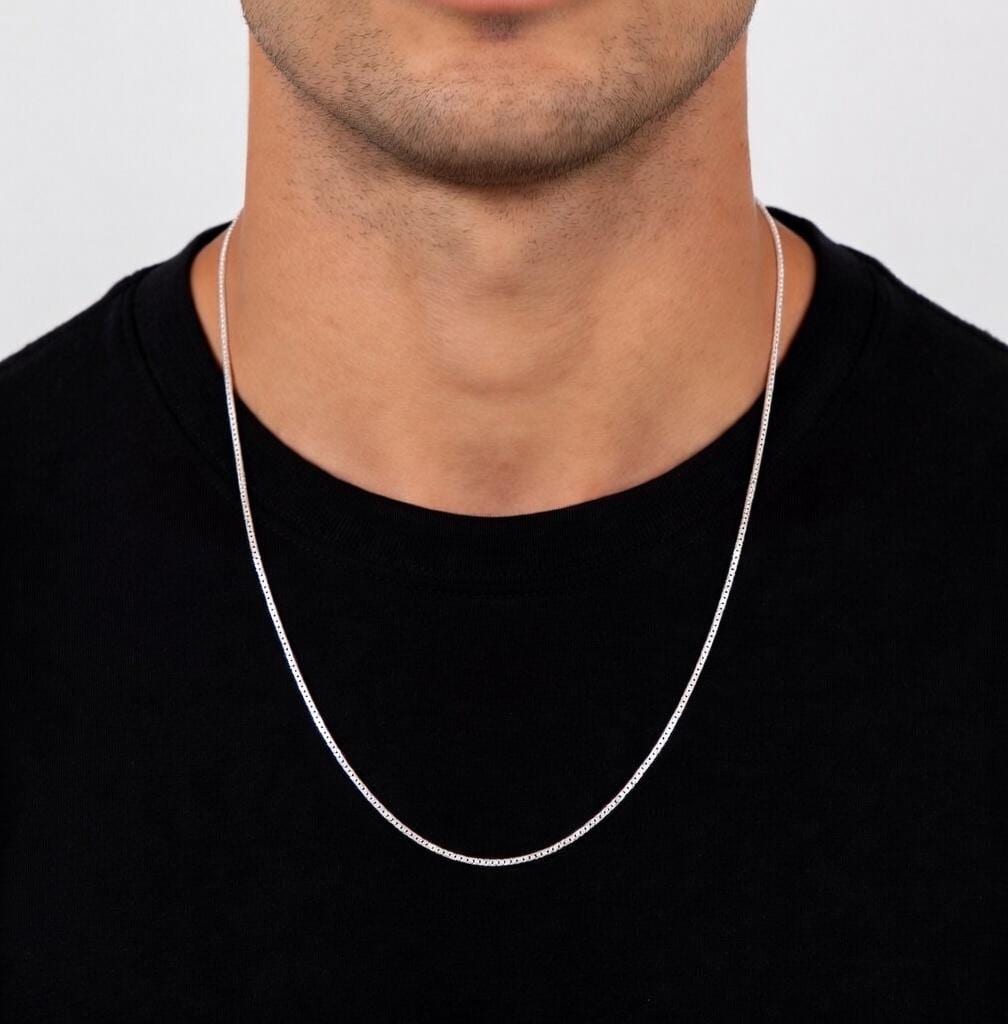
Sterling silver does tarnish. Exposure to air and sulphur compounds in the atmosphere causes a chemical reaction that darkens the surface over time, especially in humid environments or with frequent contact with perfume and skincare products. This is worth separating clearly from the kind of wear that affects vermeil.
Tarnish is a surface reaction that polishes away, restoring the original shine underneath. It’s not a loss of material.
Plating wear on vermeil is different: once the gold layer has thinned through friction, there’s less of it, and no amount of polishing brings it back.
That distinction is why sterling silver suits chains and pieces meant for constant, unthinking daily wear. Tarnish is an annoyance you clean off with a cloth; it never eats into the structure of the piece itself.
Pro Tip: Keep a polishing cloth in a drawer near where you take your jewellery off at night. Thirty seconds of light polishing every week or two prevents tarnish from ever building up enough to need proper cleaning.
Vermeil vs sterling silver side by side
| Factor | Gold vermeil | Sterling silver |
|---|---|---|
| Appearance | Warm gold tone, mimics solid gold closely | Cool, bright white-silver tone |
| Durability / lifespan | Gold layer wears at contact points; re-plating needed periodically | Structurally durable for decades; tarnish is cosmetic only |
| Price / value | Mid-range; cheaper than solid gold, pricier than basic plating | Generally lower upfront cost; fewer ongoing maintenance costs |
| Hypoallergenic properties | Silver core is generally kinder to sensitive skin than brass-based plating | Hypoallergenic when nickel-free; verify via hallmark and alloy disclosure |
| Maintenance | Avoid water, chemicals, perfume; store separately to protect the coating | Polish occasionally; more tolerant of everyday contact |
| Repairability | Can be re-plated to restore the gold finish | Can be professionally polished; no coating to renew |
The appearance gap is the first thing most buyers notice, and it’s entirely a matter of taste rather than quality. Neither tone is objectively better.
Durability tells a more practical story. Vermeil’s thicker gold layer and silver core make it more durable than cheap plating, and it can be re-plated when the coating eventually thins, which is a real advantage over disposable costume jewellery. But “re-platable” also means “will eventually need re-plating”, and that’s a maintenance cost sterling silver simply doesn’t carry.
Run the numbers over five years and sterling silver usually comes out ahead on cost-per-year, even though vermeil’s photo isn’t necessarily higher at checkout. A re-plating service every two to three years adds up, while a sterling piece needs nothing but a cloth and occasional attention.
On hypoallergenic grounds, vermeil’s gold surface and silver core generally sit well with sensitive skin, and genuine sterling silver with no nickel content is one of the more skin-friendly metals available at this price point.
How to care for vermeil and sterling silver properly
- Take vermeil off before water contact. Showering, swimming and washing up all accelerate wear on the gold layer, so remove vermeil pieces first.
- Apply perfume and lotion before putting jewellery on, not after. Chemicals in these products react with and dull the gold coating faster than daily wear alone.
- Store vermeil separately from other metals, ideally in a soft pouch, to stop it scratching against harder pieces in a jewellery box.
- Polish sterling silver with a proper silver cloth, not a household cleaning product, and store it with anti-tarnish strips if you’re not wearing it regularly.
- Watch for thinning or a patchy colour change on vermeil as your cue that it’s time to consider re-plating; watch for a dull, uneven grey on silver as your cue for a proper polish or a professional clean.
Pro Tip: If you wear a chain every single day and rarely take it off, sterling silver will almost always outlast vermeil in that specific routine, purely because it has no coating to wear through.
Choosing between vermeil and sterling silver: a shopping checklist
Match the material to how you’ll actually wear it, not just how it looks in a photo. If you want a gold look for occasional wear, special outfits, or gifting, vermeil delivers that warmth at a fraction of solid gold’s price. If you want one piece you can put on and forget for years at a time, sterling silver is the lower-maintenance choice.
Before you buy either, check for:
- A clear 925 stamp on sterling pieces, and a 925 stamp plus karat marking on vermeil
- A stated gold thickness on vermeil listings (2.5 microns or above)
- The seller’s re-plating and warranty policy in writing, not just implied
- A returns policy that gives you time to test the piece against your actual skin and routine
If your budget stretches further, gold-filled jewellery is worth a mention. It uses a mechanically bonded gold layer that’s substantially thicker than vermeil’s electroplated coating, often lasting 20 to 30 years, though it sits at a higher price than vermeil and lacks silver’s tarnish-and-polish simplicity. Solid gold sits above both, with no coating to wear through at all, but at a price point that puts it out of reach for most everyday chains.
Allergy risks beyond the hypoallergenic label
“Hypoallergenic” on a listing isn’t a guarantee, and the risk profile differs between the two materials in ways worth understanding before you buy.
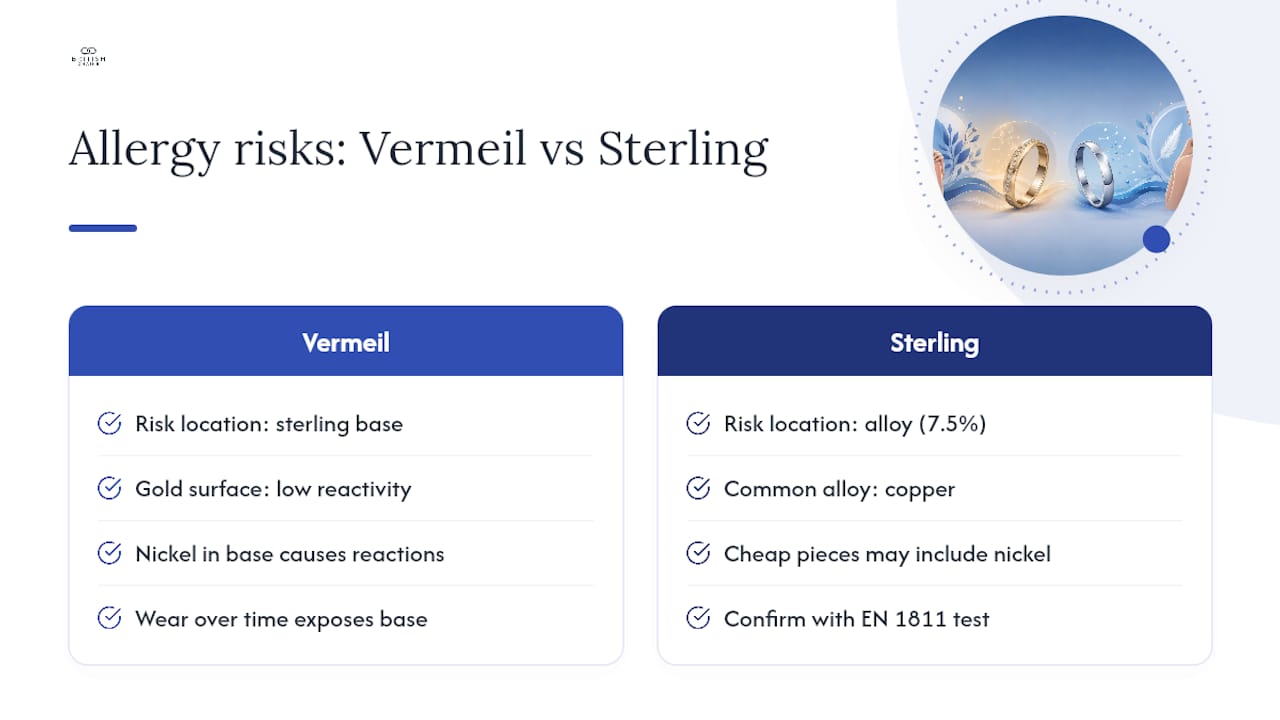
With vermeil, the gold surface itself rarely causes reactions, since pure gold is one of the least reactive metals against skin. The risk sits underneath, in the sterling silver base and whatever alloy metals it contains. If that base includes nickel, which some cheaper vermeil pieces do to add hardness, reactions can develop once the gold layer thins enough to expose the metal beneath it. A piece that felt fine for the first year can start irritating skin in year two, purely because the coating has worn down.
Sterling silver carries a related but distinct risk. The 7.5% of the alloy that isn’t pure silver is where problems usually originate. Reputable makers use copper, which very few people react to, but lower-quality sterling can include nickel as a cheaper alternative. Checking a piece against the EN 1811 nickel-release standard is the most reliable way to confirm a genuinely skin-safe alloy before you buy, particularly if you’ve had reactions to costume jewellery in the past.
Either way, the fix is the same: buy from a seller who discloses the alloy composition, not just the headline purity figure.
Sourcing and ethics: where the gold and silver come from
Both materials trace back to mining, and neither industry is free of environmental and ethical complications worth knowing about.
Silver mining is often a byproduct of copper, lead and zinc extraction, which means its environmental footprint is frequently tied to demand for those other metals rather than silver alone.
Gold’s supply chain carries its own well-documented concerns, from the environmental damage to large-scale mining to labour conditions in smaller, less regulated operations in some regions. Because vermeil uses only a thin gold layer rather than a solid gold structure, it requires considerably less raw gold per piece than an equivalent solid-gold item, which is a genuine environmental point in its favour even though it’s rarely the reason buyers choose it.
For shoppers who care about this, the practical question to ask a retailer is straightforward: where does the metal come from, and is any of it recycled? A supplier willing to answer clearly is usually a supplier worth trusting on the rest of their claims too.
Publisher perspective: why hallmarked sterling silver is our starting point
Britishchains works with hallmarked sterling silver because the 925 stamp is independently checkable, not just a claim on a product page. Customers consistently choose sterling chains for the same reason they’d choose a reliable pair of boots over a fashionable one: they want to put it on and stop thinking about it. Vermeil has its place for occasional gold-toned pieces, but for daily wear and gifting, we’d always point you towards checking the hallmark and the product detail page before you buy.
— British
A hallmarked sterling chain worth a look
If sterling silver’s low-maintenance case has landed for you, a genuine 925 chain is the obvious next step, and the 2mm Sterling Silver 925 Curb Chain Necklace is a straightforward example of what to look for.
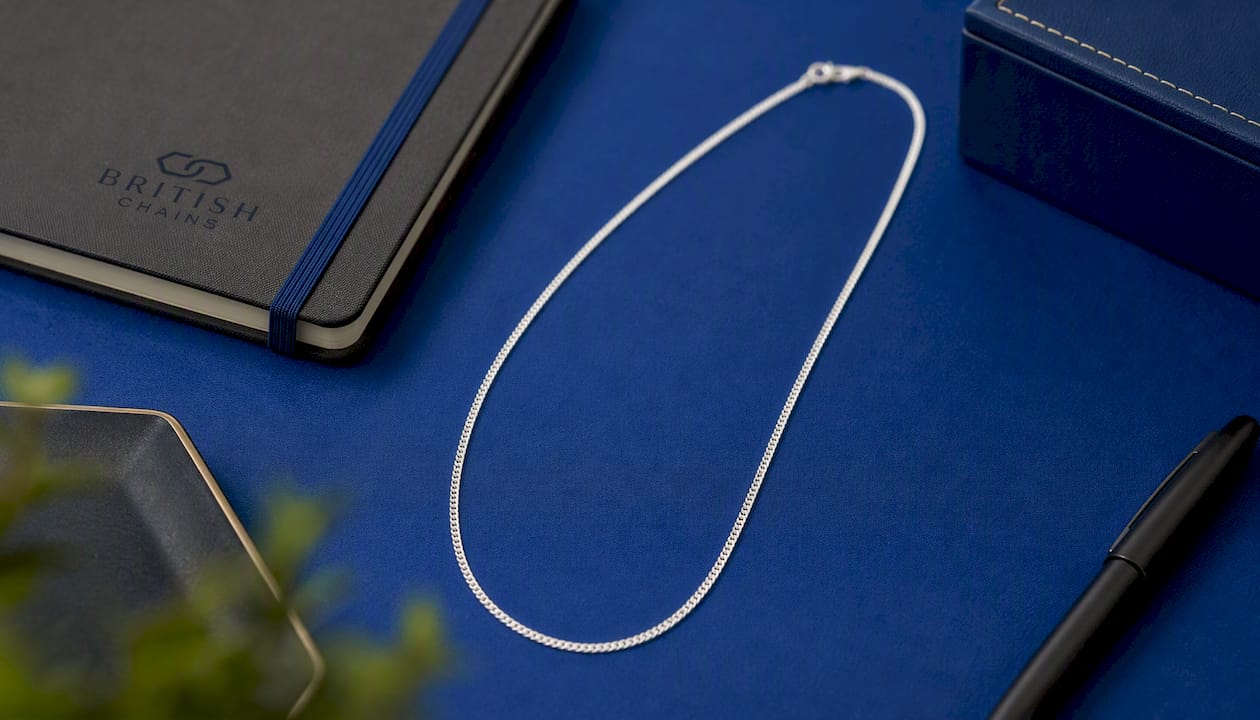
It’s polished, diamond-cut, available across eight lengths, and built for exactly the kind of daily wear this comparison has been making the case for: unisex, hallmarked, and free of any coating that needs renewing down the line. The full sterling silver necklace range covers curb, rope, Figaro and snake styles if a curb chain isn’t quite your shape, and the curb chain collection specifically shows the width and length options side by side. Sterling silver bracelets are also worth a look if you’re building out a matching set, available in the bracelet collection. Every piece carries the 925 stamp described throughout this guide, so check the product page, confirm the hallmark, and choose the length that suits how you actually wear a chain day to day.
Sources
Standards and guidance referenced above come from independent jewellery guides on vermeil thickness, sterling composition, and hallmark verification. Always check a seller’s own stamps and returns policy before buying.
- Is Gold Vermeil Worth It? Honest 2026 Review – AJLuxe
- Gold Vermeil vs Sterling Silver vs Gold-Filled – Mint & Lily
- What Is Better, Gold Vermeil or Sterling Silver? – ORE Jewelry
- What is Gold Vermeil? Complete 2026 Guide to Vermeil Jewelry Standards – Adina Eden
FAQ
How long will vermeil last?
With careful wear and avoiding water, chemicals and perfume, vermeil can last several years before the gold layer visibly thins. Because it uses a sterling silver base, it can be re-plated rather than replaced once wear starts to show, which extends its usable life considerably.
Is vermeil worth buying?
Vermeil is worth it if you want a genuine gold surface at a lower price than solid gold and you’re prepared for occasional re-plating. It sits between standard plating and gold-filled or solid gold in both durability and cost, which makes it a reasonable middle ground rather than a compromise.
Can I shower with vermeil?
It’s best to remove vermeil before showering, swimming or exercising, since water and skincare chemicals accelerate wear on the gold coating. Sterling silver tolerates incidental water contact far better, which is one reason it suits everyday wear more comfortably than vermeil.
Is vermeil considered real gold?
The surface layer on vermeil is genuine gold, often 10K to 18K, not an imitation or a gold-coloured alloy. It isn’t solid gold throughout, though, so it doesn’t carry the resale or melt value of a solid gold piece.
Does Britishchains sell vermeil or sterling silver?
Britishchains specialises in hallmarked 925 sterling silver chains, necklaces and bracelets rather than vermeil. Current pricing and available styles are listed on the product pages themselves.


