

Protect sensitive skin: verify sterling silver with EN 1811
Sterling silver does not automatically contain nickel, but nothing stops a manufacturer from adding it. If you’re nickel-sensitive, don’t rely on a “925” stamp alone: ask the seller for the alloy breakdown, or look for a piece verified against EN 1811 nickel-release testing or an XRF alloy report before you buy.
TL;DR:
- Most sterling silver does not inherently contain nickel, but manufacturers can add it to alloy or plating, especially for budget jewelry or certain hardware parts.
- Nickel can contact skin through the alloy, plating underlays, or separate components like clasps and posts, which may be made with nickel-containing alloys.
- Genuine allergy to silver is rare; most reactions are caused by nickel sensitivity, presenting as redness, itching, or rash at contact points within hours or days.
- Verifying nickel content requires requesting alloy breakdowns, EN 1811 testing, or XRF reports; home test kits are unreliable for plated surfaces.
- For sensitive skin, opt for nickel-free sterling, Argentium silver, or jewelry with confirmed alloy tests, and consider re-plating or barrier methods if irritation occurs.
Table of Contents
- What sterling silver actually is, and why the alloy matters
- How nickel actually gets onto your skin
- Can sterling silver actually trigger an allergic reaction?
- How to check whether a piece contains nickel before you buy it
- Safer silver choices and a buying checklist
- What to do if a piece is already irritating your skin
- How Britishchains approaches nickel-safe sterling
- Shop hallmarked sterling chains built with sensitive skin in mind
- Why “hypoallergenic” claims deserve healthy scepticism
- Sources
What sterling silver actually is, and why the alloy matters
That’s the only part that’s fixed. The remaining 7.5% is where things get interesting, because nothing legally requires that portion to be copper, even though copper is the traditional and most common choice.
Pure silver is too soft to hold its shape in a chain or clasp, so makers alloy it with harder metals. Copper is the classic option because it keeps the warm tone of silver while adding strength. Some manufacturers use zinc instead, and premium brands increasingly use germanium in place of copper, which is the basis of Argentium silver, a tarnish-resistant alloy that’s typically formulated to be nickel free by design.
The trouble is that nickel is cheap and hardens an alloy effectively, which gives some manufacturers, particularly those producing high volumes of budget jewellery, an incentive to include it. A 925 hallmark tells you the silver content is genuine.
How nickel actually gets onto your skin
There are three realistic routes, and only one of them involves the silver itself.
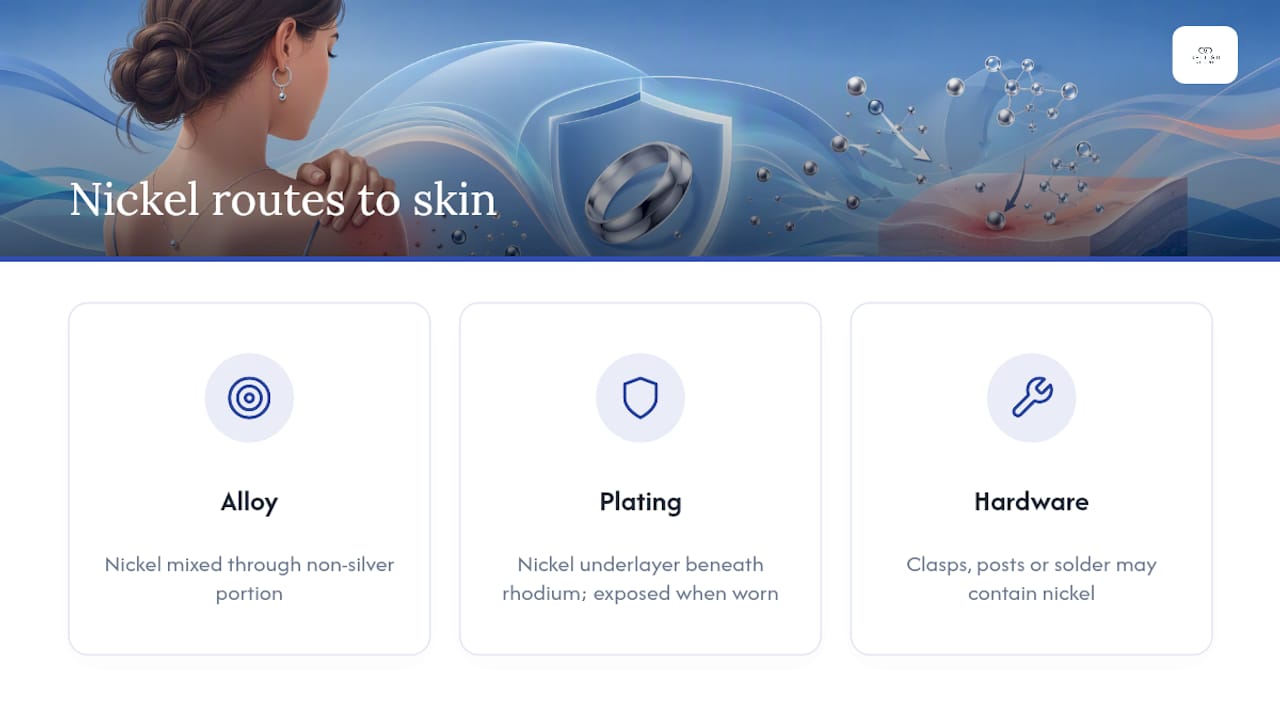
The first is the alloy. If a manufacturer has used nickel to bulk out the non-silver portion for hardness or a particular colour cast, it’s mixed right through the metal and every bit of skin contact touches it.
The second route is plating, and it’s the one most people never think about. Rhodium plating is popular because it gives silver a bright, white, tarnish-resistant finish, but that plating is often applied over a nickel underlayer to help the rhodium adhere. Wear the plating down, which happens with everyday contact and cleaning, and the nickel beneath is exposed directly to your skin.
The third is the hardware: clasps, earring posts, jump rings, and solder joins. These small components are frequently made or plated separately from the main chain, sometimes with a cheaper, nickel-containing alloy even when the chain itself is genuinely nickel-free. A necklace can pass every test on its main links and still cause a rash from the clasp sitting against the back of your neck.
Can sterling silver actually trigger an allergic reaction?
Yes, but the silver is rarely to blame. Genuine allergy to pure silver is rare. What people call a “silver allergy” is almost always nickel allergy, triggered by the nickel content hiding in the alloy or plating rather than the metal you think you’re wearing.
The pattern is easy to recognise. Contact dermatitis from nickel shows up as redness, itching, small bumps, or dry, scaly patches exactly where the metal touches skin. Earlobes are the classic site, but wrists under a bracelet clasp and the strip of neck skin behind a necklace clasp are just as common. Reactions can appear within hours of putting a piece on, or build gradually over days of repeated wear.
If a reaction persists, spreads, or keeps recurring with different pieces of jewellery, it’s worth asking a GP or dermatologist about patch testing rather than guessing. Patch testing confirms nickel sensitivity directly and rules out other causes, such as a reaction to soap residue trapped under a chain or a skin condition unrelated to metal at all.
How to check whether a piece contains nickel before you buy it
Verification works best in a specific order, from easiest to most rigorous.
- Ask the seller directly. A legitimate retailer should be able to tell you the composition of the non-silver 7.5%, and whether any plating involves a nickel underlayer. If they can’t answer, treat that as a red flag rather than an oversight.
- Look for an EN 1811 result. This is the recognised European test for nickel release from jewellery, measuring how much nickel actually migrates from the metal onto skin under simulated wear conditions rather than just confirming nickel’s presence in the alloy.
- Request an XRF report where possible. X-ray fluorescence spectrometry gives a precise breakdown of every metal in the alloy, including trace nickel that other methods might miss.
- Be cautious with home test kits. Consumer nickel spot-test kits are widely sold, but they can produce false negatives, especially on plated surfaces where the nickel sits beneath a coating the swab never reaches.
Pro Tip: If a listing uses the word “hypoallergenic” with no test data behind it, treat it as marketing rather than proof. It’s an unregulated term, so the only claim worth trusting is one backed by an actual EN 1811 or XRF result you can ask to see.
Safer silver choices and a buying checklist
If nickel sensitivity is a genuine concern, three alternatives are worth knowing before you shop. Argentium silver swaps some of the copper for germanium, which cuts tarnishing significantly and is typically formulated nickel-free, though it usually costs more than standard sterling. Explicitly labelled nickel-free sterling keeps the traditional 92.5/7.5 ratio but restricts the alloy to copper or zinc, giving you standard sterling’s durability without the risk.
Nickel allergy is one of the most common causes of contact dermatitis linked to metal jewellery, which is exactly why buying with a checklist beats buying on trust alone.
Before you commit to a piece, run through this:
- Confirm the “nickel-free” claim in writing, not just on the product photo.
- Ask whether an EN 1811 or XRF report is available for that specific piece, not just the product line.
- Check the clasp, posts, and any soldered joins separately. These are the parts most likely to differ from the main chain.
- Buy from a hallmarked, traceable seller rather than an anonymous marketplace listing with no verifiable origin.
- Favour sellers who disclose sourcing, since mass-produced, low-cost sterling is where nickel substitution is most common.
What to do if a piece is already irritating your skin
A reaction doesn’t automatically mean the jewellery has to go straight in the drawer forever. Start with the quickest fix and work up from there if it doesn’t hold.
- Coat the contact points. A thin layer of clear nail polish or a dedicated jewellery sealant creates a barrier between nickel and skin, though it wears off within days or weeks and needs reapplying.
- Replace the findings. Swapping a clasp or earring post for titanium or niobium, both genuinely hypoallergenic, often solves the problem without retiring the whole piece.
- Ask about re-plating. A jeweller can sometimes reapply rhodium plating without a nickel underlayer, which removes the hidden exposure route entirely.
- Stop wearing it if the reaction spreads or won’t settle. Persistent redness, swelling, or broken skin is a sign to see a GP or dermatologist rather than keep experimenting with home fixes.
Pro Tip: Nail polish barriers fail fastest at pressure points, so check the underside of a clasp or the back of an earring post first. That’s usually where the coating wears through before anywhere else.
How Britishchains approaches nickel-safe sterling
The retailer works with hallmarked sterling silver and discloses material composition on its product pages rather than leaving buyers to guess. If nickel sensitivity is a concern, customers can request further verification details before ordering, and product care guidance is available for anyone wanting to reduce wear-related risk. Treat sensitivity as a genuine buying requirement, not an inconvenience.
Shop hallmarked sterling chains built with sensitive skin in mind
Once you know what to check for, choosing the right chain gets a lot easier, and this retailer offers hallmarked, disclosed-alloy sterling rather than an anonymous listing with no backstory.
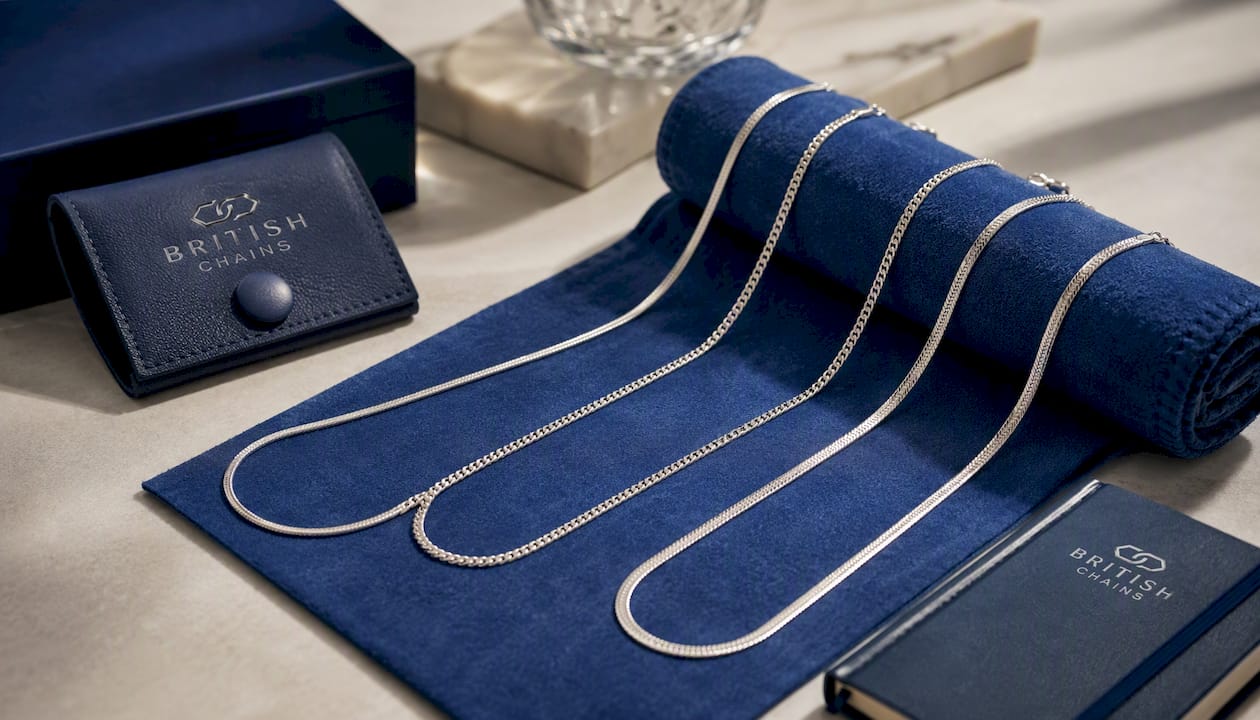
Three options suit different everyday needs. The snake chain necklace is a polished, hypoallergenic marketed pick suited to daily wear where a smooth, low-snag finish matters against the skin. The curb chain necklace works as a genuinely unisex, durable option available across eight lengths, making it a solid choice if you want one chain that fits several people or occasions. The herringbone chain necklace suits anyone who wants a flatter, more fluid drape, ideal as a pendant base or worn on its own.
Every product page lists the hallmark and material details, and you’re welcome to ask for further alloy verification before you order. Browse the full range of silver chains to compare lengths and finishes, or head straight to a product page to check availability for your size.
Why “hypoallergenic” claims deserve healthy scepticism
Most guidance on this topic treats “hypoallergenic sterling silver” as a fixed category you can shop for, and that framing undersells the problem. It’s not a category. It’s a claim, and claims vary wildly in how much evidence sits behind them.
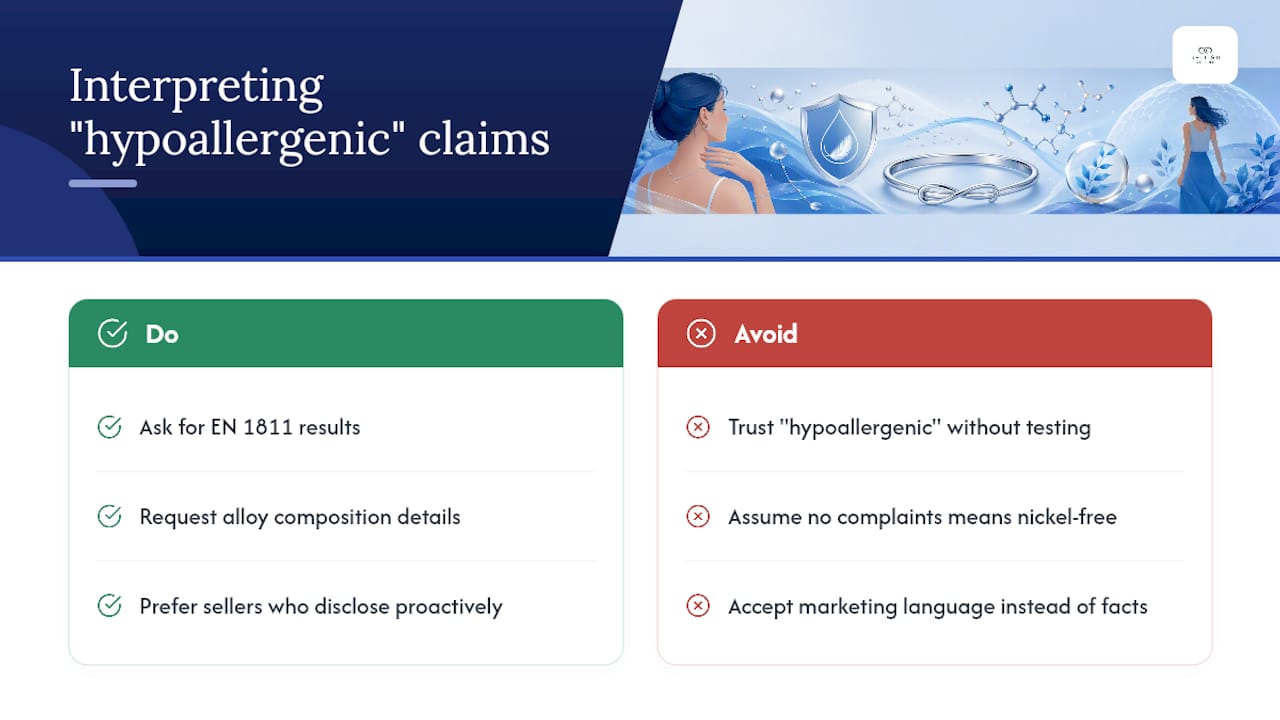
The uncomfortable truth is that the jewellery industry has no binding definition of “hypoallergenic.” A seller can print it on a listing with zero testing behind the words, and plenty do. That’s not necessarily dishonest; a maker might genuinely believe their sterling is nickel-free because they’ve never had a complaint, which is a very different thing from having an EN 1811 result in hand.
What actually protects a nickel-sensitive buyer isn’t a label. Sellers who disclose alloy composition without being asked are telling you something about how they operate, not just what’s in that particular chain. Sellers who dodge the question, or answer with marketing language instead of a material fact, are telling you something too.
— British
This article is general information, not a substitute for advice from a qualified doctor. Consult a qualified healthcare professional about your own circumstances before acting on anything here.
Sources
For readers who want to check the underlying standards directly: GOV.UK’s guidance on jewellery metal content covers what a hallmark does and doesn’t confirm. Cleveland Clinic’s overview of nickel allergy explains symptoms and patch testing. ScienceInsights’ breakdown of nickel in sterling silver covers EN 1811 testing and plating practices in more depth.


