

How to tell if a necklace is real silver: quick UK checks
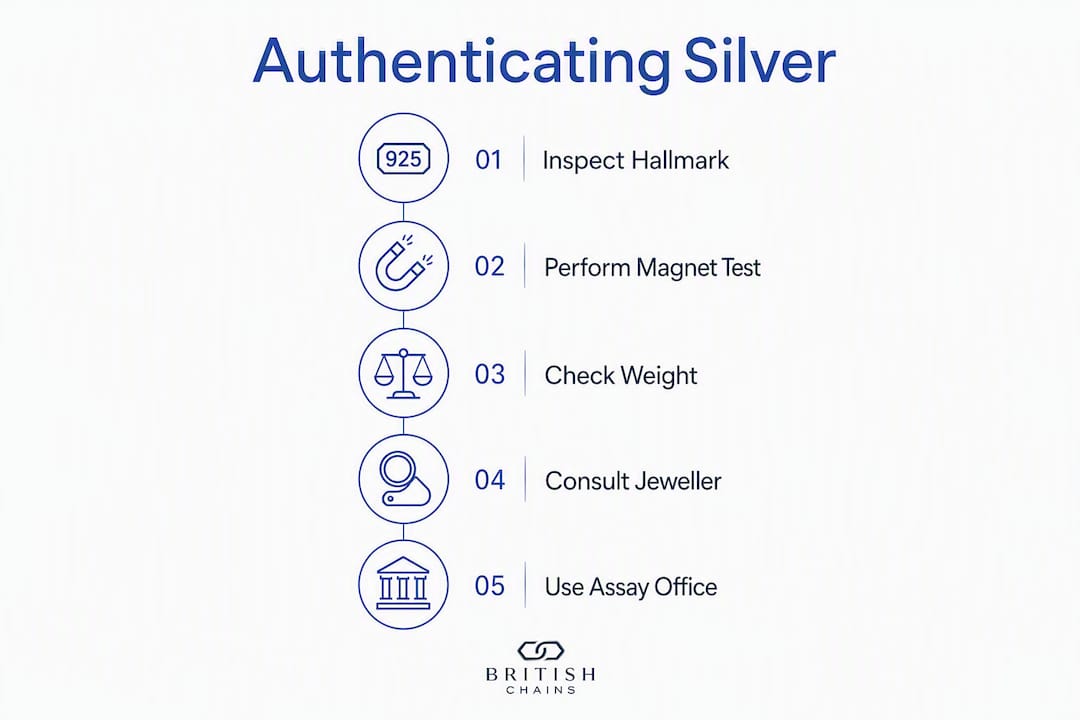
The fastest way to check a necklace is real silver: look for a stamp marked with the sterling silver purity indicator or a lion passant hallmark, then hold a magnet to the chain. If it sticks, it is not sterling. If it does not stick, run one more test before deciding. A practical testing workflow recommends starting with hallmarks, then non-destructive physical checks, and reserving acid or professional testing for anything valuable.
- Check for a hallmark (925, “sterling”, or a lion passant mark on the clasp or pendant back)
- Run the magnet test (a strong fridge magnet works; genuine silver is non-magnetic)
- If the piece is valuable or results conflict, take it to a registered UK jeweller or Assay Office
If both the hallmark and magnet test pass, you have reasonable grounds to believe the necklace is genuine sterling. If either fails, or if the piece is worth more than a few pounds to you, keep reading.
Table of Contents
- How do you find and read hallmarks on a silver necklace?
- What safe tests can you do at home to check a silver necklace?
- Which chemical tests work, and which are too risky to try at home?
- What methods do jewellers and assay offices use to test silver?
- How do you verify a hallmark in the UK, and when should you use an Assay Office?
- Quick checklist: the steps to run right now
- Why you can trust this guidance: Britishchains’ expertise in hallmarked silver
- Key takeaways
- The case for taking hallmarking seriously
- Hallmarked sterling silver necklaces from Britishchains
- Useful sources and where to learn more
How do you find and read hallmarks on a silver necklace?
Hallmarks are the most efficient first check when identifying real silver jewellery. On a necklace, look at the clasp tag, the bail (the loop that holds a pendant), the pendant back, or the inner surface of any large links. The stamp is often tiny, so use a 10× loupe or your phone’s macro camera to read it clearly.
Common UK marks and what they mean:
- A mark indicating sterling silver purity, typically denoting high silver content. The most common mark on modern necklaces.
- Sterling — the word itself is a valid UK mark on older or American-made pieces.
- Lion passant — the walking lion symbol used by the four UK Assay Offices (London, Birmingham, Edinburgh, Sheffield). Seen on hallmarked British pieces alongside the maker’s mark and date letter.
- 950 / 999 — higher-purity silver (Britannia silver and fine silver respectively), less common in everyday chains.
- 800, 835, 900 — continental European fineness marks. Genuine silver, but lower purity than sterling. Not uncommon on antique or imported pieces.
The hallmarked sterling silver necklace guide on Britishchains explains where these marks typically appear on different chain styles, which is worth a look if you are unsure where to search on your specific piece.
The limits of hallmarks: a stamp can be added to a plated item. Counterfeit punches exist, and a blurry or shallow impression is a warning sign. A genuine hallmark is struck cleanly with sharp edges; a fake often looks smudged or raised rather than recessed. Treat a hallmark as a necessary signal, not final proof.
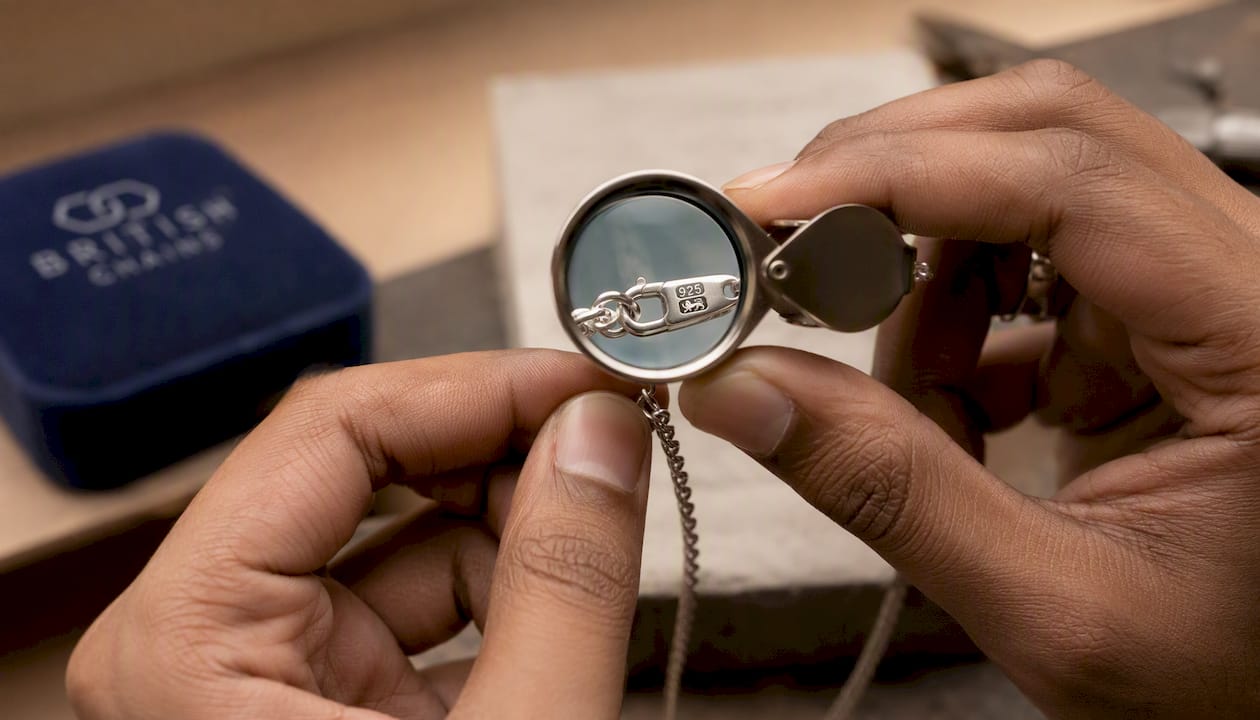
Pro Tip: Use your phone’s camera in portrait mode or a cheap 10× jeweller’s loupe to zoom in on the stamp. A genuine punch has crisp, defined edges. If the mark looks like a blob or the numbers are uneven in depth, treat it with scepticism.
What safe tests can you do at home to check a silver necklace?
No single home test is conclusive. Run two or three together and the picture becomes much clearer.
-
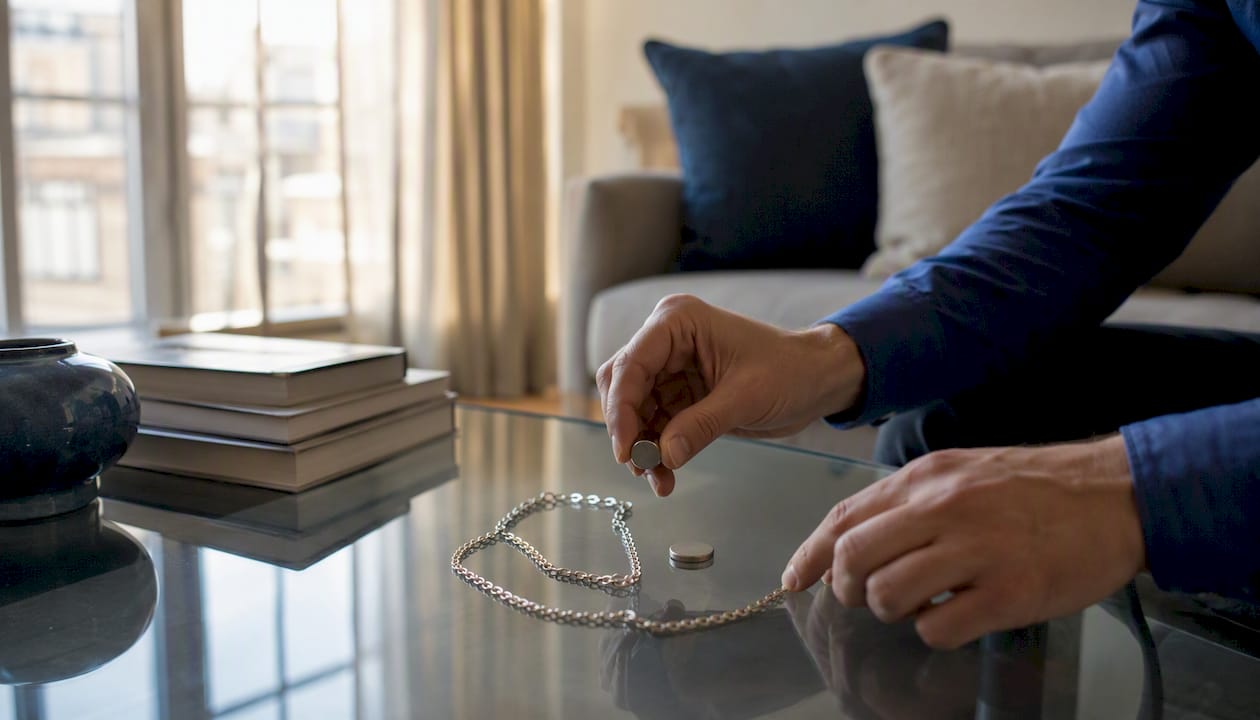
Magnet test. Hold a strong magnet (a neodymium magnet is best, but a fridge magnet will catch obvious fakes) close to the chain. Genuine sterling silver shows no magnetic attraction. If the chain pulls toward the magnet, it contains ferrous metal and is not solid silver. Bear in mind: many base metals such as brass, copper, and aluminium are also non-magnetic, so passing this test only rules out iron-based fakes. A short visual demo shows how clasps can sometimes be magnetic while the main chain body is not, which is worth watching before you draw conclusions.
-
Ice/thermal test. Place an ice cube on the necklace and watch. Silver conducts heat far more efficiently than common base metals, so on genuine silver the ice often begins melting noticeably within 30–60 seconds. On copper or brass, the melt is slower. This is a supporting clue, not a verdict on its own.
-
Sound (ring) test. Tap a pendant or a larger link with your fingernail or a small coin. Real silver produces a clear, high-pitched ringing note that sustains briefly. A dull thud suggests a denser base metal or a hollow construction.
-
Visual and tarnish test. Natural tarnish is a positive indicator: genuine silver reacts with sulphur in the air to form a dark patina over time. Rub the necklace with a white cloth; a faint black residue is reassuring. No tarnish at all after months of wear can mean rhodium plating or a non-silver base. For more on how sterling behaves over time, the Britishchains article on whether sterling silver tarnishes easily is a useful read.
-
Weight and density check. Silver’s density is around 10.49 g/cm³, which makes genuine pieces feel noticeably heavier than aluminium or hollow base-metal fakes of the same size. Hold the necklace in your palm and compare it with a similar-looking piece of known metal. For higher confidence, a specific gravity test (weighing the piece dry, then submerged in water) gives a numerical result you can compare against silver’s known density.
| Test | Confidence | Invasive? | What a pass means |
|---|---|---|---|
| Magnet | Low–medium | No | Rules out ferrous metals only |
| Ice/thermal | Medium | No | Consistent with high conductivity |
| Sound (ring) | Low | No | Suggests solid metal construction |
| Tarnish/cloth rub | Medium | No | Consistent with silver oxidation |
| Weight/density | Medium–high | No | Consistent with silver’s density |
| Specific gravity | High | No (careful handling) | Strong numerical match to silver |
Combine at least two non-destructive tests before drawing a conclusion. Pairing the magnet test with a density or weight check gives good confidence for everyday purchases without risking any damage to the piece.
Which chemical tests work, and which are too risky to try at home?
Some people try household chemicals first. The results are mixed.
Baking soda and vinegar: rubbing a paste of baking soda and water onto silver can remove tarnish, and some guides suggest that a reaction (fizzing) with vinegar indicates real silver. In practice, many metals react similarly to mild acids, so this tells you very little. It is not a reliable test for silver authenticity.
Nitric acid test: this is accurate. A drop of nitric acid on exposed silver produces a creamy-white reaction; on base metals or silver plate over copper, the reaction turns green or grey. The problem is that nitric acid is corrosive, requires careful handling, and will damage the surface of the piece. The touchstone method is far safer: a jeweller rubs the piece on a black touchstone, then applies acid to the streak rather than to the jewellery itself. This gives a reliable colour reaction without touching the piece with acid directly.
File and acid: filing a small area to expose the core metal, then applying acid, is the most conclusive home method. It will, however, leave a permanent mark. Only consider this on a piece of no sentimental or resale value, and only if you are comfortable handling acid safely.
The rule of thumb: if the piece is worth more than the cost of a professional test, do not use acid at home. A jeweller’s touchstone test costs very little and gives a far more reliable result without risking damage to something you care about.
Do not attempt: flame tests (can melt or discolour the piece), bleach tests (corrosive and unreliable), or any test that requires removing significant metal. These are not worth the risk when professional options are accessible and affordable.
What methods do jewellers and assay offices use to test silver?
Professional testing removes the guesswork entirely. Three methods are used most often.
- XRF (X-ray fluorescence): a non-destructive scan that gives an elemental readout of the metal’s composition, usually expressed as a percentage. It is the gold standard for non-invasive testing. Electronic silver testers vary in reliability, but XRF from a reputable lab is the most accurate non-destructive option available. One caveat: thick plating can skew surface readings, so a skilled operator will interpret results carefully.
- Electronic resistivity testers: handheld devices that measure electrical conductivity. Silver has a distinctive conductivity profile, and these testers give a quick pass/fail result. They are faster than XRF but less precise, and some struggle to distinguish between thick silver plate and solid silver.
- Touchstone and controlled acid: a jeweller rubs the piece on a touchstone and applies a calibrated acid solution to the streak. The colour reaction identifies the metal type and approximate purity. Reliable, low-cost, and widely available at high-street jewellers.
When you take a piece in, ask for the silver percentage in the result rather than a simple yes or no. A written result showing 92.5% or above confirms sterling. Costs vary by method and provider, but a basic touchstone test at a high-street jeweller is often free or a few pounds; XRF from a specialist lab typically costs more but provides a formal certificate if needed.
How do you verify a hallmark in the UK, and when should you use an Assay Office?
The UK has four active Assay Offices: the Goldsmiths’ Company Assay Office in London, the Birmingham Assay Office, the Edinburgh Assay Office, and the Sheffield Assay Office. Each publishes hallmark charts and identification guides on its website.
Step-by-step verification:
- Photograph the hallmark under good light, using macro mode. Capture the full stamp clearly.
- Compare your photo against the official hallmark charts published by the UK Assay Offices. Look for the fineness mark (925), the sponsor’s mark (maker’s initials), and the assay office symbol.
- If the mark matches a recognised pattern and the physical tests pass, you have strong grounds for confidence.
- If the mark is unclear, inconsistent, or absent, take the piece to a registered jeweller or directly to an Assay Office.
When to request a formal assay:
- You have inherited a piece and want written confirmation of its metal content.
- You suspect a seller has misrepresented the metal.
- You are buying or selling at a price where authenticity matters financially.
- You want a piece hallmarked for resale in the UK (a legal requirement for silver items over a certain weight sold commercially).
Bring clear photographs, any proof of purchase, and the piece itself. The Assay Office will advise on turnaround times and fees.
Quick checklist: the steps to run right now
Follow this order for the most efficient result.
- Inspect for a hallmark. Use a loupe or macro camera. Look at the clasp, bail, and pendant back.
- Run the magnet test. Any attraction means it is not solid silver.
- Do the ice/thermal check. Place an ice cube on the piece and watch for rapid melting.
- Check for tarnish. Rub with a white cloth; a faint black mark is a good sign.
- Weigh and compare. Does it feel dense for its size? Lightweight pieces warrant more scrutiny.
- Photograph any stamps. Compare against UK Assay Office hallmark charts online.
Decision guide:
- Hallmark present + magnet fails + ice melts quickly + tarnish present: likely genuine sterling. Keep the photos as a record.
- Hallmark present but magnet attracts, or no tarnish after months of wear: uncertain. Seek professional verification.
- No hallmark + lightweight + no tarnish: likely plated or base metal. A jeweller can confirm quickly.
For anything of real value or sentimental importance, a professional test is always worth the small cost.
Why you can trust this guidance: Britishchains’ expertise in hallmarked silver
Britishchains specialises exclusively in hallmarked sterling silver chains and necklaces made in the UK. Every piece sold carries a 925 hallmark, and product pages list weights so buyers can cross-reference the density of what they receive against what was described.
- Guidance here draws on UK Assay Office hallmarking standards, published jewellery testing methodology, and the practical checks used by professional jewellers.
- Britishchains’ product listings include hallmark images and gram weights, giving buyers verifiable data points before and after purchase.
- The buying authentic sterling silver online guide on the Britishchains site covers what to ask sellers and what product page evidence to save.
Pro Tip: When you receive a Britishchains necklace, check the clasp tag first. The 925 stamp is struck there on every piece. Compare the listed weight on the product page against your kitchen scales — a significant discrepancy is worth querying.
Key takeaways
Hallmarks combined with at least one physical test give the most reliable at-home verdict on whether a necklace is genuine sterling silver.
| Point | Details |
|---|---|
| Start with hallmarks | Look for 925, “sterling”, or a lion passant on the clasp or pendant back using a loupe. |
| Combine two home tests | Pair the magnet test with the ice or density check for better confidence than either alone. |
| No single test is conclusive | Plated items can pass individual checks; conflicting results mean seek professional verification. |
| Use UK Assay Offices for certainty | XRF or a touchstone acid test from a registered jeweller gives a reliable, documented result. |
| Britishchains pieces are hallmarked | Every Britishchains necklace carries a 925 stamp and a listed weight, giving you verifiable proof from purchase. |
The case for taking hallmarking seriously
The conventional wisdom is that a 925 stamp settles the question. It does not, and treating it as final proof is the single most common mistake buyers make. A stamp is easy to add to a plated chain; what it cannot fake is the combination of correct density, genuine tarnish behaviour, and a clean, deeply struck punch that matches official assay office records.
What actually matters is the convergence of evidence. A piece that has a sharp, correctly formatted hallmark, feels appropriately heavy, shows natural tarnish after a few months, and passes the magnet test is almost certainly genuine. A piece that has a stamp but is featherlight, never tarnishes, and has a blurry punch is almost certainly not.
The other thing people underestimate is how accessible professional testing is in the UK. A high-street jeweller with a touchstone can give you a reliable answer in minutes, often at no charge. The UK Assay Offices offer formal testing and hallmarking services that provide written evidence. For anything worth more than a modest sum, that route is far more sensible than relying on a home acid test that risks damaging the piece.
Home checks are genuinely useful for everyday decisions. They are not a substitute for an assay when the stakes are real.
Hallmarked sterling silver necklaces from Britishchains
If the checks above have left you wanting a necklace you never have to question, Britishchains sells hallmarked 925 sterling silver chains with weights listed on every product page. No guesswork, no ambiguous stamps. Every piece is made in the UK to British hallmarking standards, so the 925 mark on the clasp is the real thing.
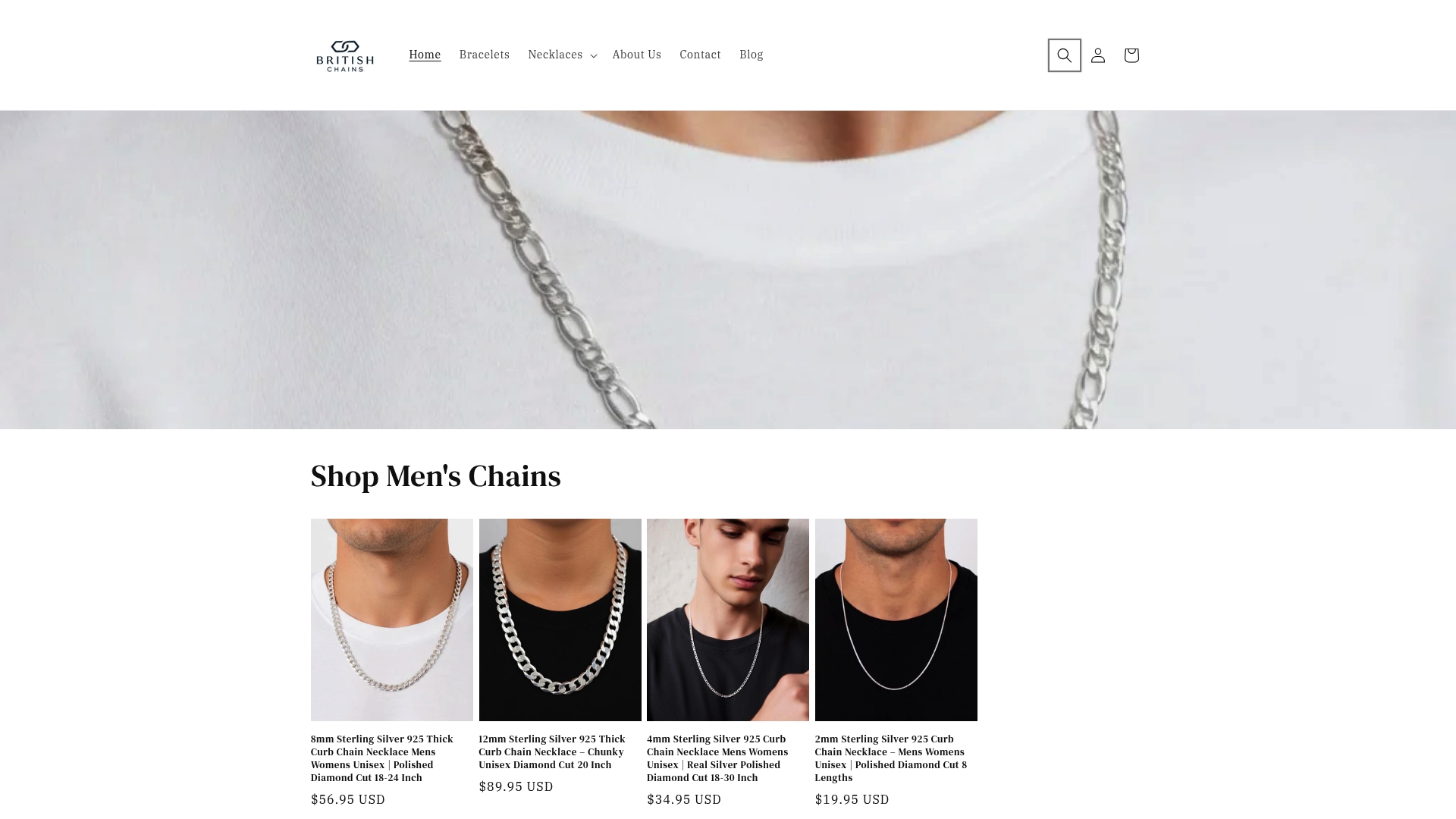
Browse the full collection and check the gram weight against your own scales when the chain arrives. That is the simplest verification of all.
Useful sources and where to learn more
- Goldsmiths’ Company Assay Office London — hallmark charts, identification guides, and formal assay services for UK buyers.
- How to Tell If an Item Is Made of Real Silver — a clear overview of the magnet, tarnish, and stamp checks.
- How To Tell If Your Silver Is Real — covers sterling marks, household tests, and what to look for when shopping.
- Hallmarked sterling silver necklace guide — Britishchains — detailed explanation of hallmark placement on UK chains and necklaces.
For hallmark identification specifically, the UK Assay Office websites are the authoritative starting point. For a professional test, contact a registered jeweller or book directly with one of the four UK Assay Offices.


