

What is mid-range silver quality? Your 2026 guide
Mid-range silver quality is defined by 925 sterling silver, an alloy composed of 92.5% pure silver and 7.5% other metals, typically copper, engineered to balance durability, beauty, and affordability. This is not a marketing category. It is a centuries-old metallurgical standard recognised by hallmarking authorities across the world, including the UK Assay Offices. For anyone exploring silver jewellery options, understanding this grade is the single most useful thing you can do before spending a penny. It separates genuine quality from imitation, and practical wearability from decorative novelty.
What is mid-range silver quality and why is 925 sterling the benchmark?
925 sterling silver earns its position as the standard for mid-range silver quality because of one engineering fact: the 92.5% silver ratio is an optimum balance of strength and lustre tested over nine centuries. Pure silver is too soft to hold its shape in rings, chains, or bracelets under daily use. Adding 7.5% copper, or occasionally zinc or germanium, transforms the metal into something genuinely wearable.
The Mohs hardness of sterling silver sits at approximately 3.5 to 4, compared to roughly 2.5 for pure silver. That difference is significant in practice. A pure silver chain will deform under moderate stress. A sterling silver chain holds its structure through daily wear, clasping, and the occasional knock.
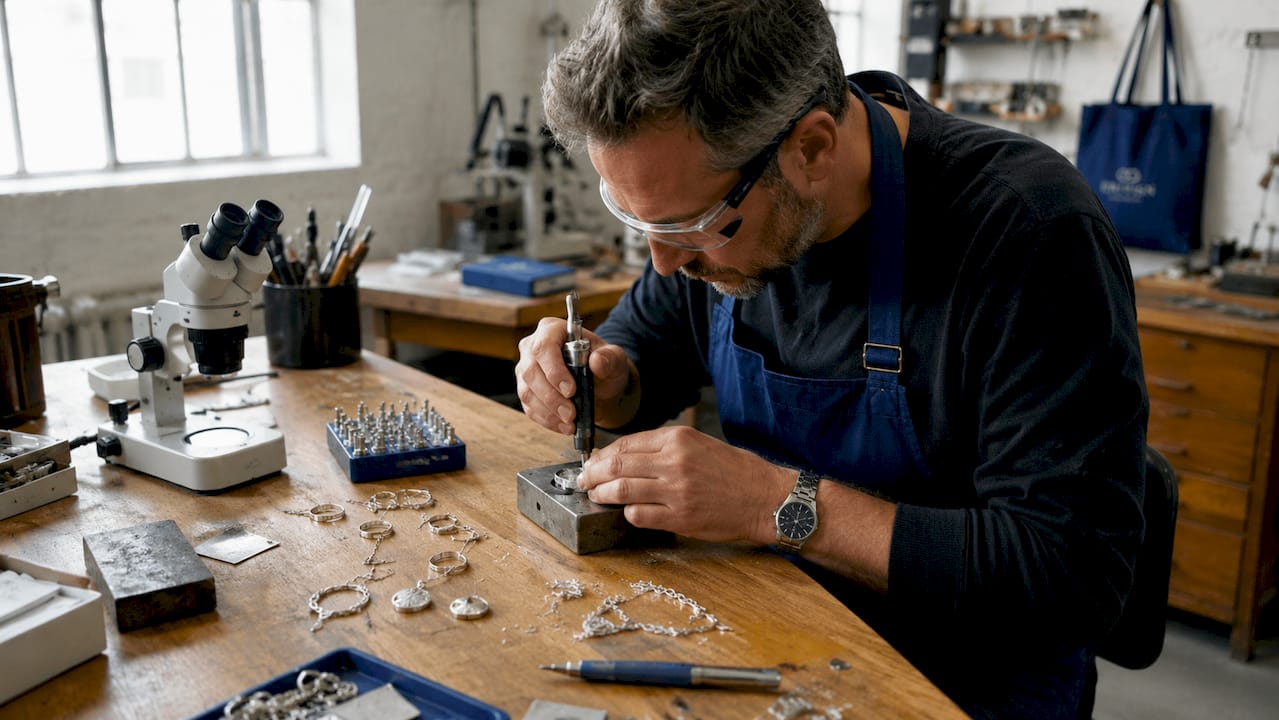
The historical origin of this standard traces back to 12th-century England, where it was used for currency and trade goods. That longevity is not accidental. Jewellers, metallurgists, and trade bodies have validated this ratio across hundreds of years of practical use. The UK hallmarking system, administered by the four Assay Offices in London, Birmingham, Sheffield, and Edinburgh, formally certifies sterling silver pieces to this standard today.
The key properties that define this grade are:
- Purity: 92.5% fine silver content
- Hardness: Mohs 3.5–4, sufficient for rings, chains, and settings
- Colour: Cool white lustre characteristic of high-purity silver
- Workability: Suitable for complex designs including thin chains and stone settings
- Hallmark: Stamped 925 or S925, certifiable by a UK Assay Office
Pro Tip: When buying sterling silver in the UK, look for the lion passant hallmark alongside the 925 stamp. The lion passant is the British guarantee of sterling standard and is only applied after independent assay.
How does mid-range silver quality compare with other silver types?
Understanding silver quality explained properly means placing 925 sterling in context with the full range of silver grades. Each grade involves a different trade-off between purity, hardness, cost, and practicality.
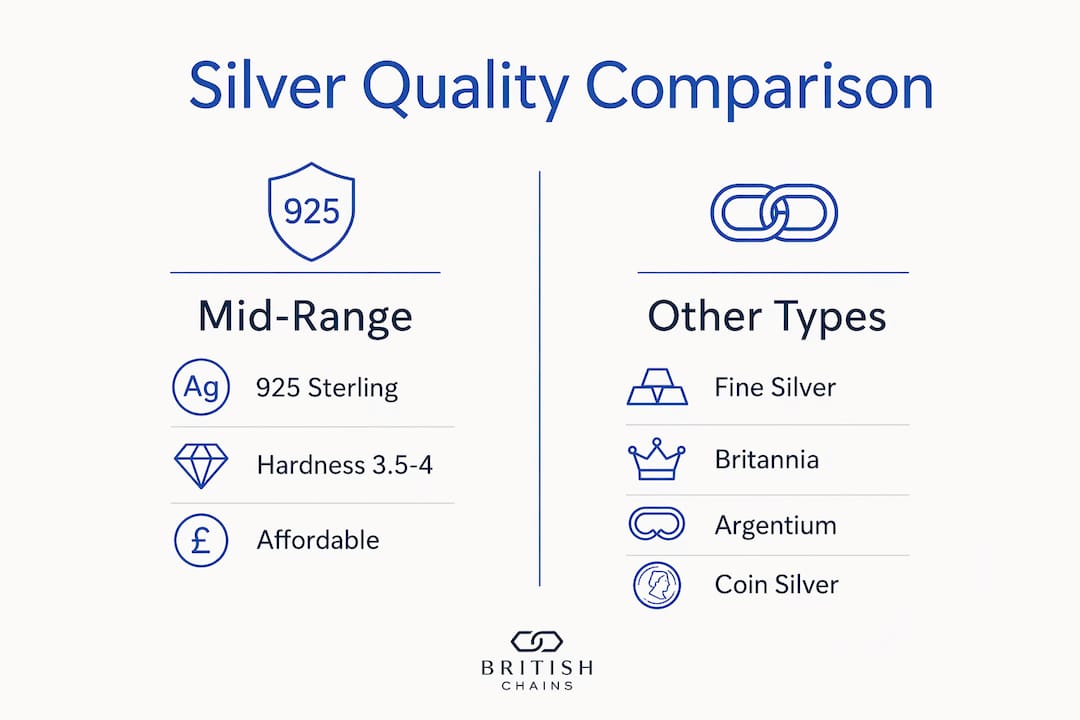
Fine silver carries a purity of 99.9% and is the closest you can get to pure elemental silver in jewellery form. It has a brighter, whiter appearance than sterling. The problem is hardness. Pure silver has poor durability under mechanical stress, making it unsuitable for rings or chains worn daily. Fine silver is used mainly for pendants, earrings, and pieces that see minimal physical stress.
Britannia silver sits at 95.84% purity, a standard introduced in England in 1697 to protect coinage silver from being melted down by silversmiths. It is softer than sterling and rarely used for mainstream jewellery today. You will encounter it mainly in antique British silverware.
Coin silver is an older American standard at approximately 90% purity. It predates the widespread adoption of the 925 standard and is now largely historical. You will not find it in new jewellery.
Argentium silver is a modern alloy that replaces some copper with germanium. Argentium offers higher tarnish resistance than standard sterling but costs considerably more. It sits above mid-range in both price and performance, making it a premium choice rather than an everyday one.
Silver-plated items are not silver jewellery in any meaningful sense. They consist of a base metal, often brass or copper, coated with a thin layer of silver. The silver coating wears off quickly during daily use, revealing the base metal beneath. This affects both appearance and longevity. A plated item may look identical to sterling on day one. By month six, the difference is visible.
The table below summarises where each grade sits across the key factors buyers care about:
| Silver type | Purity | Hardness | Tarnish resistance | Suitable for daily wear |
|---|---|---|---|---|
| Fine silver | 99.9% | Low | High | No |
| Britannia silver | 95.84% | Low | Moderate | No |
| 925 sterling silver | 92.5% | Moderate | Moderate | Yes |
| Argentium silver | 93.5%+ | Moderate | High | Yes |
| Coin silver | ~90% | Moderate | Moderate | Limited |
| Silver-plated | Trace | N/A | Low | No |
For most buyers, 925 sterling sits in the practical sweet spot. It is purer than coin silver, harder than fine silver, and far more durable than plated alternatives. If you want to understand sterling versus silver-plated necklaces in more detail, the distinction matters enormously for long-term value.
Common misconceptions about silver hallmarks and quality
The biggest misunderstanding buyers carry is that a hallmark guarantees quality. It does not. Hallmarks like S925 certify metal composition but say nothing about how the piece was made. A poorly soldered chain with the correct 925 stamp is still a poorly made chain.
A hallmark only guarantees alloy composition, not craftsmanship. Manufacturing defects such as porosity, weak solder joints, and uneven polishing all affect how long a piece lasts. These defects are invisible to the hallmarking process. They show up after a few months of wear.
A second common error is treating silver-plated items as equivalent to sterling. The two are structurally different. Sterling silver is a solid alloy throughout its entire cross-section. Silver-plated jewellery will eventually reveal the base metal as the coating wears away. No amount of polishing restores a plated surface once it has worn through.
Here is what to check beyond the stamp when assessing genuine mid-range quality:
- Solder joints: Look for clean, even joins with no visible gaps or excess material
- Surface finish: Consistent polish with no pitting or rough patches
- Weight: Sterling silver has a satisfying density. Plated items often feel lighter than expected
- Hallmark clarity: A genuine UK hallmark is crisp and legible, not blurred or stamped unevenly
- Seller provenance: Buy from retailers who can confirm UK assay certification
Pro Tip: If you are buying online, check whether the retailer lists the specific Assay Office that hallmarked the piece. UK-hallmarked sterling silver from a named Assay Office is the clearest proof of authentic mid-range quality.
Learning how to tell if a silver chain is real before you buy saves you from costly mistakes.
What practical benefits does mid-range silver quality offer?
Mid-tier silver value is most clearly demonstrated in everyday wearability. Sterling silver holds its shape under the mechanical stress of daily use in a way that fine silver simply cannot. The 7.5% copper addition induces work hardening, enabling structural resilience in complex designs like thin chains and prong settings. This matters most in the jewellery types people actually wear every day: chains, rings, and bracelets.
The affordability of 925 sterling silver is a genuine advantage. Mid-range sterling silver pieces typically retail across a wide price band depending on design complexity, weight, and craftsmanship. This positions sterling silver well below gold and platinum while still offering a genuine precious metal with lasting value. You are not buying a disposable fashion item. You are buying something that, with basic care, lasts for decades.
Maintenance is straightforward. Sterling silver tarnishes over time due to the copper content reacting with sulphur compounds in the air. This is not damage. It is a surface reaction that polishes off easily with a silver cloth or mild cleaning solution. Fine silver tarnishes less, but its softness makes it far more prone to scratching and deformation. For everyday silver necklaces, sterling is the practical choice.
The jewellery types best suited to this grade include:
- Chains and necklaces: Curb, rope, Figaro, box, and herringbone styles all benefit from sterling’s hardness
- Rings: Sterling holds stone settings and maintains shape under finger pressure
- Bracelets: Withstands the flex and stress of wrist movement better than fine silver
- Pendants: Provides a durable bail and frame for stones or enamel work
For guidance on whether this grade suits your lifestyle, the question of sterling silver for everyday wear is worth reading before you decide.
Key takeaways
Mid-range silver quality is defined by 925 sterling silver, which delivers the best balance of hardness, purity, and affordability for everyday jewellery wear.
| Point | Details |
|---|---|
| 925 is the standard | Sterling silver at 92.5% purity is the recognised mid-range grade for durable fine jewellery. |
| Hardness matters | Sterling silver scores 3.5–4 on the Mohs scale, making it far more suitable for daily wear than pure silver. |
| Hallmarks have limits | A 925 stamp certifies composition only. Craftsmanship quality determines how long a piece actually lasts. |
| Plated is not sterling | Silver-plated items wear through to base metal. Solid sterling silver can be polished and maintained indefinitely. |
| Argentium costs more | Argentium silver offers better tarnish resistance but sits above mid-range in price. Sterling remains the practical choice. |
Why I think most buyers underestimate what the 925 stamp actually means
Most buyers treat the 925 stamp as a quality ceiling rather than a quality floor. They assume that because sterling silver is not the purest form of silver, it is somehow a compromise. That reading is wrong, and it costs people money.
The 92.5% ratio exists because it works. Not because it was the cheapest option available, but because centuries of practical use confirmed it as the point where silver retains its beauty while gaining the structural properties needed for real jewellery. Fine silver is purer. It is also too soft to hold a stone setting or survive a year of daily wear without visible damage. Argentium is better in one specific way, tarnish resistance, but it costs more and the difference in maintenance is marginal for most wearers.
What buyers consistently underestimate is the role of craftsmanship. I have seen 925-stamped pieces fall apart within months because the solder joints were weak. I have also seen sterling chains worn daily for fifteen years without a single failure. The alloy was identical. The difference was entirely in how the piece was made. A hallmark tells you what the metal is. It tells you nothing about whether the person who made it knew what they were doing.
My honest advice: spend less time comparing purity percentages and more time assessing the maker. Look at the finish, the weight, the join quality. Buy from a retailer who can tell you where the piece was hallmarked and who made it. That information separates a piece that lasts from one that disappoints.
— British
Britishchains sterling silver: quality you can verify
Britishchains designs and retails hallmarked 925 sterling silver chains and necklaces crafted in the UK, covering styles from curb and rope to Figaro and herringbone. Every piece carries a genuine 925 hallmark, and the focus on British craftsmanship means the quality goes beyond the stamp.
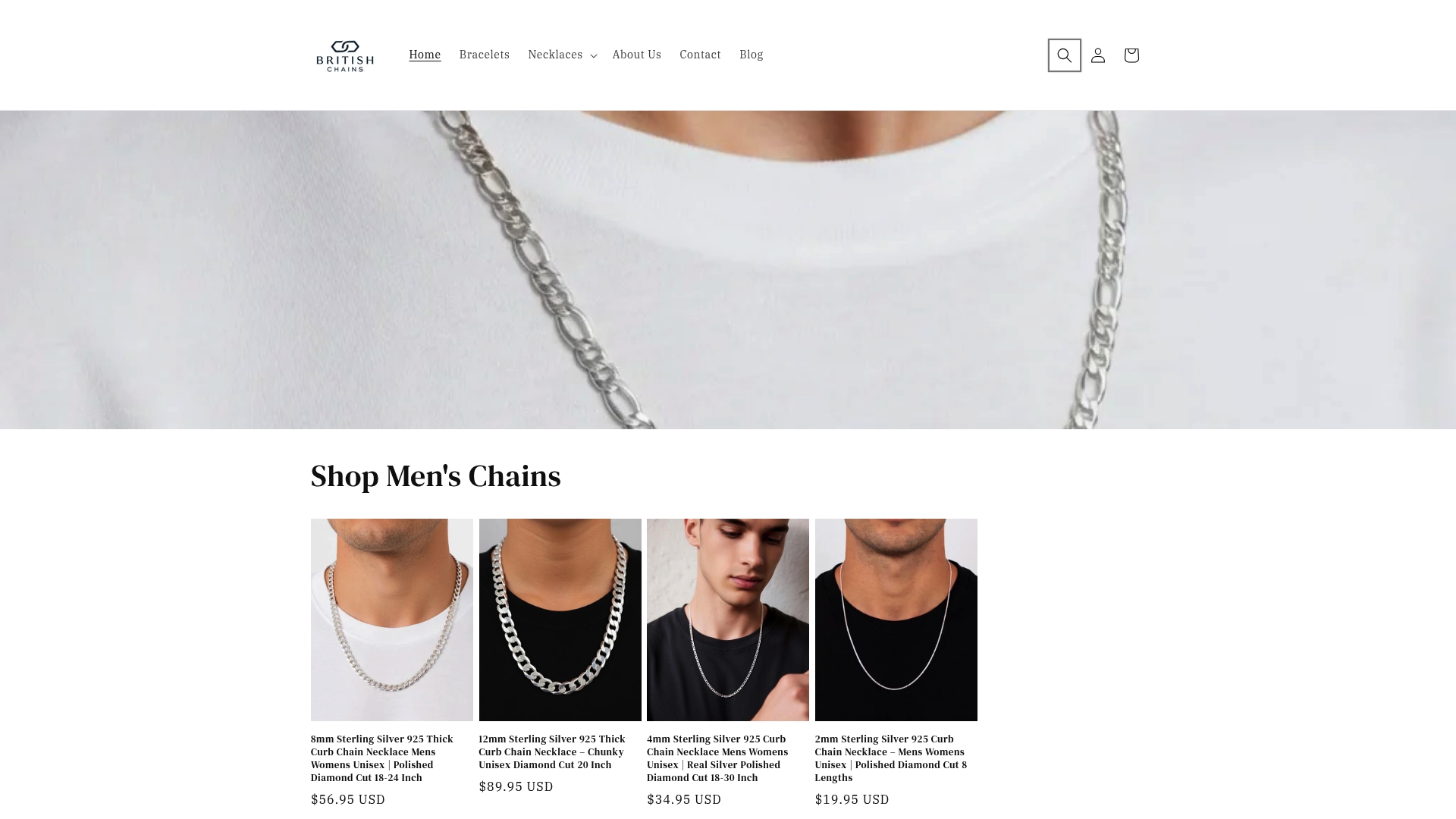
If you want sterling silver that holds up to daily wear without sacrificing appearance, the 8mm Figaro chain necklace is a strong starting point, built from solid 925 sterling with a polished diamond-cut finish. For a lighter, everyday option, the 2mm curb chain offers the same hallmarked quality in a versatile unisex style. Both are available in multiple lengths and backed by the craftsmanship standards that mid-range silver quality actually requires.
FAQ
What does mid-range silver quality mean?
Mid-range silver quality refers to 925 sterling silver, an alloy of 92.5% pure silver and 7.5% other metals, typically copper. It is the standard grade for durable, everyday fine jewellery that balances purity, strength, and affordability.
Is 925 sterling silver real silver?
Yes. 925 sterling silver is a genuine precious metal alloy containing 92.5% pure silver. The remaining 7.5% is added to increase hardness, as pure silver is too soft for most jewellery applications.
What is the difference between sterling silver and silver-plated jewellery?
Sterling silver is a solid alloy throughout the entire piece and can be polished and maintained for decades. Silver-plated jewellery has only a thin surface coating of silver over a base metal, which wears away with daily use.
Does a 925 hallmark guarantee quality?
A 925 hallmark certifies that the metal composition meets the sterling silver standard. It does not guarantee craftsmanship quality. Factors such as solder joints, surface finish, and design construction determine how long a piece lasts in practice.
How do I care for mid-range sterling silver jewellery?
Polish sterling silver regularly with a soft silver cloth to remove tarnish caused by the copper content reacting with air. Store pieces in an airtight pouch or box when not in use to slow the tarnishing process.


