

What Does 925 Sterling Silver Mean? Quality, Value & Care
If you've ever flipped over a silver necklace or bracelet and noticed a tiny "925" stamp, you've probably asked yourself: what does 925 sterling silver mean? It's a fair question, and understanding the answer matters, especially before you spend money on jewelry. That three-digit number is a quality marker, and it tells you exactly what you're getting.
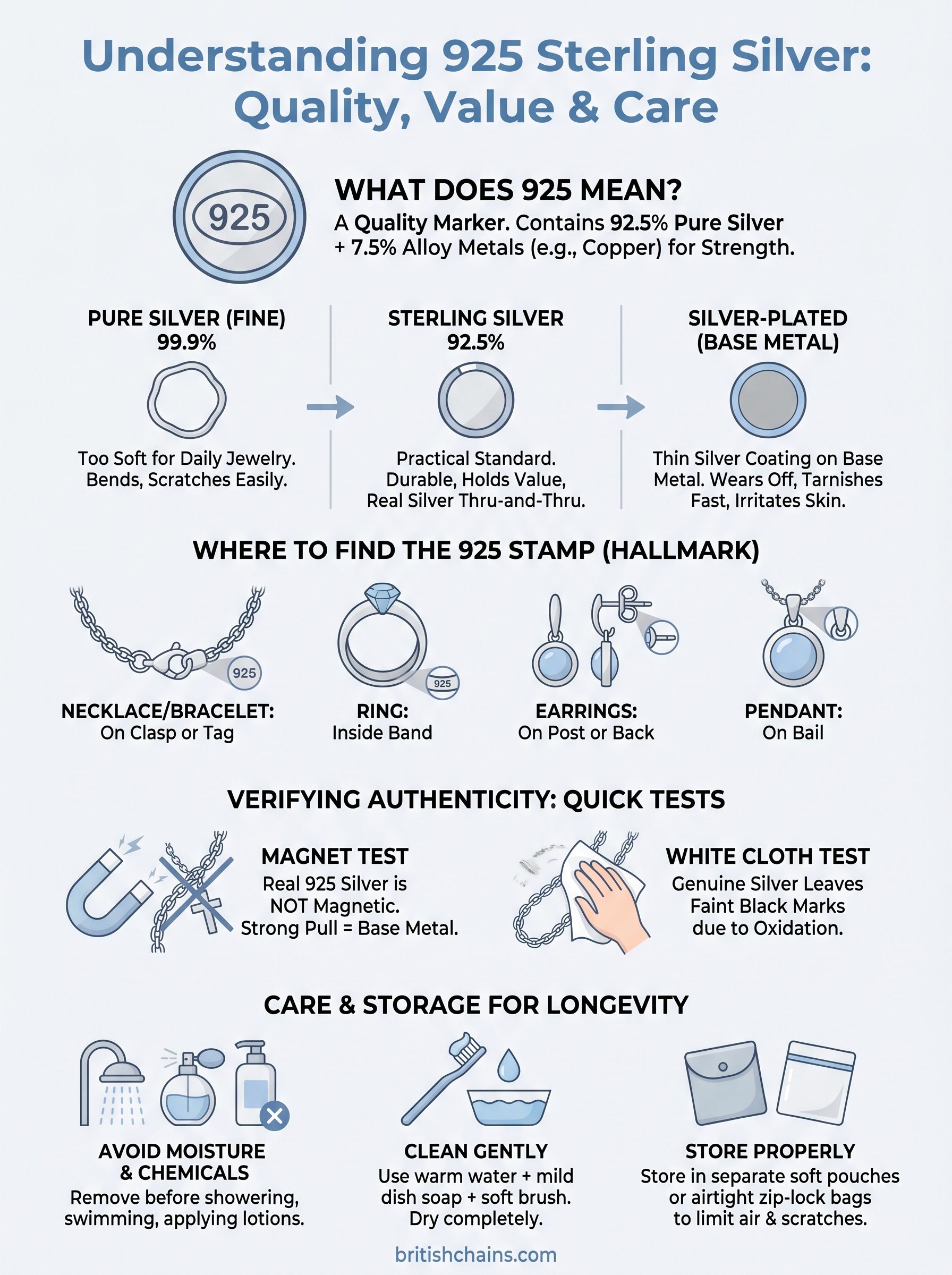
Here's the short version: 925 means the piece contains 92.5% pure silver, mixed with 7.5% other metals (usually copper) for added strength and durability. Pure silver on its own is too soft for everyday jewelry, it bends, scratches, and wears down fast. Sterling silver fixes that problem while keeping the look and feel of real silver jewelry.
At British Chains, every chain necklace and bracelet we sell is made from genuine 925 sterling silver. So we're not just writing about this topic, we work with this material daily and know it inside out. Below, we'll break down the composition, explain how to verify authenticity, cover what affects value, and share practical care tips to keep your silver looking sharp for years.
What 925 sterling silver means on jewelry
The number 925 is a purity hallmark, a small stamp that tells you exactly how much silver is in a piece of jewelry. When you see it, you know the metal is 92.5% pure silver by weight, with the remaining 7.5% made up of other metals. This combination has a formal name: sterling silver. The hallmark and the name go hand in hand, so when you ask what does 925 sterling silver mean, you're really asking about a globally recognized quality standard that applies to both necklaces and bracelets alike.
The silver-to-alloy ratio explained
Pure silver, also called fine silver, carries a purity grade of 999 or 99.9% silver. It looks stunning, but it's also extremely soft. You could bend a fine silver ring with your fingers, and it would scratch just from sitting in a drawer. To solve that, jewelers mix in a small percentage of base metals, most commonly copper, which adds strength and hardness without changing the color or appearance in any meaningful way. The 92.5/7.5 ratio hits a practical sweet spot: durable enough for daily wear, pure enough to hold real value.
Sterling silver's 92.5% purity level has been the recognized jewelry standard in many countries for centuries, and the 925 stamp is its modern proof.
Where the 925 stamp appears
Jewelry makers stamp 925 directly onto the metal, usually in a spot that's small and discreet. The mark is tiny by design, but it's always present on a genuine piece. Use a magnifying glass if you're struggling to find it.
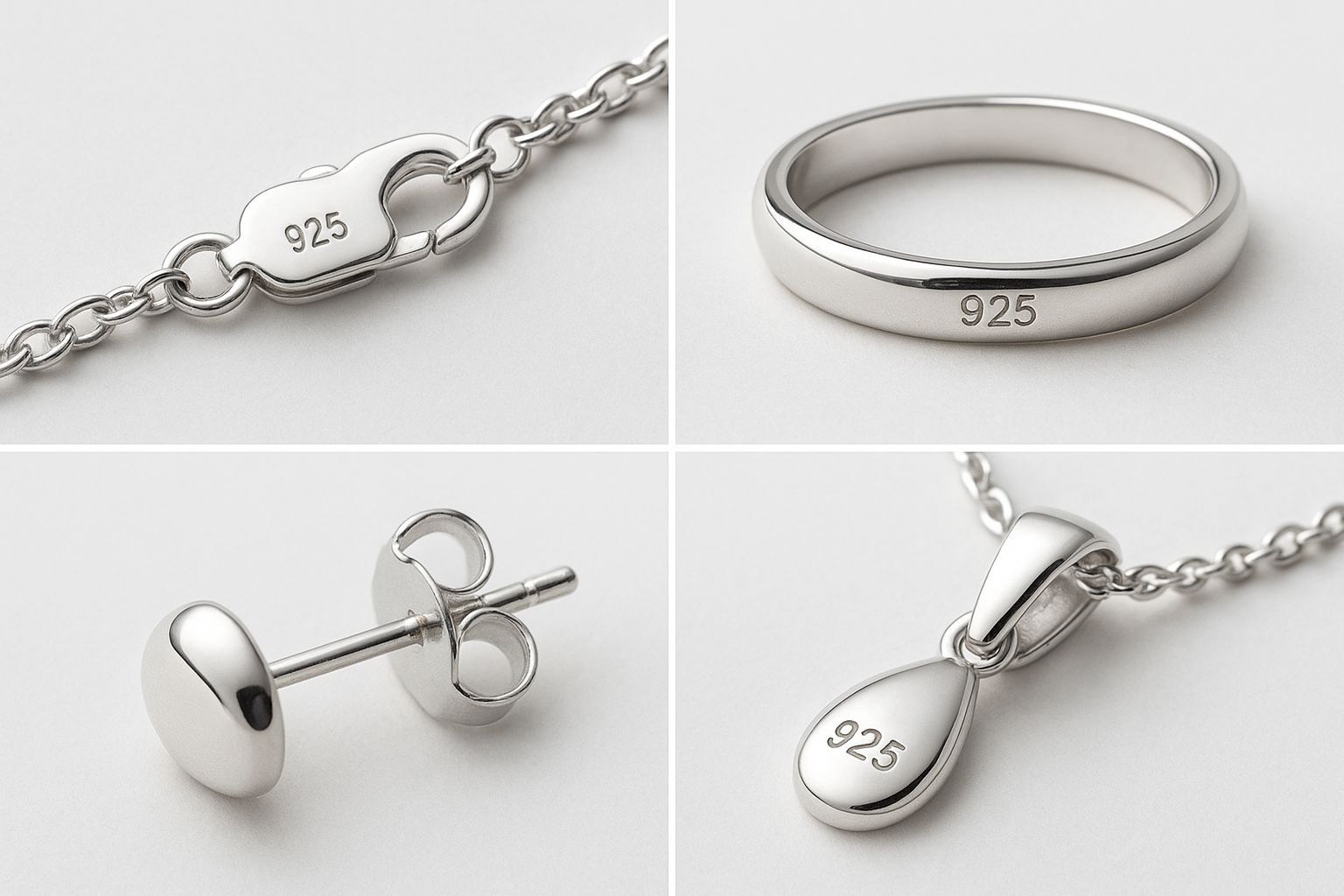
Here's where to look on common jewelry types:
- Necklaces and bracelets: on the clasp or a small attached tag near the clasp
- Rings: stamped inside the band
- Earrings: on the post or back fitting
- Pendants: on the bail, which is the loop connecting the pendant to the chain
Why the 925 stamp matters when you buy silver
The 925 stamp is your first line of defense against low-quality products. Without it, you have no real way to confirm what metal you're buying, and sellers can legally use vague terms like "silver-tone" or "silver-colored" to describe pieces with little to no actual silver content inside them.
It protects you from misleading products
When you understand what does 925 sterling silver mean in a retail context, the stamp separates genuine silver from imitations. A piece without the hallmark may look identical on the surface but could be a base metal with a thin silver coating that tarnishes, flakes, and fades far faster than sterling.
Always check for the 925 stamp before buying, especially from unknown sellers or large online marketplaces where product descriptions are not always accurate.
It signals lasting value
Sterling silver holds its value better than plated alternatives because the silver content runs throughout the entire piece, not just on the surface. This means a 925-stamped chain you buy today still carries real material worth years from now, not just an attractive finish that wears away.
Buying stamped sterling silver also protects your skin. Genuine 925 silver is far less likely to cause irritation compared to base metal imitations, which often contain nickel or other reactive metals.
How 925 compares to pure and silver-plated jewelry
925 sterling silver sits in the middle of the silver quality spectrum. Understanding what does 925 sterling silver mean in relation to other options helps you make a smarter buying decision. Pure silver is softer and more valuable per gram, while silver-plated jewelry contains almost no real silver content at all.
Pure silver vs. sterling silver
Fine silver (999) contains 99.9% silver, making it too soft for most jewelry applications. It bends and scratches with everyday use, which is why sterling silver's 92.5% composition is the practical standard for wearable chains, bracelets, and rings built to last.
| Type | Purity | Durability |
|---|---|---|
| Fine silver | 99.9% | Low |
| Sterling silver | 92.5% | High |
| Silver-plated | Trace | Very low |
Silver-plated vs. sterling silver
Silver-plated pieces are base metal items coated with a thin layer of silver that measures just a few microns thick. That coating wears away with regular use, exposing the metal underneath and causing tarnish, discoloration, and skin irritation for some wearers.
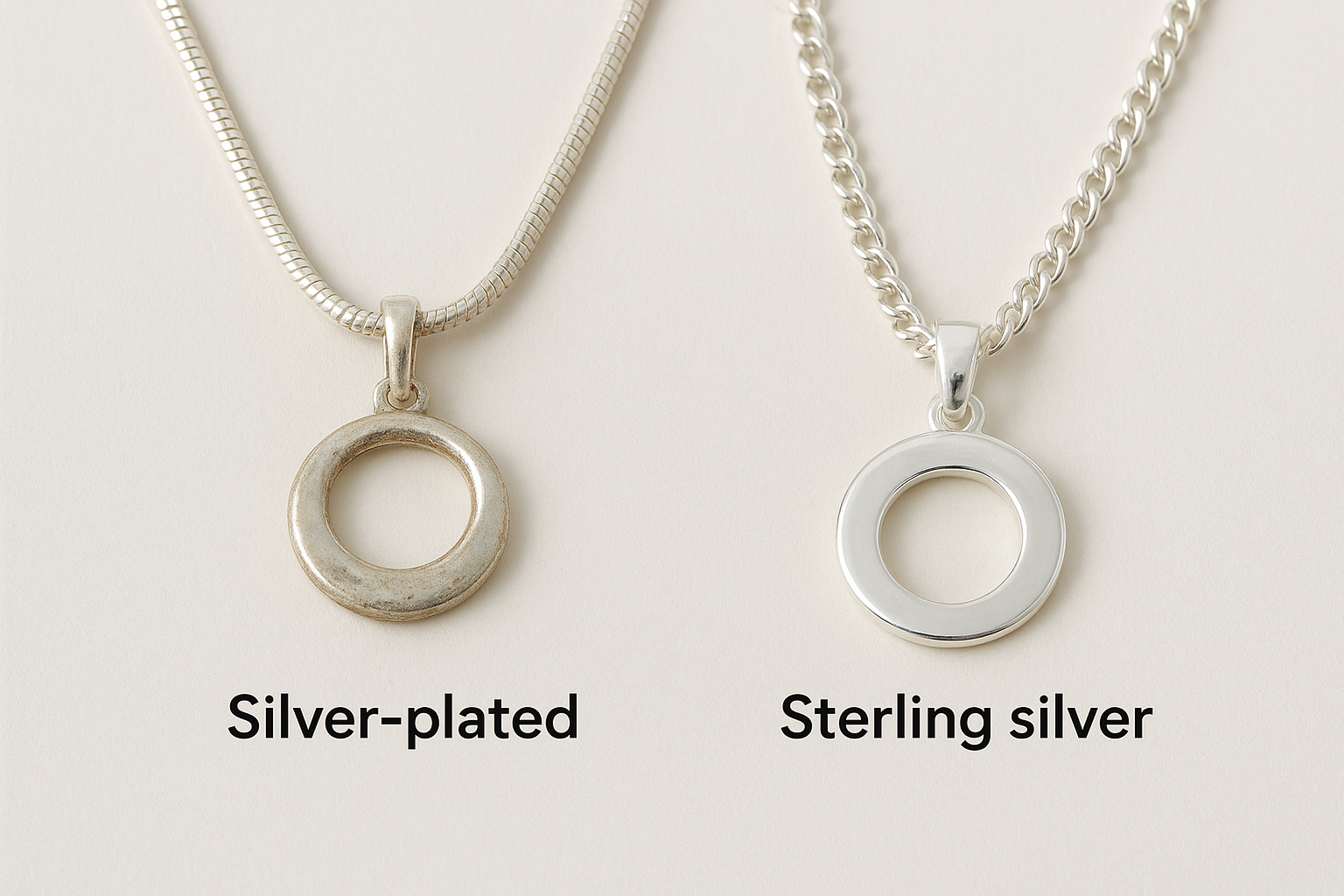
Sterling silver runs solid all the way through, so it won't peel, flake, or expose base metal the way plated jewelry does over time.
With silver-plated pieces, you're paying for surface appearances only. With 925, the quality and silver content run consistently through the entire piece.
How to tell if 925 silver is real or fake
There are several straightforward ways to verify whether a piece is genuine before or after you buy it. Understanding what does 925 sterling silver mean helps you know what to look for, but confirming authenticity requires a bit more than spotting the stamp.
Quick tests you can run at home
The magnet test is the easiest starting point. Real sterling silver is not magnetic, so if a strong magnet pulls noticeably at your chain or bracelet, the piece almost certainly contains base metals rather than genuine silver. Use a neodymium or rare-earth magnet for the most reliable result, as weaker fridge magnets may not be sensitive enough.
If a piece fails the magnet test, skip it regardless of what the listing or seller tells you about quality.
You can also rub the piece firmly with a white cloth. Genuine sterling silver leaves faint black marks on the cloth as the surface oxidizes slightly under friction. A complete absence of marks often points to a plated or non-silver metal. For full certainty, a professional jeweler can confirm purity with acid testing or XRF analysis in minutes.
How to care for 925 sterling silver
Knowing what does 925 sterling silver mean helps you understand why it needs specific care. The 7.5% alloy content, typically copper, reacts with moisture and sulfur compounds in the air, causing the surface to darken. This darkening is called tarnish, and while it looks like damage, it's purely a surface reaction that you can remove and prevent with straightforward habits.
Daily habits that prevent tarnish
Moisture and harsh chemicals are the main causes of tarnish buildup. Remove your silver pieces before showering, swimming, applying lotions or perfumes, or working with cleaning products. After wearing, wipe your chain or bracelet with a soft, dry cloth to remove skin oils and sweat before you store it.
- Take silver off before any water activity
- Apply perfume and lotions before putting jewelry on
- Wipe down with a soft cloth after each wear
Cleaning and storing your silver
When your piece needs a deeper clean, use warm water and a small drop of mild dish soap with a soft-bristle toothbrush. Scrub gently, rinse thoroughly, and dry completely before putting it away.
Never store sterling silver while it's still damp, as trapped moisture speeds up tarnishing.
Store each piece in a separate soft pouch or airtight zip-lock bag to limit air exposure and prevent links from scratching against other jewelry.
Final takeaways
Understanding what does 925 sterling silver mean comes down to one core fact: the 925 stamp guarantees your piece contains 92.5% pure silver, mixed with 7.5% alloy for durability. That hallmark is your proof of quality, your protection against imitations, and your assurance that the silver runs solid through the entire piece rather than just coating the surface.
Real sterling silver outlasts plated jewelry, holds material value over time, and stays comfortable against your skin. The magnet test, the stamp location check, and consistent storage habits all give you the tools to buy confidently and keep your jewelry looking its best for years.
If you're ready to invest in genuine sterling silver, browse our silver curb chains for a classic style that works for everyday wear. Every piece we sell carries the 925 hallmark, so you always know exactly what you're getting.


