

Long-term jewellery value: what it means and how to protect it
Jewellery holds long-term value only for a narrow subset of pieces — those with verifiable material purity, independent certification, and designs that remain desirable across generations. A GIA-graded diamond in a platinum setting bought with full paperwork is a fundamentally different asset from a high-street fashion piece, even if both cost the same at retail. UK Assay Office hallmarks and gemstone certification are the two most reliable signals that a piece clears the minimum bar. Britishchains.com, which produces hallmarked sterling silver chains to British standards, is a practical example of how even accessible fine jewellery can meet baseline criteria.
Three quick criteria:
- Material purity (18k gold, platinum, or hallmarked sterling silver as a minimum)
- Independent certification (GIA report, Gem-A certificate, or UK Assay Office hallmark)
- Design timelessness (classic silhouettes that collectors will still want in 50 years)
Table of Contents
- What does ‘long-term jewellery value’ actually mean?
- What factors determine long-term jewellery worth?
- How do different materials perform over decades?
- Why do UK hallmarking and gemstone certification matter?
- How does the UK resale market work?
- How to judge whether a piece will hold long-term value
- How to care for jewellery so it keeps its value
- UK tax and legal points to be aware of
- How jewellery fits into a wider investment strategy
- Britishchains.com: sterling silver and long-term value
- Key takeaways
- A practical perspective on buying jewellery for the long term
- Hallmarked sterling silver chains from Britishchains
- Useful sources and further reading
What does ‘long-term jewellery value’ actually mean?
The phrase covers two distinct things that are easy to conflate. Financial value means what a piece will fetch on the open market — its melt value, auction result, or dealer bid — years or decades after purchase. Emotional and utility value is what it means to the wearer: provenance, family history, the pleasure of wearing it daily.
Most jewellery delivers the second kind far more reliably than the first. Retail markups mean that resale often returns significantly less than the original purchase price, particularly for fashion-oriented pieces with no intrinsic material weight. Long-term financial value implies resilience across decades: a material floor (the melt or scrap price of the metal and stones) plus a collectability premium where the design, maker, or provenance adds something above that floor.
Documentation and condition are what shift a piece from decorative object to genuine asset. A signed ring with its original receipt, an independent appraisal, and a GIA report sits in a different market from an identical-looking unsigned piece with no paperwork.
What factors determine long-term jewellery worth?
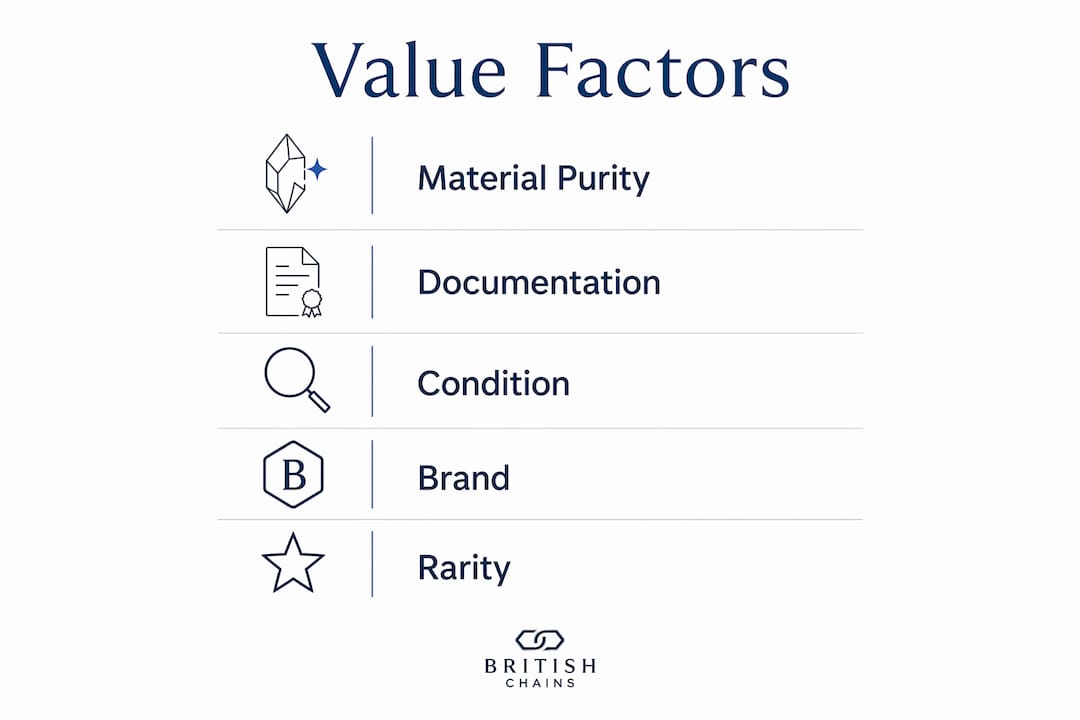
Material, craftsmanship, and documentation consistently appear as the three most important determinants of resale value across industry buyer guides. Here is how the main drivers rank in practice:
- Metal purity and weight: The heavier and purer the metal, the stronger the material floor. 18k gold (75% pure) and platinum (typically 95% in PT950) provide the most reliable base.
- Gemstone quality and certification: A GIA report on a natural diamond, or a Gem-A certificate on a coloured stone, gives a resale buyer an objective basis for pricing. Without one, they guess — and guess low.
- Brand or signed maker: A Cartier or Van Cleef & Arpels signature carries demand that an unsigned piece from the same period cannot replicate. Signed heritage pieces typically retain a substantially higher portion of retail value than unsigned fashion lines from the same house.
- Design timelessness: Solitaires, clean geometric forms, and classic chain silhouettes age better than trend-driven statement pieces.
- Provenance and documentation: Original receipts, certificates, and independent appraisals raise resale prospects materially.
- Condition and restorability: Minor wear is acceptable; missing stones or structural damage is not.
- Resale channel: Where you sell matters almost as much as what you sell.
Pro Tip: If your goal is wealth preservation rather than visible branding, prioritise metal weight and purity above all else. A heavy 18k bracelet bought close to melt value will always have a floor; a lightweight branded piece without strong secondary-market demand may not.
How do different materials perform over decades?
| Material / category | Long-term outcome | Liquidity notes |
|---|---|---|
| 18k gold | Strong material floor; melt value tracks gold spot price | Liquid; dealers and refiners always bid |
| 14k gold | Lower floor due to reduced purity; still tradeable | Moderate; common in UK market |
| Platinum (PT950) | High intrinsic value; durable; rarer than gold | Less liquid than gold but strong among collectors |
| Sterling silver (hallmarked) | Lower melt floor; value driven by design and condition | Good for everyday longevity; outlasts costume jewellery significantly |
| GIA-certified natural diamonds | Stable demand; lab-grown competition applies downward pressure on some grades | Deep global market for certified stones |
| Untreated coloured gemstones | Rarity-driven; can appreciate strongly at investment grade | Specialist market; requires expert appraisal |
| Vintage / antique pieces | Estate pieces from recognised periods frequently command premiums above metal value | Collector-driven; auction houses preferred |
| Costume / fashion jewellery | No material floor; value depreciates rapidly | Very low; essentially decorative only |
Trade sources broadly recommend 14k–18k gold for daily jewellery because it balances durability with meaningful metal content. Lab-grown diamonds are worth noting separately: they have fallen sharply in resale value since 2020 as production volume has expanded, making them a lifestyle choice rather than a financial one.
- Fine solid-metal jewellery retains a material floor regardless of trends
- Costume jewellery has no such floor and should be bought purely for enjoyment
- Sterling silver trends that lean classic rather than fashion-forward hold up far better over time
Why do UK hallmarking and gemstone certification matter?
In the UK, hallmarking is a legal requirement for gold, silver, and platinum articles sold above a minimum weight threshold. The four UK Assay Offices — London (Goldsmiths’ Company), Birmingham, Sheffield, and Edinburgh — each apply a set of marks that confirm metal type, purity, year of assay, and the maker’s registered mark. For a buyer or reseller, a full hallmark removes any ambiguity about what they are actually holding.
GIA gemstone reports do the same job for diamonds and coloured stones. A GIA Excellent-cut natural diamond with a full grading report gives a resale buyer the colour, clarity, carat, and cut data they need to price it against the global market. Without that report, the buyer prices in uncertainty — which means a lower offer.
- Verify the hallmark is complete: metal mark, purity mark, Assay Office mark, and date letter
- For diamonds, insist on a GIA report or equivalent (Gem-A, IGI for coloured stones)
- Keep all original certificates in a fireproof location or a scanned secure backup
Pro Tip: Commission an independent valuation from a valuer who has no commercial relationship with the original retailer. UK independent appraisals are the baseline evidence for both insurance and any future resale, and a dated appraisal trail across years demonstrates that you have maintained the piece properly.
How does the UK resale market work?
| Channel | Typical speed | Discount vs retail | Fees | Best for |
|---|---|---|---|---|
| Major auction house | several weeks | Varies widely; provenance reduces discount | Buyer’s premium; seller’s commission | Signed, rare, or high-value pieces |
| Private dealer / jeweller | 1–4 weeks | Significant; dealer needs margin | Negotiated | Mid-range fine jewellery |
| Online secondary marketplace | Days to months | Moderate if well-documented | Platform fees (typically 5%) | Certified stones; documented pieces |
| Pawnbroker | Immediate | Very high; expect well below melt value | Interest if not redeemed | Emergency liquidity only |
Most jewellery resells at a meaningful discount to retail because retail prices include design, labour, brand margin, and retailer profit. Provenance shortens sale time and improves price at every channel. Wealthy buyers increasingly treat jewellery as a store of value during periods of market uncertainty, which supports auction-house results for documented fine pieces.
Pro Tip: Before listing, gather every document you have — original receipt, certificate, independent appraisal, service records — and photograph the piece against a neutral background showing hallmarks clearly. A realistic reserve price, set against recent comparable auction results rather than the original retail price, will sell the piece faster and at a better net figure.
How to judge whether a piece will hold long-term value
- Verify the hallmark — confirm metal type and purity from the Assay Office mark.
- Weigh the piece — heavier metal content means a stronger material floor.
- Check gemstone reports — GIA or Gem-A certification is non-negotiable for stones above a trivial size.
- Evaluate design longevity — ask whether the silhouette will still be desirable in 50 years.
- Assess condition — look for missing stones, structural weakness, or repairs that reduce restorability.
- Confirm provenance — original receipt, maker’s mark, and any auction or collection history.
- Check comparable sales — recent auction results for similar pieces are the most honest price signal available.
If your goal is wear rather than wealth preservation, steps 4 and 6 matter most. If you are buying as an heirloom investment, steps 1, 2, and 3 are the non-negotiables.
How to care for jewellery so it keeps its value
Condition at resale is largely determined by how a piece has been stored and serviced over its life.
- Store each piece separately in a soft pouch or lined box to prevent scratching; silver benefits from anti-tarnish strips
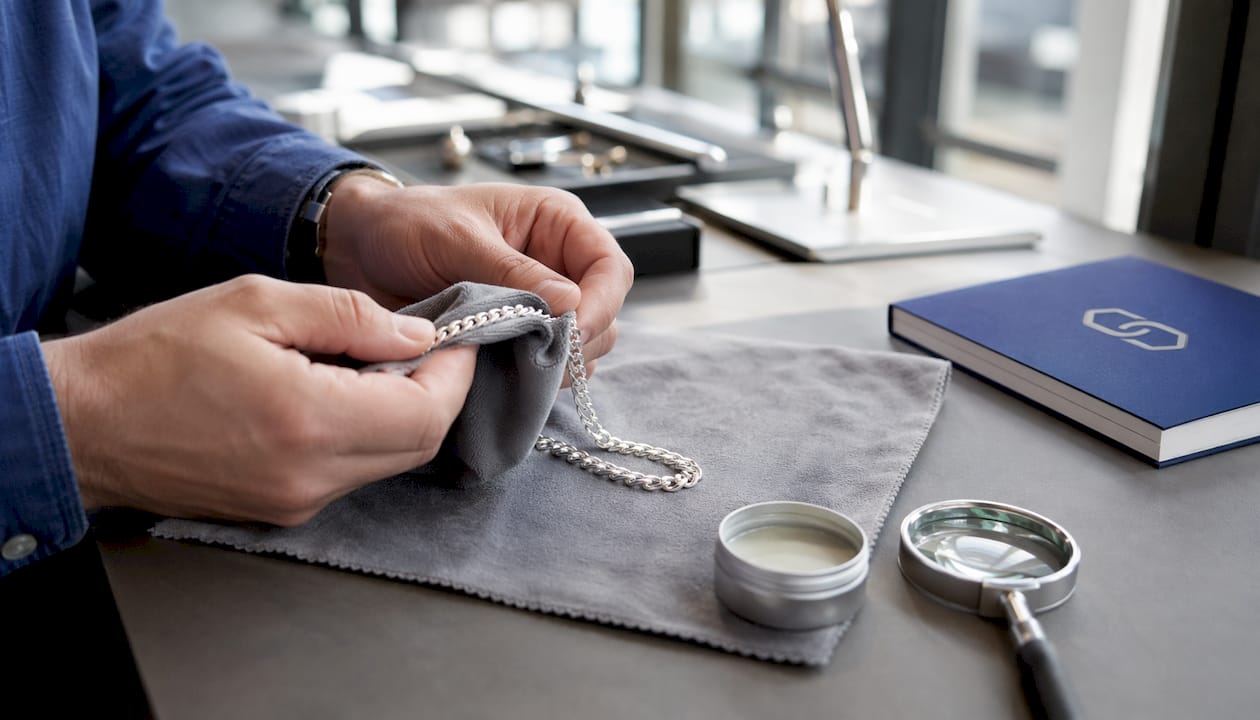
- Clean sterling silver gently with a soft cloth; avoid ultrasonic cleaners for pieces with set stones unless a professional confirms it is safe
- Have settings checked by a professional jeweller every two to three years; a loose stone caught early costs far less than a lost one
- Service chains and clasps annually if worn daily
Pro Tip: Keep dated receipts from every professional service. A documented maintenance history is a form of provenance — it tells a future buyer that the piece has been looked after, and that matters at resale. Britishchains’s jewellery care guide covers storage and cleaning specifics for sterling silver in practical detail.
UK tax and legal points to be aware of
Jewellery sits within the UK’s capital gains tax framework as a chattel. Broadly, gains on individual items sold for more than £6,000 may be subject to Capital Gains Tax, though the rules depend on your personal circumstances and the item’s classification. Inherited jewellery may also fall within the estate for Inheritance Tax purposes.
- CGT: gains on items sold above the chattel exemption threshold may be taxable; consult HMRC or a tax adviser for your specific position
- VAT: private sellers are generally not VAT-registered, but dealers and auction houses may charge VAT on their fees
- Inheritance: high-value heirloom pieces should be declared and valued for estate purposes
Pro Tip: Retain independent appraisals specifically for insurance and tax records. An appraisal that pre-dates a sale is far more useful to HMRC or an insurer than one commissioned after the fact.
This article provides general information only, not tax or legal advice. Confirm your position with HMRC or a qualified adviser.
How jewellery fits into a wider investment strategy
Jewellery is illiquid, carries high transaction costs at both ends, and generates no income while held. Those are real constraints. Against them, fine jewellery offers a tangible material floor, inflation linkage through precious metal prices, and the utility of actually wearing the asset.
- Liquidity: far lower than gold bullion or equities; plan for a sale timeline of weeks to months
- Transaction costs: retail markup at purchase and dealer/auction fees at sale can erode returns significantly
- Emotional utility: unlike gold bars, jewellery can be worn, enjoyed, and passed down — that utility has real value
- Storage and insurance: ongoing costs that reduce net returns; factor them in from day one
- Portfolio weight: experts broadly suggest capping jewellery at 5–10% of a total portfolio, treating it as a diversification and inflation-hedge tool rather than a primary growth position
For a collector play, provenance and rarity matter more than metal weight. For a wealth-preservation play, metal weight and purity matter most. The two strategies call for different pieces and different resale plans.
Britishchains.com: sterling silver and long-term value
Hallmarked sterling silver sits at the accessible end of the fine jewellery spectrum, but it meets the baseline criteria that separate durable possessions from disposable fashion. Britishchains.com produces curb, rope, Figaro, snake, herringbone, and box chains in solid 925 sterling silver, hallmarked to UK standards. That hallmark is the buyer’s guarantee of metal purity — the same assurance that underpins the resale logic described throughout this guide.
Classic chain silhouettes score well on the generational-appeal criterion. A clean curb or rope chain does not date the way a trend-driven pendant does, which means it remains wearable and giftable across decades. For everyday silver necklaces worn regularly, the combination of solid construction, hallmarking, and a timeless design is the practical definition of long-term jewellery worth at the sterling silver tier.
Key takeaways
Jewellery holds long-term financial value only when it combines verifiable material purity, independent certification, and a design that remains desirable across generations — without all three, most pieces revert to decorative status at resale.
| Point | Details |
|---|---|
| Material purity is the floor | 18k gold, platinum, and hallmarked sterling silver all provide a measurable base value that costume jewellery cannot match. |
| Certification drives resale confidence | A GIA report or UK Assay Office hallmark gives buyers objective evidence, which shortens sale time and supports price. |
| Design timelessness matters | Classic silhouettes — solitaires, curb chains, clean geometric forms — hold generational appeal; trend pieces rarely do. |
| Documentation is active value | Original receipts, appraisals, and service records materially improve secondary-market outcomes at every channel. |
| Britishchains for hallmarked silver | Britishchains.com’s hallmarked 925 sterling silver chains meet the baseline criteria for durable, documented fine jewellery. |
A practical perspective on buying jewellery for the long term
The conventional wisdom treats jewellery investment as a luxury-goods play — buy the signed piece, hold it, watch it appreciate. The reality is more prosaic and more useful. For most buyers, the strongest return on a jewellery purchase is the combination of genuine material substance and the pleasure of wearing something well-made. The pieces that hold up financially are almost always the ones that were bought for the right reasons: heavy metal, honest purity, a design that does not chase a moment.
My preference is for weighty, hallmarked pieces with their paperwork intact — not because I expect to profit, but because those are the pieces that remain meaningful and sellable when circumstances change. Buy for enjoyment first; buy with the discipline of documentation and material quality so that enjoyment does not come at the cost of long-term worth.
Hallmarked sterling silver chains from Britishchains
If the criteria in this guide point you towards a durable, hallmarked fine-jewellery piece at an accessible price point, Britishchains.com is a direct route. Every chain is crafted in solid 925 sterling silver and hallmarked to UK standards — the same baseline that underpins the resale and documentation logic covered above.
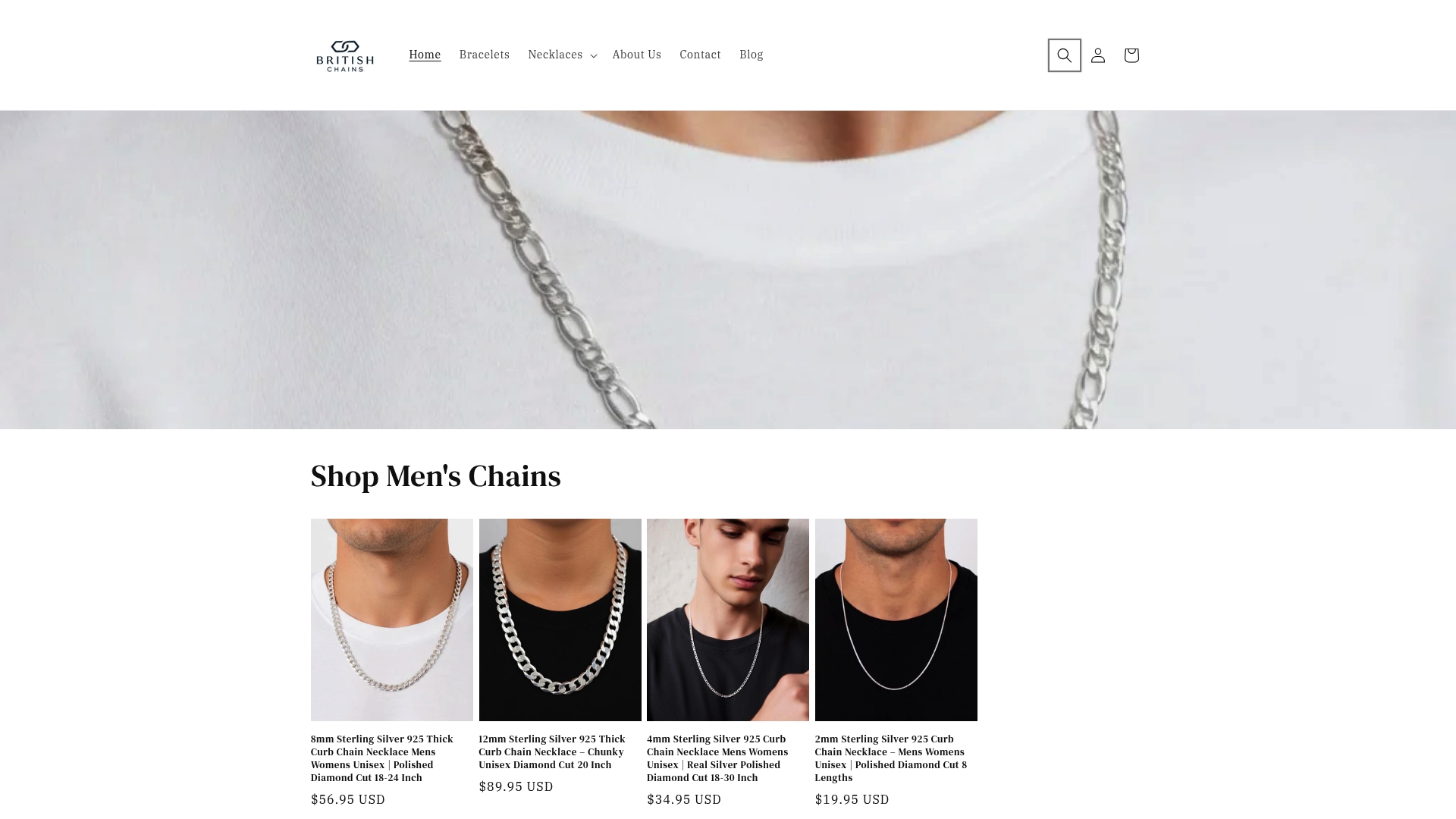
The 2mm sterling silver curb chain and the 3mm twisted rope chain are both solid-construction, classic-silhouette pieces that meet the generational-appeal criterion. Neither is a speculative asset, but both are documented, hallmarked possessions built to last. Browse the full collection at britishchains.com and check the product page for hallmarking details before purchasing.
Useful sources and further reading
- AME Jewellery: which jewellery can preserve value? — a clear breakdown of the categories (coloured gemstones, antique pieces, auction-house provenance) that meet long-term preservation criteria.
- TheCaratCut: investment-grade jewellery guide — detailed explanation of how retail markup erodes early returns and what documented scarcity actually means for resale.
- CNBC: wealthy consumers invest in jewellery amid market volatility — market-behaviour context for why fine jewellery attracts buyers during economic uncertainty.
- Eternal Carat: why invest in fine jewellery — covers the portfolio-weighting argument (5–10% cap) and the inflation-hedge case for precious metals and certified stones.
- Blue Nile: is jewellery a good investment? — practical guidance on the material, craftsmanship, and documentation triad; useful for buyers at any budget.
- SageStone: does jewellery lose value over time? — honest treatment of resale discounts and the conditions under which a material floor protects value.


