

Why silver outlasts costume jewellery: the real difference
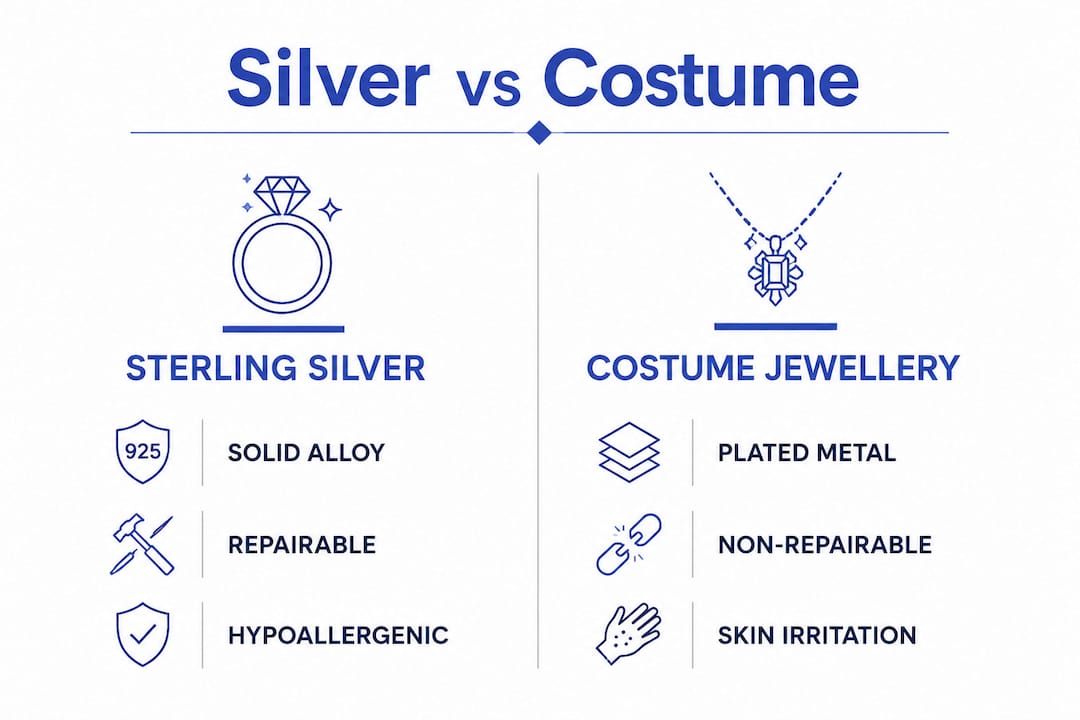
Sterling silver is defined as a solid precious metal alloy containing 92.5% pure silver, and that composition is the primary reason why silver outlasts costume jewellery in every meaningful measure. Costume jewellery, by contrast, is a base metal product coated with a thin decorative layer that wears away within months. The difference is not cosmetic. It is structural. Sterling silver, hallmarked to the 925 standard, can be worn daily for decades, polished back to life, and repaired by a jeweller. A costume piece cannot. Understanding this distinction saves money, protects your skin, and reduces waste.
Why silver outlasts costume jewellery: the material science
The durability gap between silver and costume jewellery starts at the molecular level. Sterling silver is a solid alloy throughout. Every millimetre of the metal contains 92.5% silver bonded with copper for added strength. There is no coating, no surface layer, and no substrate waiting to be exposed.
Costume jewellery works differently. Plating thickness typically ranges from 0.03 to 1 micron over a base metal such as brass, zinc, or a copper alloy. To put that in context, a single human hair is roughly 70 microns wide. The decorative layer on a costume piece is thinner than you can see or feel.
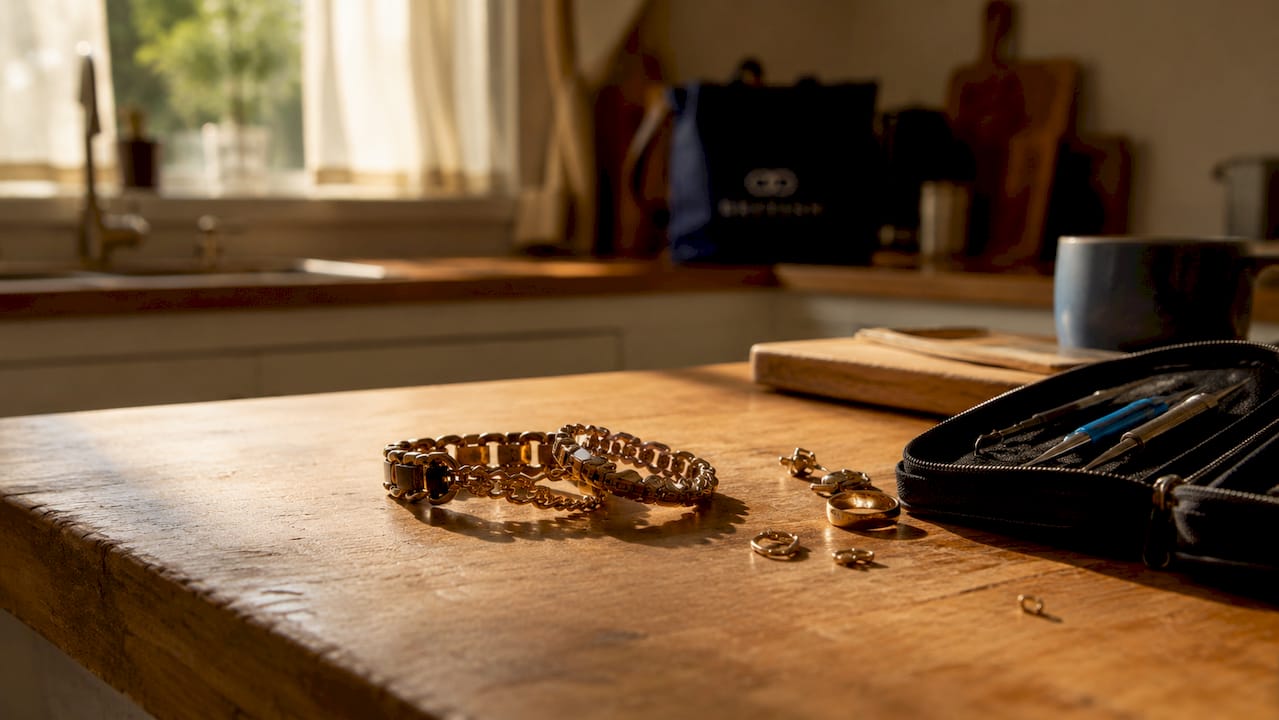
Once that plating wears through, the base metal underneath reacts with sweat, moisture, and air. The result is irreversible corrosion, green skin staining, and structural degradation. Silver tarnishes superficially as a surface chemical reaction, but that tarnish can be polished away completely. The metal beneath remains intact. Costume jewellery plating loss is permanent. There is no equivalent restoration.
Pro Tip: Check for a “925” hallmark stamped on any silver piece before buying. This confirms the metal is genuine sterling silver, not silver-plated base metal.
Silver also resists reaction with sweat and common chemicals far better than base metal alloys. Silver’s chemical stability prevents the aggressive breakdown that occurs when costume jewellery alloys meet perspiration. That stability is the foundation of silver’s long-term structural integrity.
How long does silver actually last compared to costume jewellery?
The lifespan difference between the two materials is stark. Costume jewellery lasts 6 to 24 months with regular wear before plating degrades visibly. Sterling silver, worn daily and cleaned occasionally, can last multiple decades and even pass between generations.
Several factors accelerate costume jewellery’s decline:
- Plating thickness. Thinner plating wears through faster, particularly on high-contact areas like chain links and clasps.
- Base metal quality. Lower-grade zinc alloys corrode more aggressively once exposed than brass substrates.
- Environmental exposure. Chlorine in swimming pools, salt water, and household cleaning products strip plating rapidly.
- Sweat and skin chemistry. Acidic skin pH accelerates plating loss on costume pieces worn close to the body.
- Friction. Chains and bracelets experience constant mechanical wear that thins plating at contact points.
Sterling silver is not immune to environmental factors, but its response is fundamentally different. Tarnish builds on the surface when silver reacts with sulphur compounds in the air. That tarnish is reversible with simple cleaning. A polishing cloth, a mild silver cleaner, or even a paste of bicarbonate of soda and water restores the original finish. No professional intervention is needed for routine maintenance.
Sterling silver’s softness also allows jewellers to resize, reshape, and repair pieces professionally. A silver chain with a damaged clasp or a worn link can be fixed. A costume piece with failed plating cannot be restored to its original state. The repair option alone extends silver’s useful life by years.
Pro Tip: Store silver in an airtight pouch or a jewellery box lined with anti-tarnish fabric. Reducing sulphur exposure between wears significantly slows tarnish buildup.
Is silver jewellery safer to wear than costume jewellery?
925 sterling silver is hypoallergenic and nickel-free, making it the safer choice for prolonged skin contact. Sterling silver’s hypoallergenic properties are well established, and the metal is routinely recommended for people with sensitive skin or metal allergies.
Costume jewellery presents a different picture:
- Nickel is a common component in costume jewellery alloys. It is also the most frequent cause of contact dermatitis from jewellery.
- Cheap alloys can release nickel ions through sweat, triggering rashes, redness, and itching even after short periods of wear.
- Green skin staining from copper-based alloys is a cosmetic sign of the same chemical reaction occurring on the skin’s surface.
- Adhesives and lacquers used in costume jewellery construction can also cause localised skin reactions.
Silver adds a further health benefit. Silver releases antimicrobial ions that inhibit bacteria and fungi on skin-contact surfaces. This makes sterling silver a genuinely healthier option for everyday wear, particularly for chains and bracelets worn against the skin for extended periods. Costume jewellery metals carry no equivalent antimicrobial property and can harbour bacteria in corroded surface pits.
The environmental and economic case for choosing silver
The financial argument for silver is counterintuitive but clear. Silver’s upfront cost is higher, but the per-wear cost over a lifetime is substantially lower than repeatedly replacing costume pieces. A costume chain bought for £15 and replaced every 12 months costs £150 over a decade. A sterling silver chain bought for £60 and worn for 20 years costs £3 per year.
The environmental case is equally compelling. Consider the lifecycle comparison:
- Recyclability. Silver is a precious metal with established recycling infrastructure. It retains intrinsic value throughout its lifecycle and can be melted and reused indefinitely.
- Landfill contribution. Costume jewellery’s short lifecycle and mixed material construction make it difficult to recycle. Most pieces end in landfill after a single replacement cycle.
- Consumption frequency. A single silver piece replaces multiple costume purchases over the same period, reducing manufacturing demand and packaging waste.
- Repairability. Silver pieces that can be repaired never enter the waste stream. Costume pieces that cannot be repaired always do.
Choosing sterling silver aligns with sustainable consumption in a way that fast-fashion jewellery cannot match. The material retains value, reduces replacement frequency, and supports a circular economy rather than a linear one.
How to care for silver jewellery to maximise its lifespan
Silver’s longevity depends on basic, consistent maintenance. The good news is that the effort required is minimal compared to the years of wear it returns.
- Clean regularly. A soft polishing cloth removes light tarnish before it builds up. For heavier tarnish, a dedicated silver cleaning solution or a bicarbonate paste works effectively.
- Store correctly. Proper silver storage means keeping pieces in airtight pouches or anti-tarnish-lined boxes, away from direct sunlight and humidity.
- Remove before contact with chemicals. Chlorine, bleach, perfume, and hairspray all accelerate tarnishing. Remove silver before swimming, cleaning, or applying cosmetics.
- Avoid moisture. Drying silver thoroughly after accidental water exposure prevents sulphide formation on the surface.
- Use anti-tarnish strips. Placing these inside a jewellery box absorbs sulphur compounds in the air, slowing tarnish significantly.
Costume jewellery requires equally careful handling, but careful handling only delays the inevitable. Once plating wears through, no amount of cleaning or storage restores the original finish. Silver’s maintenance cycle, by contrast, genuinely extends the piece’s life. Sterling silver worn daily and maintained properly remains structurally sound and visually appealing for decades.
Pro Tip: Polish silver with a lint-free cloth in straight lines rather than circular motions. Circular polishing can create fine scratches that dull the surface over time.
Key takeaways
Sterling silver outlasts costume jewellery because it is a solid precious metal alloy that can be cleaned, repaired, and maintained over decades, while costume jewellery relies on plating thinner than a human hair that wears away permanently.
| Point | Details |
|---|---|
| Material composition | Sterling silver is solid 92.5% silver throughout; costume jewellery is base metal with a 0.03–1 micron surface coating. |
| Lifespan difference | Costume jewellery lasts 6–24 months with regular wear; sterling silver lasts decades with basic maintenance. |
| Skin safety | 925 sterling silver is hypoallergenic and nickel-free; costume jewellery alloys frequently cause allergic reactions. |
| Environmental value | Silver is recyclable and retains intrinsic value; most costume jewellery ends in landfill after a single replacement cycle. |
| Cost per wear | Silver’s higher upfront cost produces a far lower cost per wear over its lifetime compared to repeatedly replacing costume pieces. |
The case for silver is stronger than most buyers realise
The most common mistake I see buyers make is treating tarnish as a sign of poor quality. It is the opposite. Tarnish on a sterling silver piece confirms you are looking at solid precious metal. It is a surface reaction, not structural damage. A quick polish and the piece looks new again. That reversibility is the whole point.
Costume jewellery’s decline, by contrast, is invisible until it is too late. The plating thins gradually with every wear. By the time you notice the colour change or the green staining, the base metal is already exposed and the piece is finished. There is no recovery.
What I find most compelling about silver is its repairability. A silver chain with a broken clasp is a five-minute job for any jeweller. A costume piece with failed plating is landfill. That single difference changes the entire economics of the purchase. Silver is not just a material choice. It is a decision to stop replacing things.
The skin safety argument also deserves more attention than it typically receives. Nickel sensitivity is genuinely common, and many people who experience redness or irritation from jewellery never connect it to the metal. Switching to 925 sterling silver resolves the issue entirely for most people. That is a practical, measurable benefit that goes well beyond aesthetics.
Balancing durability, skin health, and sustainability, the case for silver over costume jewellery is not close. The upfront cost is higher, but every other factor favours silver decisively.
— British
Britishchains sterling silver: built to last
Britishchains designs and sells hallmarked 925 sterling silver chains and necklaces crafted in the UK, built specifically for daily wear and long-term durability. Every piece carries the 925 hallmark, confirming solid sterling silver construction throughout.
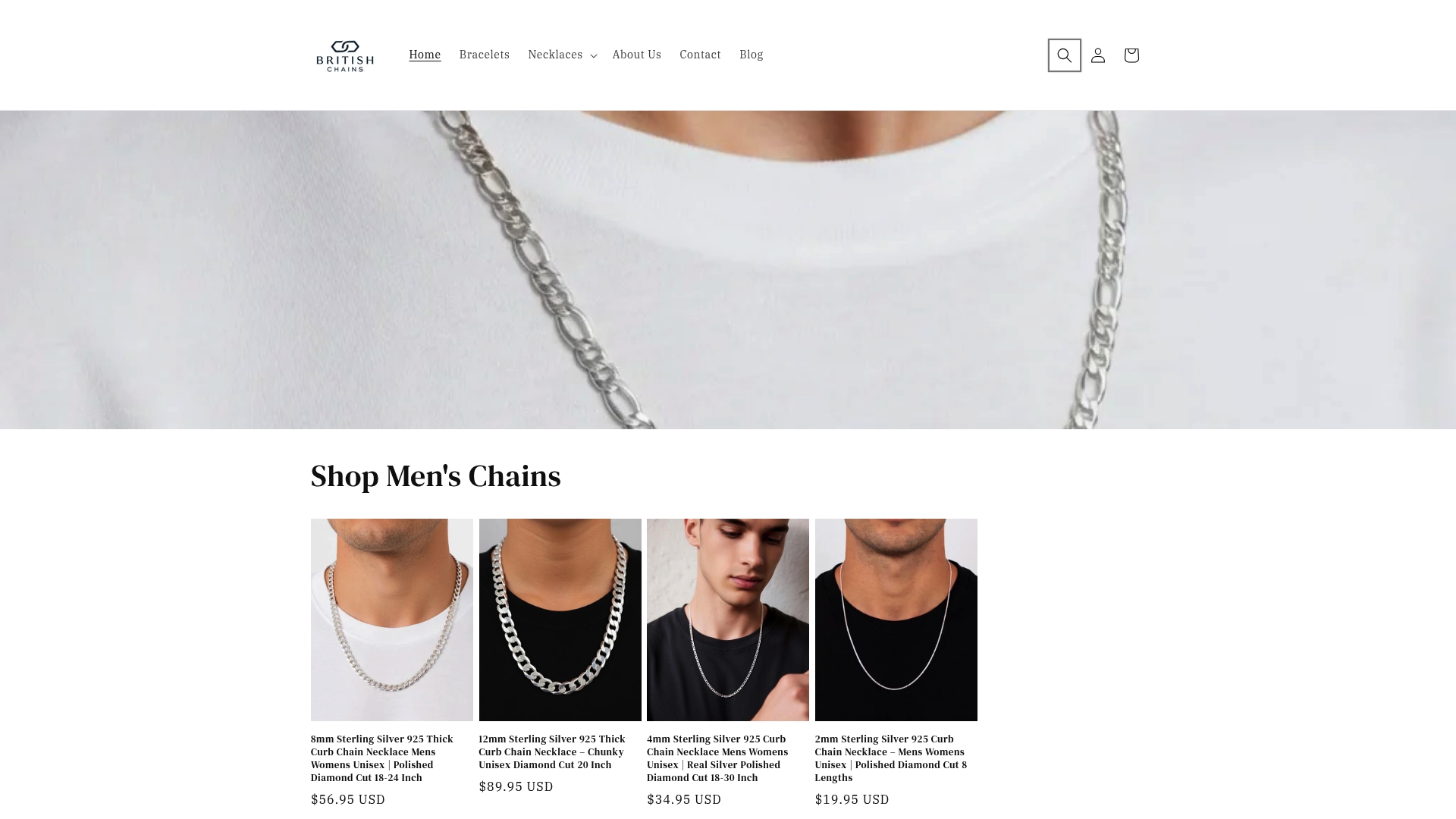
The collection spans curb, rope, Figaro, snake, herringbone, and box chains in multiple widths and lengths, catering to both men and women. The 8mm diamond cut curb chain is a standout example of the durability and finish that hallmarked British silver delivers. For a slimmer option, the 2mm Figaro chain necklace offers timeless elegance in the same solid sterling silver construction. When you buy silver that lasts, you stop replacing jewellery altogether.
FAQ
What is the main difference between silver and costume jewellery?
Sterling silver is a solid precious metal alloy containing 92.5% silver throughout, while costume jewellery is a base metal coated with a thin decorative layer. That coating wears away permanently; silver tarnishes superficially and can be restored.
How long does sterling silver last compared to costume jewellery?
Costume jewellery typically lasts 6–24 months with regular wear before plating degrades visibly. Sterling silver lasts decades with occasional cleaning and can be professionally repaired to extend its life further.
Is sterling silver safe for sensitive skin?
925 sterling silver is hypoallergenic and nickel-free, making it suitable for sensitive skin. Costume jewellery frequently contains nickel, which is a leading cause of contact dermatitis from jewellery.
Can silver jewellery be repaired once it is damaged?
Yes. A jeweller can polish, resize, and repair sterling silver pieces because the metal is solid throughout. Costume jewellery with worn plating cannot be restored, as the surface coating cannot be reapplied practically at home.
Is silver jewellery worth the higher upfront cost?
Silver’s higher purchase price produces a far lower cost per wear over its lifetime. Replacing costume jewellery every 6–24 months costs significantly more over a decade than a single silver piece maintained with basic care.


