

Why handcrafted silver costs more: the real reasons
Handcrafted silver jewellery costs more than mass-produced pieces because every item absorbs the full weight of raw material prices, skilled artisan time, and small-batch production economics. Unlike factory-made chains stamped out by the thousand, a handcrafted piece demands hours of individual attention from a trained maker. The silver craftsmanship value you pay for is not padding on the price tag. It reflects real inputs: rising silver spot prices, labour that cannot be rushed, and overheads spread across far fewer pieces. Understanding these cost drivers helps you buy with confidence rather than doubt.
Why handcrafted silver costs more: the silver market’s role
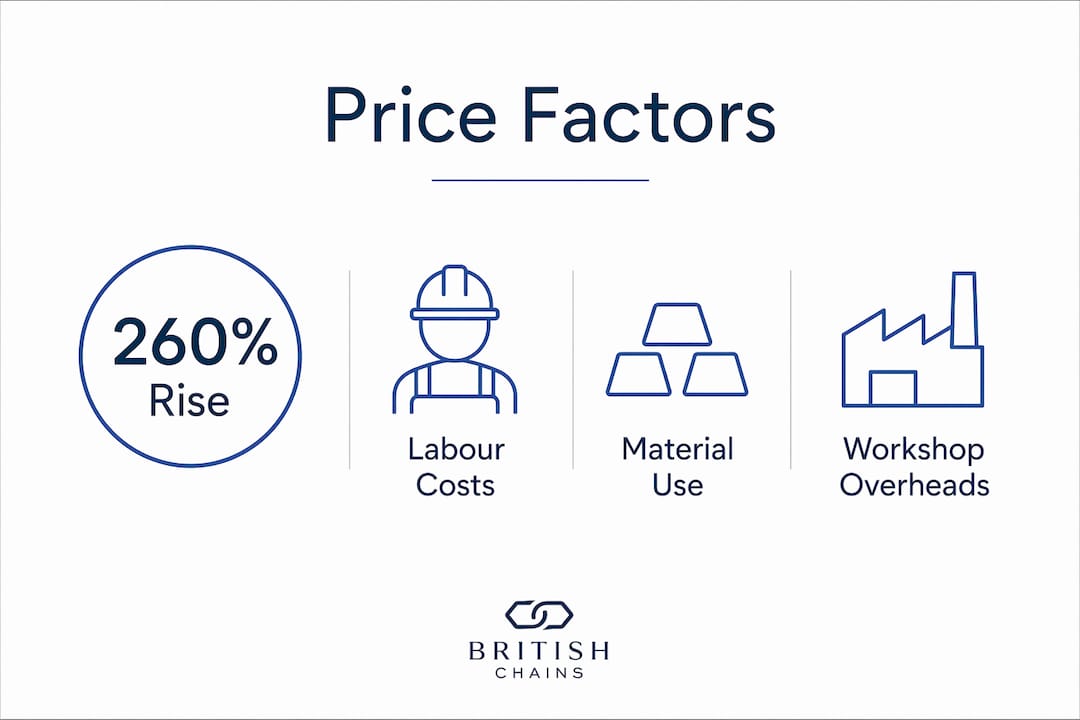
Silver prices have surged dramatically in recent years, and that surge flows directly into the retail price of every handcrafted piece. Silver prices rose 260% over the last five years. That scale of increase means artisans are paying far more for their raw material today than they were half a decade ago.
The supply side makes this worse. Silver is largely a byproduct of mining other metals such as copper and zinc. Miners cannot simply increase silver output in response to jewellery demand. Supply is structurally inelastic, which means prices stay elevated even when demand softens slightly.
Industrial and investment demand for silver also competes directly with jewellery makers. Electronics, solar panels, and financial instruments all consume silver. Artisans sit at the end of that queue, buying small quantities at full spot price with no volume discount.
Large manufacturers hedge their silver purchases and buy in bulk, locking in lower per-gramme costs. A small workshop buys what it needs, when it needs it, at whatever the market charges that week. Every price spike hits the artisan’s margin immediately and fully.
| Factor | Impact on handcrafted silver price |
|---|---|
| 260% price rise over five years | Higher raw material cost per piece |
| Byproduct supply structure | Cannot scale output to meet demand |
| Industrial competition for silver | Reduces availability for jewellery makers |
| No bulk purchasing power | Artisans pay full spot price on small orders |
How artisan labour drives the costs of handmade silver
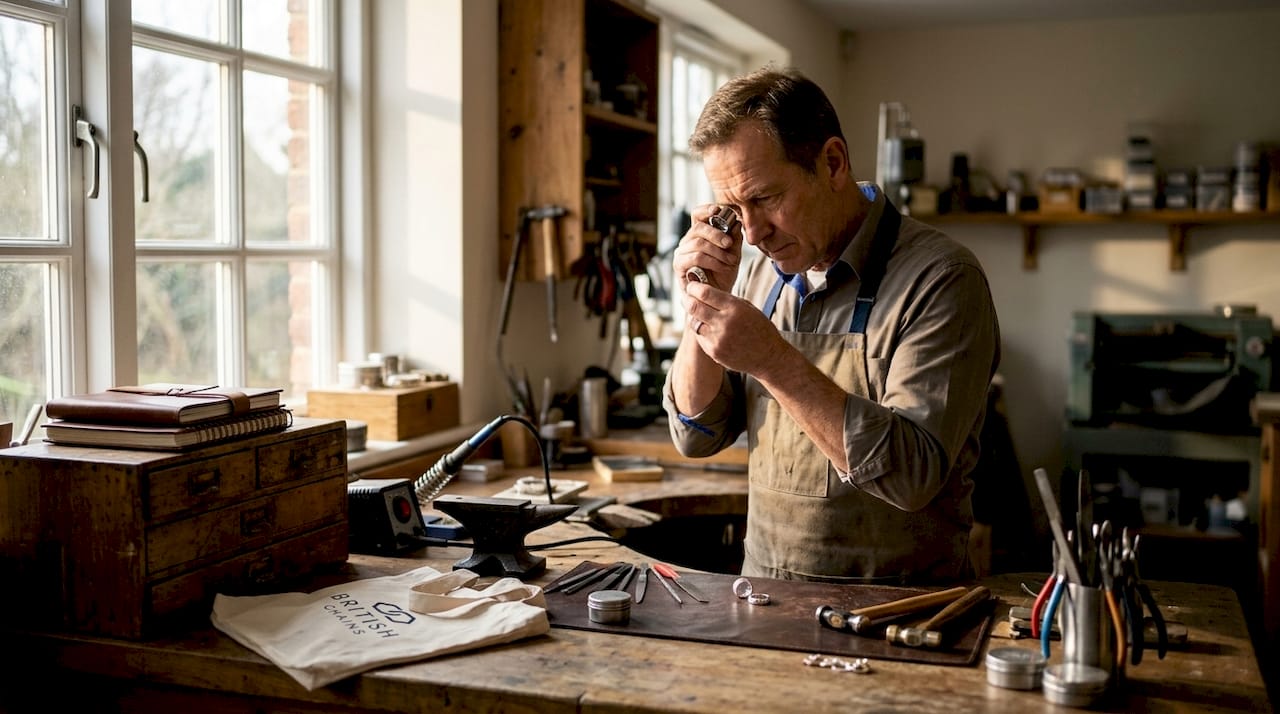
Labour is the single largest cost component in handcrafted silver jewellery. Making charges for handcrafted pieces run 50% to 100% higher than for mass-produced equivalents. A simple handmade design may carry a making charge of £10–£15, while a complex piece can exceed £50 or more.
That gap exists because artisan time cannot be compressed. A maker working by hand on a sterling silver curb chain or a herringbone necklace applies a sequence of techniques that each demand full attention:
- Shaping and forming: bending, drawing, and manipulating silver wire or sheet to the intended profile
- Soldering: joining components with precision heat to create strong, clean bonds
- Filing and refining: removing excess material and correcting imperfections by hand
- Polishing and finishing: bringing the surface to its final lustre through progressive abrasion and buffing
- Quality inspection: checking weight, symmetry, and finish against the maker’s own standard
Each of these stages takes time. A factory machine completes equivalent steps in seconds. An artisan may spend several hours on a single piece. That time is the product, and it carries a price.
Smaller production volumes compound the issue. A workshop producing twenty pieces a week cannot spread its fixed costs the way a factory producing twenty thousand can. Every piece carries a proportionally larger share of rent, tools, and energy.
Pro Tip: When buying handcrafted silver, ask about the making charge separately from the silver weight cost. A transparent maker will tell you both. That breakdown tells you exactly what you are paying for skill versus material.
How design complexity and material use affect the price
Artisans prioritise structural integrity and character over minimising silver use. Handcrafted silver pieces use more metal per item than their mass-produced counterparts because makers accept proportionally more material waste in small-batch production. A factory optimises every gramme. A workshop does not have that luxury.
Design complexity raises costs in two directions at once: it increases both the time required and the amount of silver consumed. A plain box chain is straightforward. A diamond-cut herringbone necklace with its flat, interlocking plates requires far more precise work and more material to achieve the right weight and drape.
Handcrafted pieces also carry physical proof of their making. Subtle tool marks, slight weight variation between pieces, and minor finish differences are not flaws. They are authenticity markers. These physical traits distinguish handmade silver from machine-stamped items and confirm that a human being shaped that specific piece.
Key material and design factors that raise the price of handmade silver:
- Higher silver weight per piece: artisans build for durability, not minimum material use
- Greater waste in small batches: offcuts and rejected material cannot be recycled as efficiently as in factory settings
- Longer production time for intricate designs: complexity multiplies both hours and material consumption
- Unique character per piece: no two handcrafted items are identical, which adds inherent scarcity value
Pro Tip: Weigh a handcrafted silver piece against a mass-produced equivalent of the same style. The handcrafted version will almost always be heavier. That extra weight is real silver, and it adds both durability and resale substance.
What workshop overheads add to the final price
Small silver workshops carry fixed costs that mass manufacturers spread across millions of units. Artisan workshops bear rent, specialised tools, and ethical sourcing costs that large factories externalise by offshoring labour and cutting corners on sourcing. Every piece a small workshop sells must contribute to covering those costs.
The overhead structure of a typical artisan silver workshop breaks down as follows:
- Workshop rent and utilities: a dedicated space with adequate ventilation, lighting, and power for soldering and polishing equipment
- Specialised tools and equipment: rolling mills, draw plates, soldering stations, polishing motors, and precision scales all require purchase and maintenance
- Ethical silver sourcing: responsibly sourced sterling silver 925 carries a premium over commodity-grade material
- Fair artisan wages: makers in the UK are paid at rates that reflect their skill level, not the minimum possible
- Logistics and packaging: quality presentation, insurance, and tracked delivery add to the per-unit cost
- Certification and hallmarking: British hallmarking standards require assay office submission, which carries a fee per piece
Sustainable artisan pricing requires retail multipliers of 2.5x to 3.5x labour costs and 2x to 3x material costs to maintain gross margins of 50–65%. That formula is not greed. It is the minimum required to keep a skilled maker in business.
Mass production externalises many of these costs. Factory-made jewellery is often produced in countries with lower wages, looser environmental standards, and no hallmarking requirements. The price difference you see at the counter reflects those hidden externalities, not superior efficiency.
Is handcrafted silver worth it? Value beyond the price tag
Handcrafted silver jewellery carries value that does not appear on a materials invoice. Each piece embodies the artisan’s time and traditional skill, making it a cultural and artistic object as much as a wearable one. That narrative is part of what you own.
Durability is a concrete, measurable benefit. Handcrafted pieces are built with more silver and more careful construction than mass-produced equivalents. They are also repairable. A skilled jeweller can re-solder a broken link, re-polish a scratched surface, or resize a piece. Many mass-produced items are not worth repairing because the cost of labour exceeds the replacement cost.
“Handcrafted jewellery represents an investment in human narrative and traditional skills. The artisan’s time shaping and finishing each piece cannot be compressed, making the final price a direct reflection of hours dedicated to that unique item.”
Resale value is a separate matter. The resale price of silver jewellery depends primarily on bullion weight and purity, not on making charges. If you sell a handcrafted piece as scrap, you recover the silver content value, not the artisan’s labour. Making charges are almost never recouped when selling jewellery as scrap silver. Buy handcrafted silver for the quality and the experience of ownership, not as a financial instrument.
The pricing gap between handmade and mass-produced jewellery arises from vastly different production scales and cost absorption. Knowing that gap exists for legitimate reasons changes how you evaluate the price you see.
Key takeaways
Handcrafted silver costs more because it combines higher raw material prices, skilled labour that cannot be mechanised, and small-batch overheads that mass production never faces.
| Point | Details |
|---|---|
| Silver prices have surged | A 260% rise over five years raises raw material costs for every handcrafted piece. |
| Labour is the largest cost driver | Making charges run 50–100% higher than mass-produced equivalents due to artisan time. |
| Material use is deliberately higher | Artisans prioritise weight and durability, accepting more silver per piece than factories. |
| Workshop overheads are real | Rent, tools, hallmarking, and ethical sourcing all add to the per-piece price. |
| Resale reflects bullion, not craft | Making charges are rarely recovered at resale; buy handcrafted silver for quality, not speculation. |
The price tells you something important
I have spent years looking at how artisan jewellery is priced, and the most common mistake buyers make is treating the making charge as negotiable padding. It is not. When I see a handcrafted sterling silver chain priced significantly above a mass-produced equivalent, I do not see a margin grab. I see rent, tools, hallmarking fees, and hours of skilled work that cannot be done any faster without compromising the piece.
The misconception that troubles me most is the idea that a lower price means better value. In silver jewellery, a suspiciously low price almost always signals thinner silver, lower purity, or labour paid at rates that no British maker could accept. The sterling silver 925 standard exists precisely because consumers need a reliable benchmark for what they are buying.
My practical advice: look at the weight, check the hallmark, and ask about the making process. A maker who cannot explain their pricing is a maker who does not understand their own costs. Authentic handcrafted silver comes with a story, and that story should be told with confidence, not vagueness. The price is not the problem. The price is the proof.
— British
Sterling silver chains worth knowing about
Britishchains designs and retails premium sterling silver 925 chains and necklaces crafted to British hallmarking standards. The collection covers a range of styles built for durability and everyday wear.
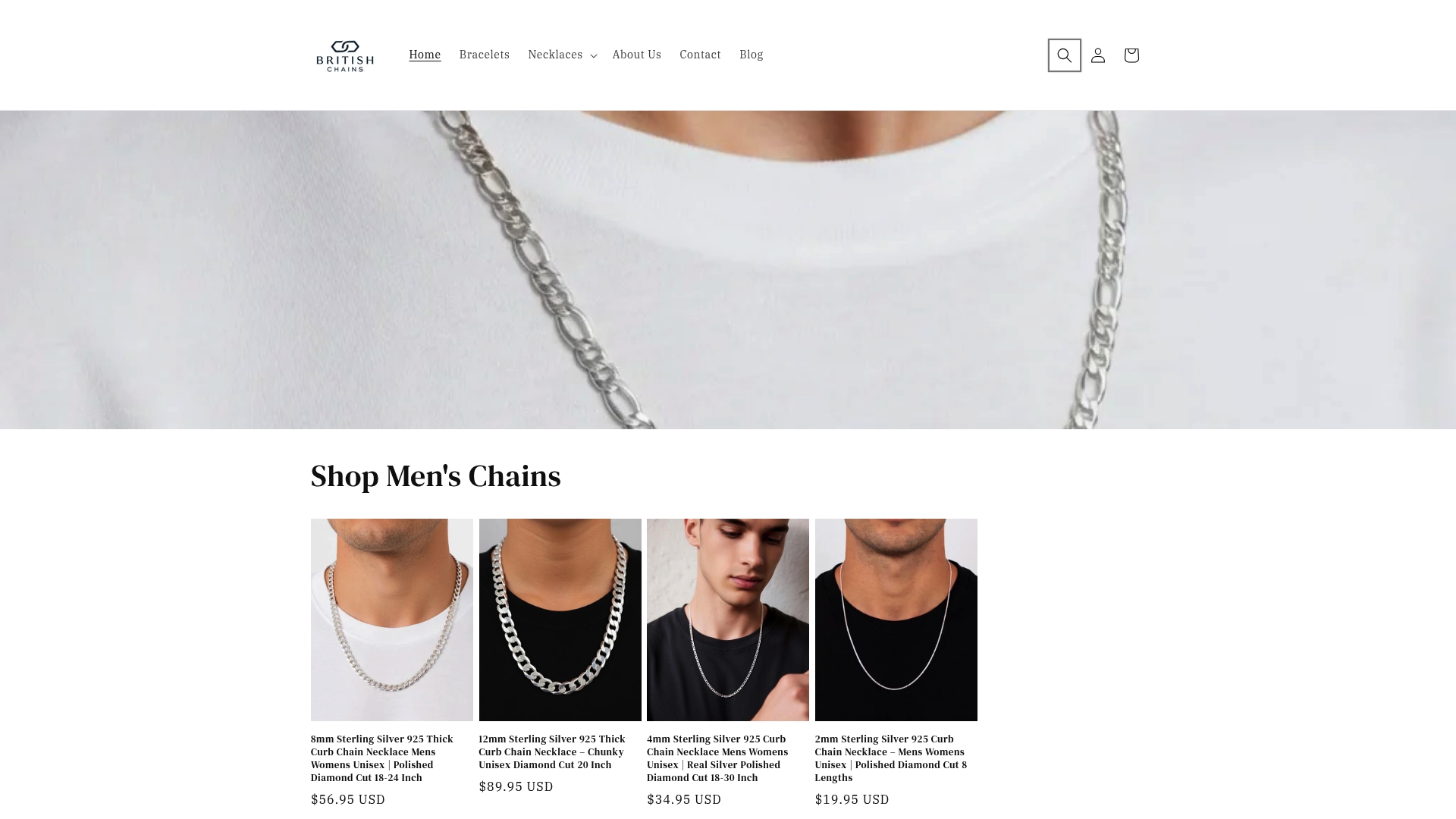
Whether you prefer the classic weight of a 4mm curb chain or the refined texture of a twisted rope necklace, each piece reflects the material and labour costs discussed throughout this article. Britishchains offers unisex styles in curb, rope, Figaro, herringbone, and box chain designs, available in multiple lengths and thicknesses. Every chain is hallmarked, giving you a verifiable guarantee of silver purity before you buy.
FAQ
Why are handcrafted silver making charges so high?
Making charges for handcrafted silver run 50–100% higher than mass-produced equivalents because artisan labour cannot be mechanised or compressed. A single piece may require several hours of skilled shaping, soldering, and finishing work.
Does handcrafted silver hold its value better than mass-produced silver?
The resale value of silver jewellery depends primarily on bullion weight and purity, not on craftsmanship. Making charges are rarely recovered at resale, so handcrafted silver is best valued for its quality and longevity rather than as an investment.
What is sterling silver 925 and why does it matter for pricing?
Sterling silver 925 is an alloy containing 92.5% pure silver, the recognised British standard for jewellery. Pieces meeting this standard cost more than silver-plated or lower-purity alternatives because they contain significantly more actual silver by weight.
How do rising silver prices affect handcrafted jewellery more than factory-made pieces?
Large manufacturers buy silver in bulk and hedge against price rises, reducing their exposure. Small artisan workshops buy at spot price with no volume discount, so every market increase hits their costs immediately and in full.
What physical signs confirm a piece is genuinely handcrafted?
Subtle tool marks, slight weight variation between pieces, and minor finish differences are authenticity markers for handmade silver. These characteristics confirm individual human craftsmanship rather than machine stamping.


