

The budget jewellery trade-off: what it means and how to win it
The budget jewellery trade-off is the tension between what a piece costs upfront, how long it actually lasts, and whether you get genuine value from wearing it. The single rule that cuts through the noise: prioritise cost-per-wear and durability for everyday pieces; save on trend items you will wear only a handful of times. That one principle, applied consistently, will stop you buying cheap pieces that fail in six months and expensive ones that sit unworn in a drawer.
Before you buy anything, run through these quick checks:
- Metal stamp — look for 925, 375, 585, or 750 stamped on the piece
- Hallmark — a UK Assay Office mark (London anchor, Edinburgh castle, Sheffield rose) confirms independent purity testing
- Clasp and joins — tug gently; a good clasp holds without flex, and soldered joins should be clean with no gaps
- Return policy — at least 14 days, ideally 30, with a clear warranty statement
Pro Tip: If a seller cannot tell you the metal stamp or show you a hallmark, treat the piece as fashion metal regardless of what the listing claims.
Key takeaways
The single most useful rule in the budget jewellery trade-off: spend on metal purity and construction for pieces you will wear daily, and save on trend pieces with a short lifespan.
| Point | Details |
|---|---|
| Cost-per-wear beats ticket price | A £80 hallmarked 925 chain worn daily for three years costs roughly 9p per wear — less than a cheaper plated alternative. |
| Hallmark is your proof of purity | A UK Assay Office mark independently confirms metal content; a maker’s stamp alone does not. |
| Prioritise daily-wear pieces | Spend on metal purity and clasp quality for everyday jewellery; save on trend pieces you will wear rarely. |
| Check returns and warranty | A minimum 14-day return policy and a written warranty are basic trust signals worth insisting on. |
| Britishchains 925 silver | Hallmarked sterling silver chains offer verifiable metal value, repairability, and low long-term cost for UK daily wear. |
Table of Contents
- What are the real trade-offs between quality, price and value?
- Materials and finishes: what do you actually get?
- Price bands in the UK: what does each budget actually buy?
- Practical shopping checklist: what to check before you buy
- How to allocate a limited budget: a prioritisation framework
- Care, maintenance and lifetime cost: the numbers that change everything
- Red flags and the questions you must ask before buying
- Why Britishchains focuses on 925 sterling silver
- Britishchains: hallmarked 925 silver for budget-conscious UK buyers
- Sources
What are the real trade-offs between quality, price and value?
The jewellery value stack has four layers: raw material cost, craftsmanship, brand premium, and retail markup. Two pieces that look identical in a photograph can differ by £80 because one carries a brand name and the other does not. Understanding which layers you are actually paying for is the core skill in navigating the budget jewellery trade-off.
Material and purity is the most verifiable layer. A 925 sterling silver chain has a known metal content you can confirm with a hallmark. A fashion-metal chain has none of that. Purity is not just about prestige; it directly affects tarnish rate, skin reaction risk, and whether the piece can ever be repaired or resized.
Craftsmanship covers finishing, setting, and assembly. Labour and finishing work — setting stones, polishing, clasp assembly — materially affect how long a piece holds together. Most early failures in budget pieces come from weak solder, thin prongs, and poorly fitted clasps, not from the metal karat itself.
Design and versatility is where you can legitimately save. A simple curb chain in 925 silver pairs with almost anything and never looks dated. A heavily embellished fashion piece might cost less upfront but works with fewer outfits and dates quickly, so its cost-per-wear climbs fast even if the ticket price is low.
Materials and finishes: what do you actually get?
The table below maps common materials to the factors that matter most for UK buyers. A five-part check covering metal, craftsmanship, stones, brand premium, and retail markup is the fastest way to judge whether a price is justified.
Demi-fine jewellery — gold vermeil over a 925 sterling silver base — sits between fashion and fine. With proper care it typically outlasts standard costume plating by several years, which is why editors at Forbes and Good Housekeeping consistently flag 925 silver and 14ct gold as the materials that deliver real longevity among affordable options.
Pro Tip: In the UK, an Assay Office hallmark is your independent proof of metal purity — it is not the same as a maker’s own stamp. Look for the four-part UK hallmark: sponsor’s mark, metal purity mark, Assay Office mark, and optional date letter. Without it, you are taking the seller’s word alone.
For shoppers with sensitive skin, sterling silver’s hypoallergenic properties make it a practical choice that fashion-metal alternatives rarely match.
Price bands in the UK: what does each budget actually buy?
Under £50 covers fashion metal, thin plating, and occasional entry-level 925 silver. Expect tarnish within months on plated pieces, limited or no hallmarking, and clasps that may loosen with daily wear. Fine for a trend piece you will wear a dozen times.
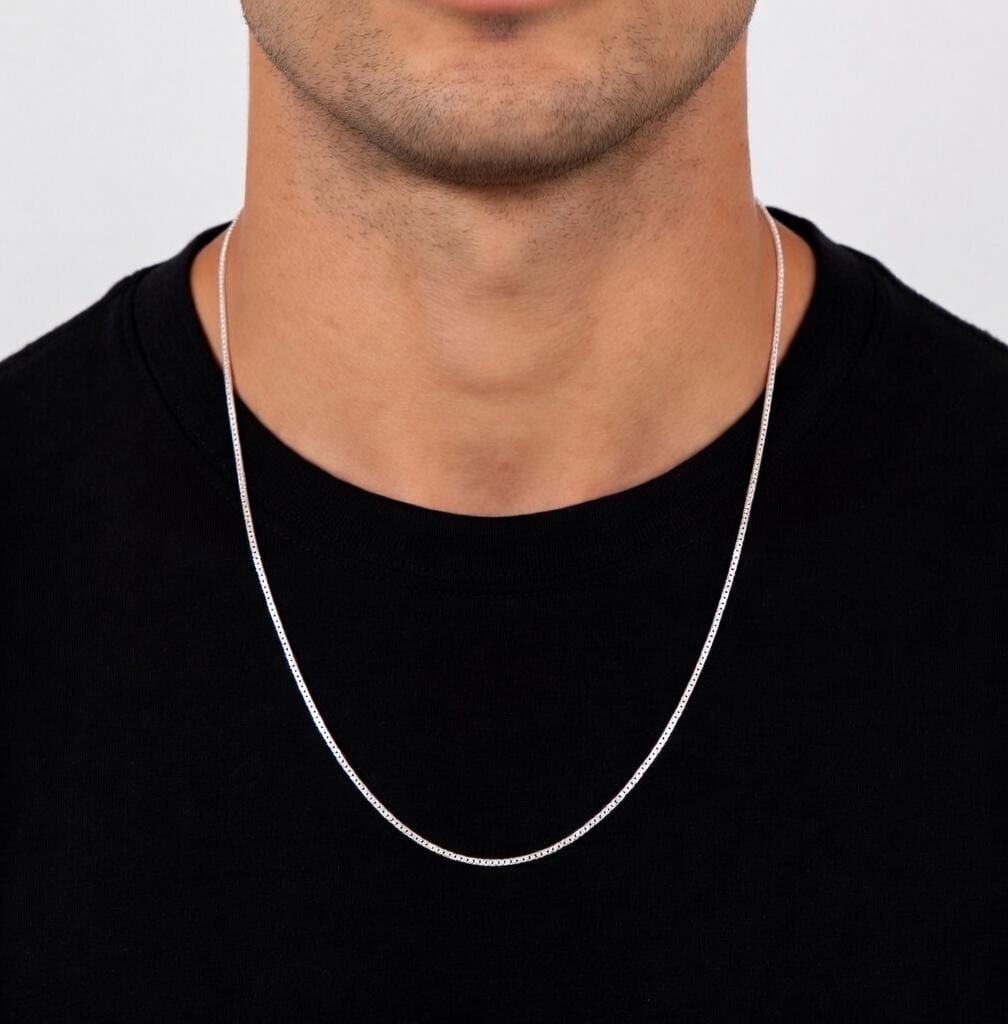
£50–£200 is where 925 sterling silver and gold vermeil become accessible. A well-made 925 chain in this band, hallmarked and properly finished, can last years of daily wear. This is the sweet spot for everyday silver necklaces and gift purchases where you want something that looks good and holds up.
£200–£1,000 opens up solid 9ct gold, heavier sterling silver pieces, and better stone settings. Repair costs are proportionally lower because the metal itself has scrap value and most jewellers will work on it. Resale is possible, though rarely at purchase price.
£1,000+ is fine jewellery territory: 18ct gold, natural stones with certification, and pieces that hold or appreciate in value. Cost-per-wear on a daily piece at this level can be remarkably low over a decade.
| Price band | Typical materials | Durability | Repair likelihood | Resale/scrap value |
|---|---|---|---|---|
| Under £50 | Fashion metal, thin plate | Low | Rarely worth it | Near zero |
| £50–£200 | 925 silver, vermeil | Good–very good | Yes, affordable | Modest |
| £200–£1,000 | 9ct gold, heavier silver | Very good | Yes, cost-effective | Moderate |
| £1,000+ | 18ct gold, certified stones | Excellent | Yes, high value | Strong |
Cost-per-wear in practice: a hallmarked 925 silver chain bought under £100 and worn frequently over multiple years offers a very low cost per wear. A £15 plated chain that needs replacing after four months costs around 12p per wear and generates more waste. The cheaper piece is not actually cheaper.
Practical shopping checklist: what to check before you buy
A short checklist prevents most poor-value purchases, whether you are shopping online or in-store.
- Metal stamp present — 925, 375, 585, or 750 stamped on the piece itself, not just on the packaging
- UK hallmark visible — Assay Office mark confirms independent testing; absence is a red flag
- Clasps and joins — test the clasp; check solder joins under good light for gaps or rough edges
- Stone settings — prongs should be flush and even; a loose stone on a new piece signals poor finishing
- Return policy — minimum 14 days in writing; a warranty covering manufacturing defects is a strong trust signal
- Material documentation — a receipt or product description that states the metal and any treatments in writing
Can you negotiate on price? With independent jewellers, yes, particularly on higher-value pieces or when buying multiple items. Online retailers rarely discount individual listings, but discount codes and seasonal sales are common.
Should you tell your jeweller your budget? Yes. A good jeweller will redirect you to pieces that fit your budget rather than upsell you into something that stretches it. Hiding your budget helps no one.
Is it worth selling old gold? If you have hallmarked gold pieces you no longer wear, scrap value is real and worth checking with a reputable gold buyer. Fashion metal and plated pieces have no scrap value.
Pro Tip: Rub a plated piece gently on white paper after a few weeks of wear. If you see a faint gold or yellow smear, the plating is already wearing through. A 925 silver piece will leave a faint grey mark — that is normal tarnish, not metal loss, and it polishes off.
For everyday bracelet styles that hold up to daily wear, clasp quality and soldered joins are the two construction points worth examining most closely.
How to allocate a limited budget: a prioritisation framework
Start with one question: will I wear this every day?
If yes, spend on metal purity (925 silver or solid gold), clasp quality, and construction — these are the points of failure that end a piece’s life early. A priority-based budget that directs money to the centrepiece, then the setting and structure, then decorative extras, consistently produces better long-term value than spreading a small budget thinly across several low-quality items.
If no, save; consider pairing your jewellery purchases with choices from the top affordable niche fragrances to complement your style. A trend piece you will wear to a handful of events does not need to be 925 silver. Spend less, accept the shorter lifespan, and put the difference towards a daily-wear piece that earns its cost-per-wear.
A practical example: instead of buying a large, heavily embellished plated pendant for £45, consider a smaller solid 925 silver pendant for the same price. The plated piece may look more impressive on the shelf. The silver piece will still look good in five years, can be polished at home, and has modest scrap value if you ever want to sell it. That is the value-for-money calculation most budget shoppers miss.
Care, maintenance and lifetime cost: the numbers that change everything
The true price of a piece includes what you spend keeping it wearable. Budget jewellery often looks cheap on the ticket but expensive over time once you factor in replacement and upkeep.
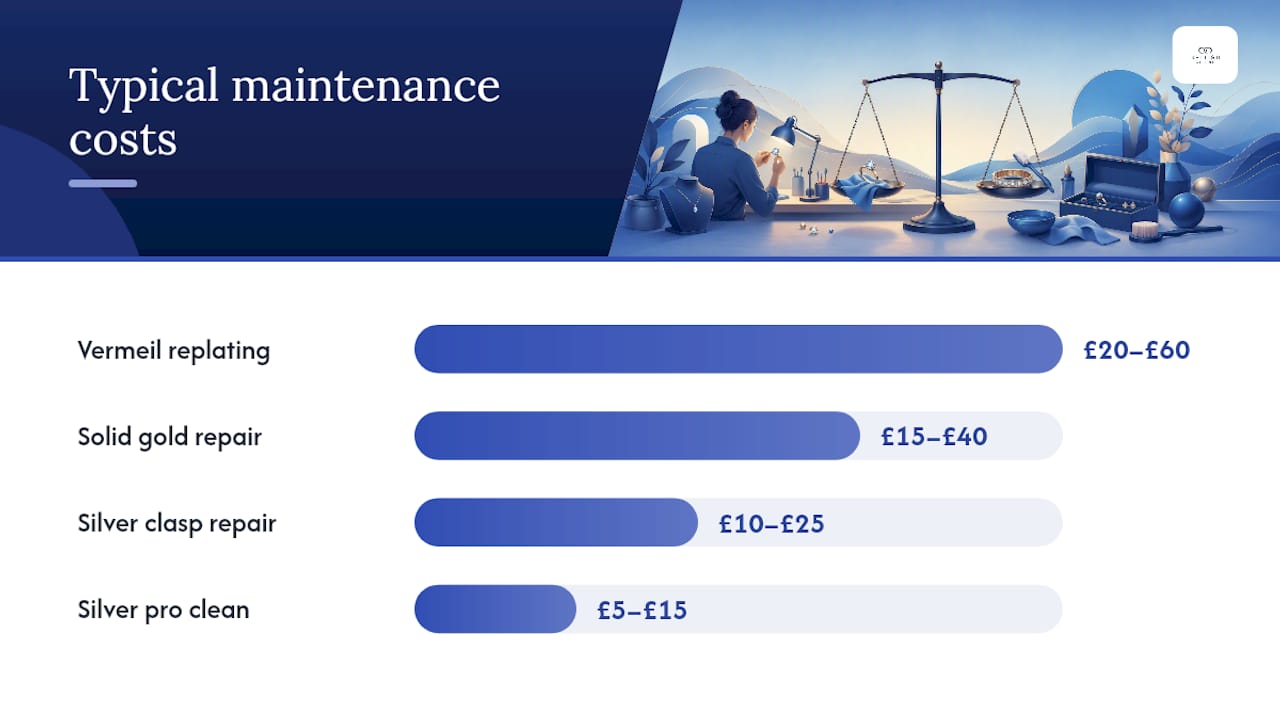
- 925 sterling silver — tarnishes with air and moisture but polishes easily at home with a silver cloth (under £5). Professional cleaning costs £5–£15. Clasp repair at a jeweller typically runs £10–£25. A well-cared-for 925 chain can last decades.
- Gold vermeil — avoid water, perfume, and sweat. Replating costs £20–£60 depending on piece size and the jeweller. Expect to replate every one to three years with regular wear.
- Gold-plated fashion metal — replating is often uneconomical because the base metal is not worth the labour. Most plated pieces are effectively disposable once the finish goes.
- Solid gold — minimal maintenance beyond occasional polishing. Prong tightening and clasp work are the main repair costs, typically £15–£40 per visit.
A vermeil chain bought at a moderate price can incur significant replating costs over several years. A 925 silver chain bought for £80 with home polishing and one clasp repair costs around £95 over the same period, and the silver chain retains modest scrap value at the end of it. Craftsmanship and finishing are what determine whether that repair cost is £10 or £40.
Simple steps that genuinely extend lifespan: store silver in an anti-tarnish pouch or zip-lock bag; remove jewellery before swimming, showering, or applying perfume; clean with a soft cloth after wearing.
Red flags and the questions you must ask before buying
Red flags to walk away from:
- Vague material claims (“silver-tone”, “gold-coloured”, “alloy”) with no metal stamp
- No hallmark and no willingness to provide one
- No returns policy or a policy shorter than 14 days
- Loose or misaligned stone settings on a brand-new piece
- Clasps that feel flimsy or spring-loaded catches that do not click firmly
- Inconsistent finish — rough edges, visible seams, uneven plating
Questions to ask the seller:
- What is the metal stamp, and where is it on the piece?
- Is this piece hallmarked by a UK Assay Office?
- Has the metal or stone been treated, coated, or enhanced in any way?
- What does the warranty cover, and for how long?
- What is your repair or replating policy after purchase?
On resale: hallmarked 925 silver and solid gold have genuine scrap value. Fashion metal, plated pieces, and simulated stones have effectively none. If resale matters to you, buy hallmarked metal and keep the receipt.
Why Britishchains focuses on 925 sterling silver
The budget jewellery trade-off resolves most cleanly when the material is verifiable, the construction is honest, and the care path is straightforward. That is why Britishchains centres its range on hallmarked 925 sterling silver chains rather than chasing lower price points with plated alternatives.
Hallmarking is not a marketing claim. It is an independent assay that confirms the metal is what it says it is. For a buyer navigating the trade-offs in cheap jewellery, that single mark removes the biggest uncertainty: you know exactly what you are paying for. Pair that with visible construction checks — soldered joins, quality clasps, neat finishes — and the cost-per-wear calculation becomes straightforward rather than speculative.
The honest position is that 925 silver is not the cheapest option in any price band. It is, however, the most reliable sweet spot between tangible metal value, durability, repairability, and accessible price for daily wear. For shoppers who want to buy once and wear for years rather than replace every season, that trade-off lands clearly in silver’s favour.
Britishchains: hallmarked 925 silver for budget-conscious UK buyers
Buying hallmarked sterling silver does not require a large budget. Britishchains offers a range of 925 sterling silver curb chains — including a 2mm polished curb chain that sits comfortably in the £50–£200 band — with UK hallmarking, clear metal specifications, and a return policy that removes the guesswork from buying online.
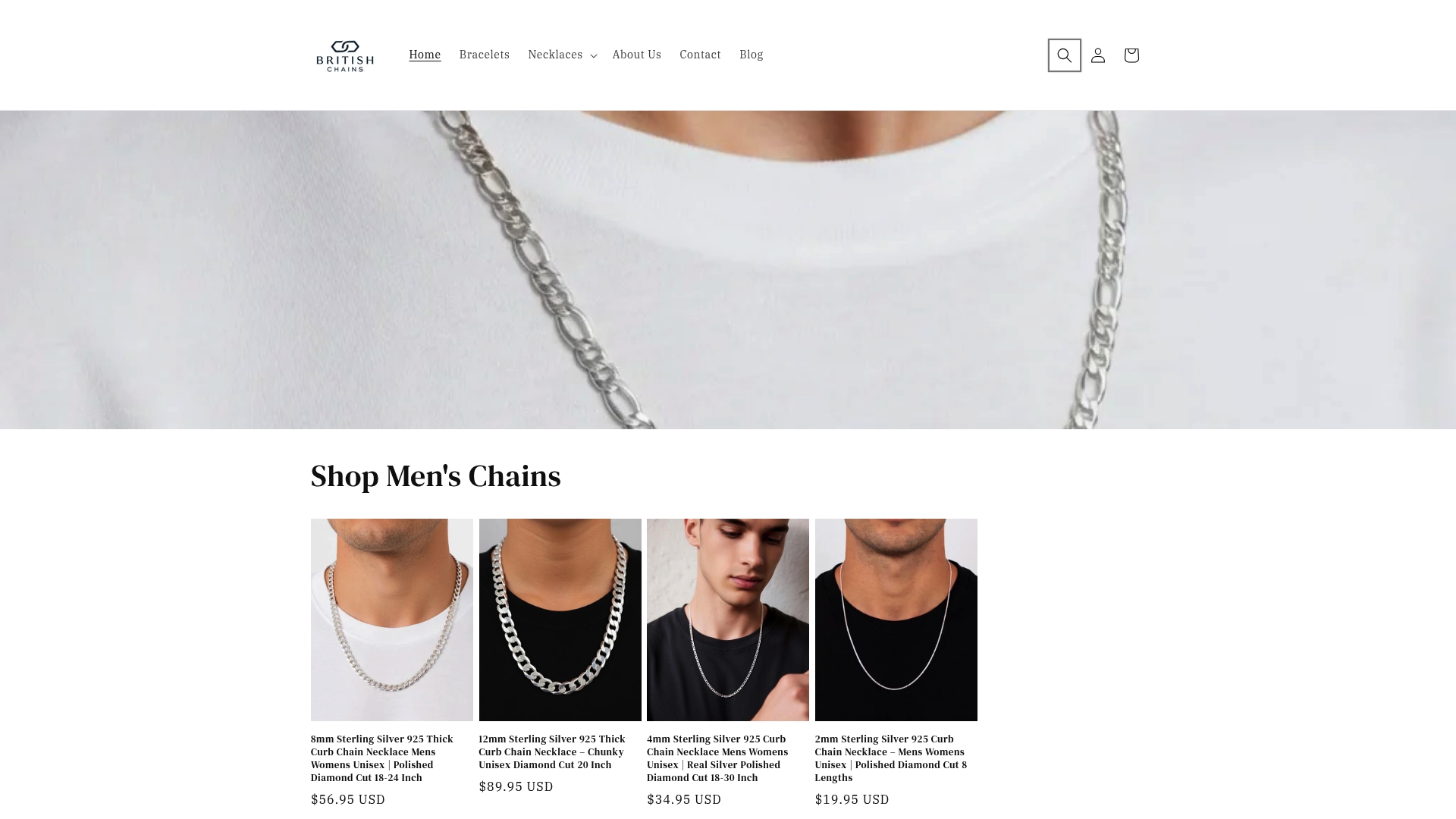
Every piece comes with documented metal purity, so the five-part check this article recommends takes seconds rather than minutes. For daily wear, a hallmarked 925 chain from Britishchains delivers the cost-per-wear maths that fashion-metal alternatives simply cannot match. Browse the full range at Britishchains and check the curb chain collection for a practical starting point.
Sources
- Forbes: best affordable jewellery brand (selection and editors’ notes)
- Good Housekeeping: best affordable jewellery brands
- Onsale


