

Untangle a Necklace Fast for UK Buyers with Simple Household Fixes
Unclasp the necklace, lay it flat on a well-lit surface, and work into the centre of the knot with a fine needle or tweezers, adding a tiny dab of baby oil or a pinch of powder if the metal resists. Always tease the knot from the middle outward rather than pulling the ends. If a link looks bent, twisted, or forced through another, or the chain is a delicate herringbone or snake style that won’t budge after patient work, stop and take it to a jeweller.
TL;DR:
- Using needles and tweezers from the center outward minimizes the risk of tightening or damaging links during untangling.
- Applying a small amount of baby oil or olive oil to a stubborn knot can help fine links slide past each other more easily.
- Baby powder or cornstarch provides a dry alternative to oil, especially for plated jewelry prone to staining, by reducing friction between links.
- For heavily fused or months-old knots, vibrating a container with glass cleaner can loosen the tangle without force, but never soak the chain too long.
- Storing chains with clasps fastened and separately in pouches or on hooks prevents tangles and reduces the need for untangling altogether.
Table of Contents
- How to prepare before you untangle a necklace
- Using needles and tweezers to pick apart a tight knot
- Does baby oil or olive oil help loosen a stuck chain?
- Can baby powder untangle a necklace without oil?
- What to do when a knot won’t budge: glass cleaner and vibration
- Will a warm soapy soak loosen a dirty, knotted chain?
- How do you untangle several necklaces at once?
- When should you take a tangled necklace to a jeweller?
- How to store your chains so they never tangle again
- What does Britishchains recommend for lower-maintenance chains?
- Our take: why patience beats force every time
- Ready for a chain that won’t fight you every morning?
- Sources
How to prepare before you untangle a necklace
Work on a flat, hard surface with good contrast, a pale cloth or sheet of paper under a dark chain, a dark cloth under a silver one, under bright light or a desk lamp angled low. Unclasp the necklace first and remove any pendant, then move well away from sinks and drains, since a dropped link can vanish down a plughole in seconds.
Gather your kit before you start rather than hunting for tools mid-knot:
- Two fine sewing needles or safety pins
- A pair of tweezers
- Toothpicks and cotton swabs
- Baby oil or olive oil
- Baby powder or cornstarch
- A soft cloth and a small bowl of warm water
- A magnifying glass, if your eyesight needs the help
Treat snake, herringbone, and other tightly linked chains with extra care. Their links interlock rather than loop, so they kink and mark far more easily than a curb or rope chain.
Pro Tip: Photograph the knot before you touch it. If you lose track of which loop feeds where, you can check the picture instead of guessing.
Using needles and tweezers to pick apart a tight knot
This is the technique most jewellers reach for first, and it works on the majority of everyday tangles.
- Slide one fine needle into the loosest part of the knot and wiggle it gently to create a small gap.
- Insert a second needle or a pin from the opposite side of that same gap, then ease the two apart to widen the opening. This two-point picking method reduces the risk of tightening the knot further, which is exactly what happens if you pull on the chain’s ends instead.
- Use tweezers to lift individual strands free once there’s enough space to see what’s looping over what.
- Rest the chain on a soft cloth while you work, and reach for a magnifying glass if the links are fine.
Stop the moment a link bends or the metal feels like it’s fighting you. Forcing a stubborn knot rarely ends well, and a bent link is much harder to fix than a tangle.
Pro Tip: Work from the knot’s centre outward. Every jeweller repeats this rule because pulling on loose ends is the single most common way people make a small knot worse.
Does baby oil or olive oil help loosen a stuck chain?
Yes, for genuinely stubborn knots. A drop of oil lets fine links slide past each other instead of gripping, which is why baby oil and olive oil are repeatedly recommended as a quick fix for necklaces that won’t shift with needles alone.
- Dab a small amount onto a cotton swab and apply it directly to the knot, not the whole length of chain.
- Work the loosened knot with your needle or tweezers while the oil is still doing its job.
- Once free, wash the chain in warm water with a little washing-up liquid and dry it thoroughly with a soft cloth.
- Skip oil altogether on heavily plated pieces or anything with glued stones and rinse promptly if you do use it, since residue left sitting can dull the finish.
Can baby powder untangle a necklace without oil?
Baby powder or cornstarch works as a dry alternative, and it’s the better choice for plated jewellery where oil risks staining the surface. Sprinkle it liberally over the knot and rub it in gently with your fingertip so the fine particles get between the links and cut the friction holding them together.
- Work the knot with a needle while the powder does its job, checking every few seconds for movement.
- Brush off the excess once the chain is free, or give it a quick rinse if powder has packed into tight loops.
- Never mix oil and powder on the same knot. Combined, they turn into a paste that clogs the links rather than freeing them.
What to do when a knot won’t budge: glass cleaner and vibration
When a chain has sat tangled for months and the knot feels almost fused, glass cleaner acts as a surfactant that breaks down the surface tension holding fine links together, and a little vibration finishes the job.
- Drop the tangled section into a small sealed container and add a splash of glass cleaner or another mild surfactant.
- Seal it, then set the container on a vibrating surface, the top of a running washing machine or a phone set to vibrate against a hard table, for a minute or two.
- Fish the chain out and work the softened knot with a needle while it’s still wet.
- Rinse thoroughly afterwards and never leave the chain soaking longer than necessary; brief exposure is the goal, not a long soak.
Pro Tip: Keep the container sealed the entire time. Vibrating chemicals in an open dish is how they end up on your worktop instead of loosening the knot.
Will a warm soapy soak loosen a dirty, knotted chain?
Sometimes a knot isn’t really a knot at all. It’s grime and old lotion gluing links together, and a short soak in warm soapy water dissolves that residue rather than fighting it with force.
- Fill a small bowl with warm water and a few drops of mild dish soap, then submerge the tangled section for two to three minutes.
- Lift the chain out while wet and use a pin to gently tease apart any gaps that appear as the grime softens.
- Rinse well and dry the chain immediately with a soft cloth, since sterling silver left damp is more prone to tarnishing.
How do you untangle several necklaces at once?
A jewellery box with three chains fused into one knot looks worse than it is, provided you work methodically. Unclasp every necklace first and spread them out flat so you can see how many strands you’re actually dealing with, then trace each clasp back to its own chain before touching anything.
- Start with whichever chain looks easiest to isolate; freeing one strand often loosens the whole tangle.
- Move to tighter multi-chain knots only once the simpler ones are clear.
- Dust the pile with a little baby powder to help overlapping strands slide apart.
- For a genuinely fused knot involving several chains, use two needles from opposite sides at once rather than trying to pick one loop out with a single tool.
When should you take a tangled necklace to a jeweller?
Some knots aren’t worth fighting yourself. If a link looks bent or forced through another, or you’re working with a snake or herringbone chain that’s developed a visible kink, stop before you make it permanent.
- Give yourself a rough thirty-minute limit; if you’re no further along, continued force is more likely to distort links than free them.
- Very delicate chains and severely compressed knots are exactly the cases jewellers flag as best left to a professional.
- A jeweller has magnification, specialist picks, and the option to anneal the metal, softening it briefly so a stubborn knot can be worked loose without stressing the links.
How to store your chains so they never tangle again
Prevention takes less effort than any of the methods above, and it’s the difference between opening a jewellery box and wincing versus reaching in and picking up exactly what you want.
- Always fasten the clasp before putting a necklace away, even for two minutes on a bedside table. An open clasp is how loose chains find their way around everything else in the drawer.
- Store each chain separately, in its own soft pouch, hung on an individual hook, or laid in a divided jewellery case rather than tossed into a communal tray.
- Travelling is where most tangles happen. Threading a chain through a drinking straw and fastening the clasp at both ends stops it moving during a flight, or invest in a compartmentalised travel case if you carry several pieces regularly.
- Choose sturdier styles for daily wear. A thicker rope or Figaro chain holds its shape far better than a thin cable or fine snake chain, which twist and knot almost on contact.
What does Britishchains recommend for lower-maintenance chains?
Some jewelry retailers focus on hallmarked sterling silver chains built for daily wear and may recommend styles that resist tangling. Curb, rope, and Figaro links sit thicker and looser than fine cable or snake designs, so they’re less prone to the tight, compressed knots that send people to a jeweller in the first place.
- Rope and Figaro chains hold their shape well because their links are broader and less likely to fold flat on themselves.
- Hallmarking can confirm silver purity, which matters for how the metal ages and how it responds to cleaning methods like a soapy soak.
- Detailed chain care guidance on cleaning and aftercare is available for readers who want to look after a piece properly once it’s untangled.
Our take: why patience beats force every time
Most of the advice circulating about necklace tangles amounts to the same thing dressed up differently: be patient, work from the centre, and don’t yank the ends. That’s the correct advice, and it’s also the bit most people skip when they’re frustrated and running late.
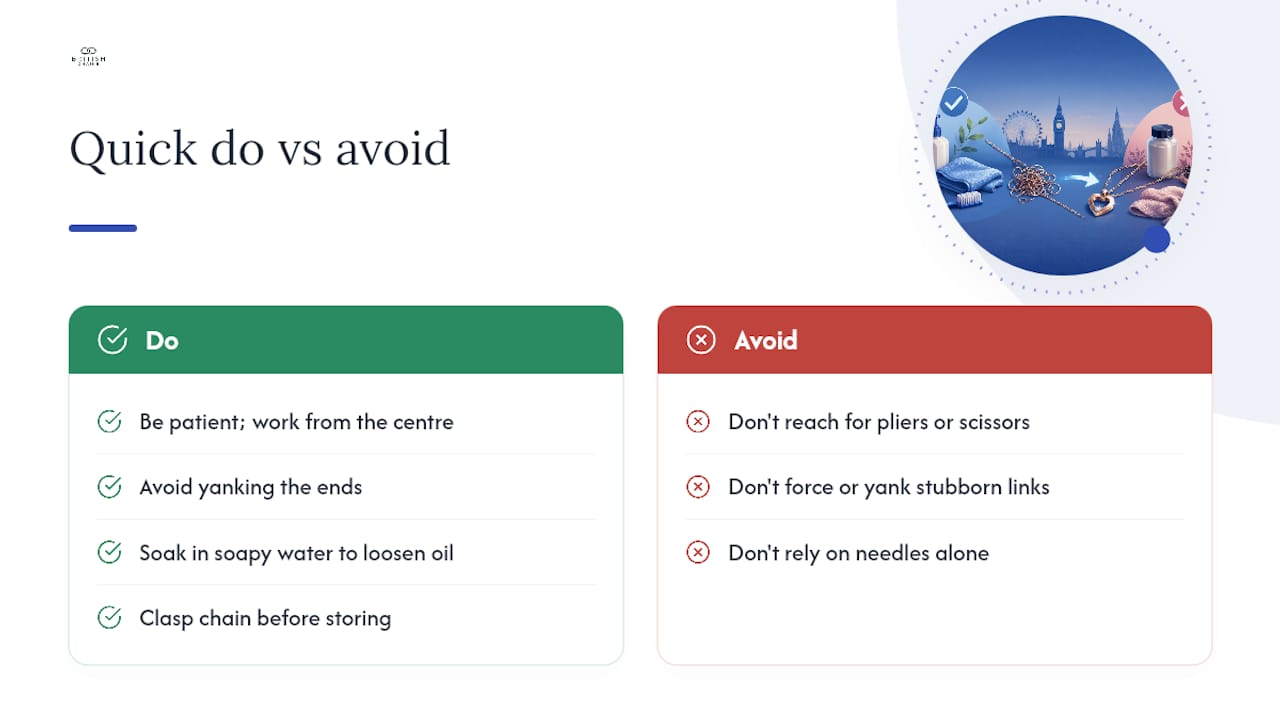
What gets underrated is how often the “knot” is really just dried lotion or body oil binding two links together, which is why a soapy soak solves problems that needles alone can’t touch. What gets overrated is reaching for pliers or scissors the moment a chain resists. Either tool can permanently deform a link in seconds, and a bent link on a fine chain is often unrepairable without a full section replacement.
The single change worth making isn’t a new untangling trick. It’s storage. Clasping a chain before it goes in a drawer takes three seconds, and it eliminates the vast majority of tangles before they start. Combine that with choosing chunkier chain styles for the pieces you wear daily, and you’ll spend a lot less time hunched over a lamp with a needle in hand.
— British
Ready for a chain that won’t fight you every morning?
If you’re tired of untangling the same fine cable chain every other week, the fix might be simpler than another round with the needles. A thicker, sturdier chain simply doesn’t knot the way a delicate one does, and that’s exactly where Britishchains focuses its collection.
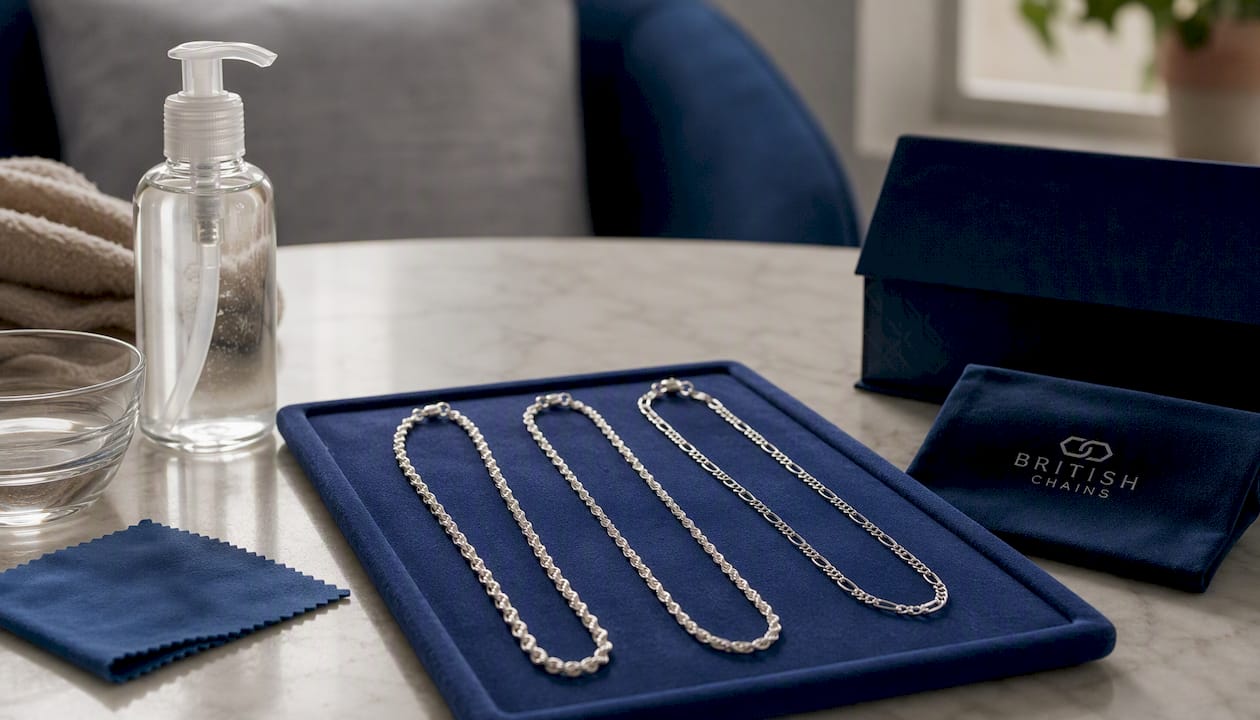
The 3mm sterling silver twisted rope chain holds its twist well through daily wear, and if you want something with even more presence, the 4mm rope chain offers the same tangle resistance in a heavier build. For a slimmer look that still avoids the fine-cable trap, the 2mm Figaro chain balances a delicate appearance with links substantial enough to resist knotting.
Every piece is hallmarked sterling silver, so you know exactly what you’re wearing and how to care for it. Browse the collection and pick the chain that fits how you actually wear jewellery, then keep it clasped in its own pouch, and you’ll rarely need a needle again.
Sources
- How to untangle a necklace chain: 5 easy tips
- How to Untangle a Necklace Easily, According to a Pro
- How to Untangle Necklaces
- How to Untangle a Necklace: A Step-by-Step Guide


