

Chains that don't pull hair: best styles and quick fixes
The chains least likely to pull hair tend to include snake, box, fine cable and wheat, because their links sit flush against each other with minimal gaps for strands to catch. One effective fix if your necklace snags is checking the clasp for rough edges and, if needed, sliding it round to the front to determine whether the clasp or the links cause the snagging.
- Snake chain — a solid, ridged tube with no open links at all, so hair simply glides across it.
- Box chain (Venetian) — square links sit tightly stacked, leaving almost no gap for a strand to wedge into.
- Fine cable chain — traditional oval links, smooth and low‑profile when kept slim and well‑finished.
- Wheat chain — twisted, braided links that look intricate but sit close enough to resist snagging.
Pro Tip: Before buying or wearing any chain, run it slowly between your thumb and forefinger. Any rough patch, burr, or catch you feel is exactly what your hair will find too.
Key Takeaways
Chains that don’t pull hair typically have tightly linked construction, a polished finish, and a clasp with smooth, flush edges.
| Point | Details |
|---|---|
| Best low-risk styles | Snake, box, fine cable and wheat chains resist snagging thanks to tight, gap-free link construction. |
| Clasp is the usual culprit | Check the clasp for rough edges first; moving it to the front diagnoses the real cause of pulling. |
| Finish matters as much as shape | High-polish surfaces reduce friction; matte or hammered finishes grip hair more readily. |
| Maintenance prevents recurrence | Clean away product buildup regularly and store chains flat to avoid kinks that create new snag points. |
| Britishchains’ hallmarked options | Britishchains’ polished sterling silver snake and box chains are hallmarked and tested for smoothness before dispatch. |
Table of Contents
- Why some chains snag or pull hair
- Chain types least likely to pull hair — what to pick and why
- How to choose a chain: thickness, clasp, length and layering
- Immediate prevention and simple fixes you can try now
- Care tips to keep chains smooth and snag-free
- Britishchains’ recommended styles and features
- Sources
Why some chains snag or pull hair
Four things cause a chain to catch hair: link shape, surface texture, gaps between components, and clasp edges. Get any one of these wrong and even an expensive necklace will tug at your hairline within a day.
Open or twisted link designs are the worst offenders, because a gap wide enough to admit a single hair strand will eventually trap dozens of them. Rope chains, some Figaro styles and heavily textured curb chains fall into this category more often than smooth constructions do. A rough or unpolished surface adds friction, so even a well‑built chain in a matte or hammered finish grips hair more than a high‑polish equivalent does. Loose bails and pendants that spin freely twist strands around themselves as you move through the day, and a poorly seated clasp, particularly a spring‑ring with a worn edge, is one of the most common single culprits behind a “pulling” necklace.
Jewellery designers routinely advise testing chains between the fingers before wearing them for any length of time, since a snag you can feel with your fingertips is a snag your hair will find within minutes. Picture the nape of the neck where a chain sits against loose hair: the clasp dangles at exactly the height where fine strands brush past it hundreds of times an hour, which is why that one small component causes a disproportionate share of the problem.
Chain types least likely to pull hair — what to pick and why
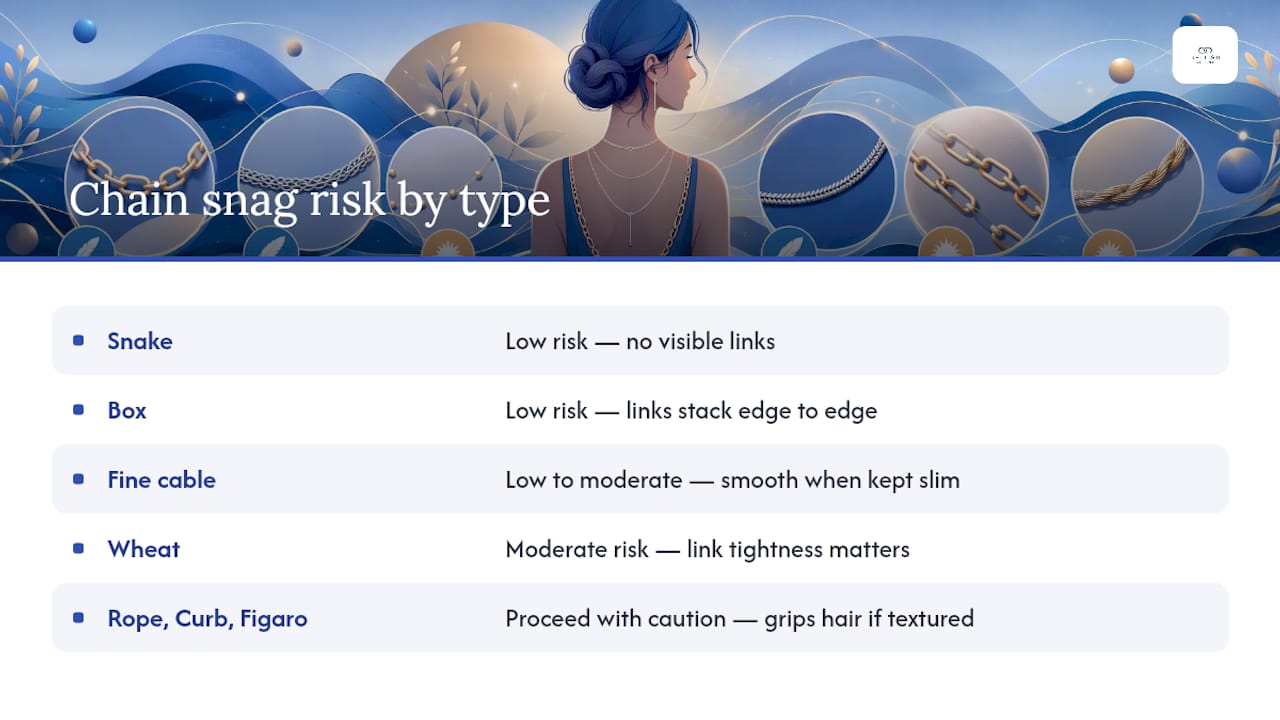
Snake chain — low risk. Its interlocking metal scales form a continuous, flexible tube with no visible links or gaps. There’s nothing for hair to catch on, which is why guides on avoiding hair‑pulling jewellery consistently name it as one of the safest constructions available. It drapes close to the neck and suits both minimalist pendants and standalone wear.
Box chain — low risk. Square links stack edge to edge, so the chain reads almost like a solid cord rather than a series of joined pieces. This tight geometry, also flagged as low‑snag by independent typologies of chain design, makes box a strong everyday choice for anyone who ties their hair up and down repeatedly through the day.
Fine cable chain — low to moderate risk. The classic oval‑link design is smooth when kept slim and well‑finished, though wider or looser cable links start to behave more like rope chains. Cable works well for layering because it lies flat rather than twisting.
Wheat chain — moderate risk. The braided, twisted links look elaborate, but a well‑made wheat chain keeps those twists tight enough to resist catching. Cheaper versions with looser braiding are more prone to snagging, so link tightness matters more than the style name here.
Rolo chain — low to moderate risk. Small, round, uniform links create a clean silhouette. Risk rises mainly with larger link sizes, where gaps widen enough to admit strands.
Rope, curb and Figaro — proceed with caution. Rope chains twist multiple small links together, and the resulting texture is exactly the kind of surface that grips hair rather than releasing it. Curb chains, with their flattened, interlocking oval links, can catch if the links sit loosely or the finish is rough. Figaro’s alternating pattern of long and round links introduces more edges and transition points than a uniform chain, raising the odds of a snag near the join.
Finish matters as much as shape. A high‑polish surface reduces the microscopic texture that friction depends on, while matte, brushed or hammered finishes add exactly the kind of grip that traps fine hair. Link size compounds this: a delicate 1mm snake chain glides more easily than a chunky 4mm version of the same style, simply because thicker links have more surface area and, in some constructions, more room between components.
Pro Tip: If you love the look of rope or curb chains, look for versions described as “tightly woven” or “solid link” rather than “hollow” or “diamond-cut” — the tighter the construction, the less it behaves like Velcro against your hairline.
How to choose a chain: thickness, clasp, length and layering
The decisive rule is simple: choose a smooth, tightly linked chain with a flush clasp, worn at a length that sits comfortably below where your hair falls loosest.
- Thickness — moderate is better than extremely thin. A very fine chain (under 1mm) can twist on itself and create the kind of irregular surface that grabs hair, whereas 1.5 to 2.5mm gives enough structure to lie flat.
- Clasp type — lobster clasps with smooth, rounded edges are generally kinder to hair than older spring‑ring designs, which wear down and develop sharp lips over time.
- Length — for long hair, a shorter choker‑style length that sits above the hairline, or a longer opera length that falls well below it, avoids the exact zone where loose strands brush past most.
- Pendant and bail — choose a fixed bail over a loose ring where possible, since a pendant that spins freely twists strands around the chain as you move.
- Layering — stick to two or three chains of clearly different lengths and avoid mixing textured styles like rope with fine cable, since dissimilar textures tangle against each other as much as they do against hair.
Quick decision rules: if you have fine, easily tangled hair, pick snake or box over rope or curb every time. If you wear your hair up most days, length matters less than clasp quality, since the clasp will still brush your neck. If you’re buying a first “everyday” chain, a mid‑weight box chain in a polished finish covers the widest range of hair types and styles.
Immediate prevention and simple fixes you can try now
Clasp inspection, length adjustment and cleaning solve most hair‑pulling complaints without buying a replacement chain.
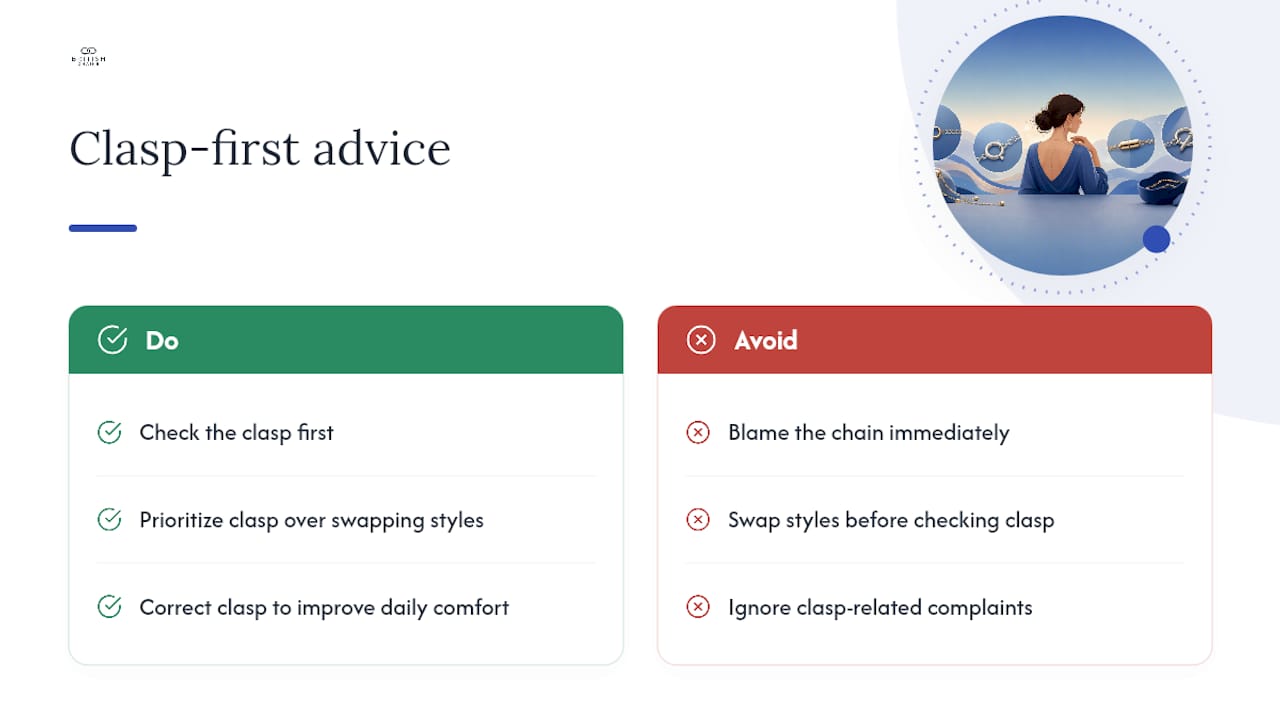
- Check the clasp first. Run a fingernail gently along its edge; any roughness or a bent lip is often the actual cause of pulling, even on a chain with perfectly smooth links.
- Move the clasp to the front as a diagnostic. If the pulling stops, the clasp is the problem, not the chain itself.
- Lengthen the chain slightly, or swap to a longer style, so the clasp and links sit clear of where hair falls loosest.
- Clean away product buildup. Hairspray, oils and skincare residue make a chain tackier and more likely to grip strands over time.
- Secure spinning pendants with a smaller jump ring or a fixed bail so they stop rotating against your hair.
- If hair actually wraps around a link, don’t pull. Hold the chain still, use a fine-tooth comb to tease strands loose gently, and add a drop of conditioner if it’s tightly knotted.
- See a jeweller if you spot sharp edges, bent links, or a clasp that won’t close properly. These usually need repair rather than a home fix.
Care tips to keep chains smooth and snag-free
Routine cleaning and a quick visual check keep surfaces smooth and clasp edges safe, which is most of what prevents future snagging.
- Wipe your chain with a soft polishing cloth after wearing it, especially if you’ve applied perfume, hairspray or moisturiser that day.
- Store chains flat or hanging separately rather than tangled in a jewellery box drawer, since kinks in the links create new rough points.
- Avoid sleeping in chains. The repeated friction against a pillow bends links and wears down clasps faster than daytime wear does.
- Get chains professionally polished or repaired once links start looking dull or a clasp feels stiff.
Product buildup is worth taking seriously: a chain coated in invisible residue becomes tackier, and a tacky surface grips hair the same way a rough one does, even if the underlying links are perfectly smooth.
Britishchains’ recommended styles and features
Britishchains recommends sterling silver snake chains and box chains for anyone whose hair regularly catches on jewellery, matching the independent guidance on low‑snag constructions that Britishchains’ own comparison confirms for everyday wear.
- Every chain carries a British hallmark, the legal stamp confirming genuine sterling silver purity, so you know the finish and construction meet a verified standard rather than a marketing claim.
- Polished snake and box styles are offered across multiple thicknesses, letting fine‑haired wearers choose a slimmer profile and thicker‑haired wearers size up without sacrificing smoothness.
- Britishchains’ own staff test new stock by running each chain through their fingers before it ships, the same check recommended earlier in this guide.
Pro Tip: If you’re unsure which thickness suits your hair type, contact customer service before ordering. A quick conversation about your hair and how you wear it saves a return later.
A practical note from someone who has looked at a lot of chains
The chain rarely deserves the blame it gets. In most complaints we’ve seen, the clasp was the real culprit, not the links, which is why checking it first matters more than swapping styles. Getting this right changes how comfortable jewellery feels every single day.
Where to find hair-friendly chains that actually last
There are other routes to solving this, from asking a local jeweller to modify a clasp, to hunting through general fashion retailers for whatever happens to be in stock. Britishchains takes a different approach: every chain is designed and hallmarked in the UK with construction quality checked before it ever reaches you, so you’re not gambling on an unlabelled finish or a clasp that wears out within months.
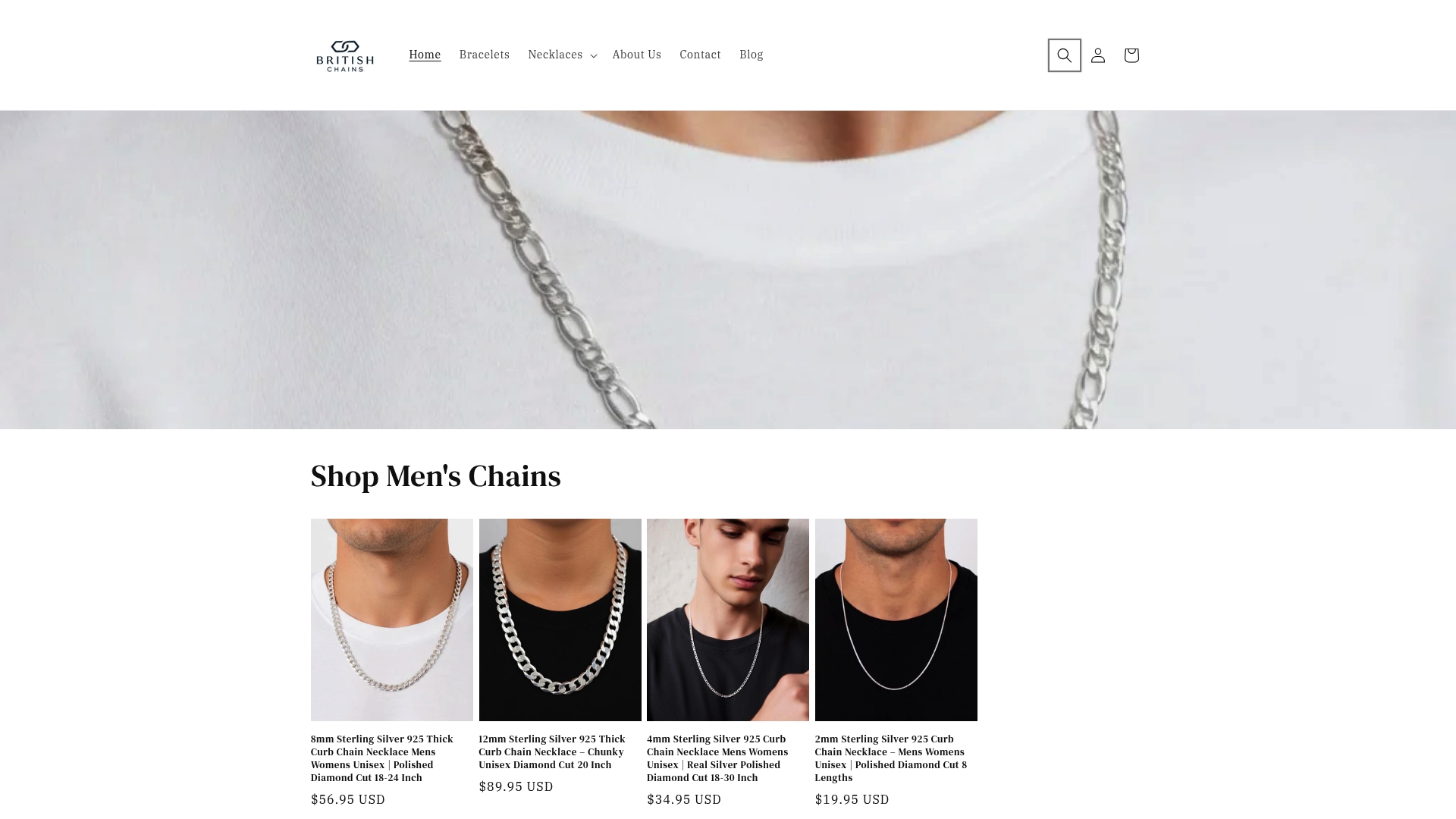
If snagging has been putting you off wearing a necklace at all, browse the snake chain collection or the box chain range and pick a thickness that matches how you wear your hair day to day. Unsure which one suits you? Get in touch with customer service before you order, and they’ll talk you through clasp type and thickness based on your hair and your usual style.
Sources
- Types of necklace chains
- Which Type of Necklace Chain Is Best for Avoiding Hair Pulling?
- Chain pulling your hair? 7 fixes that work
- How to choose a chain that won’t pull on your hair


