

How To Clean A Sterling Silver Bracelet: Easy At-Home Fixes
That favorite sterling silver bracelet you wear every day? Over time, it's going to tarnish. It's not a sign of poor quality, it's just what happens when sterling silver 925 reacts with moisture, air, and the natural oils on your skin. The good news: knowing how to clean a sterling silver bracelet at home is straightforward, and you probably already have everything you need in your kitchen.
At British Chains, we sell sterling silver bracelets built to last, but even the highest-quality pieces need a little maintenance to keep their shine. We put this guide together based on methods that actually work, so you can skip the guesswork and get straight to results. Whether your bracelet has light dullness or a stubborn layer of dark tarnish, there's a simple fix below that'll handle it.
This guide covers several at-home cleaning techniques, from a basic soap-and-water wash to the popular baking soda and aluminum foil trick, along with tips on what to avoid so you don't accidentally damage your jewelry. Each method includes step-by-step instructions you can follow right now with supplies you likely already own.
What you need and what to avoid
Before you start any cleaning method in this guide, gather your supplies first. Having everything on hand before you begin means you won't stop mid-clean and accidentally leave your bracelet soaking longer than needed. Most of what you need for these how to clean sterling silver bracelet methods already sits in your kitchen or bathroom cabinet.
Supplies to gather
You don't need specialty jewelry products to get strong results. The items below cover every method in this guide, so check what you have at home before spending anything.
- Mild dish soap (plain formula, no moisturizers or antibacterial additives)
- Warm water
- Baking soda
- Aluminum foil
- White vinegar
- Soft-bristled toothbrush (an old one works perfectly)
- Soft, lint-free cloth or microfiber towel for drying
- Small bowl or shallow container
A lint-free cloth is the right tool for drying and buffing. Paper towels feel gentle but are abrasive enough to leave fine scratches on a polished silver surface.
What to avoid
Certain cleaning approaches seem reasonable but will strip the finish, cause scratches, or actually speed up tarnish on your bracelet. Knowing what not to use protects your bracelet just as much as the cleaning steps themselves.
Sterling silver 925 is an alloy containing 92.5% silver and 7.5% copper. That copper content is what causes tarnish, but it also makes the metal sensitive to harsh chemicals. Using the wrong product can cause lasting surface damage that no amount of polishing will fix.
Avoid these entirely:
- Bleach or ammonia-based cleaners: far too harsh for sterling silver and will cause visible damage
- Toothpaste: contains abrasives that scratch the metal surface
- Paper towels: leave micro-scratches on polished silver
- Ultrasonic cleaners: not safe for all silver, especially chain links or pieces with stones
- Hot water: can warp delicate links and accelerates oxidation
- Rubber bands or rubber gloves: rubber speeds up tarnishing on silver surfaces
Step 1. Start with the gentlest clean
Every cleaning session should start here, regardless of how bad the tarnish looks. A mild soap-and-water wash removes surface oils, sweat, and everyday buildup that causes dullness before it turns into real tarnish. For many bracelets, this method alone restores enough shine that you won't need to go further.
How to do a basic soap wash
This method works for light dullness and everyday maintenance, and it's the safest option for any sterling silver bracelet, including pieces with intricate link patterns. Run through these steps in order:
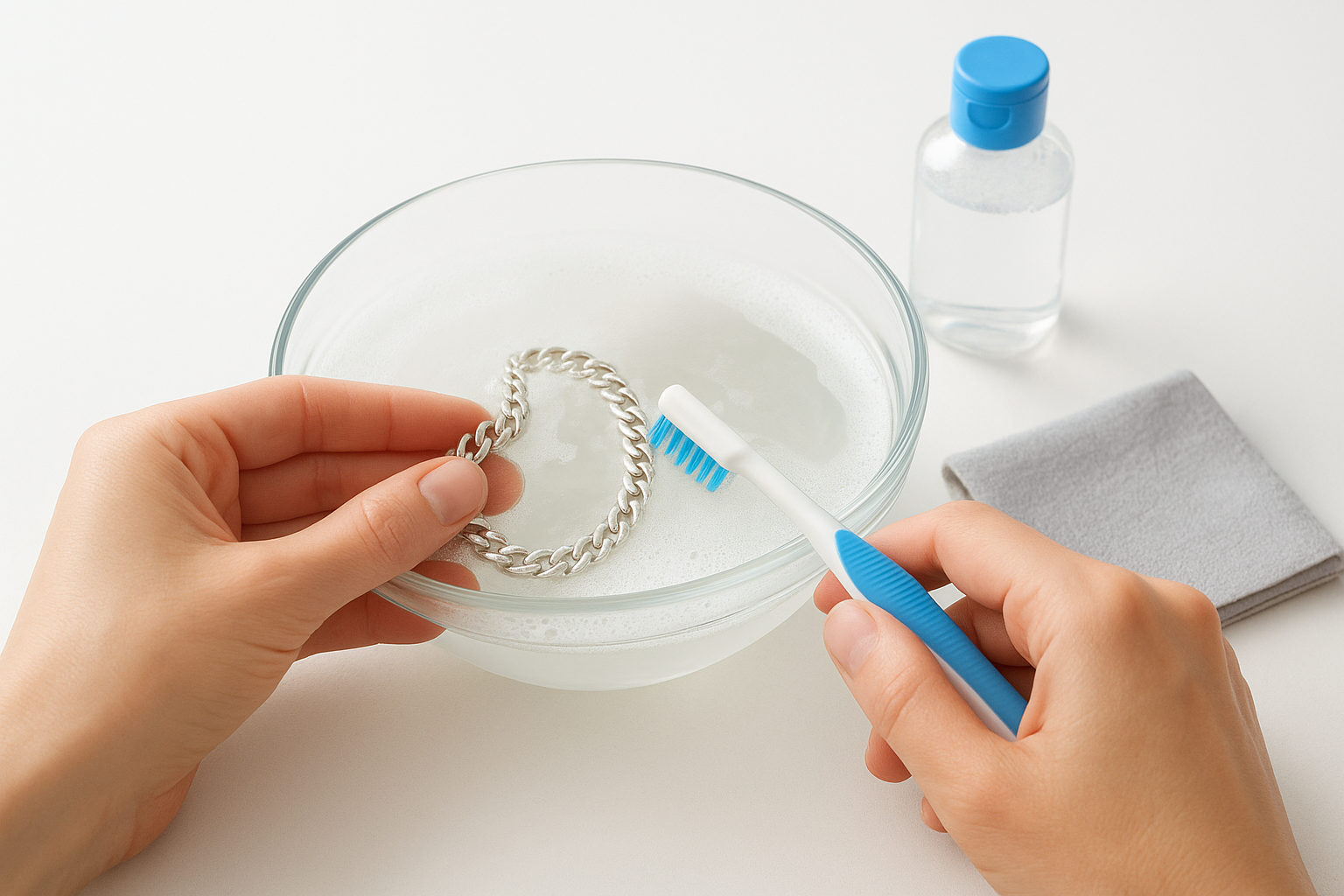
- Fill a small bowl with warm (not hot) water and add two or three drops of plain dish soap.
- Place your bracelet in the bowl and let it soak for two to three minutes.
- Use a soft-bristled toothbrush to gently scrub along the links, paying attention to crevices where buildup collects.
- Rinse thoroughly under cool running water to remove all soap residue.
- Pat dry immediately with a soft, lint-free cloth. Don't leave it to air dry.
Leftover soap residue will dull your bracelet faster than the tarnish you just removed, so rinse it well.
Knowing how to clean a sterling silver bracelet starts with this basic step. Skipping straight to stronger methods on a lightly tarnished piece is unnecessary and increases the risk of surface wear over time.
Step 2. Remove tarnish with baking soda and foil
When soap and water aren't enough, the baking soda and aluminum foil method is your next move. This technique uses a simple electrochemical reaction to lift tarnish off your bracelet rather than scrubbing it away, which means less friction and less risk of scratching the surface.
How the reaction works
The science behind this method is straightforward. When you combine baking soda, hot water, and aluminum foil, a chemical reaction transfers the sulfur compounds responsible for tarnish from your bracelet onto the foil instead. You can actually watch the foil discolor as it works. This is one of the most effective ways to clean a sterling silver bracelet without any abrasive rubbing.
Steps to follow
Read through the full list before you start so you know what to expect. Each step matters, including the rinse at the end.
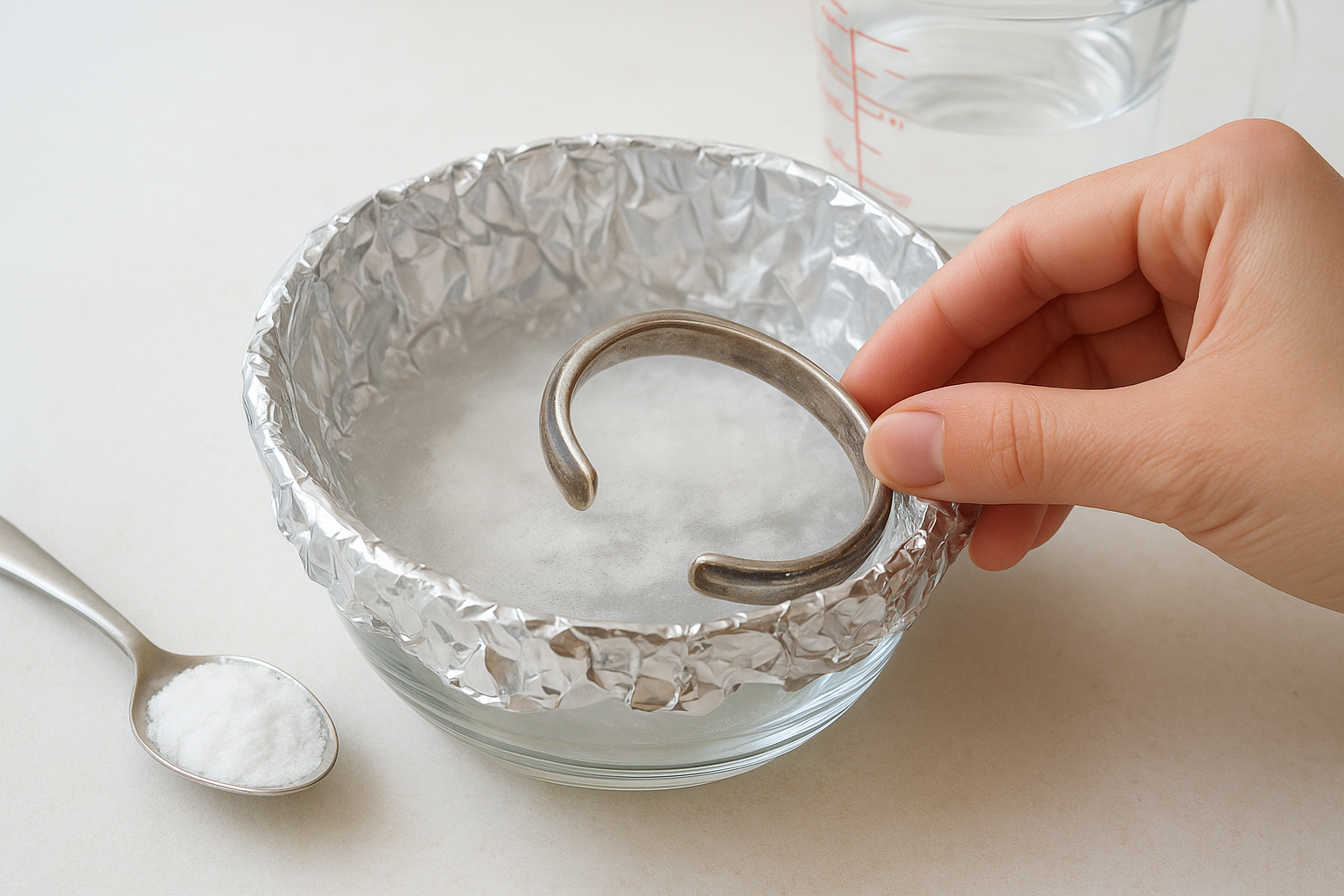
- Line a small bowl with aluminum foil, shiny side facing up.
- Add one tablespoon of baking soda and pour in one cup of hot (not boiling) water. Stir briefly.
- Place your bracelet in the bowl so it touches the foil directly. No contact means no reaction.
- Let it soak for two to five minutes, or up to eight minutes for heavier tarnish.
- Remove the bracelet, rinse thoroughly under cool running water, and dry immediately with a soft lint-free cloth.
Don't leave your bracelet in the solution for more than ten minutes, as extended exposure can dull the surface finish.
Step 3. Use vinegar for stubborn tarnish
White vinegar works well when the baking soda method leaves behind persistent dark patches that won't budge. The mild acidity in vinegar dissolves the oxidized compounds clinging to the surface without requiring harsh scrubbing. Use this method selectively, not as a routine clean, since repeated acid exposure can gradually affect the metal's finish.
How to clean with vinegar
This approach to how to clean sterling silver bracelet tarnish works best when targeted directly at the discolored areas. You only need two ingredients, and the soak time is short enough that there's no risk of over-exposing the metal if you follow the steps as written.
Do not let your bracelet soak in vinegar for longer than five minutes. Extended exposure to acid can dull polished surfaces.
Follow these steps in order:
- Mix half a cup of white vinegar with two teaspoons of baking soda in a small bowl. The mixture will fizz briefly, which is normal.
- Place your bracelet in the solution once the fizzing settles down.
- Let it soak for two to five minutes, checking it at the two-minute mark.
- Remove the bracelet and scrub lightly with a soft-bristled toothbrush to clear any remaining residue.
- Rinse thoroughly under cool running water and dry immediately with a lint-free cloth.
Fixes for green stains and fast re-tarnish
Two issues trip people up beyond ordinary tarnish: green discoloration on the bracelet itself and silver that goes dark again within days of cleaning. Both have specific causes, and fixing them means addressing the root problem rather than just repeating the same clean.
Green stains on your bracelet
Green marks come from the copper content in sterling silver 925 reacting with moisture, sweat, and skin oils. To remove them, make a thick paste with baking soda and a few drops of water, apply it directly to the stained area, and gently scrub with a soft toothbrush for thirty seconds. Rinse completely and dry right away.
Green marks on your skin from wearing your bracelet are harmless, but they signal that your bracelet needs a thorough clean and better storage between wears.
Fast re-tarnish after cleaning
If you're asking how to clean a sterling silver bracelet only to watch it darken again within a week, your storage or daily habits are the likely cause. Storing your bracelet on an open surface, wearing it while applying lotion or perfume, or showering with it on all accelerate oxidation significantly. Switch to an airtight zip-lock bag between wears, and apply any products before putting your bracelet on, not after.
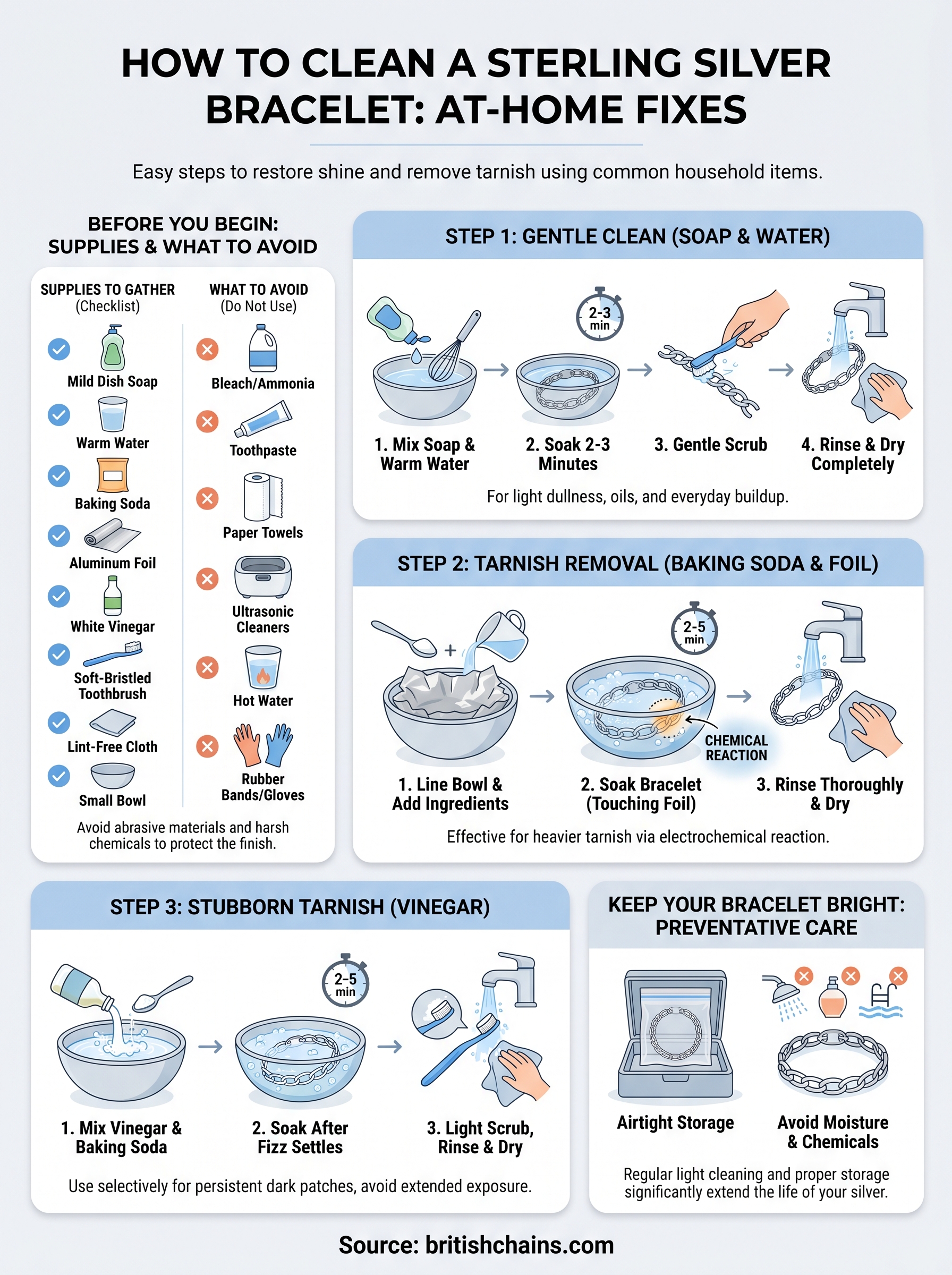
Keep your bracelet bright
Now that you know how to clean a sterling silver bracelet using methods that range from a basic soap wash to the baking soda foil trick, the goal is to clean less often by storing and wearing it correctly. Keep your bracelet in an airtight bag or sealed jewelry box when you're not wearing it, away from humidity and direct sunlight. Take it off before swimming, showering, or applying any skin products.
Regular light cleaning every two to four weeks prevents buildup from becoming serious tarnish. A quick soap-and-water wash after heavy wear takes under five minutes and keeps your bracelet looking sharp between deeper cleans. Good habits make every clean easier and extend the life of your silver.
If you're looking to add another piece to your collection, browse our men's silver chains for styles crafted from the same genuine sterling silver 925 that holds up beautifully with the right care routine.


