

Does Sterling Silver Tarnish? Why It Happens + Prevention
If you've ever noticed a yellowish or dark film forming on your silver jewelry, you've already answered the question: does sterling silver tarnish? Yes, it does. Every piece of sterling silver 925, from necklaces to bracelets, will eventually develop some degree of tarnish when exposed to air and moisture.
The good news? Tarnishing is a surface-level chemical reaction, not a sign of poor quality. It's actually one of the easiest jewelry issues to prevent and reverse. At British Chains, we work exclusively with genuine sterling silver 925 for our chain necklaces and bracelets, so understanding tarnish, and how to manage it, is something we talk about with customers regularly.
This article breaks down exactly why tarnishing happens at a chemical level, what speeds it up, and the straightforward steps you can take to keep your silver chains looking sharp for years.
Why sterling silver tarnishes
Sterling silver tarnishes because of a chemical reaction called oxidation, driven primarily by sulfur compounds in the air. When silver contacts hydrogen sulfide or sulfur dioxide, a thin layer of silver sulfide forms on the surface. That's the dark or yellowish film you see building up on your chains and bracelets over time.
The role of copper in sterling silver 925
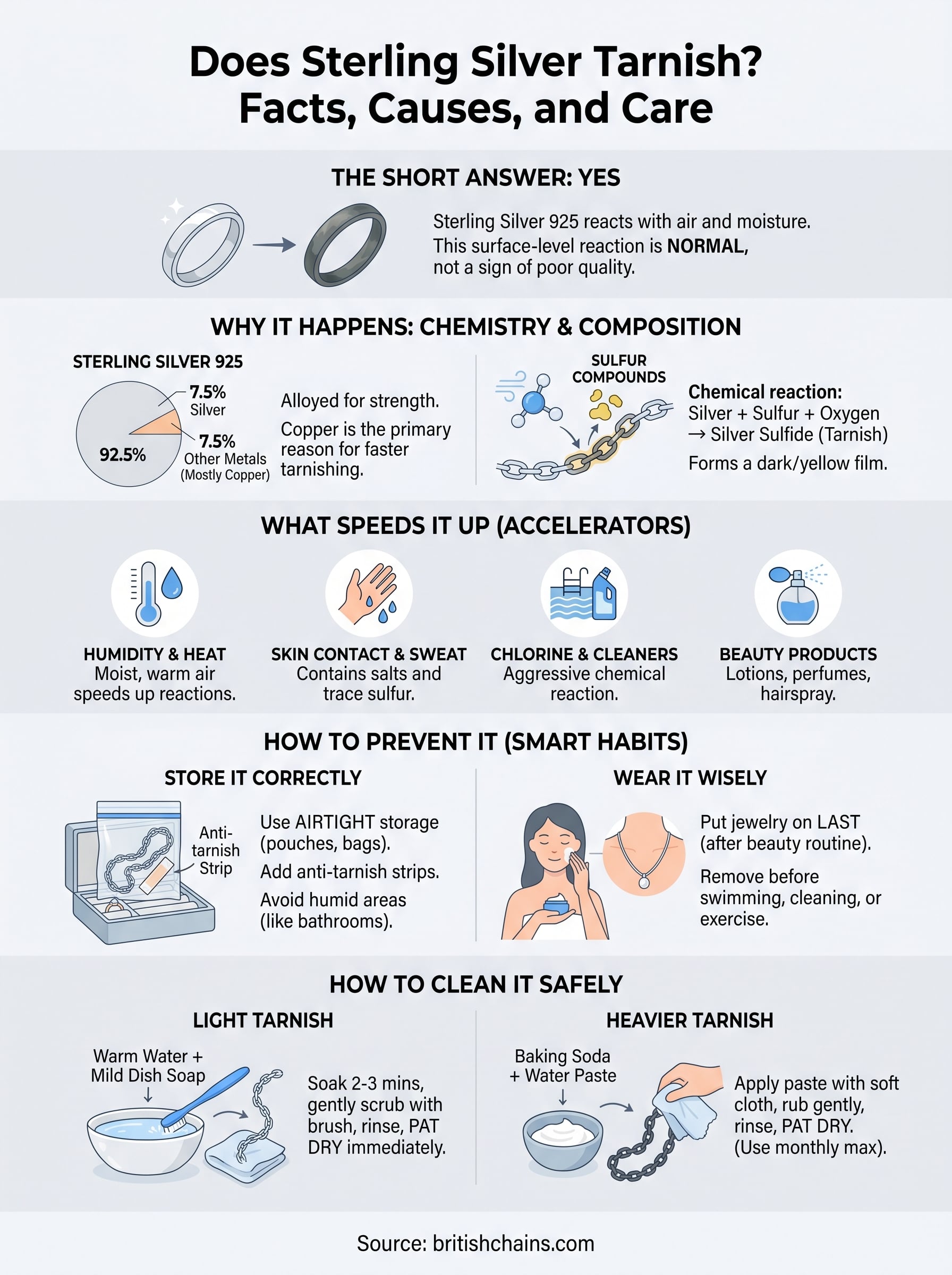
Sterling silver 925 isn't pure silver. The alloy contains 92.5% silver and 7.5% other metals, most commonly copper. Jewelers add copper because pure silver is too soft for everyday jewelry. Copper gives your chain the structural strength to hold its shape through regular wear, but it comes with a chemical trade-off.
Copper reacts far more aggressively with oxygen and sulfur than silver does, which is why sterling silver tarnishes faster than pure silver would on its own.
Copper oxidizes readily, producing its own brownish and greenish compounds alongside the silver sulfide. This combined reaction explains the range of discoloration tones you might see on tarnished sterling silver, from a subtle yellow tint early on to deep brown or near-black in more heavily tarnished pieces. So when you ask does sterling silver tarnish, the answer ties directly to this copper content built into the alloy.
Why exposure to air and moisture matters
Humidity accelerates tarnishing significantly. When moisture is present in the air, the chemical reactions producing silver sulfide move faster. Your chains may tarnish more quickly during summer months or in humid environments because warm, moist air carries a higher concentration of reactive compounds that sustain the oxidation process continuously.
Your skin also plays a direct role here. Sweat contains salts and trace sulfur compounds, and regular skin contact can speed up surface discoloration on any chain or bracelet you wear daily. This doesn't mean you should avoid wearing your jewelry. It simply means a chain worn every day without occasional cleaning will show visible tarnish sooner than one stored properly between uses, and understanding that connection helps you build smarter habits around care and storage.
Tarnish vs patina and what it looks like
Both words describe surface discoloration on silver, but they mean different things depending on context. If you've been wondering does sterling silver tarnish and what that actually looks like up close, tarnish is the unwanted buildup you want to clean off. Patina is the same chemical process reframed, typically referring to an intentional or appreciated aged appearance that some people actively preserve on antique or vintage silver pieces.
What tarnish actually looks like
Tarnish on sterling silver moves through visible stages as it builds up. In the early stage, you might notice a slight yellow or golden tint on the surface, particularly around grooves and chain links where compounds accumulate fastest. Left without cleaning, the discoloration deepens into brown, then shifts toward a near-black layer that flattens the reflective quality of your silver.
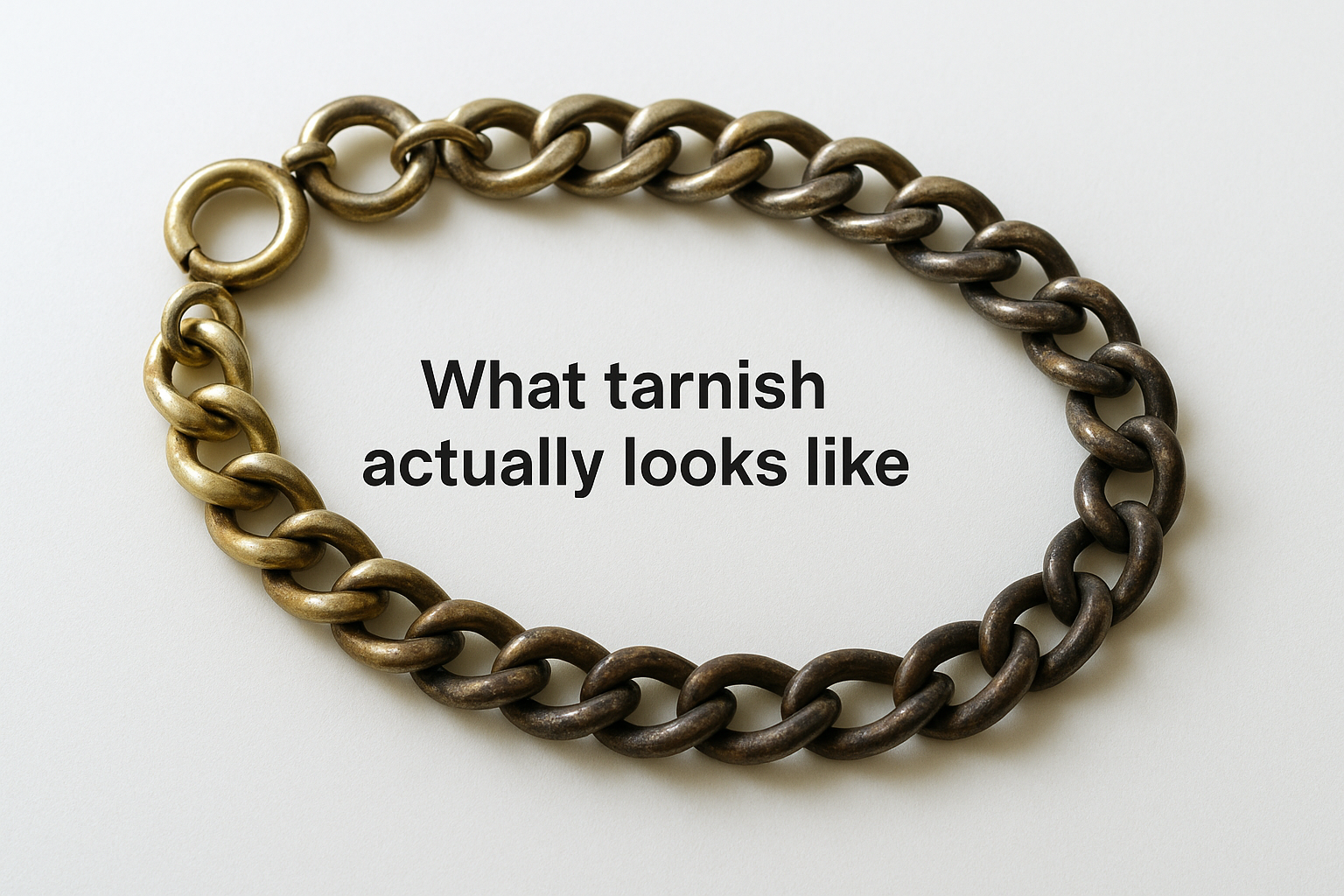
The darker and thicker the tarnish, the longer the silver has been exposed to reactive compounds without cleaning.
Chain jewelry shows this progression clearly because the linked or twisted structure creates small recessed areas that trap moisture and sulfur compounds. These spots darken faster than flat surfaces, which is why you often see patchy discoloration rather than uniform color change.
When tarnish becomes patina
On antique and vintage pieces, this same darkening in recessed areas gets called patina because it adds visual depth and character rather than detracting from the piece. Whether you consider it tarnish or patina largely depends on your preference and the style of the piece in question. For a modern, polished sterling silver chain, most people treat any discoloration as tarnish worth removing rather than a feature worth keeping.
What makes sterling silver tarnish faster
Several environmental and chemical factors accelerate tarnishing well beyond what simple air exposure causes. Knowing these helps you understand does sterling silver tarnish at varying rates, and gives you direct control over how quickly discoloration builds up on your chains and bracelets.
Chemicals and everyday products
Certain substances you use daily hit sterling silver hard. Chlorine, found in swimming pools, hot tubs, and common household cleaning products, reacts aggressively with both silver and copper. Perfume, hairspray, and body lotion contain alcohol and chemical compounds that accelerate surface discoloration when applied directly near your jewelry. The simple habit of putting your chains on after your personal care routine, rather than before, makes a real difference.
Chlorine is among the fastest-acting substances on sterling silver, and a single session in a chlorinated pool can trigger visible tarnishing within hours.
Storage conditions
Where you keep your silver when you're not wearing it determines how fast tarnish builds between uses. Open-air storage on a dresser or inside an unsealed box exposes your chains to humidity and airborne sulfur compounds around the clock. High-humidity environments, including coastal areas or bathrooms, speed up the reaction because moist air carries a higher concentration of reactive compounds than dry air does.
Storing multiple chains loose together adds another layer of risk. Metal-on-metal contact creates friction that strips away the thin protective layer silver naturally develops, exposing fresh reactive surface underneath. Keeping pieces in individual sealed pouches or an airtight jewelry box significantly slows the tarnishing process between wears.
How to prevent sterling silver from tarnishing
Prevention is easier than correction. Understanding does sterling silver tarnish under specific conditions gives you a clear advantage, because most of the causes are directly within your control. The two biggest factors you can act on immediately are how you store your silver and what you expose it to during daily wear.
Store it correctly
Airtight storage is the single most effective step for slowing tarnish. Keep your chains in individual zip-lock bags or anti-tarnish pouches with the air pressed out before sealing. Anti-tarnish strips, available cheaply at most jewelry supply retailers, absorb sulfur compounds inside the pouch and extend the time between cleanings noticeably.
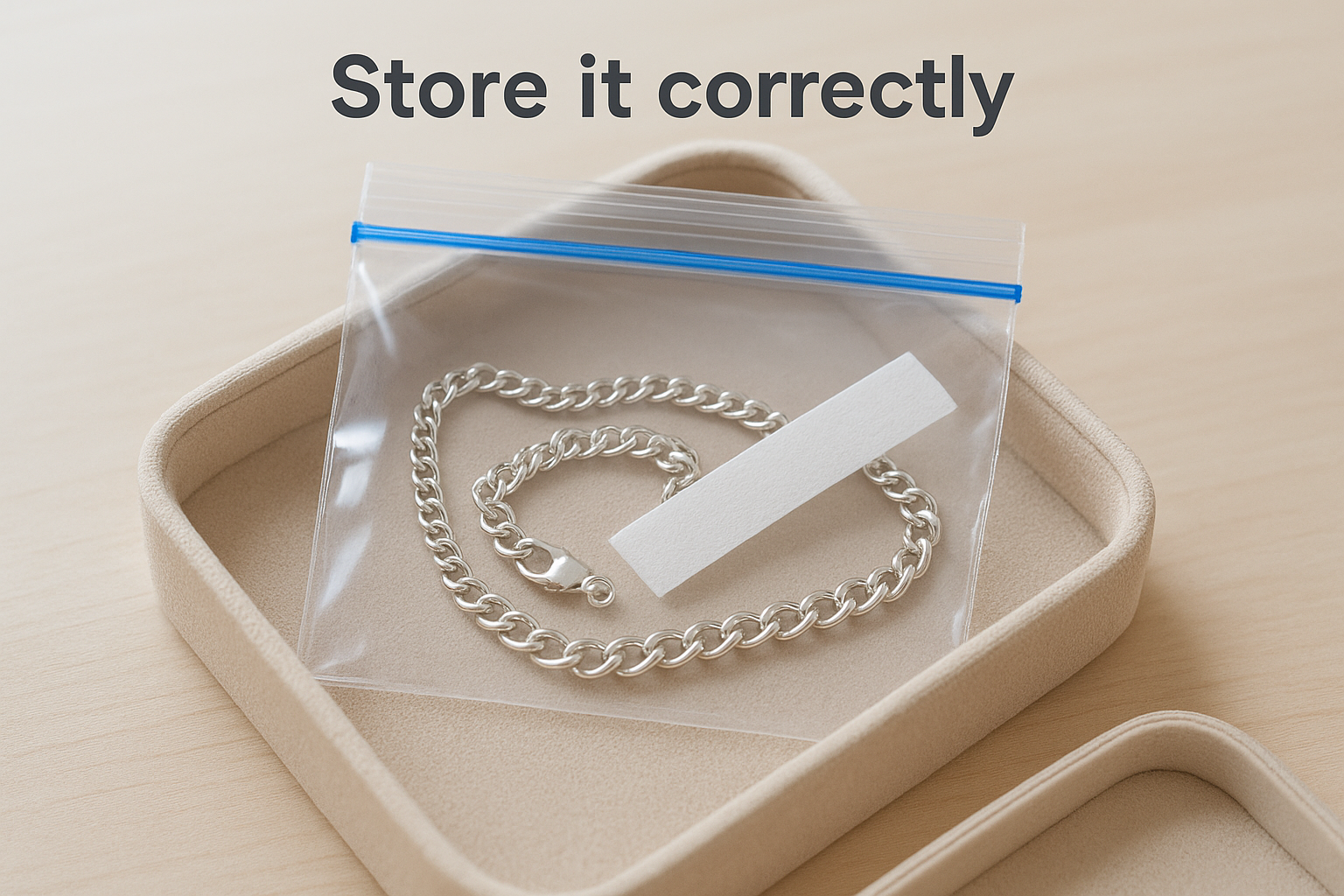
Storing your silver in an airtight container with an anti-tarnish strip can cut tarnish buildup significantly compared to leaving pieces out in open air.
Keep your jewelry away from bathrooms and humid rooms. The combination of steam and airborne compounds accelerates the reaction faster than almost any other environment in your home.
Build simple wearing habits
Put your chains and bracelets on last during your routine, after applying perfume, lotion, and hairspray. Those products settle and dry before your silver contacts them, reducing direct chemical exposure on the surface.
Remove your silver before swimming, using cleaning products, or exercising heavily. Sweat, chlorine, and household chemicals all trigger faster tarnishing, and avoiding that contact requires only a few seconds of habit. A small jewelry dish near your sink gives you a consistent spot to place your chains before any task that puts them at risk.
How to clean tarnished sterling silver safely
Even if you follow every prevention step, tarnish will still build up eventually. Understanding that does sterling silver tarnish over time as a natural process helps you treat cleaning as a normal part of ownership, not a sign that something went wrong. Most tarnish lifts with materials you already have at home, and the entire cleaning process takes only a few minutes once you know the right approach.
The dish soap and warm water method
For light to moderate tarnish, warm water and a few drops of mild dish soap work well. Soak your chain for two to three minutes, then gently scrub with a soft-bristled toothbrush to reach the small gaps between links. Rinse thoroughly with clean water and pat dry immediately with a soft, lint-free cloth. Avoid air drying, because water left on the surface extends moisture contact and can leave mineral deposits behind.
Never use abrasive scrubbers or harsh chemical cleaners on sterling silver, as they scratch the surface and strip the finish permanently.
Baking soda paste for heavier tarnish
When tarnish has built into dark brown or near-black discoloration, a baking soda paste gives you more cleaning power without damaging the metal. Mix two parts baking soda with one part water to form a thick paste, apply it to your chain with a soft cloth, and rub gently in the direction of the chain links. Rinse completely, then dry with a soft cloth right away. Repeat if needed for heavily tarnished pieces, but avoid using this method more than once a month to protect the surface long-term.
Final takeaways
Does sterling silver tarnish? Yes, and that's completely normal. The discoloration comes from a chemical reaction between silver sulfide and the copper in your 925 alloy, not from low quality or poor craftsmanship. Humidity, sweat, chlorine, and everyday beauty products all accelerate the process, but every single factor in that list is within your control.
Store your chains in airtight pouches, keep them away from humid rooms, and put them on after your personal care routine. When tarnish does build up, a quick clean with warm soapy water and a soft toothbrush brings your silver back in minutes. Treat cleaning as routine maintenance rather than damage control, and your sterling silver will hold its appearance for years.
If you're looking for a chain worth maintaining, browse the full range of sterling silver 925 chains at British Chains and find the style and size that fits your look.


