

Men's jewellery care routine: essential steps
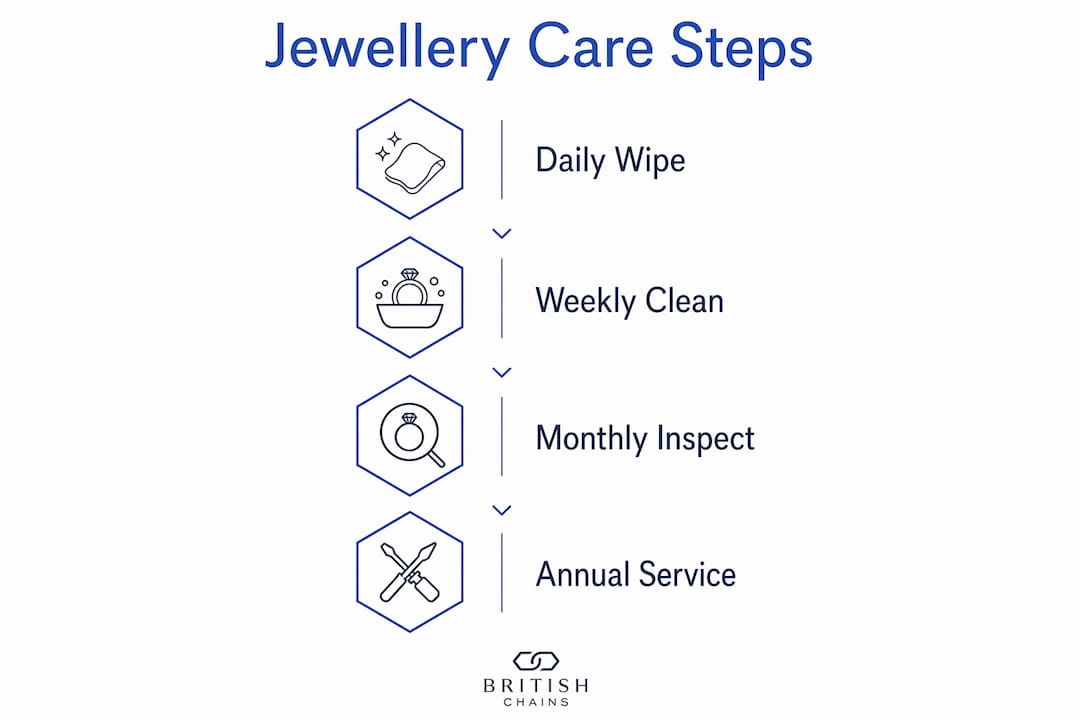
A solid men’s jewellery care routine comes down to four habits: a quick daily wipe, a gentle weekly clean, a monthly inspection, and an annual professional service. Follow that schedule and your rings, chains, bracelets and watches will hold their finish for years rather than months.
Your core schedule at a glance:
- Daily: Wipe each piece with a soft microfibre cloth after wearing to remove sweat, skin oils and product residue.
- Weekly: Soak in warm water with a drop of mild dish soap for 5–10 minutes, gently brush links, rinse thoroughly and pat completely dry.
- Monthly: Inspect clasps, stone settings and watch seals; check for loose links or signs of tarnish building up in recesses.
- Annually: Book a professional polish, re-plate if needed, and have mechanical watches serviced by a qualified watchmaker.
Pro Tip: Rotate your pieces. Wearing the same chain every single day accelerates micro-scratching and tarnish. Two or three pieces in rotation means each one rests, and you get more life from all of them.
Table of Contents
- Why does material matter for cleaning and storage?
- Daily habits that prevent most jewellery damage
- How to clean men’s jewellery safely at home
- Smart storage to slow tarnish and prevent tangles
- When should you see a professional jeweller?
- Quick fixes for common jewellery problems
- Why mindful wear matters more than you think
- Key takeaways
- A note on caring for chains every day
- Britishchains sterling silver: built for the routine you just read
- Useful sources and further reading
Why does material matter for cleaning and storage?
Not all metals behave the same under water, sweat or a polishing cloth. Matching your cleaning method to the material is the single most important thing you can do, because the wrong approach on a plated piece or a porous gemstone can cause permanent damage in minutes.
Common materials and their key care notes:
- Sterling silver (925): Prone to oxidation and tarnish. Mohs hardness of 2.5–3, meaning it scratches more easily than stainless steel. Use a silver polishing cloth; store in an anti-tarnish pouch. Hallmarked 925 silver from Britishchains meets the UK Assay Office standard, which is worth confirming on any piece you buy.
- Gold (solid): Less reactive than silver; resists tarnish well. Clean with a soft cloth and mild soap. Avoid silver-specific cleaners.
- Gold-plated: The base metal underneath is usually brass or copper. The plating layer is thin and wears through with abrasion. Gentle cloth only; no silver dips, no ultrasonic cleaners.
- Stainless steel: Durable and corrosion-resistant. Tolerates mild soap and a soft brush well. Avoid harsh abrasives that dull the finish.
- Titanium and tungsten: Very hard and scratch-resistant. Wipe clean with a damp cloth; avoid ultrasonic cleaners for certain surface finishes.
- Gemstones: Porosity and heat sensitivity vary widely. Clean gently with a damp cloth; inspect settings monthly for loosening. Keep away from direct sunlight and heat sources.
- Leather straps: Never soak. Wipe with a barely damp cloth and apply a specialist leather conditioner sparingly every few months.
- Watch cases and metal bracelets: Wipe the case and bracelet regularly; never immerse a non-waterproof watch. Check the crown is pushed in before any contact with water.
| Material | Clean with | Avoid | Frequency |
|---|---|---|---|
| Sterling silver | Silver cloth, mild soap + soft brush | Bleach, ultrasonic, silver dips at home | Weekly or after heavy wear |
| Solid gold | Soft cloth, mild soap | Silver-specific cleaners | Every 2–4 weeks |
| Gold-plated | Soft cloth only | Abrasives, dips, ultrasonic | After each wear |
| Stainless steel | Mild soap, soft brush | Harsh abrasives | Weekly |
| Titanium / tungsten | Damp cloth | Ultrasonic (certain finishes) | Weekly |
| Gemstones | Damp cloth, gentle brush | Heat, direct sun, harsh chemicals | Monthly inspection |
| Leather strap | Damp wipe + conditioner | Soaking, alcohol-based products | Monthly |
Sterling silver’s Mohs hardness of 2.5–3 is a practical reminder: it is softer than most surfaces it contacts during daily life, from gym equipment to kitchen worktops. That is why a “jewellery off” policy for high-friction activities beats relying on polishing to fix the damage afterwards.
Daily habits that prevent most jewellery damage
The majority of wear and tear on men’s jewellery is avoidable. Most damage comes not from dramatic accidents but from accumulated exposure to soap, sweat, cologne and friction during ordinary daily routines.
Rules worth making automatic:
- Put jewellery on last, after moisturiser, cologne, hair product and sunscreen have dried. These products contain alcohol, acids and oils that degrade finishes and accelerate tarnish.
- Remove pieces before showering, swimming or bathing. Soap and shampoo leave a residue film that builds up on metal and dulls the finish over time. Chlorine and salt water both degrade silver and accelerate plating wear.
- Take jewellery off before sleep. Chains catch on bedding, clasps weaken, and links stretch under repeated tension.
- Adopt a firm “jewellery off” rule at the gym, during manual work and when swimming. Sterling silver at Mohs 2.5–3 will pick up micro-scratches from barbells, tools and rough surfaces that no amount of polishing fully erases.
- Wipe each piece with a dry microfibre cloth immediately after removing it. Thirty seconds now prevents twenty minutes of polishing later.
Pro Tip: If you wear a sterling silver bracelet daily, keep a small microfibre cloth on your bedside table. The habit of wiping before you put it down takes no thought once it is in place.
How to clean men’s jewellery safely at home
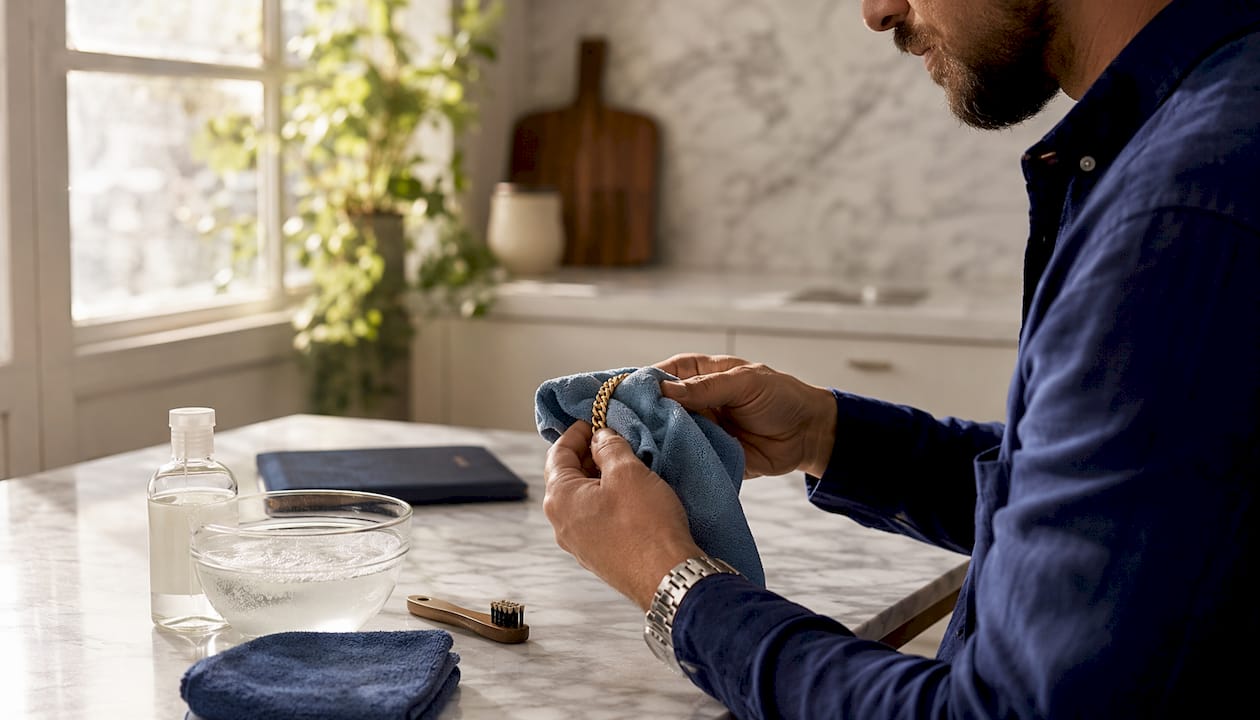
The baseline method works for most metals: warm water, a drop of mild dish soap, a soft-bristled brush (a baby toothbrush is ideal), a thorough rinse and a full pat-dry. Never leave metal air-drying in a damp room; trapped moisture is what starts tarnish in recesses.
Sterling silver chains and bracelets
- Fill a small bowl with warm (not hot) water and add one drop of mild dish soap.
- Submerge the piece and leave it for 5–10 minutes to loosen oils and residue.
- Use a soft brush to work gently along the links, paying attention to the clasp and any textured sections.
- Rinse under clean running water, holding the plug closed or using a separate bowl.
- Pat dry with a lint-free cloth and leave flat on a dry surface for 10 minutes before storing.
- Finish with a silver polishing cloth to restore shine and remove any light surface tarnish.
For sterling silver chains, Britishchains recommends a deeper clean every 2–4 weeks for pieces worn daily, and a quick wipe after every wear.
Gold and gold-plated pieces
Use a soft cloth dampened with plain water, or the mild soap method above, but skip the polishing cloth. A silver polishing cloth contains mild abrasives that will strip a gold-plated finish. Re-plating is a professional service and not cheap, so protecting the existing layer is far more cost-effective.
Stainless steel, titanium and tungsten
These tolerate the mild soap and brush method well. Rinse thoroughly and dry completely. Avoid abrasive pads or scouring cloths, which leave visible scratches on polished finishes.
Leather and fabric straps
Never soak. Wipe the strap with a cloth barely dampened with plain water, then apply a small amount of specialist leather conditioner and buff off any excess. Alcohol-based wipes will dry and crack leather within weeks.
Watches
Wipe the case and bracelet with a damp cloth. Check the crown is fully pushed in before any contact with water, and never immerse a watch that is not rated waterproof. Metal bracelets can be cleaned with the mild soap method; leather straps follow the leather guidance above.
Never use toothpaste, bleach, baking soda paste, household jewellery dips or rough brushes on any piece. Toothpaste is abrasive enough to scratch silver and strip plating. Bleach corrodes metals and weakens settings. Commercial dips are often formulated for specific metals and will damage others — including plated finishes — on contact. Reserve ultrasonic cleaners for professional use unless you know with certainty that your piece and its stones are compatible.
The GIA advises avoiding harsh chemicals and scheduling professional checks for settings and seals, particularly for pieces with gemstones or intricate link work.
Smart storage to slow tarnish and prevent tangles
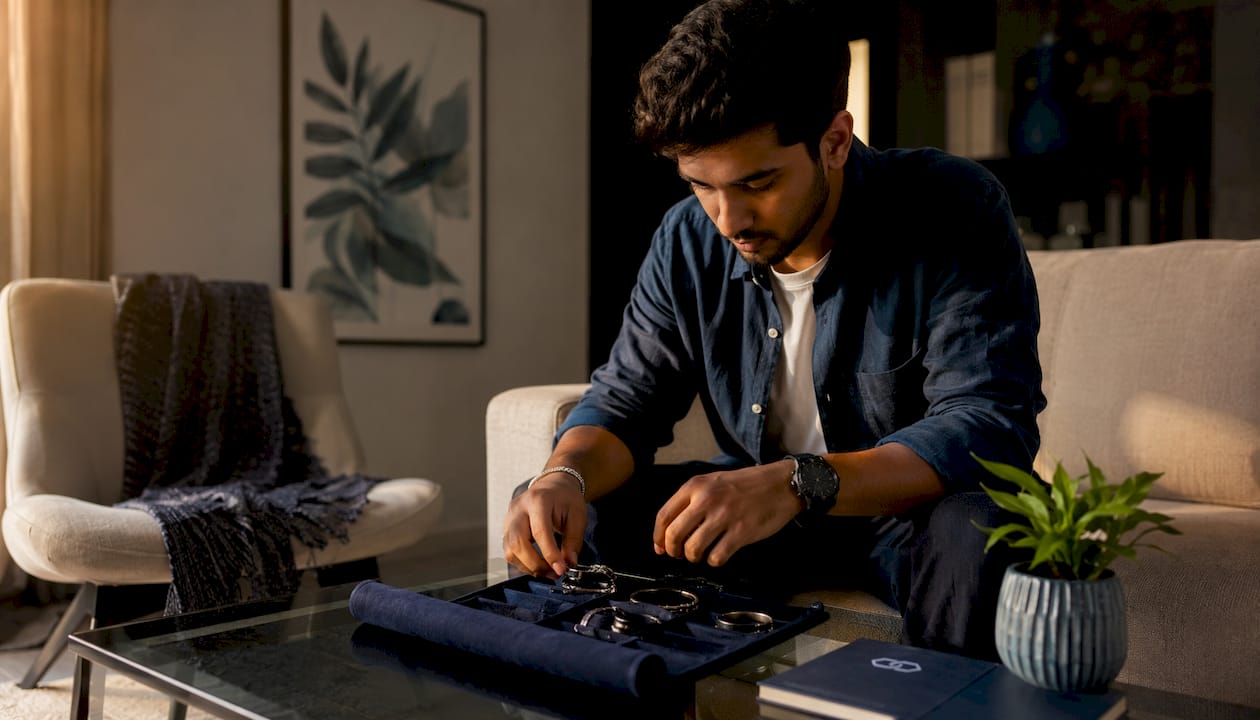
How you store jewellery between wears matters almost as much as how you clean it. A drawer where chains pile on top of each other will produce scratches, kinks and tarnish faster than almost any other single mistake.
Storage rules that actually work:
- One piece per pouch or compartment. Metal on metal causes scratches; chains tangle and kink when stored loose together.
- Close clasps before storing chains. An open clasp catches on other pieces and weakens the mechanism over time.
- Use anti-tarnish pouches or line your jewellery box with anti-tarnish fabric. Britishchains’ storage guidance recommends anti-tarnish pouches for sterling silver specifically, and they make a measurable difference in how long a piece stays bright between cleans.
- Add silica gel sachets to your jewellery box. The UK’s ambient humidity is higher than most of Europe, and humidity accelerates tarnish on silver. Replacing sachets every few months keeps the environment dry.
- Hang necklaces on a wall-mounted hook or a dedicated stand to prevent kinks. Stored flat and coiled, chains develop kinks that are difficult to remove without professional help.
- Keep jewellery away from bathrooms and windowsills. Steam, condensation and direct sunlight degrade finishes and accelerate oxidation.
| Storage method | Best for | Avoid |
|---|---|---|
| Anti-tarnish pouch | Sterling silver chains, bracelets | Storing multiple pieces together |
| Divided jewellery box | Rings, bracelets, shorter chains | Humid rooms (bathroom) |
| Wall hook / stand | Necklaces, longer chains | Direct sunlight |
| Travel roll or zip pouch | All pieces on the move | Loose in a bag or pocket |
| Silica gel sachets | Any box in a humid environment | Replacing less than every 3–4 months |
For travel, a jewellery roll or a small zip pouch with individual pockets keeps pieces separate and protected without adding bulk to your bag. Never drop a chain loose into a bag pocket; the clasp will tangle with everything around it.
When should you see a professional jeweller?
Some problems are beyond a soft cloth and a bowl of soapy water. Knowing when to stop and book a professional saves you from making a small issue significantly worse.
Signs it is time to call a jeweller:
- A stone moves or feels loose in its setting.
- A clasp no longer closes securely or a link is visibly stretched.
- Deep scratches that a polishing cloth cannot shift.
- Significant tarnish or discolouration in recesses that home cleaning cannot reach.
- Water ingress in a watch, or a watch that has stopped keeping accurate time.
- A chain that has kinked severely and will not straighten at home.
The GIA recommends professional inspection of settings and seals periodically as recommended for pieces worn regularly.
| Service | Approximate UK cost | Typical turnaround |
|---|---|---|
| Professional polish | Typical UK cost range | Typical turnaround time |
| Gold re-plating | Typical UK cost range | Typical turnaround time |
| Clasp repair | Typical UK cost range | Typical turnaround time |
| Stone re-setting | Typical UK cost range | Typical turnaround time |
| Basic watch service | Typical UK cost range | Typical turnaround time |
| Ultrasonic professional clean | Typical UK cost range | Typical turnaround time |
These are indicative ranges for UK high-street jewellers; prices vary by city, complexity and the metal involved. Always ask whether a service will affect the piece’s hallmark before proceeding, and keep any original paperwork or certificates.
Quick fixes for common jewellery problems
Tarnish
Light tarnish on sterling silver responds immediately to a silver polishing cloth. Work in straight lines along the metal rather than circular motions, which can create swirl marks. For heavier tarnish that the cloth cannot shift, use the warm water and mild soap method, dry fully, then follow with the cloth. If tarnish is deep in recesses and will not budge, that is a job for a professional ultrasonic clean.
Green residue on skin or metal
Green marks usually mean the base metal beneath a plating layer contains copper, which reacts with sweat and skin acids. The residue itself is harmless, but it signals that the plating is wearing thin.
- Clean the piece gently with the mild soap method.
- Dry thoroughly and inspect the surface for patches where the plating has worn through.
- If plating loss is visible, stop wearing the piece and book a re-plate with a jeweller.
- Do not try to scrub the green residue off aggressively; you will remove what remains of the plating.
Kinks and tangles in chains
- Lay the chain flat on a smooth, hard surface.
- Use two fine needles or toothpicks to gently work the knot open from the centre outward.
- Apply one tiny drop of baby oil to a severe tangle to reduce friction, then work slowly.
- If the chain will not release without force, take it to a jeweller. Forcing a kinked chain risks snapping a link.
Weak or stiff clasps
A stiff clasp can sometimes be freed with a tiny drop of jewellery lubricant applied with a pin. A clasp that no longer holds shut is a loss risk; do not wear the piece until it has been repaired. DIY clasp repair with pliers risks misaligning the mechanism permanently.
Why mindful wear matters more than you think
The most common mistake men make with jewellery is the all-or-nothing approach: either wearing a piece constantly without thought, or leaving it in a drawer because maintenance feels like too much effort. Neither serves the piece or the wearer particularly well.
Mindful wear is simply the habit of being deliberate about when a piece goes on and when it comes off. It is not precious or complicated. It means knowing that sterling silver at Mohs 2.5–3 will pick up micro-scratches from a barbell faster than polishing can fix them, and acting on that knowledge before the gym session rather than after.
Patina is not damage. High-quality sterling silver develops a natural patina over time — a subtle darkening in the recesses that many men find more characterful than a mirror finish. Polishing is a preference, not always a restoration necessity. Over-polishing gradually removes fine surface detail from textured or engraved pieces. Polish when you want brightness; leave it when you like the aged look. Both are legitimate choices.
Britishchains’ view is that a sterling silver chain worn mindfully and cleaned regularly will outlast one that is either neglected or over-maintained. The routine described in this guide takes less than ten minutes a week. That is the trade-off: a small, consistent habit in exchange for a piece that looks good for a decade.
Pro Tip: If you are unsure whether to polish or preserve a patina, photograph the piece in natural light before and after a polish. Seeing the difference helps you decide which finish you actually prefer, rather than defaulting to “shiny” out of habit.
Key takeaways
A consistent men’s jewellery care routine, built around daily wiping, weekly cleaning, monthly inspection and annual professional servicing, is the most effective way to preserve the finish and longevity of sterling silver, gold, stainless steel and watch pieces.
| Point | Details |
|---|---|
| Core schedule | Daily wipe, weekly soap clean, monthly inspection, annual professional service. |
| Material first | Match your cleaning method to the material; wrong methods on plated pieces cause permanent damage. |
| Storage matters | One piece per pouch, clasps closed, anti-tarnish pouches and silica gel for UK humidity. |
| Know when to stop | Loose stones, failing clasps and deep scratches need a jeweller, not a polishing cloth. |
| Britishchains | Hallmarked 925 sterling silver chains and bracelets designed for daily wear with the routine above. |
A note on caring for chains every day
There is a tendency in jewellery guides to make maintenance sound either effortless or impossibly technical. The reality sits somewhere more honest in the middle. Good sterling silver, properly hallmarked and made to a genuine 925 standard, is genuinely durable. It does not need constant attention. What it does need is the right attention at the right moments.
At Britishchains, every piece carries a UK hallmark confirming the 925 silver standard, which means you are starting from a material that responds well to the routine described here. The British sterling silver chain guide on the site covers hallmarking and purity in more detail if you want to understand exactly what you are buying and why it matters for long-term care.
The routine in this guide is the one we stand behind: simple enough to follow without thinking, thorough enough to keep a quality piece looking sharp for years.
Britishchains sterling silver: built for the routine you just read

Britishchains designs hallmarked 925 sterling silver chains and bracelets specifically for daily wear. Every piece is made to withstand the routine described in this guide: the weekly soap clean, the polishing cloth, the anti-tarnish pouch. The hallmark is not a marketing claim; it is a verifiable UK standard stamped on the piece.
To get started, a basic care kit needs only four things: a microfibre cloth, a drop of mild dish soap, a soft brush and an anti-tarnish pouch. Care accessories including anti-tarnish strips and microfibre cloths are available from Iron Bull Naturals if you want to put a kit together quickly.
For the chain itself, the 2mm sterling silver curb chain is a practical starting point: hallmarked, polished, and suited to the daily wear and weekly clean schedule above. Browse the full collection at Britishchains and find the piece that fits your style and your routine.
Useful sources and further reading
- GIA: Tips for caring for jewellery — The Gemological Institute of America’s guidance on avoiding harsh chemicals, inspecting settings and when to seek professional help. Authoritative baseline for any care routine.
- How to clean sterling silver chains — Britishchains — Stepwise cleaning instructions specific to sterling silver chains, including frequency guidance for daily-wear pieces.
- How to store silver jewellery the right way — Britishchains — Anti-tarnish storage methods and practical recommendations for UK conditions.
- Is sterling silver good for everyday wear? — Britishchains — Covers wearability, patina and the maintenance trade-offs for daily-wear pieces.
- British sterling silver men’s chain guide — Britishchains — Detailed guide to hallmarking, 925 purity and product specifications; useful for understanding what you are buying before you build a care routine around it.
- Best silver chains for men to wear daily — Britishchains — Practical recommendations on chains suited to daily rotation and the cleaning schedule above.
- Iron Bull Naturals shop — Source for anti-tarnish strips, microfibre cloths and small care accessories suitable for a home or travel kit.


