

Care for hallmarked British silver: the complete guide
Hallmarked British silver is defined as sterling silver verified to 92.5% purity by an official UK assay office, bearing marks such as the Lion Passant, assay office symbol, and date letter. These marks are not decorative. They are legal guarantees of metal quality, origin, and age. Proper care for hallmarked British silver preserves not just the metal’s appearance but the legibility of those marks, which directly affects authenticity and value. Tarnish, abrasive cleaning, and poor storage are the three most common causes of hallmark erosion. Understanding how to avoid each one is the foundation of good silver stewardship.
What do you need to care effectively for hallmarked British silver?
The right tools make the difference between preservation and damage. Using household cleaners, paper towels, or rough cloths on sterling silver causes micro-scratches that dull the surface and, over time, wear away hallmark detail.
Essential cleaning tools
- Treated silver polishing cloths: Pre-impregnated with mild tarnish inhibitors. Use for light tarnish and routine buffing.
- Mild, phosphate-free soap: For gentle wet cleaning when a dry cloth is insufficient.
- Soft-bristled brush: A clean, soft toothbrush reaches recessed areas around hallmarks without scratching.
- Silver foam or cream: For heavier tarnish. Apply sparingly and rinse thoroughly.
- Microfibre cloths: Ideal for drying and final buffing without leaving lint or scratches.
Protective gear and storage materials
Cotton or nitrile gloves are the single most underused tool in silver care. Skin oils and salts transfer instantly to silver and begin accelerating tarnish within hours. Wearing gloves during handling reduces cleaning frequency and protects hallmark clarity.
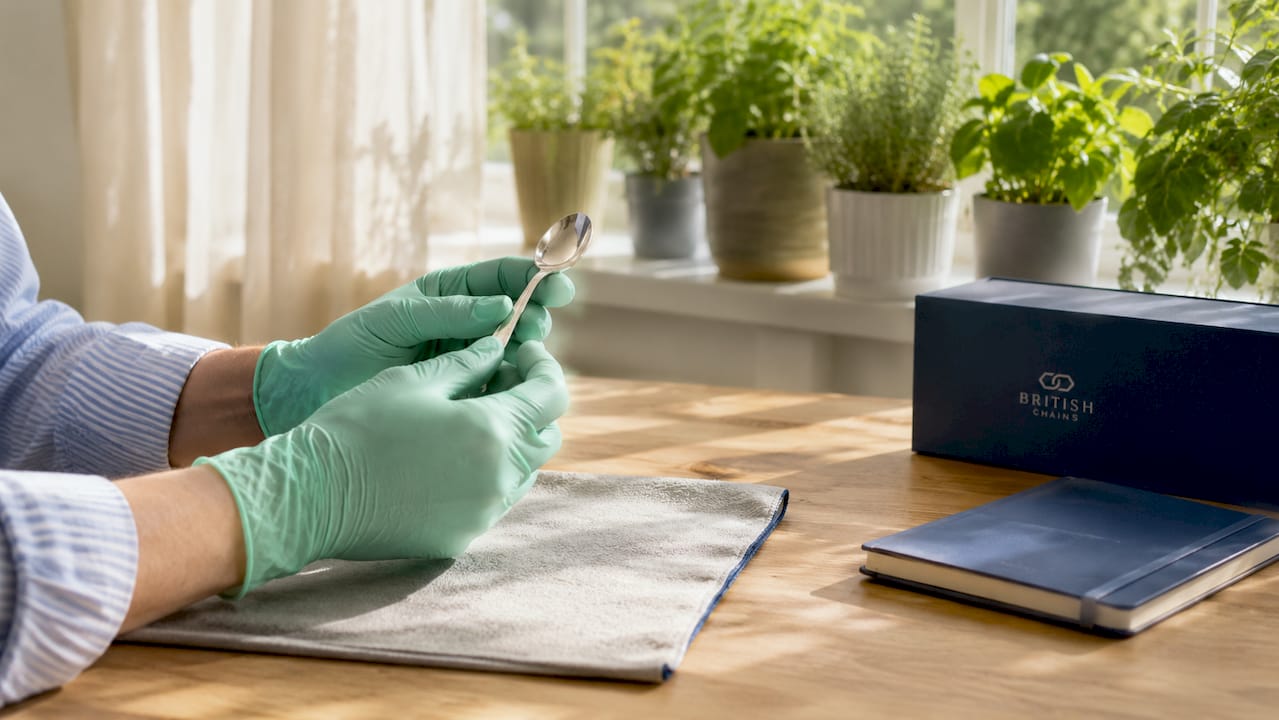
For storage, acid-free tissue and anti-tarnish bags are the standard. Avoid rubber bands, newspaper, and any sulphur-containing material entirely.
| Tool or material | Purpose | Notes |
|---|---|---|
| Treated polishing cloth | Light tarnish removal | Do not rinse after use |
| Phosphate-free soap | Gentle wet cleaning | Dilute in warm water |
| Silver foam or cream | Heavy tarnish treatment | Rinse fully; do not soak |
| Cotton or nitrile gloves | Handling protection | Wear every time |
| Acid-free tissue paper | Storage wrapping | Replace annually |
| Anti-tarnish bags | Long-term storage | Seal after each use |
| Microfibre cloth | Drying and buffing | Wash regularly |
Pro Tip: Store each silver piece individually. Pieces touching each other cause surface scratches and transfer tarnish between items.
How do you clean hallmarked British silver step by step?
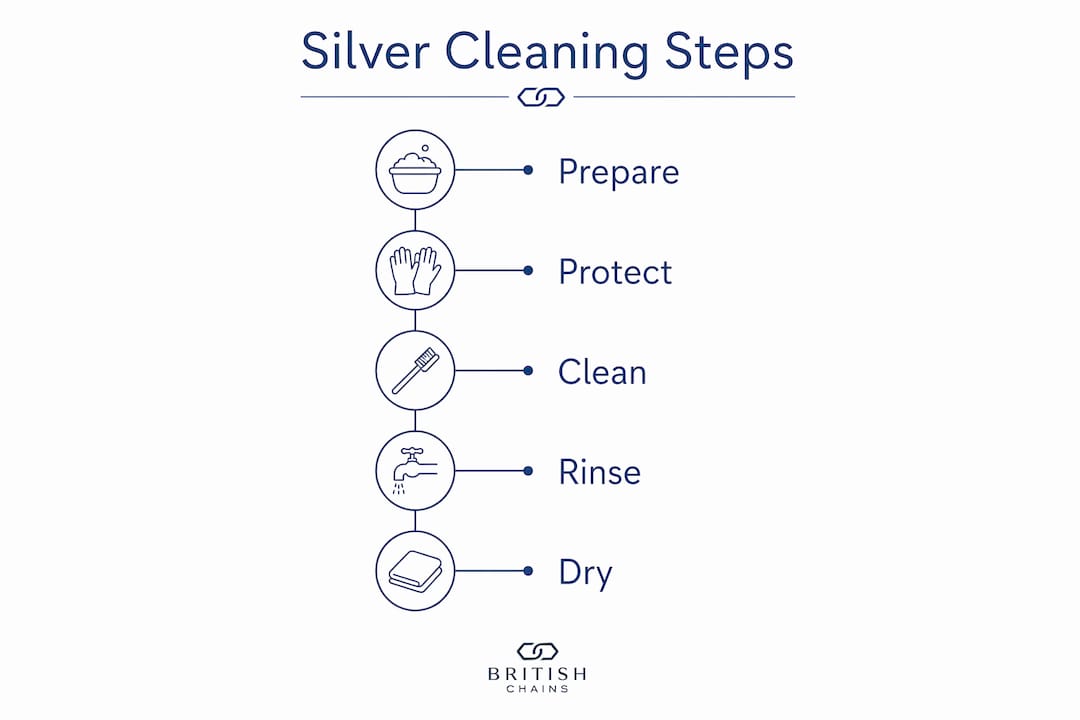
Cleaning hallmarked silver is a preservation effort, not a quest for a mirror shine. Aggressive polishing removes metal layer by layer, eventually erasing the fine lines of hallmarks that authenticate a piece. The goal is to remove tarnish while leaving the metal and its marks intact.
Routine maintenance
- After each wear, wipe the piece with a soft, dry microfibre cloth to remove oils and moisture.
- Inspect the hallmarks under good light. Check that the Lion Passant, assay office mark, and date letter remain legible.
- Store immediately in an anti-tarnish bag or wrapped in acid-free tissue.
Light tarnish removal
- Put on clean cotton or nitrile gloves.
- Take a treated silver polishing cloth and rub gently in straight lines, following the grain of the metal.
- Avoid circular motions, which create visible swirl marks on flat surfaces.
- Buff with a clean microfibre cloth to finish.
- Do not rinse the cloth after use. The tarnish-inhibiting compounds remain active across multiple uses.
Heavy tarnish treatment
- Apply a small amount of silver foam or cream to a soft cloth or soft-bristled brush.
- Work the product gently over tarnished areas, paying attention to recessed details around hallmarks.
- Rinse thoroughly under warm running water. Residue left in crevices continues to react with the metal.
- Dry immediately and completely with a microfibre cloth. Do not air-dry, as water spots form quickly on silver.
- Buff lightly with a clean polishing cloth once fully dry.
Enamelled and composite pieces
Enamelled silver requires a different approach entirely. Silver dips, abrasive polishes, and even treated polishing cloths can strip or dull enamel finishes permanently. For pieces combining enamel and silver, use only a dry microfibre cloth for dusting. If the silver areas require cleaning, apply a tiny amount of mild soap solution with a soft brush, working carefully around the enamel. Never submerge enamelled pieces.
“Enamel-covered silver requires care primarily focused on gentle dusting and protection, as harsh polishes irreversibly damage decorative layers. Once enamel is dulled or cracked by chemical contact, no amount of polishing restores it.”
Pro Tip: If you are unsure whether a piece contains enamel or composite elements, treat it as though it does. Caution costs nothing; damage is permanent.
How should you handle and store hallmarked British silver?
Tarnish is a chemical reaction between silver and sulphur compounds in the air. You cannot stop it entirely, but you can slow it significantly through correct handling and storage. Understanding why sterling silver tarnishes helps you make better decisions about where and how you keep your pieces.
Handling best practices
Always handle silver with clean, dry hands or cotton gloves. Fingerprints contain acids that etch into the surface within days. Hold pieces by their edges where possible, avoiding flat decorative surfaces and hallmark areas. Never handle silver immediately after applying hand cream or lotion.
Storage dos and don’ts
The right storage conditions for silver are low humidity, stable temperature, and complete separation from sulphur sources.
Do:
- Wrap each piece individually in acid-free tissue paper.
- Place wrapped pieces in sealed anti-tarnish bags.
- Store in a cool, dry location away from direct sunlight.
- Check stored pieces every few months for early tarnish development.
Do not:
- Use rubber bands. Rubber contains sulphur, which causes rapid black tarnishing that is difficult to reverse.
- Store silver near newspaper, cardboard, or wool, all of which off-gas sulphur compounds.
- Keep silver in bathrooms or kitchens where humidity fluctuates.
- Stack pieces directly on top of each other.
Pro Tip: Silica gel sachets placed inside storage boxes absorb excess moisture and extend the time between cleaning sessions significantly.
What are the most common mistakes when caring for hallmarked silver?
Most damage to hallmarked silver is self-inflicted. The mistakes below are the most frequent, and each one has a direct consequence on the piece’s condition and value.
| Mistake | Effect | Safe alternative |
|---|---|---|
| Using silver dip on hollow pieces | Internal corrosion; damage to non-metal parts | Use silver cream applied externally only |
| Abrasive paste or scouring pad | Surface scratches; hallmark erosion | Treated polishing cloth or soft brush |
| Over-polishing | Metal loss; faded hallmarks | Clean only when tarnish is visible |
| Soaking antique or composite items | Water ingress; structural weakening | Spot-clean with damp cloth; dry immediately |
| Storing in rubber or newspaper | Rapid sulphur-induced black tarnish | Acid-free tissue and anti-tarnish bags |
Silver dip should never be used on hollow or composite pieces. The acidic solution seeps into seams and joints, corroding the metal from the inside. The damage is invisible until the piece begins to fail structurally.
Over-polishing is equally destructive. Each polishing session removes a microscopic layer of silver. On antique pieces, this gradually softens the relief of hallmarks until the Lion Passant or date letter becomes unreadable. A piece with illegible hallmarks loses a significant portion of its provenance value.
Simple home tests for authentic silver
If you acquire a piece and want to confirm it is genuine sterling silver before applying any care routine, two quick tests help. Sterling silver is not magnetic. Hold a magnet near the piece. If it attracts, the piece is not solid silver. Second, tap the piece lightly. Genuine silver produces a clear, ringing tone rather than a dull thud. These tests do not replace hallmark verification, but they are useful first checks. Understanding purity marks on silver gives you the deeper knowledge to read what the hallmarks themselves confirm.
Pro Tip: Examine hallmarks with a jeweller’s loupe before and after any cleaning session. Early detection of hallmark erosion lets you adjust your cleaning approach before the damage becomes irreversible.
Key takeaways
Preserving hallmarked British silver requires gentle cleaning, careful handling with gloves, and sulphur-free storage to protect both the metal and the hallmarks that authenticate it.
| Point | Details |
|---|---|
| Clean with conservation in mind | Use treated cloths and silver cream; never abrasive pastes or silver dip on composite pieces. |
| Gloves are non-negotiable | Cotton or nitrile gloves prevent skin acids from accelerating tarnish and eroding hallmark detail. |
| Storage material matters | Rubber and newspaper off-gas sulphur; use acid-free tissue and sealed anti-tarnish bags instead. |
| Over-polishing causes permanent loss | Each session removes metal; clean only when tarnish is visible, not on a fixed schedule. |
| Hallmarks confirm authenticity | The Lion Passant, assay office mark, and date letter must remain legible to preserve provenance value. |
The case for cleaning less, not more
The advice I find myself repeating most often is this: put the polishing cloth down. There is a persistent belief that bright, mirror-like silver is well-cared-for silver. In my experience, the opposite is frequently true. The pieces I have seen in the worst condition are those that were polished weekly by well-meaning owners who treated shine as a proxy for quality.
Antique and enamelled pieces suffer most from this approach. A Georgian silver caddy spoon or a Victorian enamel brooch carries a light patina that is part of its character and its evidence of age. Strip that away with aggressive polishing and you remove something that cannot be replaced. The hallmarks on such pieces are also the most vulnerable. They were struck into thinner metal than modern pieces, and repeated polishing softens their edges until the date letter or maker’s mark becomes ambiguous.
My honest view is that the British hallmarking system is one of the most rigorous in the world. The Lion Passant and assay office marks represent centuries of quality assurance. Caring for those marks means treating cleaning as a last resort, not a routine. A piece cleaned only when genuinely tarnished, stored correctly between wears, and handled with gloves will outlast and outshine one that is polished into oblivion.
— British
Britishchains sterling silver: built to last with the right care
Britishchains designs and sells hallmarked sterling silver chains and necklaces crafted to British quality standards, including curb, Figaro, rope, and box styles for men and women.

Every piece from Britishchains carries the 925 sterling silver standard, meaning the care principles in this guide apply directly to keeping them in excellent condition. The 8mm curb chain necklace and the 2mm Figaro chain are both popular choices that reward proper care with lasting brilliance. For a full reference on maintaining your pieces, the Britishchains jewellery care guide covers everything from daily maintenance to long-term storage in one place.
FAQ
What hallmarks appear on genuine British sterling silver?
Genuine British sterling silver typically bears the Lion Passant, an assay office mark, and a date letter confirming purity, origin, and year of assay. These marks together verify the piece meets the 92.5% silver standard.
How often should I clean hallmarked silver?
Clean only when tarnish is visible, not on a fixed schedule. Over-polishing removes metal and erodes hallmark detail over time, reducing both aesthetic quality and provenance value.
Can I use silver dip on my hallmarked pieces?
Avoid silver dip on hollow, antique, or composite pieces entirely. Silver dip causes internal corrosion in seamed or jointed items and damages non-metal components such as enamel or adhesive settings.
What is the best way to store hallmarked British silver?
Wrap each piece individually in acid-free tissue, place in a sealed anti-tarnish bag, and store in a cool, dry location. Avoid rubber bands and newspaper, as both release sulphur compounds that cause rapid black tarnishing.
How do I clean sterling silver chains without damaging them?
Use a treated silver polishing cloth for light tarnish, working in straight strokes rather than circular motions. For heavier tarnish, apply silver cream with a soft brush, rinse thoroughly, and dry immediately. Full guidance on cleaning silver chains covers chain-specific techniques in detail.


