

Twice the Weight: When UK Buyers Should Choose Platinum or 925 Silver
Choose platinum for lifetime, daily-wear heirlooms; choose sterling silver for affordable fashion and occasional pieces. Platinum is denser, doesn’t tarnish and shrugs off decades of wear, which is why it dominates engagement rings. Sterling silver polishes up brighter for less money but needs more looking after. Check the hallmark and feel the weight in your palm and you’ll know which one you’re holding within seconds.
TL;DR:
- Platinum is roughly twice as dense as silver, making it noticeably heavier and easier to identify by touch.
- Platinum resists tarnish and retains its surface longer, developing a patina that enhances its appearance over time, unlike silver which tarnishes and wears thin.
- Platinum jewelry costs significantly more due to its rarity and industrial demand, while silver is more affordable but requires more maintenance.
- Silver contains copper (marked 925), which can cause skin sensitivities, whereas platinum (marked Pt950) is generally hypoallergenic.
- Resizing platinum is more complex and costly, but it withstands multiple adjustments better than silver, which may thin with repeated alterations.
Table of Contents
- Silver vs platinum comparison: appearance, weight, durability, tarnish and cost
- What do the purity stamps and alloys actually mean?
- How do you keep each metal looking its best?
- Which metal should you actually buy for your situation?
- Why hallmarked sterling silver from Britishchains is worth trusting
- Can you resize or repair silver and platinum jewellery?
- How ethical and environmental sourcing differ between the two
- How can you verify whether a piece is genuine?
- Platinum or silver: the honest final call
- Shop hallmarked sterling silver chains at Britishchains
- Sources
- FAQ
Silver vs platinum comparison: appearance, weight, durability, tarnish and cost
Side by side, the two metals look deceptively similar under shop lighting. Platinum has a cooler, slightly greyer white tone, while sterling silver leans brighter and more reflective, especially straight after polishing. Under warm indoor lighting the gap narrows further, which is exactly why so many buyers assume they’re looking at the same metal until they pick the piece up.
That’s where the real difference shows. Platinum is roughly twice as dense as silver, at around 21.45 g/cm³ against silver’s 10.49 g/cm³. Two chains of identical size and design will feel noticeably different in your hand, with the platinum piece sitting heavier and denser. Jewellers use this as a quick, informal check on the shop floor, long before anyone reaches for testing equipment.
Durability tells a similar story but for a different reason. Platinum doesn’t lose metal when it scratches. Instead, the surface displaces slightly and develops a soft patina, a matte, almost brushed look that many people find attractive on rings worn daily for years. Silver behaves differently: repeated polishing gradually removes tiny amounts of metal, thinning the piece over decades of wear. It’s a slow process, not something you’ll notice after a year, but it’s the reason platinum heirlooms often outlast silver ones.
Tarnish is the other major split. Platinum resists it almost entirely. Sterling silver reacts with sulfur compounds in the air and will tarnish over time, needing a periodic polish to bring back its shine.
Price context is where the two metals diverge sharply. Platinum’s rarity and industrial demand mean it typically trades at a much higher price per ounce than silver, and that gap holds even as commodity markets fluctuate through 2026. Treat any specific figure as a snapshot, not a fixed rule, since precious metal prices shift constantly.
A quick way to match metal to purpose:
- Wedding or engagement band worn daily for decades: platinum, for the durability and low maintenance.
- Everyday chain on a moderate budget: sterling silver, provided you’re happy with occasional polishing.
- Gift for someone with sensitive skin: platinum first, sterling silver as a solid second if hypoallergenic alloys are used.
- Fashion or statement piece you’ll rotate seasonally: sterling silver, since the lower cost supports building variety.
What do the purity stamps and alloys actually mean?
Every legitimate piece carries a stamp, and reading it correctly saves you from guesswork later. Sterling silver is marked 925, meaning 92.5% pure silver alloyed with other metals, usually copper, to add strength that pure silver on its own doesn’t have. Platinum pieces carry PT, PLAT, Pt950, or simply 950, indicating roughly 95% pure platinum.
That alloy difference matters beyond just strength:
- 925 sterling silver contains copper, which occasionally triggers irritation in people with metal sensitivities.
- Pt950 platinum is generally considered hypoallergenic thanks to its high purity and low-reactivity alloy mix.
- Nickel-containing alloys, rare in reputable British silver but common in cheaper imported pieces, are the most frequent trigger for skin reactions.
- Plated items (silver or platinum coating over a base metal) wear thin with use, exposing the base metal underneath and losing both their look and resale value far faster than solid pieces.
If you already know you react to costume jewellery, solid Pt950 platinum is the safer long-term bet. For most people, well-made 925 sterling silver, like the hallmarked pieces detailed in this guide to purity marks, causes no trouble at all.
How do you keep each metal looking its best?
Care routines for the two metals aren’t remotely similar, and knowing the difference saves you both time and money.
- Silver, if worn most days, benefits from a quick wipe weekly with a soft cloth and a light polish monthly. Store pieces you’re not wearing in an anti-tarnish pouch, since airtight storage slows the chemical reaction that causes dulling.
- Platinum needs far less attention. A professional repolish every one to two years restores the surface if the patina has built up or you’d prefer a mirror finish again.
- Household chemicals, particularly chlorine, bleach and some perfumes, degrade both metals over time and are worth avoiding before swimming or cleaning.
- Ask a jeweller for testing, such as an acid test or XRF scan, if you’re buying secondhand or inherited pieces and want composition confirmed before paying for repairs or resizing.
Pro Tip: Keep a small anti-tarnish strip in your jewellery box alongside silver pieces. It absorbs sulfur compounds from the air and can double the time between polishes.
Which metal should you actually buy for your situation?
The right answer changes depending on what the piece is for and how you’ll wear it. For an engagement or wedding band worn every single day for decades, platinum earns its price through durability alone. For an everyday chain, either metal works, and the decision usually comes down to budget rather than performance. Fashion and statement pieces, the kind you might swap out seasonally, make far more sense in silver, since you’re not paying a durability premium for something worn occasionally.
Weight plays into perceived value more than most buyers expect. Because platinum is so much denser, an identical design in platinum contains significantly more metal by mass than the same design in silver, which is part of why the finished piece costs more even before you factor in the metal’s higher price per ounce.
Worth remembering: precious metal prices move with commodity markets, sometimes sharply within a single year. Jewellery should be bought and enjoyed as a personal item, not treated as a direct investment vehicle.
A short checklist before you buy:
- What’s your actual budget, and does that rule one metal out immediately?
- How much upkeep are you realistically willing to do?
- Do you or the recipient have known metal sensitivities?
- Will this be worn daily, occasionally, or rotated with other pieces?
Why hallmarked sterling silver from Britishchains is worth trusting
Every hallmark tells a story, and the brand builds its entire range around authentic silver standards. Every piece carries genuine 925 sterling hallmarking, so what you’re buying matches exactly what the stamp claims.
That matters most in the styles people wear daily. The 4mm curb chain necklace and the 2mm curb chain necklace both suit the everyday-wear scenario covered above, offering diamond-cut polish and hallmarked 925 quality without platinum’s price tag.
A few resources worth bookmarking before you buy:
- How UK sterling silver purity standards actually work
- Telling tarnish apart from patina
- Whether sterling silver suits everyday wear
Can you resize or repair silver and platinum jewellery?
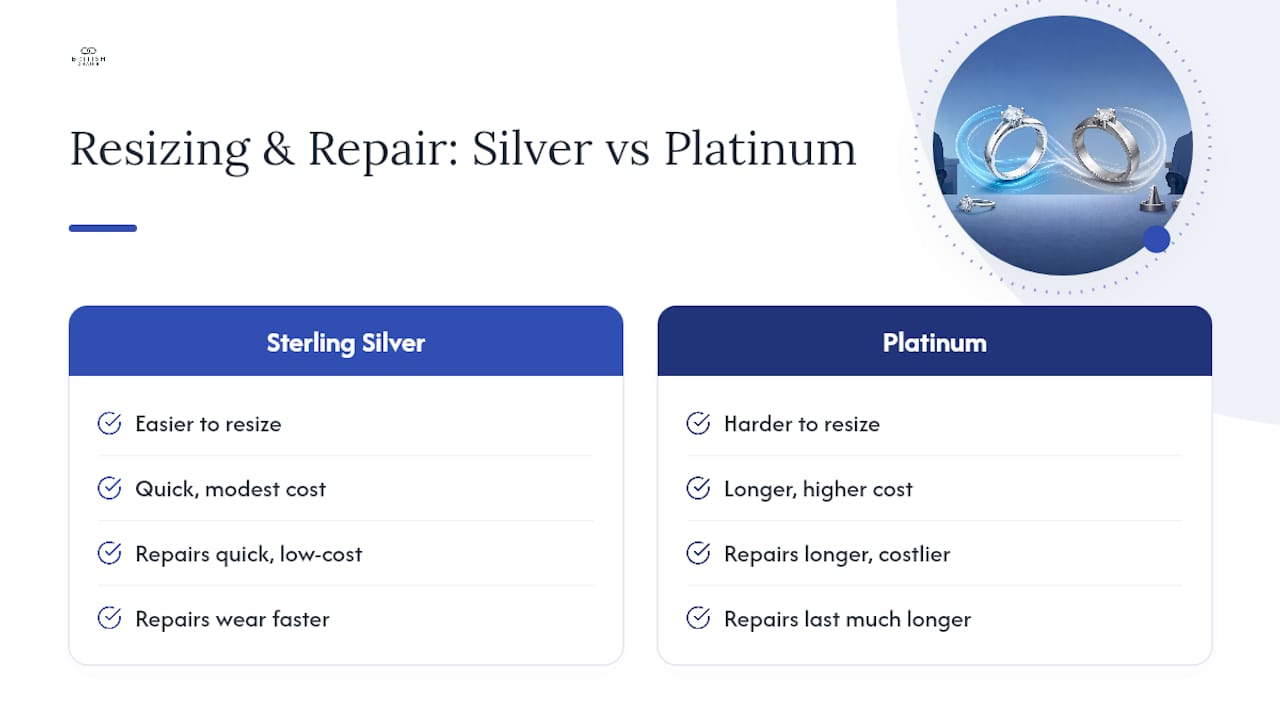
Both metals can be resized, but the process and cost differ in ways that catch buyers off guard. Sterling silver rings are generally straightforward to resize, since the metal is soft enough to work with quickly, and most high street jewellers charge modestly for the job. Platinum resizing takes longer and costs more, because the metal’s high melting point and density demand specialist equipment and more skilled labour.
Repairs follow the same pattern. A snapped silver chain link or a worn clasp is usually a quick, low-cost fix. Platinum repairs, such as re-tipping worn prongs on a ring, take longer but tend to hold up for far longer afterwards, since the metal doesn’t wear away the way silver does under repeated stress.
One practical wrinkle: heavily engraved or intricately patterned platinum pieces can be harder to resize without disturbing the design, since there’s less room to stretch or compress the band without affecting the pattern. Sterling silver, being softer, tolerates this kind of manipulation more easily, though it’s also more prone to distortion if resized too aggressively or too often.
If you’re planning to resize a ring more than once over its lifetime, say, through weight changes over the years, factor that into your metal choice upfront. Platinum’s resilience means it can handle multiple resizes without significant weakening, while silver bands resized repeatedly can eventually become thin at the seam and need reinforcement.
How ethical and environmental sourcing differ between the two
Platinum mining is concentrated in a handful of countries, with South Africa producing the overwhelming majority of the world’s supply, and the extraction process is notably energy-intensive given how much ore must be processed to yield a small amount of usable metal. That scarcity is part of what drives platinum’s price, but it also means the environmental footprint per gram tends to run higher than silver’s.
Silver is more widely mined across multiple continents, often as a byproduct of gold, copper and lead mining rather than a primary target metal. That byproduct status can reduce the marginal environmental impact of silver specifically, though the mining operations themselves still carry the usual concerns around land use, water consumption and community impact.
Recycled metal is increasingly available in both categories. Recycled sterling silver and recycled platinum perform identically to newly mined metal in terms of purity and durability, since the refining process restores the metal to the same standard regardless of origin. If ethical sourcing matters to your decision, ask any jeweller directly whether recycled metal is used and whether suppliers are audited, rather than assuming from branding alone.
How can you verify whether a piece is genuine?
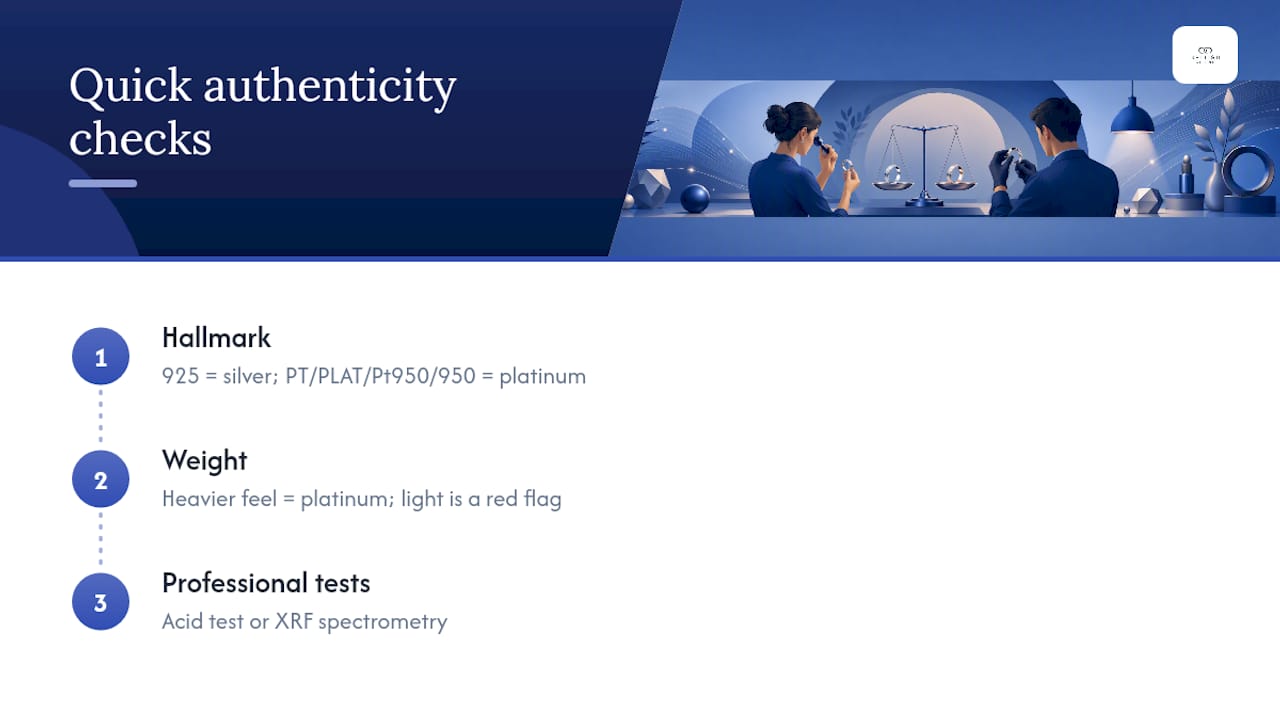
The fastest check needs no tools at all: read the hallmark. 925 confirms sterling silver, while PT, PLAT, Pt950 or 950 confirms platinum. Reputable British jewellers are legally required to hallmark items over a certain weight threshold, so a genuine piece should carry a clear, legible stamp, usually on the clasp or inner band.
Weight is the second check, and it takes seconds. Platinum feels noticeably heavier than silver in an identical design, because of that density gap covered earlier. If a “platinum” piece feels suspiciously light for its size, that’s a red flag worth investigating further.
Beyond those two checks, jewellers rely on proper testing for anything ambiguous, particularly with secondhand or inherited pieces where the hallmark is worn or missing. An acid test involves applying a small amount of reagent to a discreet spot and observing the reaction, a quick and inexpensive method jewellers have used for generations. XRF (X-ray fluorescence) spectrometry goes further, reading the metal’s composition non-destructively and giving a precise breakdown without damaging the piece at all. If you’re spending serious money on a secondhand item with no visible hallmark, ask whether the seller can provide XRF results, or take it to an independent jeweller for testing before you commit.
Platinum or silver: the honest final call
Building a jewellery collection isn’t about picking one metal forever. Platinum earns its place on pieces meant to last a lifetime, an engagement ring, a signet passed down a generation. Silver earns its place everywhere else: the chain you layer, the gift that doesn’t need to break the bank, the piece you’ll happily replace in five years when your taste shifts. The mistake is treating cost as the only variable. Maintenance tolerance matters just as much, and it’s the one thing most buyers forget to ask themselves before they pay.
— British
Shop hallmarked sterling silver chains at Britishchains
If sterling silver fits your budget and your lifestyle, Britishchains gives you a straightforward way to buy it right, without wading through unverified sellers or guessing at purity. Every chain in the silver necklaces collection carries genuine 925 hallmarking and is handcrafted in the UK, with fast UK dispatch and no ambiguity about what you’re actually paying for.
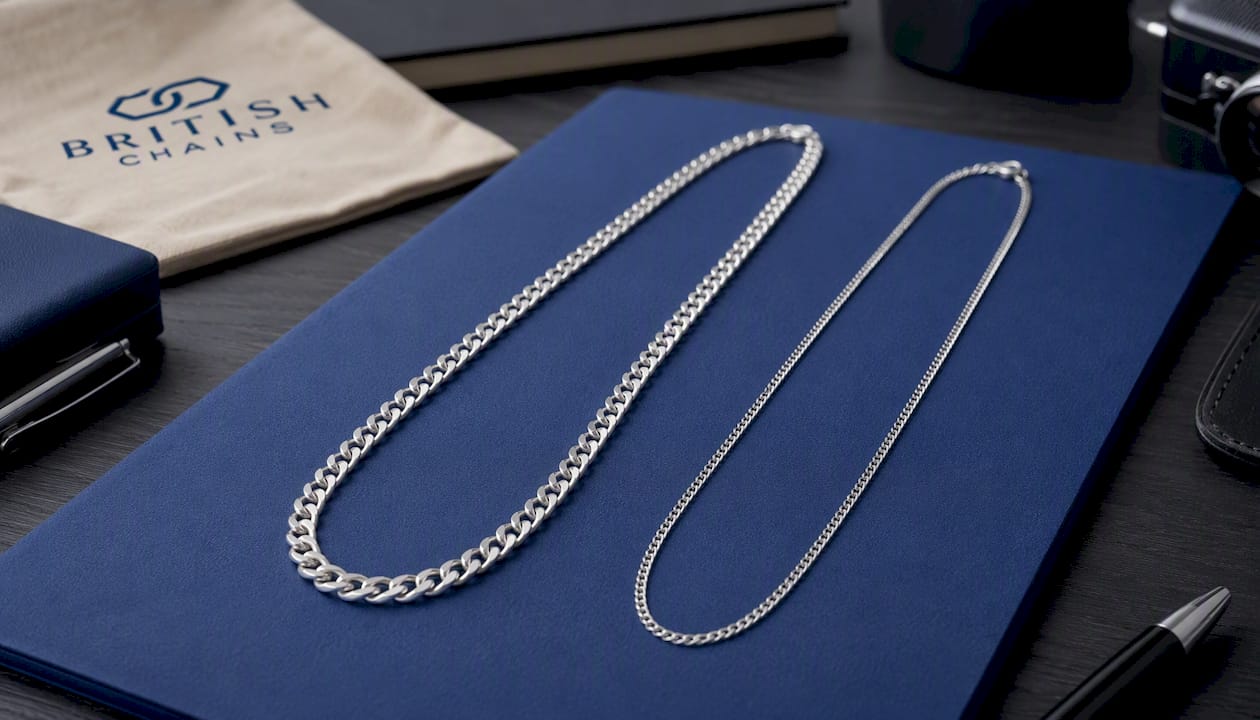
Two pieces worth a closer look if you’re after everyday-wear durability without platinum’s price tag: the 4mm curb chain for a bolder, statement feel, and the 2mm curb chain for something slimmer that layers well with other pieces. Prefer a different silhouette? Browse the rope chains, Figaro chains, or bracelets instead. Pick the style that suits you and check out today.
Sources
- Platinum vs Silver: Price, Rarity & Key Differences.
- Platinum vs Silver: Key Differences 2
- Platinum vs silver: what’s the difference? | The Mine | 7879 | 7879
FAQ
Is platinum better than silver?
Platinum is the stronger choice for durability, longevity and hypoallergenic wear, particularly for rings worn daily for decades. Sterling silver is better value and easier to find in varied styles, so “better” really depends on whether you’re prioritising lifespan or budget and variety.
What are the disadvantages of platinum?
Platinum costs considerably more per ounce than silver, and resizing or repairing it takes longer and costs more due to its density and high melting point. It also develops a matte patina over time rather than staying mirror bright, which some buyers see as a drawback and others find attractive.
How much is 1 kg of platinum?
Platinum prices shift constantly with commodity markets, so there’s no fixed figure that stays accurate for long. What’s consistent is that platinum trades at a substantially higher price per ounce than silver, reflecting its rarity and industrial demand.
Why do jewellers not like platinum?
It isn’t that jewellers dislike platinum. It’s that working with it demands more skill, time and specialist equipment than silver or gold, which raises labour costs for resizing and repairs. Some smaller workshops simply aren’t set up for it, while hallmarked sterling silver from suppliers like Britishchains remains far easier to source, resize and maintain.
Which metal is easier to check for authenticity?
Both are straightforward once you know what to look for. Read the hallmark, either 925 for sterling silver or Pt950 for platinum, and feel the weight, since platinum feels noticeably heavier than silver in an identical design.


