

925 vs 950 silver: which purity should you buy?
For most jewellery purchases, sterling silver marked 925 is the practical choice. It balances durability, price, and everyday wearability better than any other silver alloy on the market. 950 silver earns its premium on heirloom pieces and hand-finished designs where the extra 2.5% silver content genuinely shows in the lustre and patina. Both figures refer to millesimal fineness, the international system that states silver content in parts per thousand, and both should carry a UK hallmark from an assay office, not just a stamped number.
Before you buy anything:
- Check the stamp for “925” or “950” and confirm it’s paired with an official hallmark
- Ask the seller for hallmarking paperwork or a photographed assay mark on higher-value pieces
Key Takeaways
925 sterling silver suits the vast majority of jewellery buyers, while 950 justifies its premium mainly on heirloom or hand-finished pieces where the extra lustre and slower tarnish genuinely matter.
| Point | Details |
|---|---|
| Purity difference | 925 contains 92.5% silver and 950 contains 95.0%, a 2.5 point gap that affects softness, tarnish, and price. |
| Durability trade-off | Higher purity means less copper and a softer metal, raising scratch risk on thin chains and ring shanks. |
| Hallmark over stamp | An assay office hallmark verifies metal content independently; a lone “925” or “950” stamp does not. |
| Allergy consideration | Reactions usually come from nickel in the alloy, not the silver itself; ask sellers what the alloy contains. |
| Britishchains recommendation | Britishchains builds its catalogue on hallmarked 925 sterling silver for everyday durability and value, from 2mm curb chains to statement thick curb pieces. |
Table of Contents
- 925 vs 950 silver: what the numbers actually mean
- 925 vs 950 silver quality: purity, hardness, tarnish and price compared
- How 925 and 950 silver look and age over time
- Which silver purity suits your lifestyle and jewellery type
- Checking hallmarks: how to verify silver purity claims
- Caring for 925 and 950 silver jewellery day to day
- Allergies and skin sensitivity: does purity make a difference?
- Why regions and eras favour different silver standards
- Britishchains’ view: hallmarked 925 as the sensible default
- Britishchains: hallmarked chains built for how you actually wear silver
- Sources
925 vs 950 silver: what the numbers actually mean
Millesimal fineness expresses silver content per thousand parts, and it replaced the old pictorial hallmark systems used across Europe centuries ago. A 925 stamp means the metal is 92.5% pure silver, with the remaining 7.5% typically made up of copper. A 950 stamp means 95.0% silver content, leaving just 5% alloy.
Pure silver on its own is too soft for jewellery, which is why alloying exists at all. Copper hardens the metal and makes it workable for casting, soldering, and polishing.
- 925 (sterling): the global standard for jewellery, cutlery, and tableware
- 950: used in some fine jewellery traditions, including Britannia silver and Mexican Taxco work
- Both numbers describe the same underlying system, just at different points on the purity scale
925 vs 950 silver quality: purity, hardness, tarnish and price compared
The small gap between 925 and 950 sounds small on paper, but it changes how the metal behaves in your hand and on your skin.
Purity and lustre. That extra silver in a 950 piece gives it a warmer, brighter shine, particularly under natural light. Under artificial or dim lighting, though, most buyers genuinely can’t tell the two apart by eye alone.

Hardness and scratch risk. More silver means less copper, and copper is what gives sterling its structural backbone. 950 pieces are noticeably softer, which raises the risk of dents and surface scratches, especially on thin chains, ring shanks, and clasps that see daily flexing.
Tarnish. Less copper also means slower tarnish. 950 silver tends to darken more gradually than 925, and when it does tarnish, the patina often looks more even.
Price. 950 typically commands a noticeable premium over 925 for the same design and weight, reflecting both the higher silver content and the extra care needed to work with a softer metal. That premium rarely converts into stronger resale value for everyday pieces. Silver is priced largely on weight and market rate rather than fineness grade, so broader silver market trends matter more to resale than whether a chain is stamped 925 or 950.
Best applications:
- 925: chains, bracelets, everyday rings, statement pieces that get worn often
- 950: hand-finished artisan pieces, fine detail work, heirloom jewellery kept for occasional wear
How 925 and 950 silver look and age over time
Polished finishes highlight the difference most clearly. A polished 950 piece often has a slightly warmer white tone than 925, which reads as marginally “brighter” in strong light. Matt and brushed finishes flatten that distinction almost entirely, since the texture scatters light rather than reflecting it directly.
Patina tells a different story. As 950 pieces age, the reduced copper content produces a finer, more even darkening that some collectors find more attractive on engraved or textured surfaces. 925 pieces tarnish faster but develop a patina that many people actually prefer for antiqued or oxidised designs, where the contrast highlights detail rather than obscuring it.
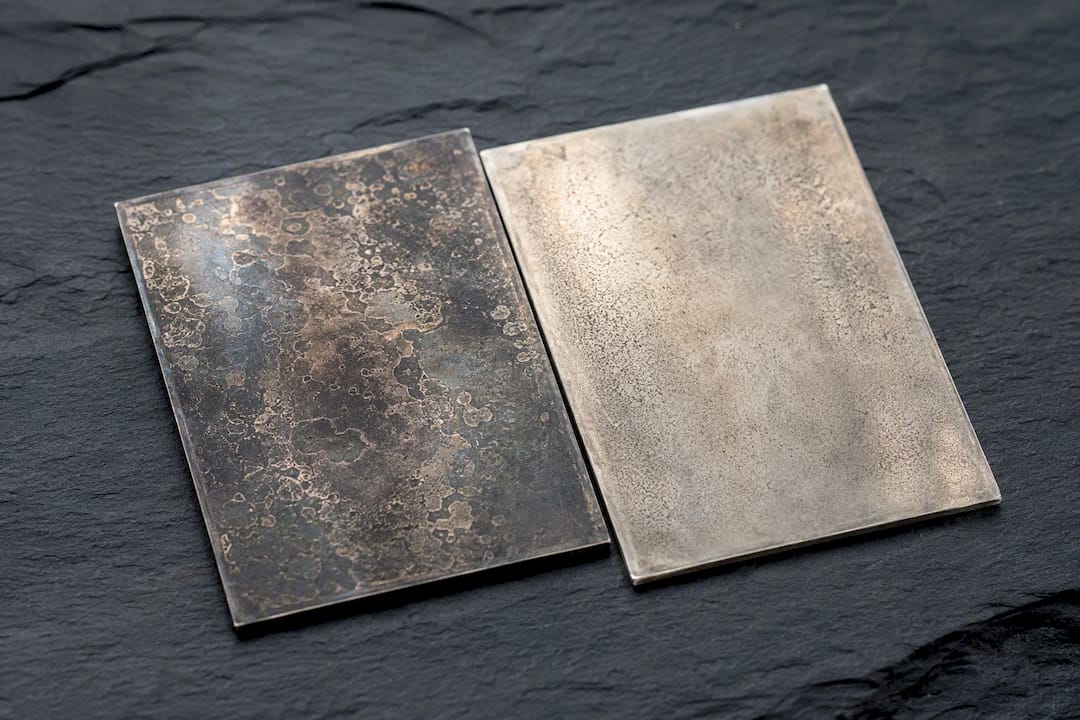
Pro Tip: Photographs rarely capture the real lustre gap between 925 and 950. If you’re buying online, look for close-up video or ask for a photo taken in daylight rather than under studio lighting, which tends to flatten both metals to a similar white.
Which silver purity suits your lifestyle and jewellery type
Match the metal to how often you’ll actually wear the piece:
- Daily-wear chains and bracelets: choose 925. The extra copper resists bending, kinking, and clasp fatigue far better under constant movement, which is why sterling remains the industry default for commercial jewellery.
- Heirloom or occasion pieces: 950 makes more sense here, particularly for hand-finished designs where the craftsperson wants the brighter lustre and finer patina that comes with higher purity.
- Thin chains, hoop earrings, and ring shanks: these are the risk points regardless of purity. Ask the seller about wire gauge and whether jump rings are soldered or simply crimped. A well-made 925 chain will usually outlast a poorly finished 950 one, because construction quality often matters more than the 2.5% purity gap.
Checking hallmarks: how to verify silver purity claims
A stamped “925” or “950” tells you what the maker claims, not what an independent body has verified. That’s the job of a hallmark.
- UK assay offices provide third-party verification of metal content, stamped separately from the purity mark itself
- Look for hallmarks near the clasp on necklaces or bracelets, and inside the band on rings
- Ask sellers for hallmarking paperwork or a photographed assay mark, particularly on higher-value pieces
- Home checks like a magnet test only rule out obvious fakes (silver isn’t magnetic); they can’t confirm fineness, so a proper assay is the only reliable route for anything valuable
Britishchains’ guide to sterling silver purity standards covers how UK hallmarking works in more detail, including the historical link between sterling and Britannia standards.
Caring for 925 and 950 silver jewellery day to day
Both purities respond well to the same basic care routine, with a few adjustments for the softer 950 alloy.
- Clean with a dedicated silver polishing cloth rather than paper towels, which can scratch the surface
- Avoid abrasive pastes and chlorine-based cleaners on both purities, but be extra cautious with 950, which marks more easily
- Store pieces separately in individual pouches with anti-tarnish strips to prevent scratching and slow oxidation
- If low maintenance matters more than tradition, alloys like Argentium 940 offer better tarnish resistance, though they come at a different price point and working process
Pro Tip: Keep chains flat rather than hanging on hooks. A coiled chain in a pouch develops far fewer kinks than one left dangling, whatever purity it’s made from.
Allergies and skin sensitivity: does purity make a difference?
Skin reactions to silver jewellery almost always trace back to the alloy metals, not the silver itself. Pure silver is broadly hypoallergenic, but neither 925 nor 950 is pure. Both contain a percentage of other metals, usually copper, and occasionally trace nickel depending on the manufacturer’s alloy recipe.
Because 950 contains less alloy metal overall (5% versus 7.5% in 925), it can be a marginally better option for people with sensitive skin, though the difference is small and rarely decisive on its own. What matters more is whether the alloy includes nickel at all. Reputable jewellers avoid nickel in silver alloys specifically because it’s the most common trigger for contact dermatitis, far more so than copper.
A hallmarked piece from a UK assay office gives you more confidence here than an unmarked import, since the verification process checks the declared metal content rather than taking a manufacturer’s word for it. For most people without a diagnosed metal allergy, both 925 and 950 are comfortable for daily wear, including on pieces that sit close to the skin like chains and rings.
Why regions and eras favour different silver standards
Sterling silver’s 92.5% standard has dominated British and American jewellery-making for centuries, largely because it strikes a workable balance between durability and cost for mass production. Britain’s hallmarking system, run through official assay offices, grew up alongside this standard specifically to police it, which is part of why sterling carries such strong trust internationally.
Britannia silver, at around 95.8% fineness, was actually Britain’s mandatory standard for a period in the late 17th century, introduced to stop coin clipping by making jewellery silver too soft to easily convert into currency. It later became optional, and sterling reclaimed its place as the practical default. That history is part of why 950 has such a strong association with fine, traditional craftsmanship in Britain even today, even though sterling now dominates the commercial market.
Elsewhere, 950 took root through different routes entirely. Mexican Taxco silver, prized for hand-finished artisan pieces, commonly uses the 950 standard, as does French silver under some historical marks. These regional preferences tend to track back to specific craft traditions and, in some cases, historical government minting standards rather than any universal judgement that one purity outperforms the other. Buyers shopping specifically for Britannia-style or Taxco-influenced pieces often gravitate to 950 for that heritage, while everyday commercial jewellery worldwide has largely settled on sterling.
Britishchains’ view: hallmarked 925 as the sensible default
We build our catalogue around hallmarked 925 sterling silver because it does the job most buyers actually need: it holds up to daily wear, keeps costs sensible, and carries verifiable British craftsmanship. A 2mm curb chain or a 2mm Figaro chain suits someone who wants a piece they’ll forget they’re wearing. An 8mm thick curb chain or thick curb bracelet fits buyers wanting a statement piece or a proper gift that lasts.
Every piece we sell carries British hallmarking, so you’re never relying on a stamped number alone. If your priority is a piece that earns its keep through years of wear rather than sitting in a drawer, sterling remains the sound starting point.
— British
Britishchains: hallmarked chains built for how you actually wear silver
Britishchains sells hallmarked 925 sterling silver chains and bracelets designed around one simple fact: most silver jewellery gets worn every day, not kept in a box. That means every design in the catalogue, from delicate everyday pieces to statement chains, is built on a purity that resists bending, kinking, and clasp fatigue better than any premium alloy at a comparable price.
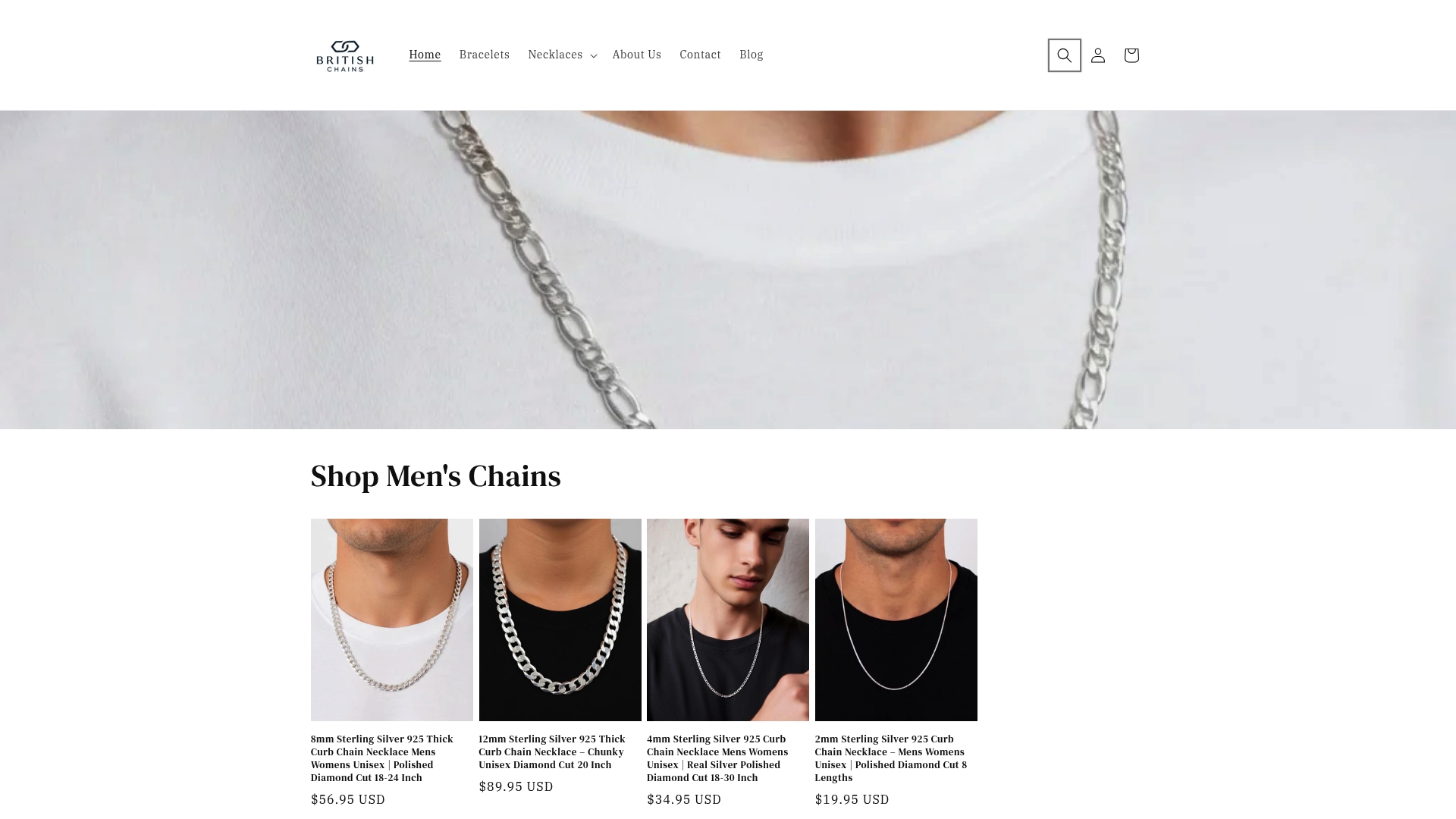
If you’re after something for daily wear, the 2mm snake chain is hypoallergenic and sits close to the skin without irritation, a genuinely practical pick if you’ve had sensitivity issues with other jewellery before. For something with more presence, the 4mm twisted rope chain works equally well as an everyday piece or a dressed-up occasion chain. Every order includes the hallmarking and product paperwork covered earlier in this article, so you’re never guessing about what you’ve bought. Browse the full sterling silver collection and pick the chain that matches how you’ll actually wear it.
Sources
For readers who want to check the fineness figures and hallmarking rules directly, the following sources back the claims made throughout this article: WhatIsThisMark’s guide to silver purity stamps explains the millesimal fineness system and how 925 and 950 marks work in practice. Spratling Silver’s comparison of 950 and 925 covers the lustre, tarnish, and hardness differences between the two standards in detail. Background on historical standards, including Britannia silver, is available on the Wikipedia entry for silver standards. For hallmarking specifics in the UK, The Assay Office’s guide to UK hallmarks explains what independent verification actually covers. Cookson Gold’s guide to types of silver offers a trade perspective on why sterling remains the commercial standard.
- Silver purity stamps explained: 925, 950, 999, and coin silver | WhatIsThisMark
- .950 Silver vs .925 Sterling: What’s the Difference? – Spratling Silver Inc.
- Silver standards — Wikipedia
- UK hallmarks — The Assay Office


