

Fineness marks on silver explained for collectors
Fineness marks are stamps on silver items that show the metal’s exact purity in parts per thousand. The number 925, for instance, tells you the piece contains 92.5% pure silver alloyed with 7.5% copper for strength, since pure silver is too soft for everyday jewellery use. These silver purity stamps are the most reliable way to confirm what you are actually buying, whether you are a collector, an enthusiast, or someone verifying a gift. Understanding fineness marks on silver is the difference between paying for solid sterling and unknowingly accepting a plated substitute.
What do fineness marks on silver actually mean?
Fineness marks express silver purity as a number out of 1,000. A mark of 925 means 925 parts per thousand are pure silver. A mark of 999 means 999 parts per thousand, which is as close to pure as commercially produced silver gets.
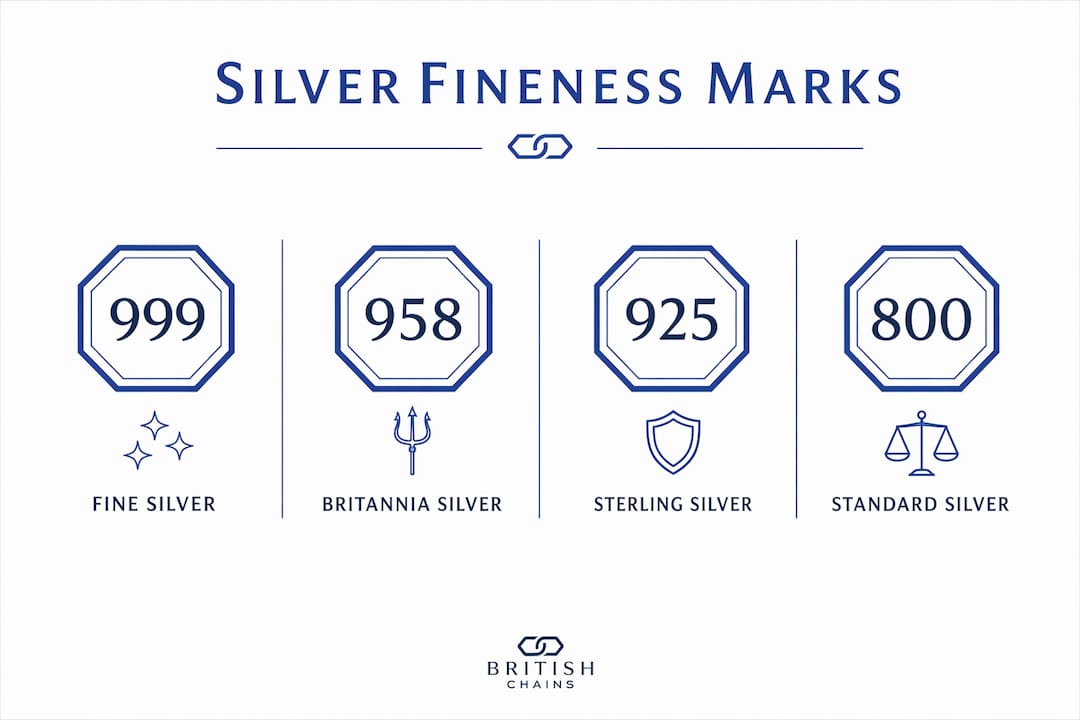
The three most common marks you will encounter are 999, 925, and 800, each representing a distinct purity level with different practical applications. Knowing which mark belongs to which category tells you immediately what the piece is worth and how it was made.
The main fineness marks and what they represent
| Fineness mark | Silver purity | Common use |
|---|---|---|
| 999 | 99.9% pure silver | Bullion bars, investment coins |
| 958 | 95.8% pure silver | Britannia silver, British ceremonial pieces |
| 925 | 92.5% pure silver | Sterling silver jewellery, flatware, chains |
| 800 | 80% pure silver | European antiques, vintage Continental pieces |
| 900 | 90% pure silver | Some Latin American and older American items |
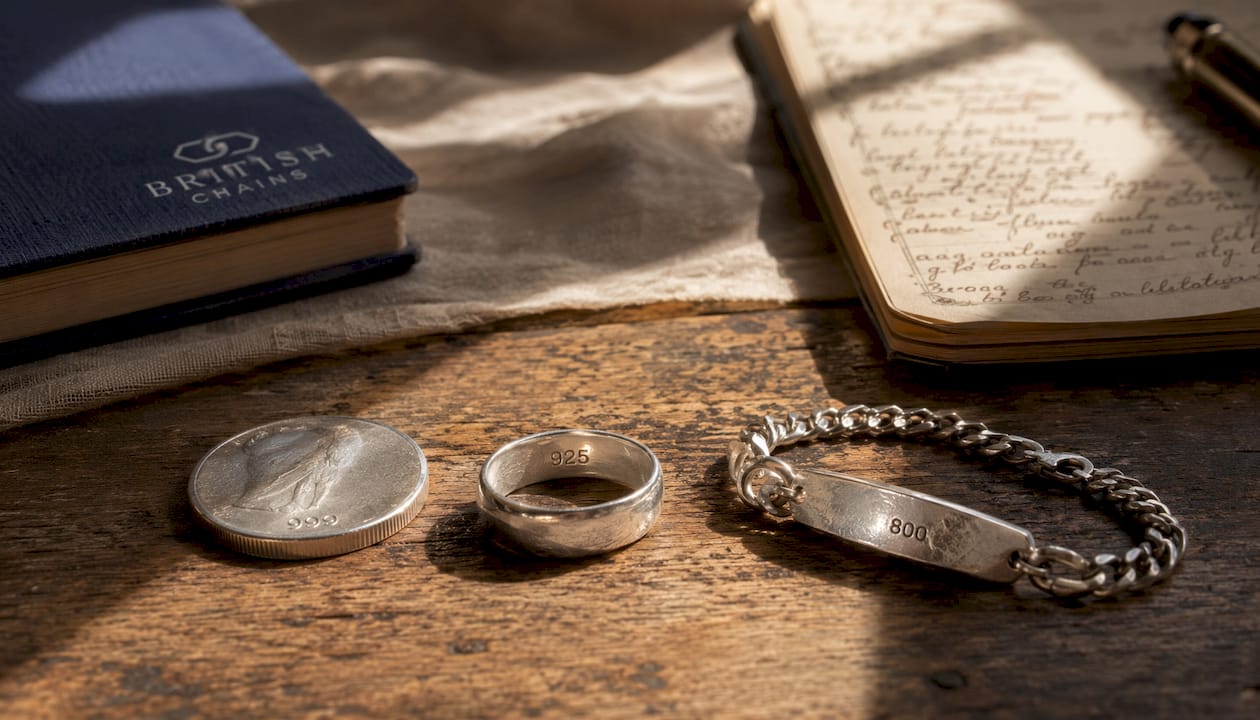
The 999 mark appears mainly on bullion and coins because fine silver is too malleable for wearable pieces. The 925 sterling silver standard is the global benchmark for jewellery, used by manufacturers and hallmarking authorities worldwide. The 800 mark is common on antique Continental European silverware, particularly German and Dutch pieces from the 19th and early 20th centuries.
Britannia silver, marked 958, holds a special place in British history. Parliament introduced it in 1697 to prevent silversmiths from melting coinage, and it remains a recognised standard today. Pieces bearing this mark are rarer and carry a premium among collectors.
Pro Tip: If you find a mark that reads “800” on a piece sold as sterling, do not accept it as equivalent. Sterling silver is 925 as a minimum standard, and 800 falls meaningfully short of that threshold.
How to tell fineness marks apart from plating marks
Silver plating marks are not fineness marks. They signal that a base metal object has been coated with a thin layer of silver, and they carry no guarantee of solid silver content whatsoever.
The most common plating marks are EPNS, EP, and A1. EPNS stands for Electro-Plated Nickel Silver. Despite the word “silver” in the name, EPNS items contain no solid silver at all. EP and A1 are shorthand variants of the same category. Other terms to watch for include “Alpaca,” “German silver,” and “nickel silver,” all of which describe base metal alloys with a silver appearance but zero silver content.
Plated items often carry no fineness stamp or use these plating codes in place of a purity number. Genuine sterling silver should display a consistent fineness mark, typically 925, alongside other hallmark elements.
Physical signs also help you distinguish plated items from solid silver:
- Wear at edges and high points. Plating wears through at corners, clasps, and raised areas, revealing the base metal beneath.
- Weight. Solid silver is noticeably heavier than plated brass or nickel for the same size piece.
- Colour at worn spots. A yellowish or reddish tinge at worn areas indicates brass or copper underneath.
- Stamp clarity. Genuine fineness marks are crisp and deeply struck. Plated items sometimes carry blurry or shallow imitation stamps.
Pro Tip: Never judge a piece by a single stamp. Turn it over, examine the clasp, and check every surface. A genuine 925 mark on one part of a piece does not confirm the whole item is solid silver if the construction quality looks inconsistent.
How hallmark systems use fineness marks alongside other stamps
A fineness mark rarely appears alone on a properly hallmarked British silver piece. Silver hallmark groups include the fineness mark, an assay office mark, a maker’s mark, and date letters, and reading them together is what confirms authenticity.
The lion passant is the most recognised symbol in British silver hallmarking. It depicts a walking lion and confirms the piece meets the 925 sterling silver standard for items assayed in England. Scotland uses a thistle, and Edinburgh historically used its own castle mark. These assay office symbols tell you where the piece was tested and certified, not just what it contains.
The key elements of a British hallmark group are:
- Maker’s mark. Two or more letters identifying the silversmith or manufacturer responsible for the piece.
- Fineness mark. The numeric purity stamp, such as 925, or the traditional symbol like the lion passant.
- Assay office mark. The symbol of the office that tested the piece: London’s leopard head, Birmingham’s anchor, Sheffield’s rose, or Edinburgh’s castle.
- Date letter. A letter indicating the year of assay, enclosed in a shield whose shape and font vary by office and period.
Date letters require careful interpretation. The same letter can represent different years depending on the assay office, the shield shape, and the typeface used. A “D” in a plain shield at one office may indicate a completely different year than a “D” in a shaped shield at another. Always cross-reference the full group when dating a piece.
Pro Tip: Use a dedicated British hallmark reference guide, such as those published by the Assay Office or specialist antique silver databases, to decode date letters accurately. Guessing from the letter alone leads to misidentification.
For a thorough walkthrough of what each symbol means, the sterling silver hallmarks guide at Britishchains covers the full British system in plain language.
Practical steps for verifying silver fineness marks
Verifying a silver piece takes more than a glance at one stamp. A systematic approach protects you from costly mistakes.
- Use magnification. A jeweller’s loupe at 10x magnification reveals whether a stamp is crisp and deeply struck or shallow and blurry. Genuine hallmarks are applied with precision. Fakes often look smudged or inconsistent under magnification.
- Check the full hallmark group. Authentic identification prioritises the standard mark such as 925 or the lion passant, not pattern numbers or decorative engravings nearby. Collectors frequently mistake a pattern number for a fineness mark. They are different things entirely.
- Test with a magnet. Silver is not magnetic. Hold a strong magnet near the piece. Any attraction indicates a ferrous base metal, which rules out solid silver immediately.
- Assess the weight. Solid silver has a satisfying density. A piece that feels light for its size warrants closer scrutiny.
- Listen to the sound. Strike a solid silver item gently and it produces a clear, bell-like ring. Base metals produce a dull thud.
- Inspect construction quality. Examining hallmark groups alongside physical construction and wear points is the method expert appraisers use. Look at solder joints, clasps, and any areas of heavy use.
- Seek professional appraisal when uncertain. For high-value antique pieces, a qualified appraiser or assay office can confirm purity through acid testing or X-ray fluorescence analysis.
The guide on how to tell if a silver chain is real at Britishchains expands on these physical tests with specific examples for chain jewellery.
Key takeaways
Fineness marks are the definitive indicator of silver purity, and reading them correctly alongside the full hallmark group is the only reliable way to confirm authenticity.
| Point | Details |
|---|---|
| Fineness marks show purity | Numbers like 925 and 999 express silver content in parts per thousand. |
| 925 is the sterling standard | Sterling silver contains 92.5% pure silver alloyed with copper for durability. |
| Plating marks are not fineness marks | EPNS, EP, and A1 indicate zero solid silver content. |
| Hallmarks work as a group | The lion passant, assay office mark, and date letter together confirm British sterling silver. |
| Physical checks matter | Weight, magnetism, and wear points confirm what stamps alone cannot always prove. |
Why single stamps mislead more buyers than you might expect
The most common mistake I see collectors make is fixating on one number and ignoring everything around it. A “925” stamp on its own is a starting point, not a conclusion. Many low-quality pieces carry faked 925 stamps, and the giveaway is always in the construction: light weight, thin walls, base metal showing at the clasp.
What strikes me most about the British hallmarking system is how deliberately it was designed to prevent exactly this kind of fraud. The requirement for multiple marks from an independent assay office means no single party can self-certify purity. That system has protected buyers for centuries, and it still works when you know how to use it.
The other thing worth saying plainly: pattern numbers fool people constantly. A piece of Victorian flatware might carry a “12” or a “24” stamped near the handle. Those are pattern or quality-of-plate numbers, not fineness marks. Consumers regularly mistake these for purity stamps, particularly on antique Continental pieces where the marking conventions differ from British practice.
My honest advice is to treat hallmark reading as a skill worth developing properly. Spend time with a reference guide. Handle pieces at reputable dealers. The more genuine hallmarked silver you examine, the faster your eye calibrates to what authentic marks look and feel like. That calibration is worth more than any single tip.
— British
Genuine 925 sterling silver chains at Britishchains
Knowing what fineness marks mean is only useful when the silver you buy actually carries them. Britishchains stocks a full range of hallmarked sterling silver chains, each stamped 925 and crafted to British quality standards.

The 8mm diamond cut curb chain is one of the most popular options, available in lengths from 18 to 24 inches and finished with a polished diamond cut. Every piece carries the 925 fineness mark so you know exactly what you are wearing. For collectors and enthusiasts who want verified sterling silver without ambiguity, Britishchains offers the full range of styles, from fine Figaro links to chunky curb chains, all with clear hallmarking information on every product page.
FAQ
What does the 925 stamp mean on silver?
The 925 stamp is a fineness mark indicating the item contains 92.5% pure silver alloyed with 7.5% copper. It is the internationally recognised standard for sterling silver jewellery.
Is 800 silver the same as sterling silver?
No. Sterling silver requires a minimum fineness of 925, meaning 92.5% pure silver. An 800 mark indicates only 80% silver content, which is below the sterling threshold and common on antique Continental European pieces.
What does EPNS mean on silver items?
EPNS stands for Electro-Plated Nickel Silver and indicates the item contains no solid silver. It is a base metal object coated with a thin silver layer, not a fineness mark.
How do I read a British silver hallmark?
A full British hallmark includes a maker’s mark, a fineness mark such as 925 or the lion passant, an assay office symbol, and a date letter. Reading all four together confirms the purity, origin, and year of assay.
Can fineness marks be faked?
Yes. Faked 925 stamps do appear on low-quality pieces. Checking the full hallmark group, assessing weight and construction quality, and using a magnet test alongside stamp inspection gives the most reliable confirmation of genuine sterling silver.


