

Hallmarked Sterling 925 Reduces Fast Green Marks for UK Buyers
Sterling silver itself doesn’t turn green. The trace copper in every 925 piece can react with sweat and skincare products to leave a harmless, washable green mark on your skin, not on the metal itself. It’s a cosmetic nuisance, not a sign of fake jewellery or a health risk, and it usually rinses away with soap and water. The fixes below cover prevention and cleaning in more detail.
TL;DR:
- Green skin marks are caused by copper salts transferring from alloyed sterling silver to your skin, not by tarnish or the silver itself.
- Heavy, quick green staining likely indicates plated jewelry rather than solid sterling, especially if it appears within hours of wearing.
- Variations in skin pH, moisture, and environment explain why the same piece can turn green for one person and not another.
- Proper storage, gentle cleaning, and avoiding exposure to chlorine and heavy lotions can prevent green marks from forming.
- Choosing hallmarked solid 925 silver eliminates base metal exposure and reduces the risk of green skin reactions over time.
Table of Contents
- Why does sterling silver contain copper in the first place?
- The chemistry behind green skin versus tarnished silver
- Tarnish or green skin: how to tell which one you’re dealing with
- Why the same chain can turn green on one person and not another
- How to stop the green marks before they start
- Getting rid of green marks and tarnish safely
- Checking whether your piece is solid sterling or plated
- What BritishChains recommends and why hallmarking matters here
- Why the “just buy cheap silver” advice misses the point
- Solid 925 pieces worth considering if green marks bother you
- Sources
Why does sterling silver contain copper in the first place?
Pure silver is too soft for everyday jewellery. It dents, bends, and scratches with normal wear, which is why jewellers alloy it. Sterling silver is defined as 92.5% silver and 7.5% other metals, and that remaining 7.5% is almost always copper. That’s what the “925” stamp actually certifies.
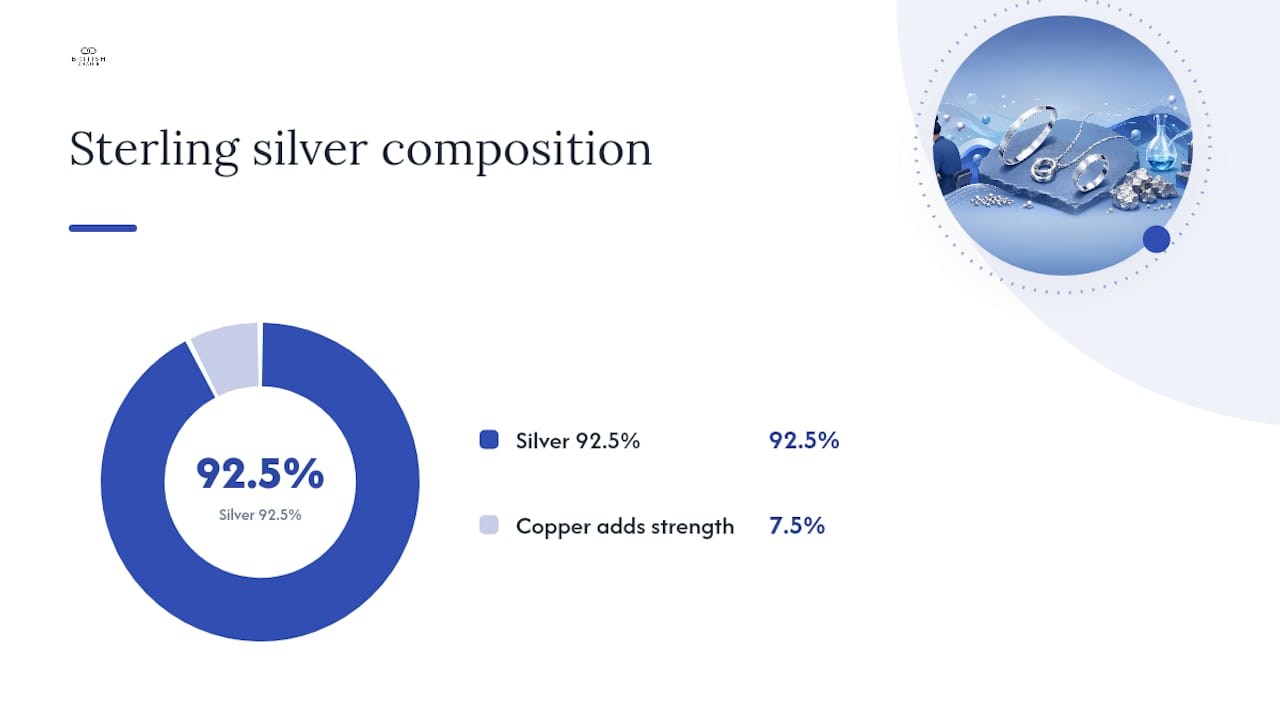
Copper adds hardness and structural strength without dulling silver’s colour or shine. Sterling strikes the balance jewellers have relied on for centuries, strong enough to survive daily wear, soft enough to be worked into fine detail.
There are alternatives. Fine silver skips the copper almost entirely and resists tarnish better, but it’s rarely used for chains because it’s simply too soft to hold a clasp or curb link. Argentium silver replaces some of the copper with germanium, which slows tarnishing and reduces (though doesn’t eliminate) the skin reactions covered below. It costs more to produce, and most retailers reserve it for premium lines rather than everyday pieces.
Silver is also chemically calmer than copper to begin with. Britannica’s overview of silver notes it as one of the less reactive metals, which is exactly why alloying with a more reactive one like copper is necessary to get workable strength at all.
The chemistry behind green skin versus tarnished silver
These are two entirely different reactions, and mixing them up is the single most common source of confusion when people ask whether their jewellery is “turning green.”
Green skin is a copper reaction, not a silver one. When copper in the alloy meets sweat, it doesn’t just sit there. Perspiration contains salts, mild acids, and moisture, all of which react with copper to form copper salts, most commonly copper chloride or copper carbonate, both of which happen to be green. Those salts don’t stay on the metal. They rub off onto your skin, which is why you see a green smudge on your finger or wrist rather than on the ring itself. The RSC’s explainer on copper and skin discolouration confirms this is a surface transfer, not a change to the jewellery’s structure, and the residue washes off with ordinary soap.
Tarnish is a completely separate sulfur reaction. Silver darkens when it reacts with sulfur compounds in the air, on your skin, or in household products, forming silver sulfide, a black or grey film that sits on the metal itself rather than transferring to you. This is the process people mean when they ask why does sterling silver tarnish: it’s the metal changing colour, not your skin.
Quick reference: Green residue on your finger points to copper reacting with sweat. Black or grey film on the chain points to sulfur reacting with silver. Different chemistry, different fix.
A comparison of jewellery discolouration causes backs this up directly: green marks are almost always copper-based, while dark tarnish is sulfide-based, and the two rarely happen for the same reason at the same time.
A handful of everyday triggers make either reaction more likely:
- Chlorinated pools and hot tubs accelerate both copper oxidation and silver tarnish, which is one reason jewellers advise removing rings and chains before swimming.
- Perfume and heavy lotions contain acids and compounds that speed up the copper reaction, especially when applied directly under a ring or bracelet.
- High humidity keeps moisture in contact with the metal for longer, giving both reactions more time to happen.
- Sulfur-heavy environments, think rubber, latex, or certain cleaning products, are a more likely culprit behind tarnish than behind green skin.
None of this means your jewellery is faulty. It means copper and silver are doing exactly what copper and silver do.
Tarnish or green skin: how to tell which one you’re dealing with
A thirty-second check tells you almost everything you need to know.
First, wipe the metal itself with a dry cloth. If a dark grey or black residue comes off onto the cloth, that’s silver sulfide tarnish on the jewellery, and a polish will sort it. Second, wash the skin underneath with soap and water. If the green disappears easily and doesn’t reappear until you wear the piece again, that’s the copper reaction working exactly as expected. Third, look at how quickly and how heavily the green appears. A faint trace after a full day of wear is normal for genuine 925. A dark, thick green mark within an hour or two of putting the piece on is a different story, and often points to plating rather than solid sterling, a distinction covered in more depth further down.
| Piece type | Copper content | Likely skin reaction |
|---|---|---|
| Solid 925 sterling | 7.5% copper alloy | Occasional faint green, usually light and slow to appear |
| Argentium sterling | Reduced copper, germanium added | Rare, milder green reaction than standard sterling |
| Silver-plated base metal | Thin silver layer over copper or brass core | Heavy, fast green once plating wears through |
The pattern to watch for is speed and intensity. Persistent, heavy staining is one of the more reliable signals that a piece is plated rather than solid, because the thin silver layer wears away fast at points of friction, exposing the copper-rich base underneath directly to your skin.
Why the same chain can turn green on one person and not another
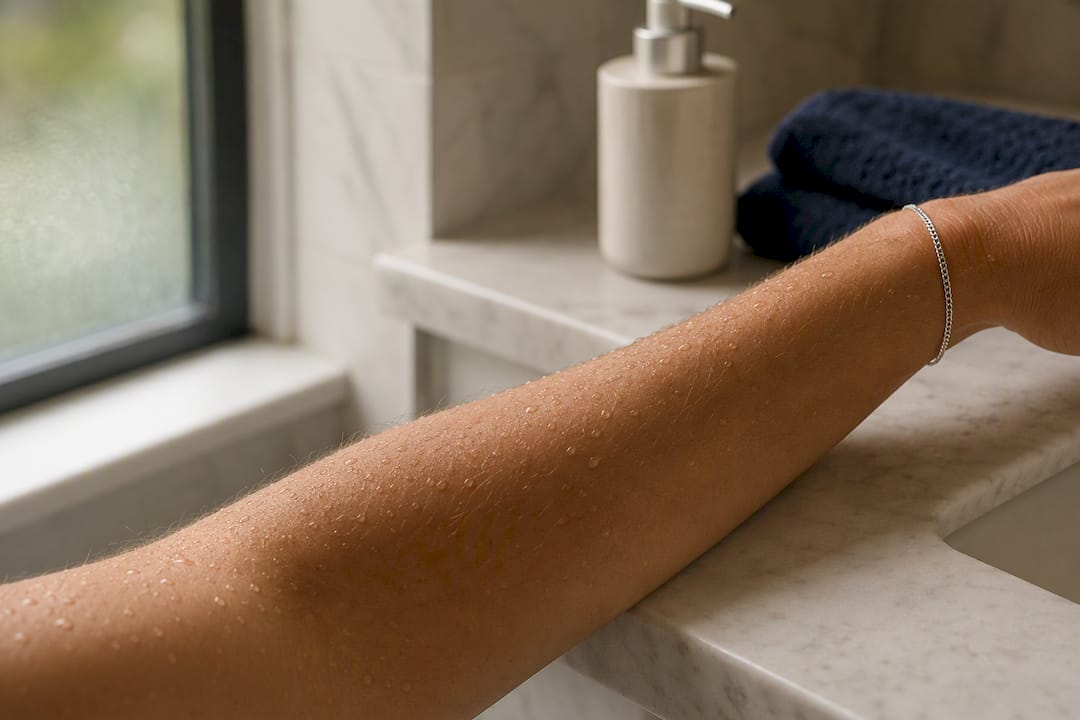
Skin chemistry varies more than most people expect, and it fully explains why two people wearing the exact same chain can get completely different results. Skin pH sits anywhere from roughly 4.5 to 7 depending on the person, and more acidic skin reacts with copper faster, producing green marks sooner and more visibly. Skin pH is a genuine variable in how sterling silver behaves against different wearers, which is why the same necklace can be trouble-free for years on one person and leave a mark within days on their partner.
Trapped moisture matters just as much. A ring worn constantly, including through washing up, gym sessions, and hot weather, gets far more sustained skin contact than a chain worn only for a few hours in the evening. Lotion, sunscreen, and perfume residue left under a piece speeds the reaction further. Even the season plays a role: summer heat and sweat, or a week by a chlorinated pool on holiday, will produce results a mild autumn week never will.
How to stop the green marks before they start
Most prevention comes down to habits you can start today, at no cost, alongside a couple of longer-term choices worth considering if green marks are a recurring issue for you.
Daily habits that make the biggest difference:
- Put jewellery on last, after lotion, perfume, and sunscreen have fully absorbed into your skin.
- Take it off first, before washing up, showering, or applying more products.
- Remove chains and rings before swimming; chlorine is one of the fastest accelerants for both tarnish and copper reactions, a point echoed in general swimwear and jewellery care advice around chlorine exposure.
- Dry your skin properly after washing hands before putting rings back on; trapped moisture is doing a lot of the work here.
- Wipe the piece with a soft cloth after wear, particularly if you’ve been active or sweating.
Pro Tip: Keep a small polishing cloth in your bag or bathroom drawer. A ten-second wipe after you take a piece off does more to prevent both tarnish and green marks than any occasional deep clean ever will.
On finishes, two options are worth knowing about if you react easily. Rhodium plating adds a thin, hard, hypoallergenic layer over sterling silver, creating a barrier between your skin and the copper underneath. It looks brighter than natural silver too, though the plating does wear over months of regular use and eventually needs redoing. Argentium silver, mentioned earlier for its lower copper content, is the other route: reducing direct copper contact through either rhodium plating or an argentium alloy measurably lowers the chance of green residue, though neither is a permanent fix and both come with a higher price tag than standard sterling.
Storage matters more than most people assume. Keep pieces in an airtight bag or a lined box rather than left out on a dish, where they’re exposed to humidity and airborne sulfur around the clock. Anti-tarnish strips inside a jewellery box are cheap and genuinely effective at extending the time between polishes. For full storage guidance, a proper routine takes minutes a week and saves considerably more time on cleaning later.
Getting rid of green marks and tarnish safely
Skin comes first, jewellery second, and both are simpler than most people expect.
- Wash the affected skin with ordinary soap and warm water. This clears the vast majority of green copper residue in one go.
- Use a gentle cloth for anything stubborn. Light rubbing with a damp flannel lifts residue that soap alone didn’t fully shift.
- Reach for isopropyl alcohol only if needed. A cotton pad with a small amount removes the more persistent traces, though this should be a last resort rather than a daily habit.
- Wipe the jewellery itself with a polishing cloth to remove any built-up residue before it transfers back to your skin next time you wear it.
- Run a mild soap bath for tarnished pieces. Warm water with a few drops of washing-up liquid, a soft-bristled brush, then a thorough rinse and dry, handles most everyday tarnish.
- Try a baking-soda paste for heavier tarnish. Mixed to a thick paste, applied gently, then rinsed off, it lifts sulfide build-up without scratching solid silver.
Green marks are genuinely cosmetic and typically clear within hours to a couple of days once you stop wearing the piece, so there’s no need to panic over a stained finger.
What to avoid: abrasive kitchen scourers, bleach-based cleaners, and toothpaste, all of which are too harsh for sterling and can leave permanent fine scratches. If a piece has deep grooves, engraving, or gemstones, a full chain cleaning method built for detailed pieces works better than a quick rub. And if a piece has visible worn patches, bent links, or plating that’s clearly flaking, that’s a job for a professional jeweller, either to replate or repair, rather than something to fix with a home remedy.
Checking whether your piece is solid sterling or plated
The 925 hallmark guarantees the metal composition, 92.5% silver, 7.5% other metals, at the time it was stamped. It does not guarantee that a mislabelled or poorly regulated seller hasn’t stamped a plated item incorrectly, which is rare but not impossible, particularly with pieces bought from unverified marketplaces rather than established retailers.
Wear patterns tell you more than the stamp alone. A yellowish or coppery tint appearing at points of friction, a clasp, the inside curve of a ring, links that rub against each other, usually means the plating has worn through to the base metal beneath. Heavy, fast, dark green staining that appears within days rather than weeks is one of the clearest signs you’re looking at a plated piece rather than solid sterling.
A simple at-home check: look closely at high-friction points under good light for any colour shift away from silver-white. If you’re still unsure, a jeweller can confirm composition properly, and it’s worth asking before assuming a piece is faulty.
What BritishChains recommends and why hallmarking matters here
Every piece sold through Britishchains carries the 925 hallmark, which sets a fixed, verifiable standard: 92.5% silver, 7.5% copper alloy, nothing hidden underneath a thin plated layer waiting to wear through. That’s the single biggest lever against the heavy, fast green staining covered above, because there’s no base metal exposed once the surface wears.
The care routine worth following is straightforward: wipe after wear, store in an airtight bag or lined box, and clean gently rather than aggressively. For step-by-step instructions, cleaning a sterling silver bracelet covers the same principles that apply to chains and necklaces.
Why the “just buy cheap silver” advice misses the point
Most guidance on green skin marks stops at the chemistry and leaves you there, as though knowing why copper reacts with sweat solves the actual problem. It doesn’t. The chemistry is only half the story; the other half is what you’re actually buying.
Cheap plated jewellery is where green staining turns from a minor annoyance into a recurring one. A thin silver layer over a copper or brass core wears through at exactly the points that get the most friction, a clasp, the inside of a ring, and once it does, you’re getting copper-skin contact with no barrier left at all. That’s not a hygiene failure or sensitive skin. It’s the product doing what a thinly plated item always eventually does.
Solid 925 sterling, properly hallmarked, doesn’t solve the copper reaction entirely, because the copper is still there, alloyed throughout rather than hidden under a coating. But it behaves predictably, wears evenly, and never suddenly exposes a different metal underneath. If green marks are a repeated problem for you, the fix usually isn’t more frequent cleaning. It’s checking what’s actually in the piece you’re wearing.
— British
Solid 925 pieces worth considering if green marks bother you
If you’re tired of guessing whether a piece is solid or plated, buying hallmarked solid 925 from the outset removes that uncertainty.

A few popular options worth a look:
- The 2mm curb chain necklace, a lightweight everyday piece available across eight lengths.
- The 8mm thick curb chain, a heavier statement piece with a diamond-cut polish.
- The 2mm snake chain, a smooth, hypoallergenic option in an 18 inch length.
- The 4mm twisted rope chain, a textured diamond-cut design in multiple lengths.
- The 2mm Figaro chain, a classic alternating-link style for men and women.
Browse the full solid 925 chain collection to find a length and thickness that suits how you actually wear jewellery day to day.
Sources
- Periodic Table — silver (RSC)
- Why does copper jewellery turn your skin green? (RSC education)
- Why jewelry turns your skin green (Halstead Bead)
- Silver | Britannica
- Does sterling silver turn green? (Aquamarise)


