

UK: British Silversmithing Hallmarks and the 7.78g Rule to Spot Fakes
Buy only hallmarked sterling silver (925) chains carrying a clear sponsor’s mark and an assay office punch. That combination is your legal proof of purity in the UK, backed by the Hallmarking Act 1973. If the chain weighs over 7.78 grams and has no hallmark, walk away. Under that weight, ask the seller for a written statement of fineness before you pay.
TL;DR:
- Only buy hallmarked sterling silver chains with a sponsor’s mark, assay office punch, and fineness mark to ensure genuine purity.
- Chains weighing over 7.78 grams without a hallmark should be verified with a written fineness statement before purchase.
- Physical inspection should include magnified photos of the hallmark, specific details of the assay office mark, and confirmation of weight and fineness.
- Heavier chains of 8mm or thicker are more likely to carry a full hallmark, making authenticity easier to verify at a glance.
- Request close-up, magnified photos of the hallmark when buying online to confirm the correct symbols and matching official markings.
Table of Contents
- The checklist: what to verify on the product page and in photos
- How do you read a UK hallmark on a chain?
- Which chain style suits how you’ll wear it?
- Sizing, weight and caring for your sterling silver chain
- What should you look for when inspecting hallmarks in person or online?
- Why consider Britishchains for your next hallmarked chain?
- British Chains’s take on hallmark honesty
- Sources
- FAQ
The checklist: what to verify on the product page and in photos
A genuine hallmark isn’t decoration. It’s a legally regulated stamp that exists purely to protect you, the buyer, from paying sterling prices for something less. UK law requires three separate marks on any qualifying piece: the sponsor’s mark, the millesimal fineness mark, and the assay office mark. Miss one of the three and the hallmark isn’t complete.
The weight threshold matters more than most shoppers realise. Anything made of silver weighing 7.78 grams or less is legally exempt from hallmarking. That’s roughly the weight of a fine snake chain or a delicate pendant, so a dainty piece with no hallmark isn’t necessarily suspect. A chunky curb bracelet at that weight or above, sold as sterling but stamped with nothing, absolutely is.
Before you buy, a reputable seller should give you:
- A clear photo of the hallmark, ideally magnified
- The item’s weight in grams
- The metal fineness stated in writing (925 or 958)
- The name of the assay office that struck the mark
- A returns and authenticity policy you can actually read
Retailers selling hallmarked pieces online are expected to display this information upfront. Assay offices even supply Dealers Notice B material specifically so online sellers can explain what buyers are looking at.
Watch for vague listings that say “silver” with no fineness number, “silver plated” dressed up in photos that avoid showing the clasp, or a total absence of close-up shots. These are the red flags that separate a proper retailer from a chancer on a marketplace.
Pro Tip: If a listing photo conveniently crops out the clasp or bail, ask for a specific close-up before buying. That’s usually where the hallmark sits, and a seller with nothing to hide will send it without hesitation.
How do you read a UK hallmark on a chain?
Every legal hallmark carries three compulsory elements, and once you know what they look like, spotting a fake gets a lot easier.
- The sponsor’s mark. A unique stamp identifying the maker or company that submitted the piece for hallmarking.
- The millesimal fineness mark. A number inside a shield showing exact purity: 925 for sterling silver, 958 for Britannia silver, the two standards used across UK hallmarking.
- The assay office mark. A symbol showing which of the UK’s testing offices verified the metal.
The four active offices each use a distinct symbol: London’s leopard’s head, Birmingham’s anchor, Sheffield’s rose, and Edinburgh’s castle. Spotting one of these tiny punches confirms independent testing took place, not just a seller’s claim.
To inspect in person:
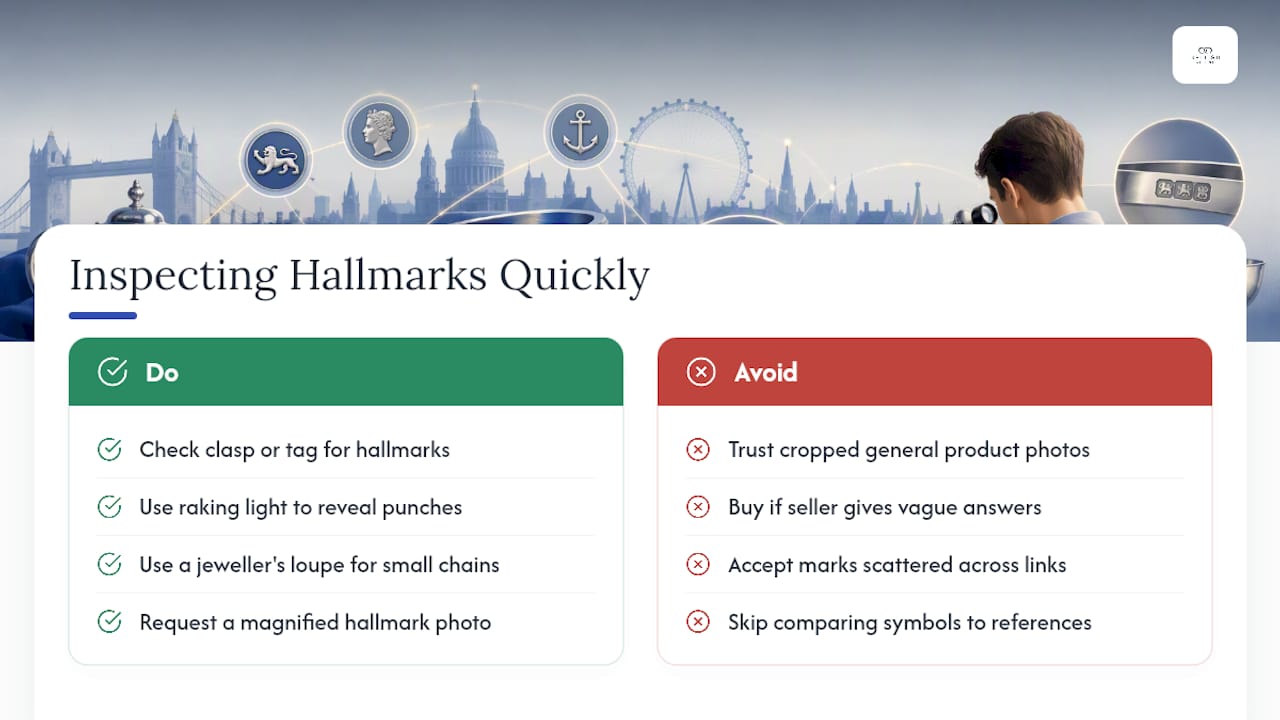
- Use a 10× jeweller’s loupe and raking light to bring tiny punches into focus.
- Check the clasp, the bail on pendants, and the reverse of any flat links.
- If buying online, ask specifically which assay office applied the mark and request a magnified photo before ordering.
Which chain style suits how you’ll wear it?
Style isn’t just about looks. It affects durability, comfort, and even how visible the hallmark will be once the chain is on your neck or wrist.
- Curb chains twist flat links into a tight, interlocking pattern. They’re dense, hard wearing, and popular for daily wear precisely because the thicker links resist tangling and stretching.
- Rope chains spiral multiple strands together for a rich, twisted texture. Attractive, but finer versions can snag more easily than a curb link.
- Figaro chains alternate long and short links for a distinctive rhythm. A good middle ground between substance and refinement.
- Snake chains sit smooth and rounded, almost like a solid strip. Elegant for pendants, though they can kink if handled roughly.
- Herringbone chains lie completely flat with a woven, ribbon-like finish. Beautiful, but among the more delicate styles and prone to creasing.
- Box chains use square links for a sturdy, slightly architectural profile that holds its shape well over years of wear.
Thickness and weight do more than change the look. A heavier gauge chain is far more likely to sit above the 7.78 gram exemption, which means it will almost always carry a full hallmark rather than relying on a maker’s written statement alone. That’s one more reason chunkier pieces, like a 12mm curb chain bracelet, tend to be the easiest to verify at a glance.
Clasp type matters too. Lobster clasps and trigger clasps are easy to inspect and generally durable. Spring rings are fine for lighter chains but wear faster under daily use.
Pro Tip: If you want a chain that can take a knock without losing shape, go for a curb or box link at 8mm or above. Fine snake and herringbone styles are gorgeous but suit occasional wear rather than the gym bag test.
Sizing, weight and caring for your sterling silver chain
Getting the length right changes how a chain sits, and a mismatch is the most common regret shoppers report after buying online.
- Choose length by neckline. 40 to 45cm sits close to the throat like a choker, 50cm rests at the collarbone, and 60cm or longer drapes lower for layering.
- Match thickness to purpose. A fine 2 to 3mm chain layers well under a collar; anything from 6mm upward reads as a statement piece worn on its own.
- Check the weight in grams before buying. Heavier pieces feel more substantial and, as noted above, are more likely to carry a full hallmark rather than sit under the exemption.
- Clean gently. A soft polishing cloth and mild soap in lukewarm water handle most tarnish. Avoid harsh dips, which can strip rhodium plating or damage soldered joints.
- Ask about surface treatments. Rhodium plating changes the surface finish but not the underlying fineness, so a rhodium-plated 925 chain still carries a genuine hallmark beneath the coating.
What should you look for when inspecting hallmarks in person or online?
Physical inspection is straightforward once you know where to look. Hallmarks are struck on the clasp, the tag near the clasp, or occasionally on a small plate soldered into the chain itself, never scattered randomly across the links.
Hold the piece under a strong desk lamp and angle it so light rakes across the surface at a low angle. This raking light throws tiny recessed punches into shadow, making them far easier to read than under flat overhead lighting. A jeweller’s loupe magnifies the marks enough to distinguish the fineness number from the assay office symbol, which can otherwise blur together to the naked eye, particularly on chains under 3mm.
Buying online removes the option of physical inspection, so the burden shifts to the seller’s photography. A trustworthy retailer will supply a genuinely magnified shot of the hallmark, not a general product photo cropped tighter. If that image isn’t already on the listing, ask for it directly, along with the name of the assay office involved and the piece’s exact weight in grams. A seller who hesitates or gives a vague answer, “it’s tested to standard” without naming an office, is telling you something worth listening to.
Compare what you’re sent against known reference symbols. The leopard’s head, anchor, rose, and castle each map to one of the four UK offices, so a mark that doesn’t resemble any of them is worth questioning before you commit to a purchase.
Why consider Britishchains for your next hallmarked chain?
The retailer specialises in hallmarked British sterling silver, and listings often state fineness, weight, and construction clearly rather than leaving you to guess. That transparency is exactly what the checklist above asks you to demand from any seller.
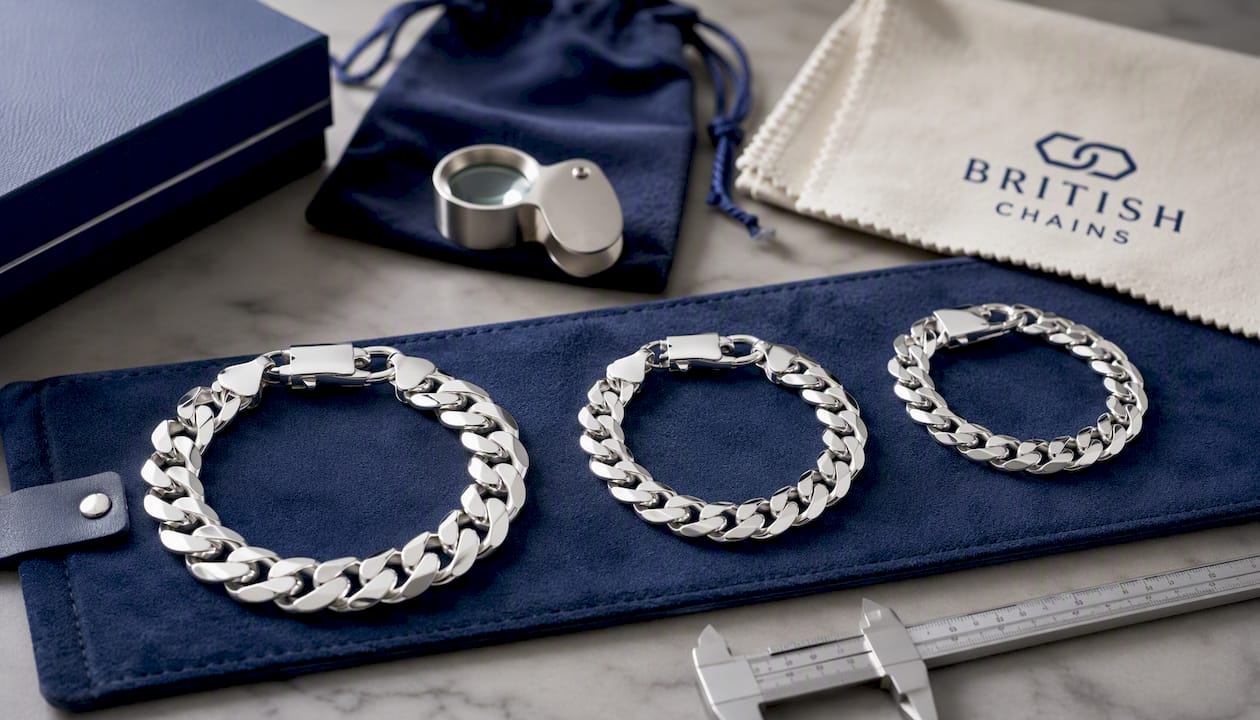
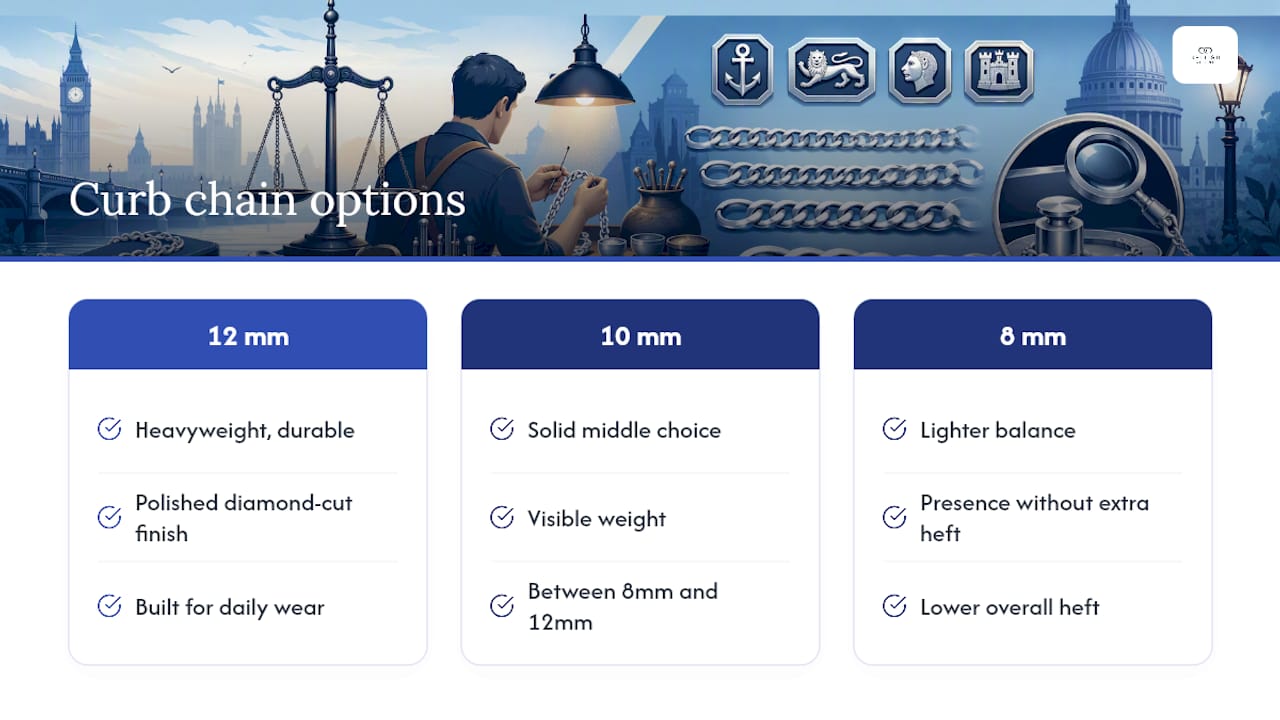
The catalogue includes several heavyweight curb pieces worth a look if durability is your priority. The 12mm curb chain bracelet is a genuinely substantial option with a polished diamond cut finish, built for daily wear rather than occasional dressing up. The 8mm version strikes a lighter balance for anyone who wants presence without the extra heft, and the 10mm curb chain sits between the two, a solid middle choice for buyers who want visible weight without going to the top of the range.
If you want to see a hallmark close up before you commit, consider requesting a magnified photo from the seller. That’s a reasonable request with any hallmarked purchase, and it should never feel like an imposition to make it.
British Chains’s take on hallmark honesty
Too many sellers treat hallmarking as fine print. It should be the headline. A stamped mark is the one part of a chain that can’t be talked around with clever photography or vague copy, and buyers deserve sellers who lead with it rather than bury it. For more detail on reading fineness numbers, the fineness marks guide and the assay office marks explainer go further than this article’s space allows. Ask for hallmark photos any time you need reassurance before buying.
— British
Sources
- Gov
- What is a hallmark? - Edinburgh Assay Office
- A Field Guide to Hallmarking — The Goldsmiths’ Company
- The Complete Guide to British Hallmarks | WhatIsThisMark
FAQ
What is the silver hallmark weight exemption?
Silver items weighing 7.78 grams or less are legally exempt from mandatory hallmarking in the UK, which is why some delicate chains and charms carry no stamp.
How do I ask a seller for hallmark verification?
Request a magnified photo of the mark near the clasp and ask which assay office applied it. A retailer confident in its stock, including sellers like Britishchains, will answer without hesitation.
What’s the difference between 925 and 958 silver?
Both are legitimate UK fineness marks.
Is silver plated jewellery the same as hallmarked sterling silver?
No. Silver plated pieces have a thin silver layer over a base metal and are not the same as solid sterling, and they will not carry a genuine millesimal fineness hallmark.
What if I can’t identify the hallmark on a chain I’ve bought?
Contact the seller and ask for clarification or a magnified image, and check the returns policy if the description doesn’t match what arrived.


