

£80 Sponsor Fee and Other Clues to Birmingham Anchor Hallmarks
The anchor is the Birmingham Assay Office mark, and it shows an item was tested and certified by that office rather than made there. For collectors, this small stamp is one of the most reliable ways to date a piece, trace its origin and judge its value with confidence.
TL;DR:
- The Birmingham anchor mark only confirms that the Assay Office tested and verified the metal, not where or when the item was made.
- Variations in the anchor’s shield shape and the presence of date letters help determine the period when a piece was assayed, especially before 1999.
- Genuine Birmingham punches show displaced metal at the edges, and verification of fineness and sponsor marks reduces the risk of counterfeit hallmarks.
- Hallmarking is legally required only for silver items weighing over 7.78 grams, but many lightweight pieces are hallmarked voluntarily for authenticity.
- Birmingham’s anchor remains a reliable clue on worn or aged silver, and buyers should inspect marks, weigh items, and consult official documentation for certainty.
Table of Contents
- A concise history of the Birmingham anchor mark
- What the anchor denotes inside a full UK hallmark
- Reading anchor variations and date letters correctly
- Checklist for verifying a genuine Birmingham anchor
- Hallmarking law essentials and typical assay office fees
- Why trust this guide on hallmark identification
- Why the anchor matters if you collect or buy silver
- Hallmarked sterling chains from British Chains
- Sources
- FAQ
A concise history of the Birmingham anchor mark
Birmingham Assay Office was established by Act of Parliament in 1773, largely through the efforts of the manufacturer Matthew Boulton, who wanted local testing facilities so Birmingham’s silversmiths did not have to send work to London for assay. That journey was slow, costly and risked pieces being copied or damaged along the way, so a local office solved a real logistical problem for the city’s growing metalworking trade.
Popular legend holds that the anchor was chosen by a coin toss at the Crown and Anchor Tavern, where Boulton and Sheffield’s representatives supposedly settled their respective town marks over drinks. It is a good story, but it is almost certainly apocryphal rather than documented fact, and it is worth treating as folklore rather than history. What is verifiable is that the anchor became Birmingham’s registered town mark from the office’s founding, and it has identified Birmingham-assayed silver and gold ever since.

What the anchor denotes inside a full UK hallmark
A full UK hallmark is a sequence of stamps, and the anchor is only one part of it. Under the Hallmarking Act 1973, a compliant hallmark on qualifying items includes:
- The sponsor’s mark, identifying the maker or the company that submitted the piece for testing.
- The metal fineness mark, showing the purity standard such as sterling silver at 925.
- The assay office mark, the anchor for Birmingham, showing which office carried out the testing.
- The date letter, which is now optional on many items rather than compulsory.
Compulsory hallmarking under that Act applies to silver items weighing 7.78 grams or more, so a great many small chains and charms fall outside the legal requirement even though many sellers hallmark them voluntarily. The anchor itself tells you nothing about where a piece was manufactured. It only confirms that Birmingham Assay Office tested and verified the metal.
Reading anchor variations and date letters correctly
The anchor’s shield outline and orientation have shifted subtly across different periods, and pairing it with a date letter is the surest way to pin down when a piece was assayed. Since 1999, date letters have been optional for many items, so their absence does not mean a mark is invalid, only that dating relies on other clues.
- Locate the full hallmark cluster, usually near a clasp or on the inside of a band, and identify each of the four possible stamps.
- Compare the anchor’s shield shape and any rotation against reference charts for the period you suspect, since minor stylistic shifts occurred over the decades.
- If a date letter is present, cross-reference it against Birmingham’s published letter cycles rather than assuming a single alphabet applies across all eras.
- Check that the fineness mark and sponsor’s mark are consistent with the date range you have inferred, since a mismatch is a warning sign.
Overseas marks applied by a UK office must also be distinguishable from domestic Birmingham marks, a point worth remembering if you encounter pieces assayed abroad under British oversight.
Checklist for verifying a genuine Birmingham anchor
Before trusting an anchor at face value, run through a short physical inspection. Genuine punches tend to show a slight displacement of metal at the punch edge, a texture that is hard to fake convincingly, while forgeries are often flat or look printed rather than struck.
- Inspect the punch depth and edges under magnification, looking for displaced metal rather than a smooth, shallow impression.
- Confirm the fineness mark is present and correct, such as the lion passant for sterling silver or the Britannia mark where that standard applies.
- Weigh the item on an accurate scale, since the 7.78 gram threshold determines whether hallmarking was legally required or applied voluntarily.
- Cross-check the sponsor’s mark against published registries where they are available, rather than assuming initials alone prove authenticity.
- Look for mismatched shield shapes or date letters that do not sit together logically, both classic signs of a copied or composite mark.
Pro Tip: When in doubt on a valuable piece, ask a jeweller or the assay office itself about XRF testing, which measures elemental composition without damaging the item.
If a seller cannot explain a mark’s inconsistencies, or refuses a closer inspection, treat that as a red flag regardless of how convincing the price seems. For broader buying context, our budget silver jewellery quality checklist covers related warning signs beyond the hallmark itself.

Hallmarking law essentials and typical assay office fees
The Hallmarking Act 1973 exists to protect buyers by guaranteeing that a marked item has genuinely been tested, not simply described accurately by a seller. Silver items under 7.78 grams sit outside the compulsory requirement, which is why many lightweight chains carry no full hallmark even when they are genuine sterling silver, though sellers can choose voluntary hallmarking regardless of weight.
For anyone submitting items or registering as a sponsor, Birmingham Assay Office publishes clear costs:
- Sponsor mark registration costs £80 plus VAT for ten years, with renewal priced at £40 plus VAT.
- Per-item hallmarking fees vary by mark type and piece size, including different charges for laser or relief marks above certain heights.
- Registration at Birmingham does not automatically transfer to other UK offices, since each office’s sponsor registration is independent.
Collectors and small sellers should check the current price list PDF directly before submitting anything, since fees are updated periodically. Our guide on the 7.78g rule goes into more depth on how that threshold plays out in everyday silver buying.
Why trust this guide on hallmark identification
The brand works with hallmarked sterling silver regularly, applying the 7.78 gram rule in practice when deciding which pieces need full hallmarking and which fall under the voluntary threshold. Checking sponsor marks against known registrations, verifying fineness stamps, and understanding how Birmingham’s anchor sits alongside date letters are routine parts of vetting stock before it reaches a customer.
That day-to-day familiarity with hallmark components, rather than abstract theory, is what shapes the identification checks set out in this guide. It draws on the same official guidance from Birmingham Assay Office and government sources that any serious buyer should consult directly when a specific piece needs closer scrutiny.
Why the anchor matters if you collect or buy silver
The anchor is one of the few marks that survives decades of wear intact, which makes it a dependable clue when other details fade. I would always prioritise hallmarked pieces over unmarked ones for anything meant to hold value, and when a mark looks even slightly off, weigh the item, inspect the punch, and ask for assay documentation before you commit.
— British
Hallmarked sterling chains from British Chains
British Chains lists hallmarked sterling silver chains and necklaces across several styles, including the 2mm Sterling Silver 925 Figaro Chain Necklace, the 4mm Figaro Chain Necklace, the 12mm Thick Curb Chain Necklace, the 4mm Curb Chain Necklace, the 3mm Twisted Rope Chain Necklace, the 8mm Thick Curb Chain Necklace, the 8mm Thick Figaro Chain Necklace and the 2mm Herringbone Chain Necklace.
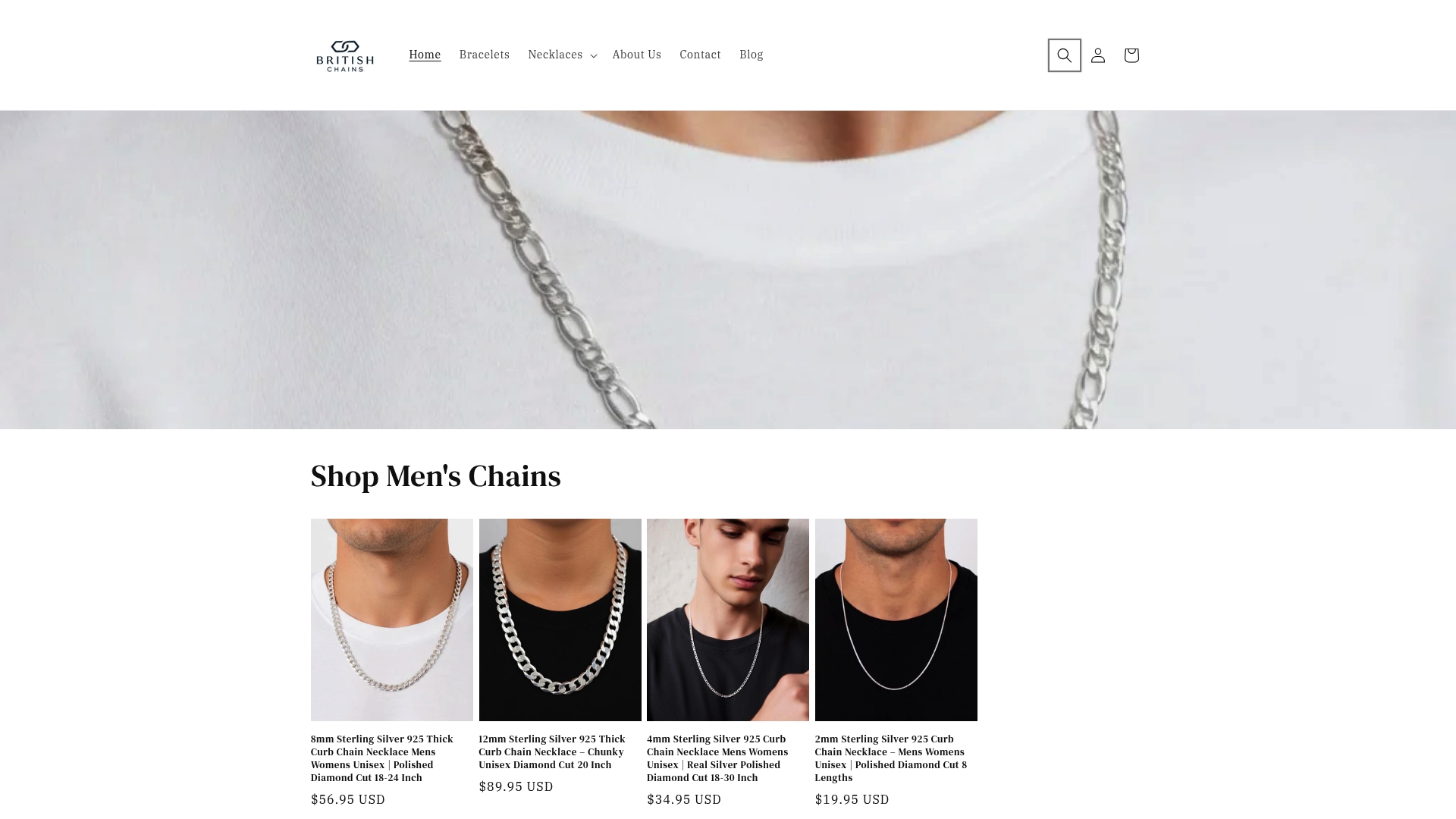
Each of these represents the kind of hallmarked 925 sterling silver piece worth inspecting with the checks above, from punch depth to fineness marking. Browse the full Silver Necklaces or Silver Curb Chains collections to see hallmark photographs on individual product pages, or contact customer service directly if you would like additional close-up images of a specific piece’s marks before you buy.
Sources
- Hallmarking | The Assay Office (Birmingham) — Our services
- Gov
- Hallmarking guidance notes (GOV.UK) — Assay office marks
FAQ
Why does Birmingham have an anchor hallmark?
Birmingham’s anchor became its registered town mark when the Assay Office was founded by Act of Parliament in 1773, largely through Matthew Boulton’s push for local testing facilities. A popular tavern coin-toss story exists but is best treated as legend rather than documented history.
Who were famous Birmingham silversmiths?
Matthew Boulton is the figure most closely tied to Birmingham’s silver trade and the founding of its Assay Office in 1773. Beyond Boulton, the city built a reputation as a major centre for silverware and jewellery manufacturing throughout the following two centuries.
How much does it cost to get a ring hallmarked?
Fees depend on the mark type and item, and Birmingham Assay Office publishes an itemised price list covering per-item hallmarking charges. Sponsor mark registration, which is separate from individual item fees, costs £80 plus VAT for ten years, with renewal at £40 plus VAT.
What are the date letters on Birmingham gold hallmarks?
Date letters are a stamped letter cycling through the alphabet that historically corresponded to a specific assay year at Birmingham. Since 1999, date letters have become optional on many items, so their absence does not indicate an invalid hallmark, only that dating needs corroboration from other marks.


