

UK Buyers: What '925 Italy' Means, Hallmarks and 4 Quick Checks
The number tells you what the metal is; the word tells you where it came from. Neither guarantees the stamp is genuine, so a quick check is always worth the two minutes it takes.
TL;DR:
- Most 925 stamps are consistent, with clear, even markings that can be verified using a magnifying glass or a reputable jeweller’s test.
- Adding a country name like Italy does not indicate higher purity; it simply shows where the silver was manufactured or exported from.
- Authentic sterling silver jewelry should have a weighty feel, resist magnetic attraction with some exceptions, and respond reliably to basic chemical tests for confirmation.
- Genuine pieces often feature a provincial code within an oval mark, which provides stronger proof of official origin in Italy.
- The retail value of Italian sterling silver can be significantly higher than its scrap value, which is solely based on current silver market prices.
Table of Contents
- What “925” means: sterling silver and millesimal fineness
- What “Italy” adds to the stamp, and why it isn’t a purity grade
- Is “925 Italy” genuine? Checks you can do before you worry
- How much is 925 Italy silver worth?
- Caring for 925 Italy jewellery
- Why hallmarking matters more than the country name
- Where to see hallmarked 925 sterling in practice
- Sources
- FAQ
What “925” means: sterling silver and millesimal fineness
The number 925 comes from the millesimal fineness system, a way of grading precious metal purity out of 1,000 parts rather than percentages. A “925” stamp means 925 parts per 1,000 are pure silver, which works out to 92.5% silver, with the remaining 7.5% made up of another metal, almost always copper.
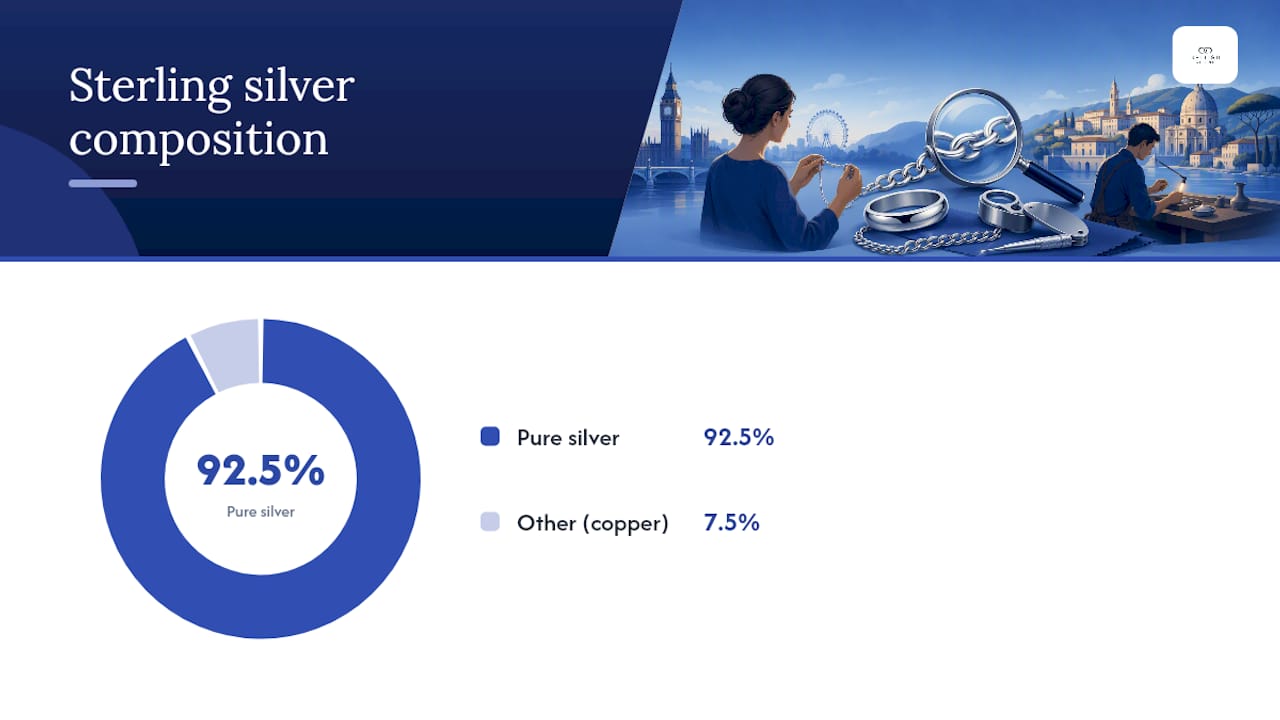
Pure silver on its own is too soft for everyday jewellery. It scratches easily, bends out of shape, and wears thin faster than most people would tolerate on a chain worn daily. Adding copper hardens the alloy without changing its colour or shine in any way you’d notice by eye. That’s the whole reason sterling silver exists as a standard: it keeps the look of pure silver while making it durable enough to survive years of wear, knocks, and the odd catch on a jumper.
You’ll see the same purity marked in a few different ways, and it helps to recognise them all as the same thing:
- 925 — the plain numeric stamp, most common on modern pieces
- Sterling or Sterling Silver — the word form, often used alongside the number
- S925 — functionally identical to 925, sometimes used by manufacturers to distinguish it from other numeric stamps
- STG or STER — abbreviated forms occasionally seen on older or smaller pieces where space is tight
- 925 Italy, 925 France, 925 Thailand — the same purity mark with a country name added, showing where the piece was manufactured
None of these variants change the underlying chemistry. Whether a clasp reads “925,” “Sterling,” or “S925,” you’re looking at the same 92.5% alloy. Britishchains covers the mark itself in more detail in its guide to what 925 means on jewellery, which is worth reading if you want the full picture beyond the Italian context.
What “Italy” adds to the stamp, and why it isn’t a purity grade
Adding a country name to a 925 stamp tells you where the piece was manufactured or exported from, not that it is made from a different or superior grade of silver. A 925 Italy stamp indicates manufacturing origin, and the purity underneath is identical to a 925 stamp from anywhere else in the world.
This trips people up because Italy carries genuine weight in the jewellery trade. Italian workshops, particularly in regions like Arezzo and Vicenza, have built a strong reputation for fine chain-making and diamond-cut finishing over generations. That reputation is real and often justified. What it isn’t is a claim about the metal being purer, heavier, or somehow better sterling silver than a 925 piece stamped elsewhere.
Some Italian pieces carry a second, more specific mark alongside the country name: a two-letter provincial code inside an oval, such as AR for Arezzo or VI for Vicenza. These provincial codes are Italy’s own version of a formal assay mark, tied to a specific regulated production centre rather than a generic “made in Italy” label.
- A plain “Italy” stamp tells you the country of manufacture, similar to a “Made in China” tag on clothing
- A provincial code inside an oval is closer to a hallmark, linked to a licensed workshop under Italian metal-marking regulation
- The provincial code is the stronger piece of evidence if you’re trying to establish genuine origin
If you want to understand how this compares with the UK’s own system, Britishchains has a guide to sterling silver hallmarks that lays out how assay marks work here.
Is “925 Italy” genuine? Checks you can do before you worry
Stamps get faked because they’re cheap to copy and most buyers never check further than glancing at the clasp. A poorly made fake often gives itself away with shallow, unevenly struck lettering, a stamp that sits crookedly on the metal, or a base metal underneath that shows through as brassy or grey once the plating starts to wear. Genuine sterling pieces tend to have crisp, consistently struck marks and a consistent grey-white colour throughout, even under a worn plated layer.
Here’s a sensible order to work through if you’re unsure about a piece:
- Inspect the hallmark closely. Use a magnifying glass or your phone’s zoom to check the stamp is sharp, evenly spaced, and sits flush with the surface rather than looking pressed on at an angle.
- Try a magnet, but don’t trust it alone. Silver isn’t magnetic, so strong attraction suggests a base metal. However, some genuine sterling pieces contain small steel parts in clasps or spring mechanisms that will attract a magnet, so a magnetic pull doesn’t automatically mean fake.
- Get a feel for the weight. Sterling silver has a noticeable heft compared with lightweight alloys like nickel silver or silver-plated brass of the same size. This takes practice, but a chain that feels suspiciously light for its thickness is worth questioning.
- Consider a simple chemical test as a last resort. Silver testing acid or a nitrate solution applied to an unobtrusive spot will react differently on base metal versus sterling. This is a jeweller’s tool, not something to improvise at home with random household chemicals.
Pro Tip: Skip the magnet test if the clasp or spring ring is the only part reacting. Test a flat section of chain instead, since clasps are the most likely place to hide a small steel component in an otherwise genuine piece.
For anything valuable or if you’re still unsure after these checks, professional testing settles it properly. Jewellers and assay offices use acid testing or XRF (X-ray fluorescence) analysis, which reads the metal composition without damaging the piece. In the UK, hallmarking carries legal weight precisely because it gives buyers independent verification rather than relying on a seller’s stamp alone, and the Goldsmiths’ Company Assay Office is a reliable place to start if you want an item checked properly.
How much is 925 Italy silver worth?
Sterling silver has two separate values, and mixing them up is the most common mistake buyers and sellers make. Scrap value, also called melt value, tracks the current silver spot price multiplied by the metal weight in the piece, adjusted down slightly for the 7.5% that isn’t silver. Retail value includes everything scrap value ignores: design work, the labour of chain-making, finishing techniques like diamond-cutting, and brand reputation.
- Scrap value reflects only the silver content by weight against the spot price, and fluctuates daily with the metals market
- Retail value reflects craftsmanship, design complexity, and the workshop’s reputation, which is where “Italy” earns its premium
- Italian workmanship can justify a higher retail price for finer diamond-cut detailing or complex link patterns, but it doesn’t add extra silver to the alloy
If you’re selling an Italian sterling piece, expect a scrap dealer to quote based on weight alone, while a specialist jewellery buyer may recognise the craftsmanship and offer closer to retail value. For insurance purposes on higher-value Italian pieces, get a proper appraisal rather than relying on a rough weight calculation, since a well-made chain can be worth considerably more than its metal content alone.
Caring for 925 Italy jewellery
Sterling silver tarnishes because the copper in the alloy reacts with sulphur compounds in the air, and Italian pieces are no different from any other 925 item in this respect. The fix is straightforward maintenance rather than anything specialist.
Clean tarnish with a dedicated silver polishing cloth or a soft microfibre cloth first, and only move to mild soapy water with a soft brush if the tarnish is stubborn. Avoid abrasive kitchen cleaners, bleach, and chlorine altogether, since they’ll dull the finish and can pit diamond-cut detailing that took real skill to produce.
- Store pieces separately in soft pouches or a lined box to stop chains tangling and scratching each other
- Use anti-tarnish strips in your storage box, particularly in humid bathrooms where jewellery is often kept
- Avoid wearing chains in swimming pools or hot tubs, where chlorine accelerates tarnish and can weaken joins over time
- Take a piece to a professional jeweller if a clasp feels loose or a join looks stressed, rather than forcing it closed yourself
Pro Tip: If a diamond-cut chain has lost its sparkle, resist the urge to scrub it. The cut facets that catch the light are shallow, and heavy polishing can wear them flatter over a few cleanings.
Why hallmarking matters more than the country name
The “Italy” part of a 925 stamp tells a good story about craft tradition, but it isn’t the part doing the legal heavy lifting. That’s what UK hallmarking is for, and it’s worth understanding the difference if you’re buying from a British retailer rather than importing a piece yourself.
British hallmarking is applied and verified by an independent assay office, which tests the metal and stamps it only once the purity is confirmed. That’s a materially different guarantee from a country name stamped by the manufacturer itself, which nobody independently checks before it reaches you. Some retailers sell pieces marked 925 with purity claims backed by independent verification standards, rather than just a mark stamped at the point of manufacture. Readers who want to understand this distinction properly should look at how hallmarks differ from country-of-origin stamps before buying anything described only as “925” with no further detail.
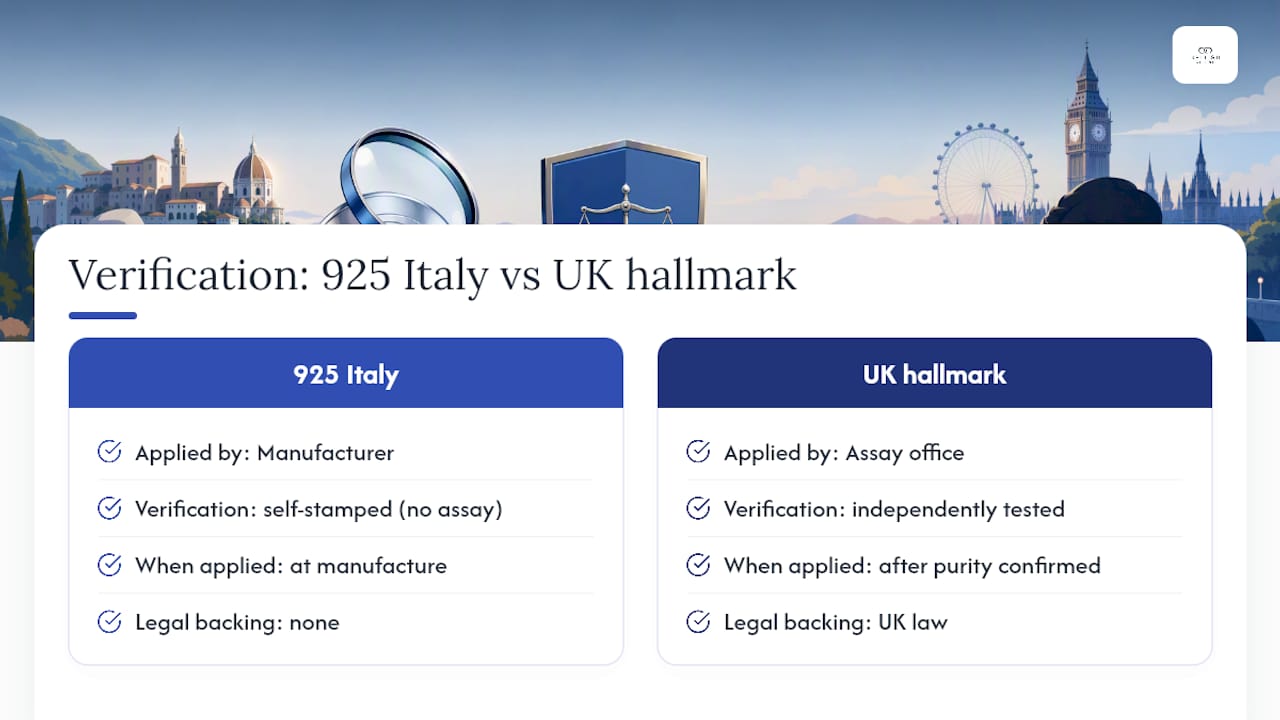
None of this means an Italian-made piece is untrustworthy. It means the country name and the purity mark are answering two different questions, and only one of them comes with independent legal backing in the UK market.
Where to see hallmarked 925 sterling in practice
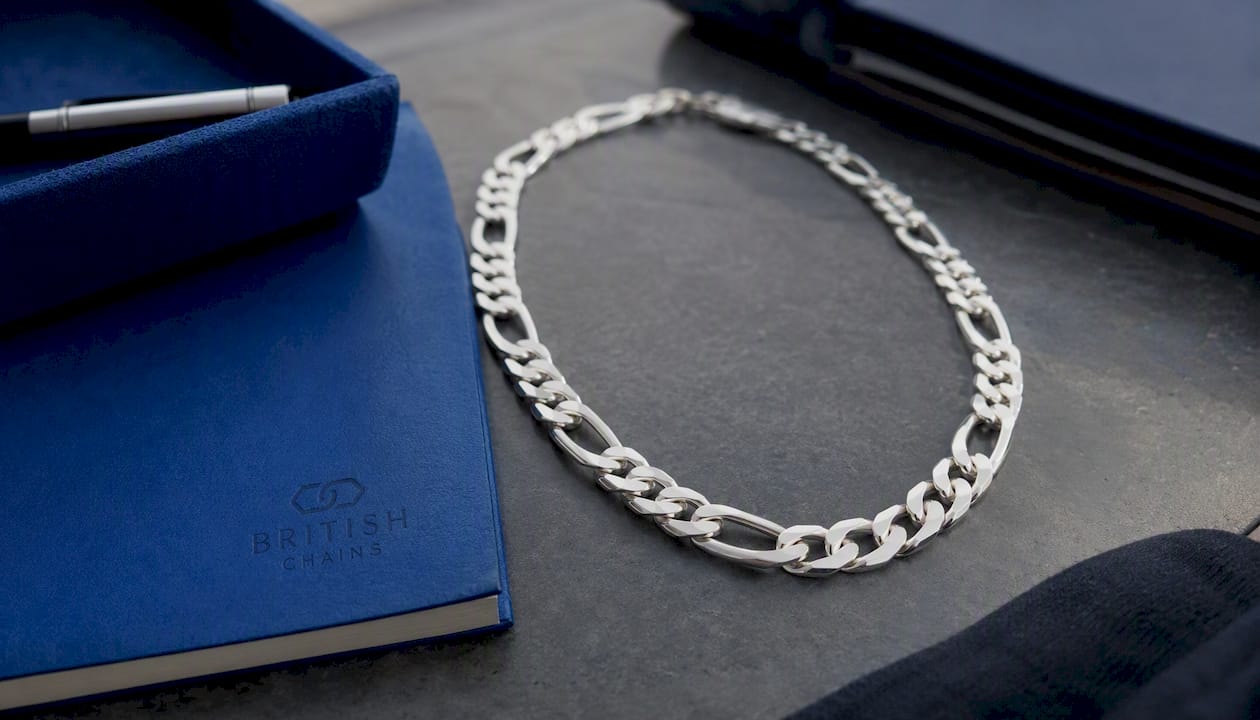
If you want to see what a properly hallmarked sterling silver piece looks like beyond the theory, Britishchains’s 8mm Sterling Silver 925 Thick Figaro Chain Necklace | Polished Diamond Cut is a solid example: a genuine 925 sterling alloy, diamond-cut finish for a brighter sparkle, and British hallmarking rather than a manufacturer’s country stamp alone. It’s the kind of piece that shows you exactly what the purity claim means once it’s backed by an independent standard rather than trust alone.
Britishchains is the alternative to buying an unverified stamp abroad and hoping it checks out: every piece carries British hallmarking behind the 925 claim, so you’re not relying on a country name to do the job a proper assay mark should do. Browse the full Figaro chain collection if the thicker link style suits your everyday wear, or look through the wider necklace collection for other weights and finishes. Returns and sizing details are listed on each product page, so check those before ordering if you’re buying a specific length for a gift.
Sources
For readers who want to verify any of the claims above independently, UK hallmarking rules are laid out in the official guidance summary, and the technical background on sterling silver as an alloy is covered on its Wikipedia entry. For professional testing, the Goldsmiths’ Company Assay Office offers assay services if you want a definitive answer on a specific piece. Britishchains’s own 925 sterling silver explainer covers quality, value, and care in more depth if you want a single reference point.
- Hallmarking is the law: guidance summary
- Sterling silver — Wikipedia
- What Does 925 Mean on Jewelry? Complete Sterling Silver Guide (Learning Jewelry)
- The Goldsmiths’ Company Assay Office (Assay Office London)
FAQ
Is 925 silver from Italy good quality?
Yes. Italian workshops have a strong reputation for fine chain-making and diamond-cut finishing, and the underlying 925 purity is identical to sterling silver made anywhere else in the world.
How much is 925 Italy silver worth?
Scrap value is based on the current silver spot price applied to the metal’s weight, while retail value adds craftsmanship, design, and brand, meaning Italian workmanship can raise the retail price without adding extra silver content.
Is 925 real or fake?
A 925 stamp is a purity claim, not proof on its own. Genuine pieces typically have a crisp, evenly struck mark and a consistent grey-white colour throughout, while a mark that’s shallow, crooked, or sits on a brassy-looking metal is worth testing further or having professionally assayed.
Is 925 silver worth money?
Yes, sterling silver holds both scrap value tied to the silver spot price and retail value reflecting design and craftsmanship, and hallmarked pieces from Britishchains carry that value with the added assurance of independent UK verification.


