

What is entry-level silver jewellery: a buyer's guide
Entry-level silver jewellery is defined as wearable pieces crafted from sterling silver, an alloy composed of 92.5% pure silver and 7.5% copper, offering an affordable, durable, and hypoallergenic option for new buyers. The industry term for this standard is “.925 sterling silver,” and the “entry-level” label simply describes the accessible price point rather than any compromise in metal quality. Sterling silver sits well above silver-plated costume jewellery and delivers a genuine precious metal experience without the cost of white gold or platinum. For anyone starting a jewellery collection or buying a thoughtful gift, it is the most practical starting point available.
What is entry-level silver jewellery made from?
The grade of silver matters more than most buyers realise. Three distinct types appear across the market, and each behaves very differently on the skin and over time.
Pure silver (.999 fine silver) contains 99.9% silver with almost no added metal. It sounds impressive, but pure silver ranks 2.5 on the Mohs hardness scale, roughly the same hardness as a fingernail. That softness means rings bend out of shape, chains kink, and clasps fail under everyday stress. Pure silver is used for bullion bars and collector coins, not wearable jewellery.
Sterling silver (.925) is the standard for all quality entry-level jewellery. The 7.5% copper alloy raises hardness enough for daily wear without affecting the bright, white appearance of the metal. Britishchains uses hallmarked 925 sterling silver across its range, which means every piece carries a verifiable mark of purity.
Silver-plated jewellery is a base metal, typically brass or copper, coated with a thin layer of silver. The plating wears away within months of regular use, exposing the base metal underneath and often causing skin reactions. It is not a sound entry-level investment, regardless of its low price tag.
| Silver type | Purity | Hardness | Durability | Typical cost |
|---|---|---|---|---|
| Pure silver (.999) | 99.9% | Very low | Poor for daily wear | High |
| Sterling silver (.925) | 92.5% | Good | Excellent for daily wear | Moderate |
| Silver-plated | Trace layer | Low | Poor, wears through | Low |
The table makes the choice clear. Sterling silver is the only type that balances genuine precious metal content with the durability needed for everyday use.
How durable and hypoallergenic is sterling silver?
Sterling silver is suitable for everyday wear precisely because the copper alloy gives it structural strength. A well-made sterling silver chain resists bending, holds its shape through daily activity, and maintains its polished finish far longer than plated alternatives.
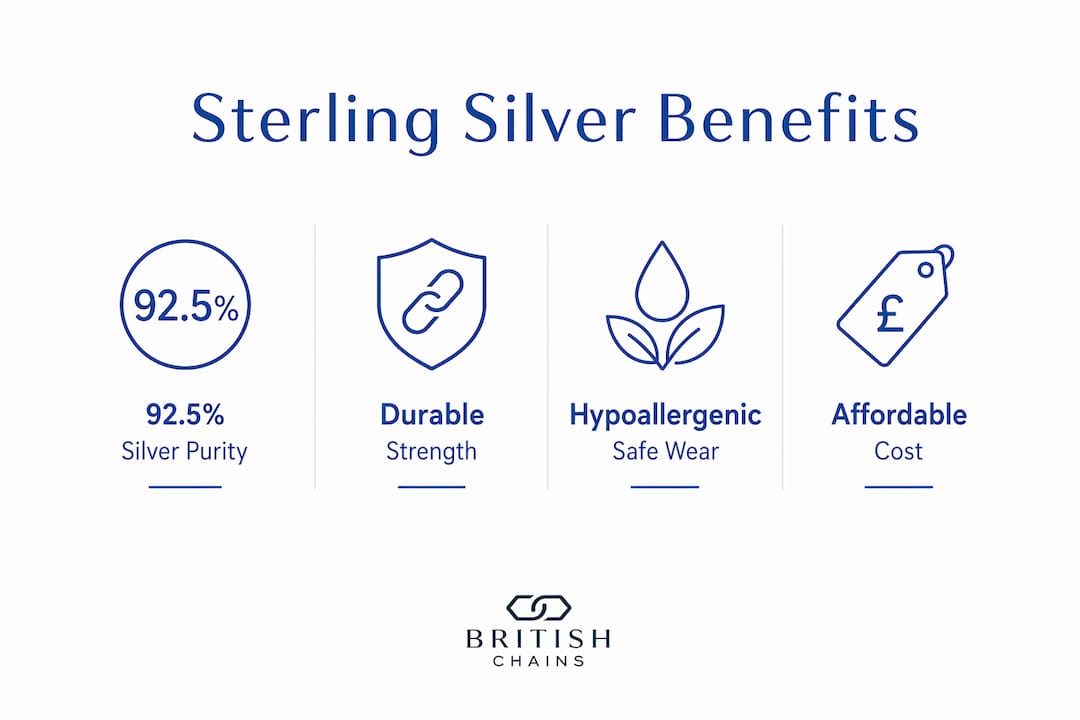
The hypoallergenic question depends on what the alloy contains. Sterling silver is safe for sensitive skin when the 7.5% alloy is copper rather than nickel, lead, or cadmium. Nickel is the most common cause of contact dermatitis from jewellery, so buyers with sensitive skin should always confirm the alloy composition before purchasing. Reputable sellers list this information clearly.
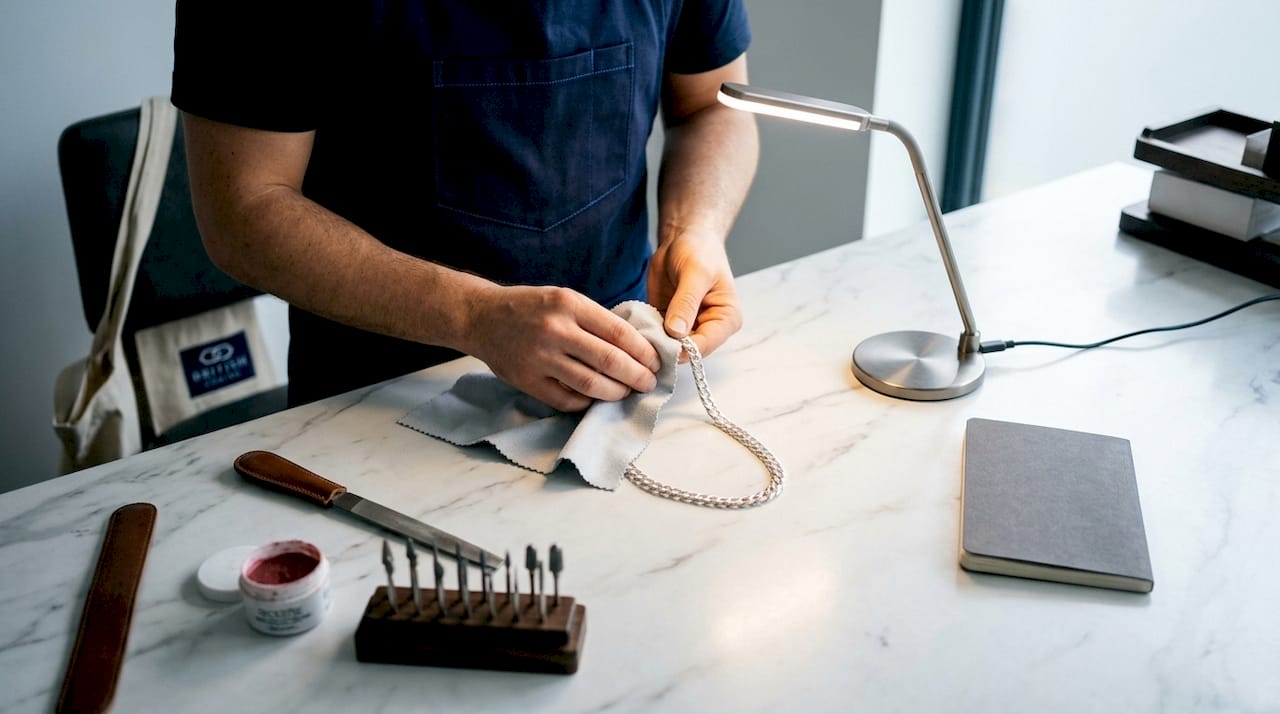
Tarnish is the one genuine maintenance consideration with sterling silver. Sterling silver naturally tarnishes when exposed to moisture, sulphur compounds in the air, and chemicals such as perfume or chlorine. Tarnish is a surface reaction, not structural damage, and it polishes away easily. The key is consistent, simple care rather than any specialist treatment.
- Store pieces in an airtight pouch or box when not wearing them.
- Wipe down with a soft silver polishing cloth after each wear.
- Remove jewellery before swimming, showering, or applying perfume.
- Keep individual pieces separated to prevent scratching.
Pro Tip: A small anti-tarnish strip placed inside your jewellery box absorbs sulphur from the air and significantly slows tarnish on all pieces stored inside.
Hallmarking provides an additional layer of quality assurance. A piece stamped “925” has been independently verified to meet the sterling silver standard. Britishchains hallmarks its jewellery in line with British assay standards, which means buyers receive documented proof of metal purity with every purchase.
What styles suit beginner silver jewellery collections?
A starter capsule of sterling silver jewellery typically includes four core pieces: a delicate chain, a pair of stud earrings, a slim ring, and a lightweight bracelet. These four items cover the widest range of occasions and outfits without requiring a large upfront spend. Starting with this foundation before adding more elaborate pieces is the approach recommended by professional jewellery educators.
Entry-level pieces are designed lightweight and minimal to keep costs accessible while maintaining versatility. That minimalism is not a limitation. It is actually what makes beginner pieces so useful, because clean, simple designs layer and stack without clashing.
- Delicate chains. A fine curb, box, or snake chain sits close to the neck and works under a collar or alone. It is the single most versatile piece in any starter collection. Britishchains offers everyday silver necklaces in multiple chain styles and lengths to suit different necklines.
- Stud earrings. Small ball or disc studs in sterling silver are appropriate for every setting from the office to a formal occasion. They are also the safest choice for anyone with newly pierced ears.
- Slim rings. A plain band or a thin stacking ring adds detail without drawing attention. Buying two or three slim rings and wearing them together on one finger costs less than a single statement ring and creates a more personal look.
- Lightweight bracelets. A fine chain bracelet or a slim bangle sits comfortably under a cuff and does not interfere with typing or writing. Britishchains covers this category with a range of daily wear silver bracelets built for longevity.
Pro Tip: When layering necklaces, vary the chain length by at least 5cm between each piece. This prevents tangling and creates a clean, intentional look rather than an accidental pile-up.
Building a cohesive capsule collection before moving to elaborate designs helps buyers develop a consistent personal style. The practical benefit is financial: four well-chosen sterling silver pieces that work together deliver more daily value than ten mismatched items bought impulsively.
What should buyers check before purchasing silver jewellery?
The single most important step is verifying the hallmark. A genuine sterling silver “925” stamp indicates the piece meets the international standard for sterling silver. The stamp alone is not sufficient proof of quality, however. Counterfeit stamps can be applied to silver-plated base metals, which tarnish rapidly and cause skin irritation. Buying from a reputable seller with transparent product descriptions and verifiable hallmarking is the only reliable safeguard.
- Check for a visible “925” stamp on the clasp, inner band, or back of the piece.
- Read the alloy composition. Confirm the 7.5% alloy is copper, not nickel.
- Look for return policies. Trustworthy sellers stand behind their metal claims.
- Assess the weight. Genuine sterling silver has a satisfying density. Plated pieces feel noticeably lighter.
- Review care instructions. Sellers who provide maintenance guidance understand their product and stand behind its longevity.
Sterling silver is a cost-effective alternative to white gold or platinum that delivers a comparable aesthetic at a fraction of the price. That value proposition only holds if the piece is genuinely sterling silver. Spending slightly more with a verified seller protects the investment far better than buying cheap, unverified pieces repeatedly.
For gifting, a hallmarked piece from a named British retailer carries an implicit quality guarantee that a generic online listing cannot match. Britishchains includes hallmarking details and full product specifications on every listing, which removes the guesswork from the buying decision. The brand’s budget gift guide is a useful starting point for anyone selecting a present within a set price range.
Key takeaways
Entry-level silver jewellery means hallmarked 925 sterling silver: durable, hypoallergenic, and genuinely affordable without sacrificing precious metal quality.
| Point | Details |
|---|---|
| Sterling silver is the standard | 925 sterling silver (92.5% silver, 7.5% copper) is the correct metal for entry-level jewellery. |
| Avoid silver-plated pieces | Plated jewellery wears through quickly and can cause skin reactions; it is not a sound investment. |
| Hallmarks verify authenticity | A “925” stamp from a reputable seller confirms genuine sterling silver and protects against counterfeits. |
| Start with four core pieces | A chain, studs, a slim ring, and a bracelet form a versatile foundation for any starter collection. |
| Simple care extends lifespan | Store away from moisture, polish regularly, and remove before swimming to prevent tarnish. |
Why I think beginners underestimate sterling silver
Most people new to jewellery assume that entry-level means entry-quality. That assumption costs them money. I have seen buyers spend the same amount on three or four plated pieces that tarnish within a season as they would have spent on a single hallmarked sterling silver chain that lasts years with basic care.
The real insight is that sterling silver is not a compromise. It is the material that professional jewellers, hallmarking bodies, and everyday wearers have settled on as the practical sweet spot between purity and durability. Pure silver is too soft to wear. Gold and platinum are out of reach for most budgets. Sterling silver sits exactly where it needs to be.
My honest advice for anyone starting out: resist the urge to buy many cheap pieces. Buy fewer, better pieces. A well-made Figaro chain or a clean box chain in hallmarked 925 sterling silver will outlast a drawer full of plated alternatives and look better doing it. Learn to layer necklaces thoughtfully and you will get more visual variety from three quality pieces than from ten mediocre ones.
The other thing beginners overlook is the gifting dimension. A hallmarked sterling silver piece carries weight, literally and symbolically. It communicates that the buyer chose something real. That distinction matters to the person receiving it.
— British
Sterling silver jewellery worth wearing every day
Britishchains designs and sells hallmarked 925 sterling silver jewellery crafted in the UK, with a focus on chains and necklaces built for daily wear. Every piece carries a verified hallmark and is free from nickel, lead, and cadmium, making the range suitable for sensitive skin.
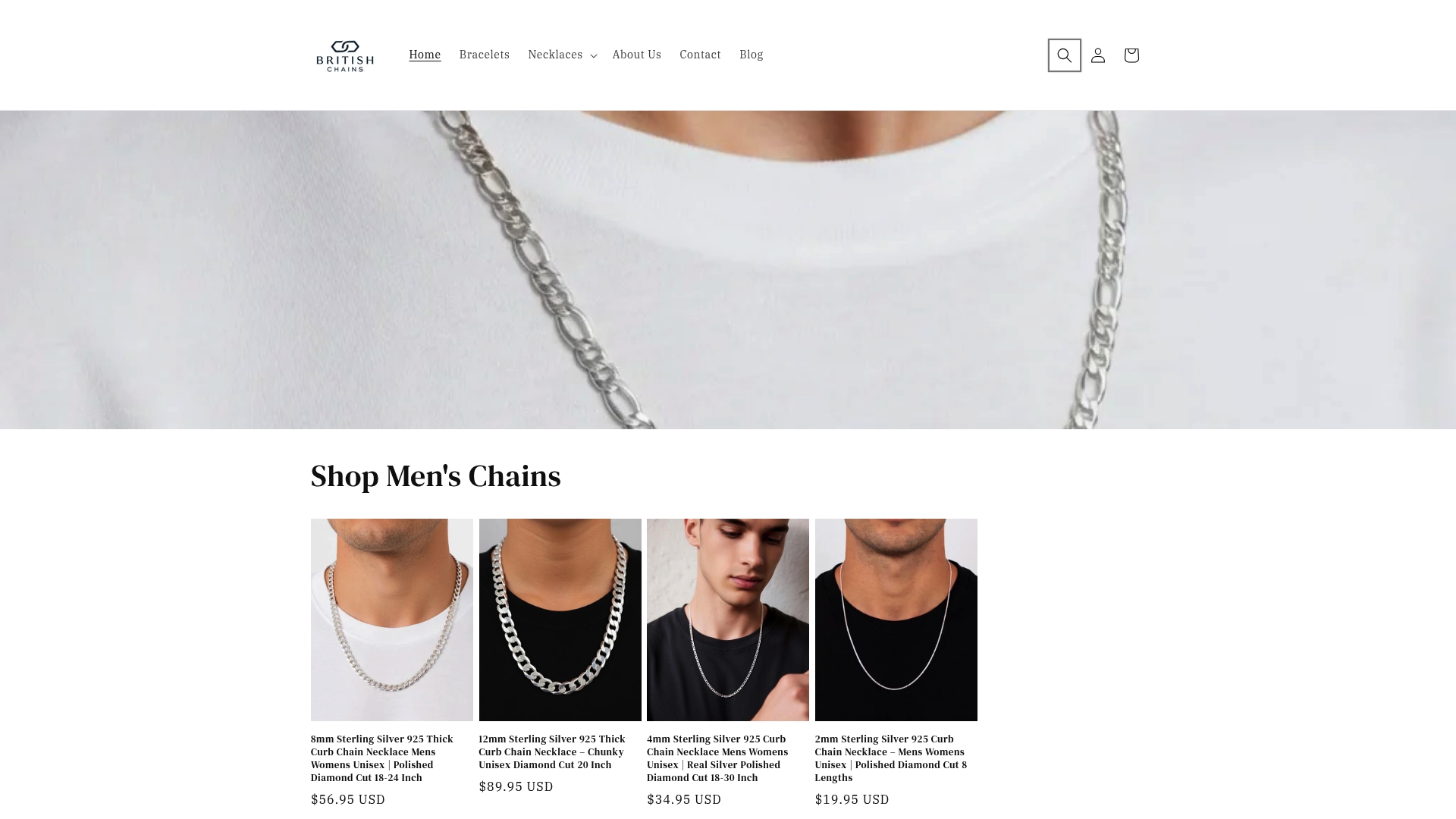
The 8mm Thick Figaro Chain Necklace in polished diamond-cut sterling silver is a strong example of what entry-level jewellery should be: substantial, well-finished, and built to last. It works equally well as a personal purchase or a gift. Browse the full Britishchains collection to find hallmarked sterling silver pieces across every style and price point.
FAQ
What does “entry-level silver jewellery” actually mean?
Entry-level silver jewellery refers to affordable pieces made from genuine 925 sterling silver, offering precious metal quality at an accessible price. The term describes the price point, not a reduction in metal standard.
Is sterling silver the same as “925 silver”?
Yes. “925 silver” and “sterling silver” are the same material: 92.5% pure silver alloyed with 7.5% copper. The “925” stamp is the hallmark that confirms this composition on a finished piece.
How do I know if a silver piece is genuine?
Look for a “925” hallmark stamped on the clasp, inner band, or reverse of the piece, and buy from a seller who provides full alloy composition details. Counterfeit stamps exist, so purchasing from a reputable, named retailer is the most reliable safeguard.
Does sterling silver cause skin reactions?
Sterling silver is hypoallergenic when the alloy contains copper rather than nickel. Nickel is the primary cause of jewellery-related skin reactions, so confirming the alloy composition before buying protects sensitive skin.
How do I stop sterling silver from tarnishing?
Store pieces in an airtight pouch away from moisture, wipe them with a silver polishing cloth after each wear, and remove them before swimming or applying perfume. Consistent basic care prevents tarnish from building up.


