

Rings last months: Rhodium plated silver lifespans for UK buyers
Rhodium-plated silver is sterling silver finished with a microscopically thin layer of rhodium, added to make the piece brighter and slower to tarnish. That whiter, mirror-like shine doesn’t last forever: the plating wears down with contact, chemicals and time, so expect to replate the piece eventually rather than treat it as a one-off purchase.
TL;DR:
- Rhodium plating on silver typically lasts several months to two years, depending on the jewelry’s type, thickness, and daily wear contact.
- Rings and bracelets wear through rhodium faster due to constant friction, while earrings and necklaces generally maintain their finish longer.
- Proper care, including avoiding water, chemicals, and abrasive cleaning, can extend plating life, but professional re-plating is needed once signs of wear appear.
- Thinner platings are common in low-cost pieces and require more frequent maintenance, whereas thicker coatings from premium brands resist wear longer.
- Reputable sellers often specify the plating thickness and hallmark details, which help buyers choose pieces suited for their intended longevity and maintenance willingness.
Table of Contents
- What is rhodium-plated silver made of?
- What are the benefits of rhodium plating?
- How long does rhodium plating actually last?
- How do you care for rhodium-plated jewellery?
- When does rhodium-plated silver need re-plating?
- Rhodium-plated silver vs unplated sterling silver: which suits you?
- How to check hallmarking and finish details before you buy
- Is rhodium plating worth the upkeep?
- Where to find hallmarked rhodium-ready chains
- Sources
What is rhodium-plated silver made of?
That copper content is also the reason unplated sterling silver tarnishes: it reacts with sulphur compounds in the air and on skin, dulling the surface over weeks or months.
Rhodium solves that problem from the outside in. It’s a hard, bright platinum-group metal that’s electroplated onto the silver in a layer often measured in microns, thinner than a human hair. The process runs rhodium ions through an acidic solution and deposits them onto a cleaned metal surface, sometimes over an adhesion layer of nickel or palladium first, so the rhodium bonds evenly rather than flaking. What you’re wearing is genuine sterling silver underneath, wrapped in a thin rhodium skin that does the visual and protective work.
What are the benefits of rhodium plating?
The appeal of rhodium plating comes down to four practical wins, and most buyers care about at least two of them without realising it’s the rhodium doing the work.
- Brighter finish: rhodium gives silver a cooler, whiter shine that reads closer to white gold or platinum than plain silver ever does.
- Tarnish resistance: the layer acts as a barrier against oxidation and sulphur exposure, which is what causes silver to dull in the first place.
- Fewer skin reactions: because the rhodium sits between your skin and the copper alloy, many wearers with sensitive skin find plated pieces more comfortable than unplated silver.
- Better scratch resistance: rhodium is harder than silver, so a plated surface shrugs off the light surface scuffs that would otherwise mark bare silver.
None of this makes the piece indestructible. It just buys you a longer stretch of good looks before maintenance becomes necessary.
How long does rhodium plating actually last?
Lifespan depends almost entirely on what you’re wearing and how often it touches something abrasive. Rings take the most punishment because hands are in near-constant contact with keys, worktops, gym equipment and washing-up water, so they wear through fastest. Necklaces and earrings sit against skin or fabric with far less friction, so the plating tends to survive considerably longer.
| Jewellery type | Typical rhodium lifespan | Main wear factor |
|---|---|---|
| Rings (daily wear) | several months to a year | Constant hand contact, abrasion |
| Necklaces | 1–2 years | Skin oils, clothing friction |
| Earrings | a few years | Minimal contact, occasional cosmetics |
These ranges vary with plating thickness, and thickness is exactly where product descriptions matter. A “flash plated” piece carries a thin, quick coating meant mainly for shine at a low price point, while a premium plating job applies a thicker layer built to survive daily wear. If a listing doesn’t mention plating thickness at all, assume it’s on the thinner end and budget for replating sooner rather than later.
How do you care for rhodium-plated jewellery?
Good habits add months, sometimes years, to a plating’s working life, and none of them require special tools. Rhodium-plated silver, rhodium jewellery of any base metal, and silver alloy coatings generally all respond to the same basic rules.
- Take rings and bracelets off before showering, swimming or doing manual work, since chlorine and prolonged water contact break down the plating faster than almost anything else.
- Apply perfume, lotion and hairspray before putting jewellery on, not after, so cosmetic chemicals don’t sit directly against the rhodium.
- Clean pieces with mild soap, warm water and a soft, lint-free cloth. Nothing more aggressive is needed for a light clean.
- Skip polishing compounds, abrasive cloths and ultrasonic cleaners entirely. All three can strip or thin the rhodium layer rather than clean it.
- Store each piece separately in an anti-tarnish pouch or a lined compartment so chains and rings don’t scratch each other in a drawer.
Pro Tip: Keep rings off during housework and gardening specifically. Detergents and soil grit account for a disproportionate amount of early rhodium wear, more than almost any other single habit.
If a piece looks dull despite gentle cleaning, that’s a job for a jeweller, not a stronger cleaning product at home.
When does rhodium-plated silver need re-plating?
Watch for a yellowish or grey cast creeping in, a patchy or uneven finish, or the base silver becoming visible at edges and high-contact points such as the underside of a ring. Any of these signs means the rhodium layer has worn through to the silver underneath, and no amount of home cleaning will restore it.
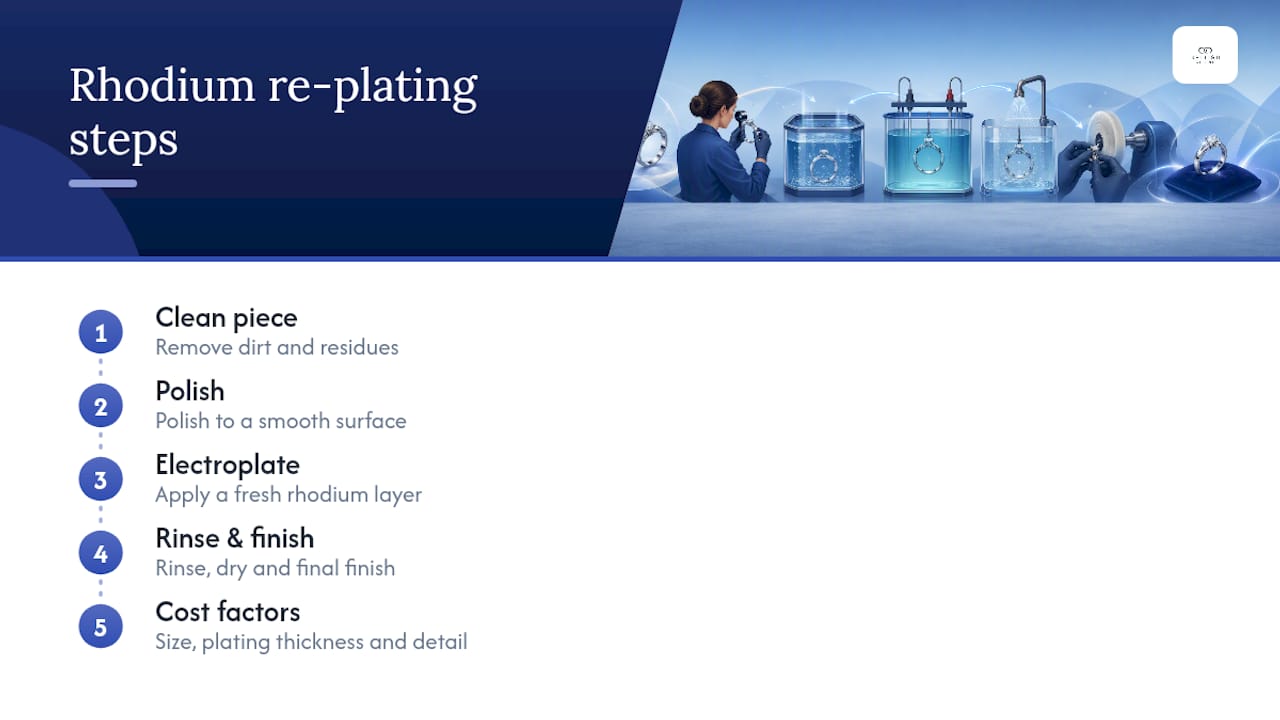
Professional re-plating typically involves cleaning the piece, polishing the surface smooth, electroplating a fresh rhodium layer, then rinsing and finishing. Turnaround is usually a matter of days. Cost depends on the size of the piece, the plating thickness requested and local jeweller rates, so a slim ring costs less to replate than a wide bangle or a heavily detailed pendant. When choosing a jeweller, favour one with clear experience in rhodium work, genuine reviews, and the ability to verify hallmarks on the piece before and after the service.
Rhodium-plated silver vs unplated sterling silver: which suits you?
Neither option is objectively better. It’s a trade-off between upfront shine and long-term maintenance.
- Rhodium-plated silver wins on appearance from day one and needs almost no upkeep between wears, but it has a finite lifespan and eventually asks for a replating service.
- Unplated sterling silver tarnishes faster without care, but you can polish it back to a shine indefinitely, and its resale or trade-in value isn’t tied to a coating that degrades.
- Rhodium plating suits anyone who wants a bright, white-metal look with minimal daily thought, particularly for rings and pieces worn constantly.
- Plain sterling silver suits buyers who prefer a material they can restore themselves at home over the years without paying for professional replating.
How to check hallmarking and finish details before you buy
Reputable retailers list this alongside the plating type, thickness where possible, and care instructions directly on the product page rather than leaving buyers to guess.
Some retailers document hallmarking and finish on product pages, so buyers can see details before checkout rather than after. For a broader look at how rhodium sits alongside other options, the guide to sterling silver finishes covers the full range, and the piece on whether sterling silver 925 tarnishes is worth reading if you’re deciding between a plated and unplated piece for everyday wear.
Is rhodium plating worth the upkeep?
Most advice on this topic treats rhodium plating like a permanent upgrade, and that’s the part worth pushing back on. It isn’t permanent. It’s a maintenance schedule dressed up as a finish, and the buyers who end up disappointed are almost always the ones who didn’t know that going in.
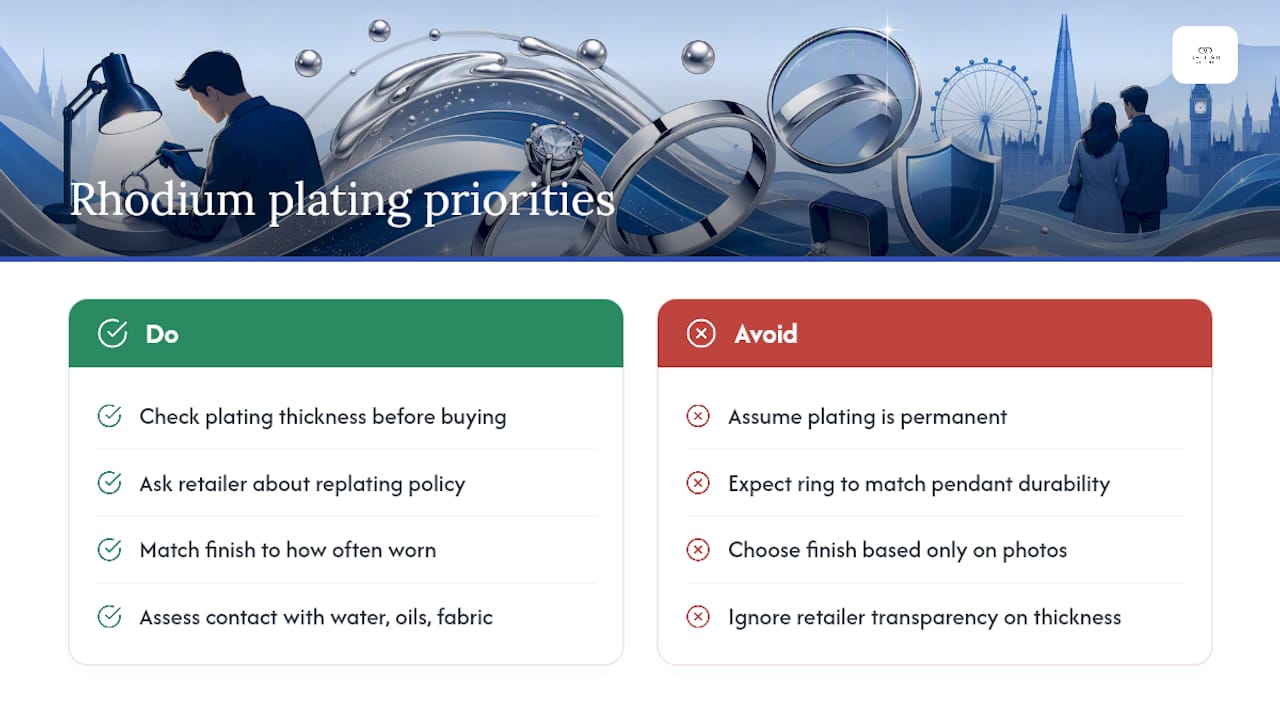
The lifespan ranges matter more than the shine itself. A ring needing attention within a year isn’t a manufacturing fault, it’s physics: hands touch everything, and rhodium is thin by design. The mistake is buying a rhodium-plated ring expecting it to behave like a rhodium-plated pendant, when the two live completely different lives on your body. Match the finish to how the piece will actually be worn, not to how it looks in a product photo.
What the reader should prioritise first isn’t the shine at all. It’s plating thickness and the retailer’s willingness to state it clearly, followed by a realistic read on how often that specific item touches water, skin oils or fabric. Get that right and the rest, cleaning, storage, eventual replating, is just routine upkeep rather than a surprise.
— British
Where to find hallmarked rhodium-ready chains
If you want a piece that’s built on genuine sterling silver with the finish clearly stated rather than buried in small print, that’s precisely where Britishchains focuses its catalogue, hallmarked 925 silver with the plating and care details listed on every product page, not hidden after checkout.
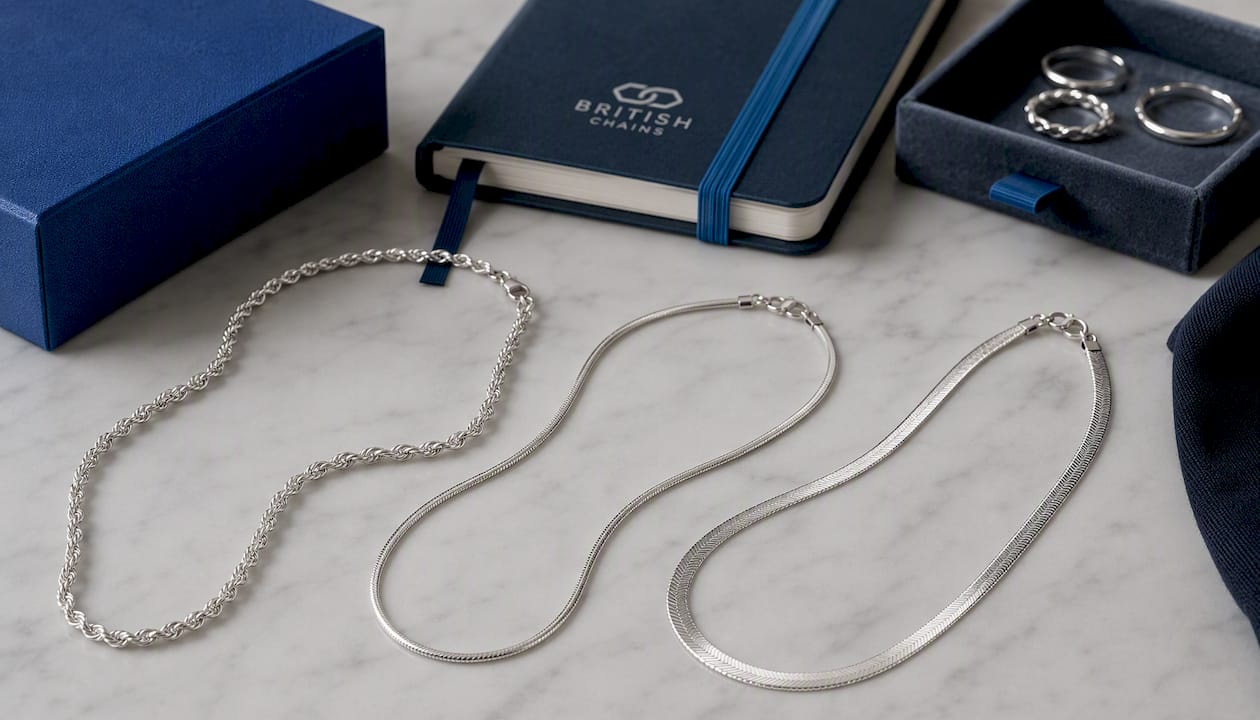
Three lines worth a look if you’re choosing your next piece:
- The 4mm Twisted Rope Chain Necklace is a diamond-cut unisex design in multiple lengths, a solid daily-wear option for anyone who wants weight and presence.
- The 2mm Snake Chain Necklace is a lightweight, polished, hypoallergenic pick suited to those who want a low-profile everyday chain.
- The 2mm Herringbone Chain Necklace offers a flatter, diamond-cut finish available across several lengths, a good middle ground between the other two.
Check the care notes on each product page before you buy, so you know exactly what upkeep the finish will need once it arrives.
Sources
For the chemistry behind rhodium, see the Royal Society of Chemistry’s element profile. For plating mechanics and care, Eon Gems’ guide covers the process in more technical depth.
- Rhodium | The Royal Society of Chemistry
- What is rhodium plating? — Brilliant Earth
- What Is Rhodium-Plated Sterling Silver? Pros, Cons & Care Guide - Craftzimi
- What Is Rhodium Plating on Silver Jewelry? Benefits, Process & Care Guide - Eon Gems


