

Cut CO2 by 87%: Recycled Sterling Silver for Makers & Buyers
Recycled sterling silver refined to the 925 standard is chemically identical to newly mined 925. Same alloy, same performance, same hallmarking rules apply. The real difference is environmental: recycling can cut CO2 output per gram substantially compared with mining new silver. Before buying, check for the 925 hallmark and ask the supplier for assay or chain-of-custody documentation.
TL;DR:
- Recycled sterling silver is chemically identical to mined silver at 925 purity, with no differences in durability, tarnish resistance, or hypoallergenic qualities.
- Recycling silver can reduce CO2 emissions by approximately 87% per gram compared to mining, but this estimate varies depending on refining practices.
- Ensuring provenance requires requesting assay reports, chain-of-custody documents, or lab results, as the hallmark alone confirms purity but not origin.
- Recycled silver tarnishes at the same rate as mined silver because tarnish relates to copper content, not the metal’s source.
- Suppliers now widely stock recycled sterling silver in standard forms like grain, wire, sheet, tube, and findings, with prices aligning closely to spot silver values.
Table of Contents
- What is recycled sterling silver and how is it made?
- How does recycled 925 compare with newly mined 925 for quality?
- What forms can makers buy recycled sterling silver in?
- How do you verify a supplier’s recycled silver claims?
- Does recycled sterling silver tarnish or wear differently?
- Is recycled sterling silver harder to find or more expensive?
- What do people get wrong about recycled sterling silver?
- What certifications back up ethical sourcing claims?
- What challenges come with using recycled sterling silver in jewellery making?
- How should you buy recycled sterling silver chains and jewellery?
- Publisher perspective: how BritishChains approaches recycled sterling silver
- Recommended recycled sterling silver chain options from BritishChains
- Sources
What is recycled sterling silver and how is it made?
Recycled sterling silver starts as scrap silver from a genuinely wide range of sources: old jewellery, silverware, electronics, medical equipment, and industrial offcuts. Refiners collect this material, melt it down, purify it to remove contaminants, and test the purity through an assay process before re-alloying it to 92.5% silver and 7.5% copper, the standard 925 mix. Feedstocks range from consumer scrap right through to specialist industrial waste streams, and recycling reduces energy use and landfill volume compared with mining new ore.
The copper added during alloying may be newly sourced, since copper recycling operates on a separate supply chain. That is not a trick, it is simply how alloy metallurgy works, but it is worth understanding if you see the phrase used loosely in marketing copy.
Recycling happens at two very different scales:
- Artisan-level: small workshops melting down their own offcuts and customer trade-ins, often batch by batch.
- Industrial refining: large refineries processing tonnes of scrap through standardised assay and purification lines, feeding wholesale suppliers and jewellery brands.
How does recycled 925 compare with newly mined 925 for quality?
Once silver is refined to 925 purity, the atoms do not carry a memory of where they came from. Recycled 925 sterling silver is chemically identical to newly mined 925 when refined to the same standard: 92.5% silver, 7.5% copper, full stop. Durability, tarnish resistance, and how hypoallergenic a piece feels come down to the alloy recipe and the manufacturing process, not whether the silver started life as a coin, a spoon, or a mine.
Recycled silver’s environmental case is where it genuinely earns its reputation. Lifecycle estimates cited across the industry suggest recycled silver can produce roughly 87% less CO2 per gram than newly mined silver, largely because it skips the energy-intensive extraction and ore-processing stages entirely.
That is a meaningful number, but it is also an estimate that varies by study and by refinery process, so treat it as a directional figure rather than a fixed universal one.
Quality genuinely depends on the manufacturer’s controls after refining, not the feedstock. Properly refined recycled sterling silver performs identically in mechanical strength and tarnish resistance to newly mined equivalents, provided the alloying and quality checks are done properly. Watch for these red flags when a “recycled” or “eco-friendly” silver claim looks thin:
- No visible 925 hallmark stamped on the piece.
- Marketing language claiming the silver “never tarnishes” (all sterling silver tarnishes; that is chemistry, not a defect).
- No assay certificate or chain-of-custody statement available on request.
- Vague sourcing language with no lot number or batch reference.
What forms can makers buy recycled sterling silver in?
Suppliers sell recycled sterling silver in the same formats as conventionally sourced material, so switching to a more sustainable silver jewellery supply chain does not mean compromising on what you can actually make. Common formats include:
- Casting grain – small pellets melted down for lost-wax casting; Cookson Gold lists 100% recycled sterling silver grain with full delivery and feature details for casters.
- Wire and rod – used for rings, wire-wrapping, and structural elements; sold in varying gauges and hardness (soft, half-hard, hard).
- Sheet – flat stock for fabrication, piercing, and forming, typically specified by gauge or millimetre thickness.
- Tube – used for hinges, bezels, and bail construction; Cookson Gold’s recycled sterling silver tube specifies a melting range of 805 to 890°C and an annealing temperature of 650°C, alongside precise diameter and wall-thickness figures.
- Pre-made chain – ready-to-finish chain stock, useful for makers who buy in components rather than drawing their own wire.
- Findings – clasps, jump rings, and connectors, usually the last item makers think to check for recycled content despite being a significant share of a finished piece.
Melting and annealing specs matter enormously for soldering work; get these wrong and you risk collapsing a delicate structure mid-fabrication.
How do you verify a supplier’s recycled silver claims?
A hallmark tells you the metal is genuine sterling silver. It does not tell you whether that silver was recycled. The 925 stamp proves purity, not origin, so buyers who care about sourcing need to ask for more than a stamp.
Request this documentation before trusting a recycled claim:
- Refinery assay report confirming the exact silver purity of the batch.
- Chain-of-custody or mass-balance statement tracing the material from scrap intake through to finished alloy.
- XRF or ICP lab report tied to a specific lot number, not a generic company-wide claim.
- Refiner credentials, ideally accreditation from the Responsible Jewellery Council (RJC), LBMA-approved refiner status, or ISO 14001 environmental management certification.
These credentials matter because they are audited by third parties rather than self-declared. Industry guidance is consistent on this point: without an assay, a chain-of-custody statement, or a lab report, a recycled claim is simply unverified marketing.
Pro Tip: Ask the supplier to match the lot number on your invoice against their assay certificate. If the numbers don’t line up, or the supplier can’t produce one at all, treat the “recycled” label as unproven rather than assume good faith.
If a supplier cannot provide any of this on request, that is not automatically a sign of dishonesty. Smaller artisan refiners sometimes lack formal paperwork. But for anyone checking ethical silver sourcing as a serious buying criterion, the absence of documentation should shift you toward suppliers who can produce it.
Does recycled sterling silver tarnish or wear differently?
No. Recycled 925 tarnishes at the same rate as newly mined 925, because tarnish is a copper reaction, not a silver one. The copper in the 7.5% alloy portion reacts with sulphur compounds in the air, producing that familiar dulling. Silver purity, alloy ratio, and storage conditions drive tarnish speed, not where the raw metal originally came from.
Everyday care is straightforward:
- Store pieces in an airtight pouch or lined box away from humidity.
- Wipe with a dedicated silver polishing cloth rather than household cleaners.
- Avoid leaving silver in bathrooms, where humidity and chlorine speed up tarnishing.
Some pieces carry a rhodium plating for extra shine and scratch resistance, common on white gold and occasionally on silver. Plated items feel identical at first but wear through the plating layer over years of use, revealing the base metal underneath, so ask whether a piece is solid sterling or plated before buying if longevity matters to you.
Is recycled sterling silver harder to find or more expensive?
Recycled sterling silver used to be a niche request from ethically minded studios. That has changed. Wholesale suppliers now stock recycled grain, wire, sheet, and tube as standard options alongside conventionally sourced silver, and mainstream jewellery retailers increasingly market entire collections built around it. Retailers and editorial coverage note a rising consumer interest in recycled silver, even though no single universal certification scheme currently governs the term across the industry.
Pricing tends to track the silver spot price closely, because recycled and newly mined 925 use the same base commodity market. Where you sometimes see a premium is at the supplier level: refiners who invest in documented chain-of-custody systems and third-party audits carry higher operating costs, and that occasionally shows up as a few percentage points added to material cost. It is rarely a dramatic markup, and for finished jewellery, the difference is usually invisible against normal price variation between brands, chain styles, and thickness.
Availability is no longer the bottleneck it once was. The bigger variable for buyers is documentation quality, not stock. Some suppliers can trace every gram back through an audited mass-balance system; others simply label material “recycled” without backing paperwork. That gap in transparency, not scarcity, is what shapes real-world pricing and trust in this market. If two nearly identical pieces sit at different price points, the documentation behind the cheaper one is worth questioning before assuming it is simply a better deal.
What do people get wrong about recycled sterling silver?
The biggest misconception is that recycled silver is somehow a lesser or “downgraded” material. It is not. Once refined to 925 purity, there is no test that can distinguish recycled silver from newly mined silver in the finished alloy. Quality lives in the refining and manufacturing process, not the metal’s previous life.
A second myth: that recycled silver jewellery will not tarnish, marketed sometimes as a green bonus. It tarnishes exactly like conventional 925, because tarnish is a copper reaction present in any sterling alloy, recycled or not.
Third, buyers often assume a hallmark alone proves recycled origin. It proves purity only. A piece can be genuinely 925 sterling and have zero recycled content, and a hallmark will not tell you which is true.
Finally, some shoppers believe “recycled” and “ethical” are interchangeable terms. They overlap but are not identical: ethical sourcing also covers labour practices and mining conditions, which recycled content alone does not guarantee. A recycled silver chain mined unethically decades ago and later melted down is still recycled silver, even if the original extraction was not conducted responsibly.
What certifications back up ethical sourcing claims?
Beyond basic assay and hallmark evidence, a handful of credentials signal a more rigorous supply chain. Responsible Jewellery Council (RJC) certification audits members across the full chain, from mining and refining through to retail, covering labour, environmental, and ethical standards. LBMA (London Bullion Market Association) accreditation applies specifically to refiners and confirms they meet strict responsible sourcing and quality assurance protocols recognised across the global precious metals trade.
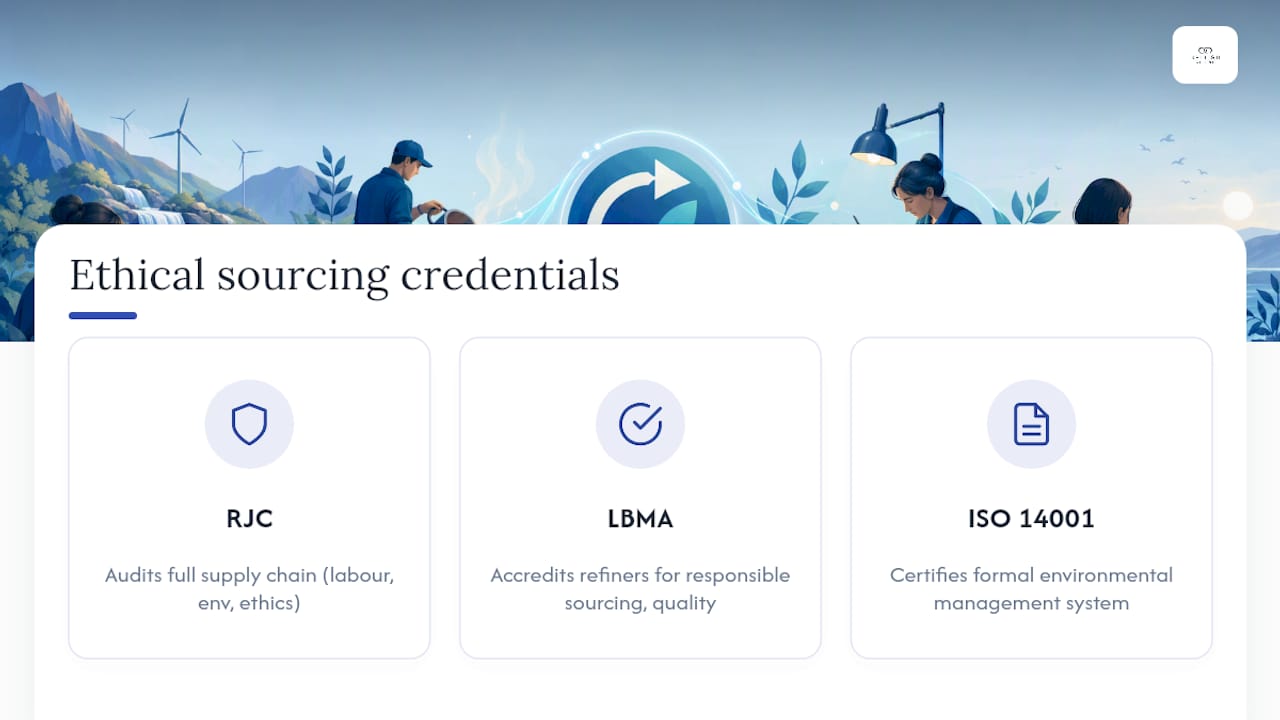
ISO 14001 certification, while not silver-specific, confirms a supplier operates a formal environmental management system, useful supporting evidence alongside recycled-content claims. None of these labels are legally required to sell sterling silver, which is exactly why their presence, or absence, tells you something real about a supplier’s priorities.
What challenges come with using recycled sterling silver in jewellery making?
Recycled sterling silver is not without friction for makers. Batch-to-batch consistency can vary slightly more than with freshly refined virgin silver, particularly from smaller-scale recyclers without tight process controls, since scrap feedstock composition is never perfectly uniform before refining.
Sourcing fully documented material also takes more legwork. Not every supplier maintains lot-level assay records, so makers who care about traceability sometimes need to shop around rather than default to the cheapest grain or wire on offer. Casting can occasionally throw up more impurities if a refiner’s purification process is less rigorous, so working with reputable, credentialed suppliers matters more here than with generic material.
None of this makes recycled sterling silver harder to work with technically. Melting ranges, annealing temperatures, and soldering behaviour match conventional 925 once the material is properly refined. The friction sits upstream, in sourcing and verification, not on the bench.
How should you buy recycled sterling silver chains and jewellery?
For most buyers, the practical route is simpler than sourcing raw material: buy finished pieces from a retailer that already hallmarks its work and can speak to its sourcing. British sterling silver chains built to last share the same fundamentals covered here: 925 purity, proper alloying, and hallmarking evidence you can check yourself.
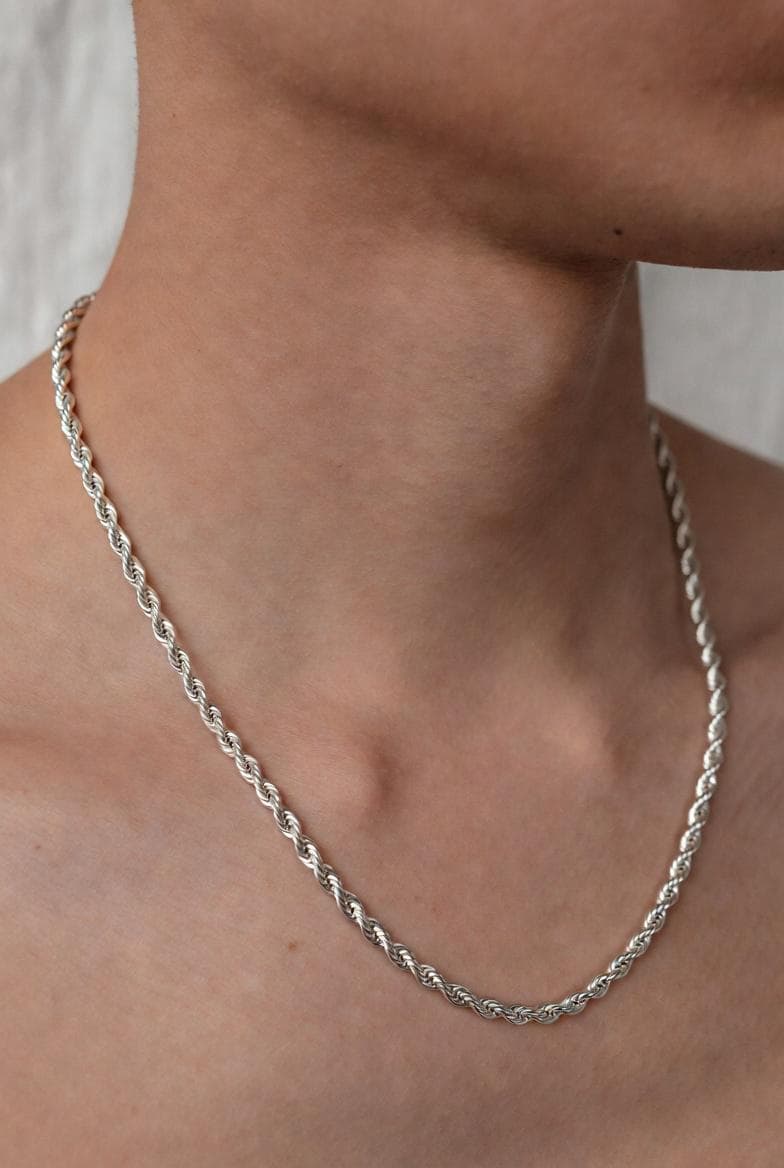
When comparing finished chains, look past the marketing copy at three things: the hallmark, the thickness in millimetres relative to how you intend to wear it, and whether the retailer discloses sourcing information at all. A 2mm chain suits everyday, understated wear or layering with pendants; a 4mm rope chain reads as a standalone statement piece or a robust option for men’s or unisex daily wear. Neither thickness is objectively “better,” it depends entirely on how the piece will be worn.
If you are shopping specifically for gift-giving, hallmarking evidence matters even more, since it is the detail a recipient can verify years later without needing to trust the original seller’s word.
Publisher perspective: how BritishChains approaches recycled sterling silver
The conventional wisdom treats “recycled” as a marketing tick-box: stamp it on, move on. That undersells what actually matters, which is whether a hallmark and supporting documentation exist behind the claim. Some retailers hallmark their sterling silver chains and stand behind the 925 purity standard on every piece they sell. If you need lot-specific assay or documentation detail for a particular order, you may contact the retailer’s customer service team to ask.
— British
Recommended recycled sterling silver chain options from BritishChains
Choosing a chain does not need to be complicated once you know what you are wearing it for. Some retailers carry hallmarked 925 sterling silver chains that cover the range from subtle everyday wear to heavier statement pieces, each backed by the 925 purity standard discussed throughout this guide.
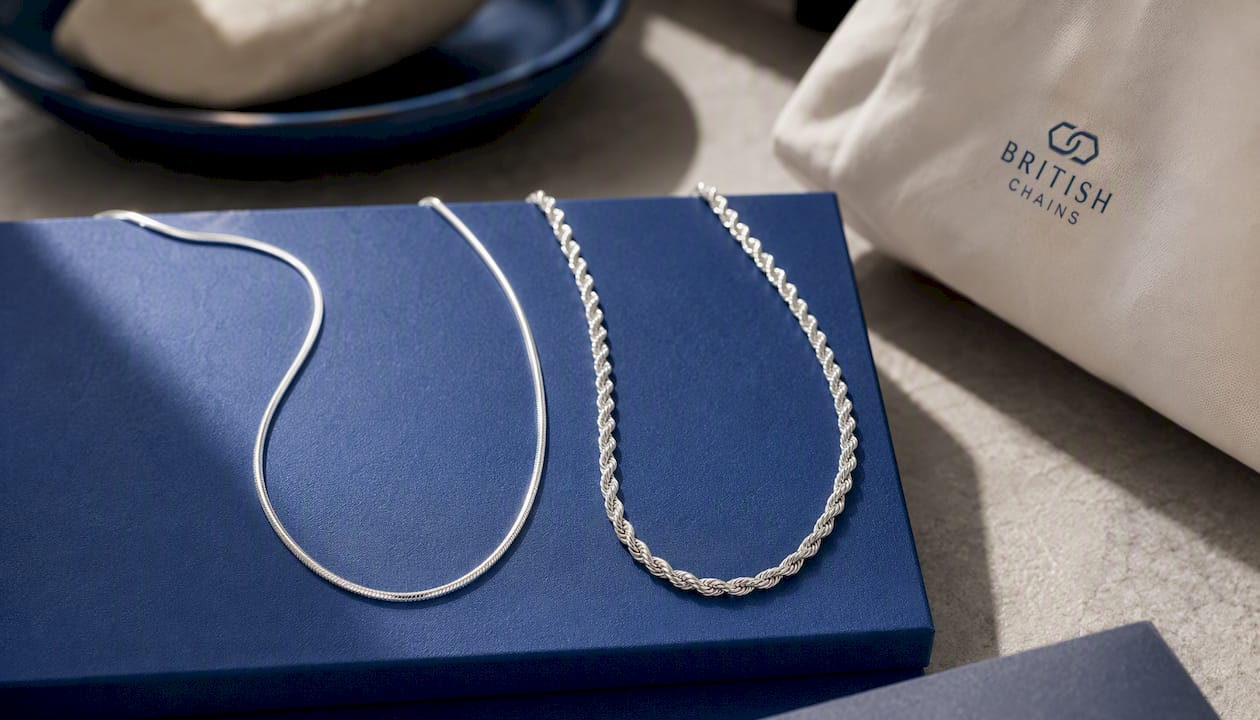
The 2mm sterling silver snake chain necklace, an 18 inch women’s and girls’ style with a polished diamond-cut finish, suits anyone who wants a fine, hypoallergenic-friendly chain for daily wear or as a base for pendants. It is hallmarked 925, so the purity is verifiable at a glance rather than taken on trust.
For something heavier, the 4mm twisted rope chain necklace works as a unisex statement piece, available across multiple lengths for men’s and women’s wear alike. Its diamond-cut finish and thicker gauge make it a durable option for daily wear without a pendant, standing on its own. Both pieces reflect the same 925 alloy standard covered throughout this guide: check the hallmark, ask about sourcing if it matters to you, and buy from a retailer willing to answer that question directly.
Sources
- Cooksongold
- Cooksongold
- 925 Sterling Silver Bracelet Guide | Recycled Silver FAQ
- Silver Recycling: All You Need To Know About Recycled Silver - Burhouse


