

How to choose quality British silver jewellery
Choosing quality British silver jewellery means identifying hallmark authenticity, recognising traditional craftsmanship, and selecting pieces built to last. The British hallmarking system is the world’s oldest consumer protection for precious metals, with an uninterrupted practice dating to 1300. That history matters because it gives you a legal guarantee of metal purity that most other countries simply cannot match. This guide covers hallmark recognition, artisan techniques rooted in British silversmithing traditions, and practical steps to assess durability and style before you buy.
How to choose quality British silver jewellery: reading the hallmark
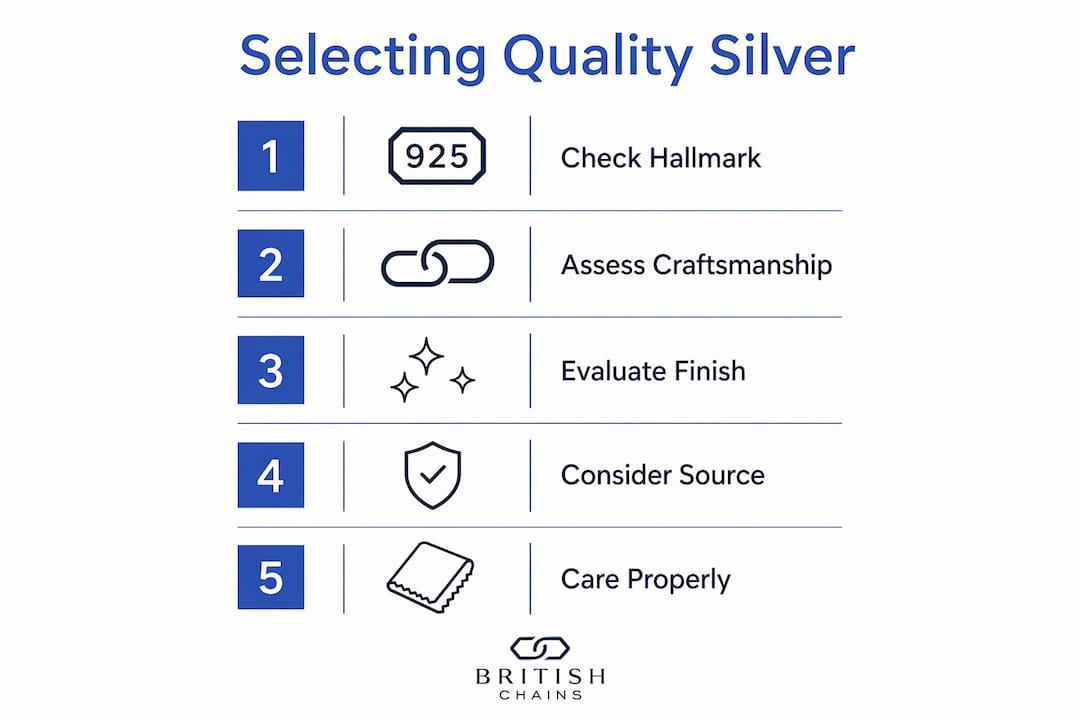
The hallmark is the single most reliable indicator of genuine British silver. Every sterling silver piece above 7.78 grams sold in the UK must legally carry a full set of marks guaranteeing at least 925 parts per thousand purity. That legal threshold means you have recourse if a seller misrepresents the metal content.
A complete British hallmark contains four marks, and you need all four to confirm authenticity:
- Sponsor’s mark: the maker’s or retailer’s registered initials, confirming who submitted the piece for assay
- Purity mark: the lion passant for sterling silver, confirming 925 purity
- Assay office mark: identifies which of the four UK assay offices tested the piece
- Date letter: an optional but commonly applied letter indicating the year of hallmarking
The four UK assay offices each use a distinct symbol. London uses a leopard’s head, Birmingham uses an anchor, Sheffield uses a rose, and Edinburgh uses a castle. Knowing these symbols lets you trace a piece to its testing location, which adds a layer of provenance that matters especially for antique pieces.
Pro Tip: Use a jeweller’s loupe of at least 10x magnification to read hallmarks clearly. Marks on chains are often struck on the clasp or a small attached tag, not the chain links themselves.
A stamp reading “925” alone is not a British hallmark. The full hallmark provides legal protection and authentication that a simple sterling number cannot. The Hallmarking Act 1973 makes misrepresentation of silver content illegal in the UK, so a seller offering only a “925” stamp without the full set of marks is not meeting the legal standard. Always check for the complete sequence before purchasing. You can cross-reference marks using the sterling silver hallmarks guide from Britishchains, which breaks down each component clearly.
What makes British silver craftsmanship traditions distinctive?
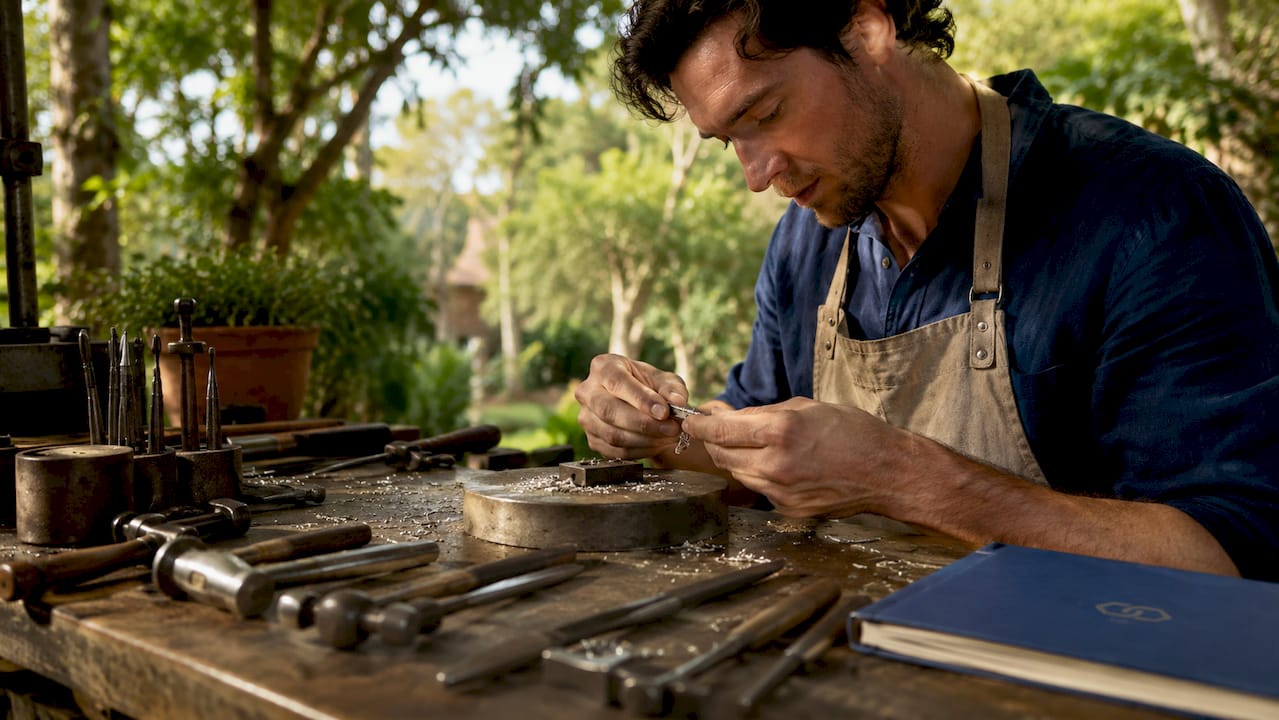
British studio jewellery carries a surface character that sets it apart from silver made elsewhere. British makers use visible tool marks and diverse finishes as a visual signature, differentiating their work from the quieter, more restrained aesthetic common in Scandinavian silversmithing. That difference is not accidental. It reflects a philosophy rooted in the Arts and Crafts movement and the workshop traditions it inspired.
The techniques that define authentic British silversmithing include:
- Chasing: pushing metal from the front to create raised or indented patterns without removing material
- Reticulation: controlled heating that creates an organic, wrinkled surface texture unique to each piece
- Hammering: deliberate strike patterns that catch light differently across the surface
- Mixed finishes: combining polished and matte areas to create contrast and depth
“The Guild of Handicraft tradition emphasises honesty of materials, celebrating intrinsic silver brightness and softness without disguising base metals. Ethical production and material honesty remain core to British silver quality standards.”
The Guild of Handicraft philosophy, established by Charles Ashbee in the late nineteenth century, continues to shape how contemporary British silversmiths approach their work. The principle is simple: let the material speak for itself. That means no plating over inferior metals, no shortcuts in finishing, and no disguising poor construction with surface decoration.
Contemporary British silversmithing also benefits from structured skills transfer. Residential training workshops supported by trusts such as the South House Silver Workshop Trust uphold techniques including chasing, engraving, soldering, and forging. When you buy from a maker connected to these programmes, you are buying a piece produced by someone trained in a direct line of craft knowledge. That provenance has real value.
Practical steps to select durable and stylish silver pieces
Durability in British silver jewellery depends on three factors: metal quality, construction method, and finish. A hallmarked 925 piece starts with the right metal. Construction quality shows in how joints are soldered, how clasps are attached, and whether the piece holds its shape under normal wear.
Assess the finish and texture
Textural complexity signals skilled handcrafting. British workshop silver jewellery displays more layered and tactile finishes than mass-produced alternatives. Run your finger across the surface. A hammered or chased finish should feel deliberate and consistent, not rough or uneven from poor manufacturing.
Consider the source and lead time
Small-batch artisan workshops often use recycled sterling silver and typically carry a lead time of up to 7 working days. That lead time is a positive signal. It means the piece is not sitting in a warehouse but being finished to order. Ethical sourcing and small-batch production also reduce the risk of quality shortcuts.
Evaluate common pitfalls before buying
| Pitfall | Why it matters | What to do instead |
|---|---|---|
| Relying only on a “925” stamp | Not a legal British hallmark | Check for all four hallmark components |
| Ignoring surface finish quality | Poor finish signals weak construction | Inspect texture and joint quality closely |
| Buying without provenance | No maker accountability | Choose sellers with hallmark documentation |
| Skipping care instructions | Tarnishing reduces lifespan | Follow silver cloth and storage guidance |
Pro Tip: Store silver jewellery in an airtight pouch or anti-tarnish bag. Exposure to air and moisture accelerates tarnishing, particularly on highly polished surfaces.
Caring properly for hallmarked silver preserves both the finish and the hallmarks themselves. Use a silver polishing cloth for routine cleaning. Avoid harsh chemicals, including bleach and ammonia, which can strip the surface and damage fine textures. Reputable sellers such as Britishchains provide clear care guidance alongside their product listings, which is itself a mark of quality.
How to authenticate antique British silver pieces
Antique British silver offers exceptional value and historical depth, but authentication requires more care than buying new. The date letter system is your primary tool. Date letters distinguish production years and are essential for verifying when a piece was assayed. Each assay office used its own sequence of letter styles and typefaces, so the combination of office mark and date letter pinpoints both location and year.
Key steps for authenticating antique pieces:
- Check hallmark clarity: worn or partial marks reduce authentication confidence. A reputable appraiser can often read marks that appear faint to the naked eye.
- Cross-reference the date letter: use published hallmark reference guides such as those produced by the Assay Office or specialist databases to match the letter style to a specific year.
- Verify the assay office symbol: confirm which office tested the piece. The Edinburgh castle mark, for example, carries its own collector significance. The Edinburgh hallmark guide from Britishchains explains its history and meaning in detail.
- Seek professional appraisal: for high-value antique pieces, a certified appraiser from the National Association of Goldsmiths provides independent verification.
| Authentication step | What it confirms |
|---|---|
| Full hallmark present | Legal assay and purity guarantee |
| Date letter identified | Year and assay office of production |
| Maker’s mark legible | Provenance and workshop origin |
| Professional appraisal obtained | Independent verification of value |
Worn hallmarks do not automatically disqualify a piece, but they require additional verification. Partial marks on antique silver are common because of decades of polishing. A professional appraiser can assess whether the remaining marks are sufficient for authentication. Responsible collecting means never paying antique prices for a piece you cannot verify.
Key takeaways
Choosing quality British silver jewellery requires hallmark verification, craftsmanship assessment, and proper care to protect both authenticity and long-term value.
| Point | Details |
|---|---|
| Full hallmark is non-negotiable | Look for all four marks: sponsor, purity, assay office, and date letter. |
| Craftsmanship shows in the surface | Chasing, hammering, and reticulation signal skilled handcrafting, not mass production. |
| Source and provenance matter | Buy from sellers who provide hallmark documentation and maker information. |
| Antique pieces need professional verification | Date letters and appraiser checks confirm authenticity for vintage silver. |
| Care extends lifespan significantly | Store in airtight pouches and clean with a silver cloth to preserve finish and marks. |
Why hallmarks and handcraft are inseparable
After years of studying British silversmithing, the thing that strikes me most is how the hallmark and the handcraft reinforce each other. A hallmark without skilled making is just a legal minimum. Skilled making without a hallmark is just an unverified claim. The two together are what make a piece genuinely worth owning.
What I find most buyers overlook is the surface texture. They focus on the hallmark, which is right, but then they treat the finish as purely aesthetic. Those tool marks are not decoration. They are the maker’s signature, encoded into the metal. A chased surface from a trained British silversmith carries the same information as a signature on a painting. You can trace it back to a workshop, a tradition, and a set of skills that took years to develop.
The Guild of Handicraft legacy also matters more than most buyers realise. The principle of material honesty, using silver for what silver is rather than disguising cheaper metals beneath it, is what separates genuine British pieces from plated alternatives that look similar at first glance. When you buy from a maker connected to that tradition, you are not paying for a brand. You are paying for a philosophy that has been tested over more than a century.
My advice is to prioritise craftsmanship and provenance over marketing language. Ask the seller which assay office hallmarked the piece. Ask whether the maker has guild or trust affiliations. Those questions separate serious sellers from those simply selling silver-coloured jewellery.
— British
Britishchains hallmarked sterling silver: built to last
Britishchains designs and sells hallmarked sterling silver 925 jewellery made in the UK, with a focus on durability and authentic craftsmanship. Every piece meets the full British hallmarking standard, giving you the legal guarantee of purity that a “925” stamp alone cannot provide.
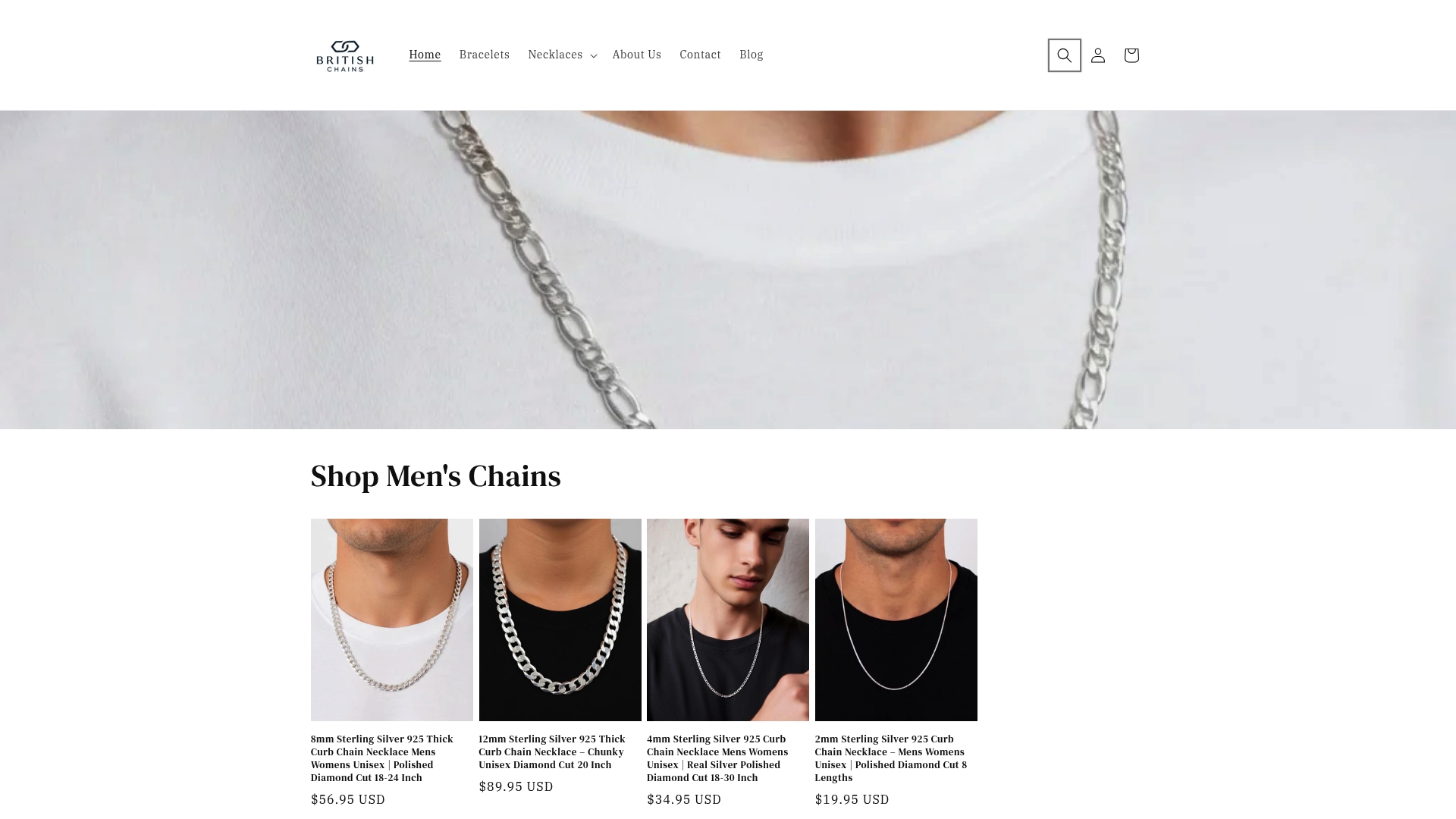
The 2mm polished curb chain necklace and the 3mm twisted rope chain are two of the most popular pieces in the Britishchains range. Both are unisex, diamond-cut, and finished to a standard that holds up to daily wear. If you are building a British silver jewellery collection or looking for a single piece that combines quality with lasting style, these are a strong starting point.
FAQ
What does a full British silver hallmark include?
A full British hallmark includes four marks: the sponsor’s mark, the 925 purity mark (lion passant for sterling), the assay office mark, and the date letter. A “925” stamp alone does not meet the legal British hallmarking standard.
Which assay offices hallmark silver in the UK?
The four UK assay offices are London (leopard’s head), Birmingham (anchor), Sheffield (rose), and Edinburgh (castle). Each office mark confirms where the piece was independently tested for purity.
How do I tell if antique British silver is genuine?
Check for a complete hallmark including a legible date letter and assay office symbol, then cross-reference the date letter against a published hallmark guide. For high-value pieces, commission a professional appraisal from a certified National Association of Goldsmiths appraiser.
What craftsmanship techniques indicate authentic British silversmithing?
Techniques such as chasing, reticulation, and deliberate hammering are signatures of skilled British handcrafting. These surface textures encode maker identity and distinguish handcrafted pieces from mass-produced alternatives.
How should I care for hallmarked British silver jewellery?
Clean with a silver polishing cloth and store in an airtight or anti-tarnish pouch. Avoid harsh chemicals such as bleach or ammonia, which damage both the surface finish and the hallmark stamps.


