

Skip Plating or Save Money: Argentium Vs Sterling for UK Makers
Argentium is a germanium-modified sterling alloy with better tarnish resistance and much easier firestain management than traditional 925 silver. Sterling remains the workhorse of the trade because it costs less, ships from every bullion supplier in the country, and carries the warmer tone jewellery buyers already recognise. Makers chasing a low-maintenance, high-shine finish should lean Argentium; everyone else, sterling still does the job.
TL;DR:
- Argentium contains more silver than 925 sterling, with grades like 935 and 940 exceeding the legal minimum, improving tarnish resistance and surface stability.
- Argentium appears brighter and whiter out of polishing, resists tarnishing longer, and requires less cleaning and firestain removal during production.
- When choosing a chain, thicker gauges or heavier designs of sterling often outperform fine Argentium pieces in durability and everyday wear, despite the alloy’s advantages.
- Argentium’s hallmark remains 925 or sterling, regardless of its higher purity, but ask sellers about solder type and heat treatment to understand the specific alloy used.
- Raw Argentium costs more than sterling, and retail prices reflect material premiums and manufacturing savings from less finishing work, yet sterling remains more available and budget-friendly.
Table of Contents
- Argentium vs sterling silver: what’s actually in the alloy?
- Which alloy looks better: whiter or warmer?
- Why does Argentium resist tarnish better than sterling?
- How does Argentium change the workshop?
- Which alloy holds up better to everyday wear?
- What hallmarks should you expect on the finished piece?
- What does Argentium cost compared with sterling?
- How do you choose between Argentium and sterling for your next piece?
- Where Britishchains stands on Argentium vs sterling
- Recommended sterling chains for everyday wear and gifting
- Sources
- FAQ
Argentium vs sterling silver: what’s actually in the alloy?
Standard 925 sterling is 92.5% fine silver with the remaining 7.5% almost always copper, added because pure silver is too soft to hold a chain link or a ring shank on its own. Argentium swaps some of that copper for germanium, a trace metal that changes how the alloy behaves at the surface without sacrificing workability.
Argentium isn’t a single formula. It comes in three recognised grades, and the percentages differ enough to matter for hallmarking:
- 935: a grade of Argentium with silver content above the legal sterling minimum
- 940: a common Argentium grade used for jewellery casting and fabrication
- 960: a higher purity Argentium grade approaching Britannia standards
Every Argentium grade meets or exceeds the legal sterling threshold, which is why some retailers describe it as “better than sterling” on purity alone. The germanium content also raises the alloy’s flow and solidus temperatures compared with standard sterling, meaning makers need to recalibrate torch work and kiln settings rather than assume identical melting behaviour. Annealing windows shift slightly too, which catches out anyone used to eyeballing traditional sterling.
Which alloy looks better: whiter or warmer?
Fresh out of the polishing wheel, Argentium reads noticeably whiter and brighter than sterling. Traditional 925 carries a faint warm undertone from its copper content, the look most people actually associate with “silver jewellery” because it’s what has dominated the market for centuries.
- Argentium: cooler, brighter white; holds that brightness longer without oxidising
- Sterling: warmer grey-white tone; develops a soft, sometimes desirable patina over months of wear
- Plating decisions: sterling pieces destined for a mirror finish often get rhodium plated to fight tarnish; Argentium frequently skips plating altogether because the alloy manages its own surface chemistry
Neither look is objectively superior. Vintage and antique-style designs often benefit from sterling’s willingness to darken in recesses, which is exactly the aged effect some buyers want. Contemporary, high-polish pieces tend to favour Argentium’s staying power.
Why does Argentium resist tarnish better than sterling?
Tarnish happens because the copper in sterling silver oxidises when it meets air and sulphur compounds, forming that dull grey-black film everyone’s polished off a chain at some point. Firescale, the deeper purple-grey stain that appears after soldering or annealing sterling, comes from the same copper oxidising below the surface during heat exposure.
Germanium changes that chemistry. It migrates to the surface during heat treatment and forms a stable oxide layer that blocks the deeper firescale sterling is prone to, so Argentium pieces need dramatically less post-soldering clean-up and tarnish more slowly in everyday wear.
Care still matters for both alloys. Follow these steps:
- Wipe pieces with a soft polishing cloth after each wear to remove skin oils before they build up.
- Store chains flat or hanging, away from rubber, latex, and direct sunlight, which accelerate tarnish.
- Use a gentle silver dip or foam cleaner only occasionally. Full guidance on preventing and treating sterling silver tarnish applies to Argentium too, just less often.
- Avoid swimming pools and hot tubs; chlorine attacks both alloys’ surfaces regardless of copper or germanium content.
Pro Tip: If you own both Argentium and sterling pieces, keep separate polishing cloths for each. Copper residue transferred from a sterling cloth onto Argentium jewellery can undermine the very tarnish resistance you bought the alloy for.
How does Argentium change the workshop?
Bench jewellers switching from sterling to Argentium aren’t retooling from scratch, but the habits do need adjusting. Solder is the first thing to get right.
- Argentium-specific solders match the alloy’s colour and tarnish behaviour more closely than traditional silver solder, though standard solder can still be used in a pinch.
- Firestain elimination is the headline benefit for production work: fewer pickling cycles, less plating, and meaningfully shorter finishing time on cast pieces.
- Precipitation hardening, done in a domestic kitchen oven at low temperature, increases surface hardness and scratch resistance without a specialist furnace.
- Cooling matters more with Argentium than sterling. Quenching a piece too soon after annealing, while it’s still glowing, risks shock cracking or warpage in larger pieces; letting it air cool a little longer first avoids that.
Independent testing backs this up: Argentium works in largely the same way sterling does on the bench, but annealing ranges, cooling behaviour, and solder flow all shift enough to require some adaptation. Overheating Argentium solder in particular can cause warpage that traditional silver solder tolerates better.
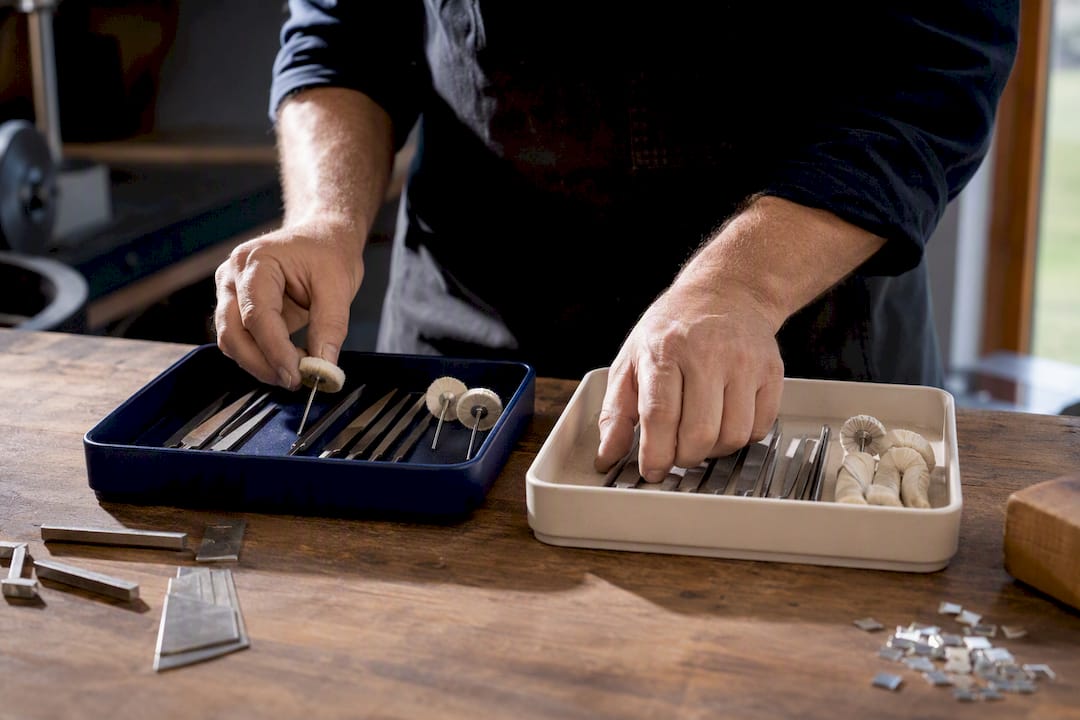
Pro Tip: Dedicate a set of files, buffs, and polishing mops to Argentium only. Cross-contamination from sterling dust is the single most common reason makers report disappointing tarnish resistance on their first Argentium projects.
Which alloy holds up better to everyday wear?
Hardness after treatment decides this more than the raw alloy composition does. Precipitation-hardened Argentium gains meaningful scratch resistance compared with its untreated state, putting it ahead of standard soft-annealed sterling for pieces that take daily knocks.
- Rings and bracelets (high-contact wear): heat-treated Argentium or work-hardened sterling both perform well; treated Argentium edges ahead on scratch resistance.
- Chains and necklaces (lower direct impact): gauge and link design matter more than alloy choice. A thicker-gauge traditional sterling chain often outlasts a thin Argentium one simply because there’s more metal to wear through.
- Fine detail castings: Argentium’s firestain-free finish holds crisp detail better over repeated wear and cleaning.
For chains specifically, this is worth remembering before paying an Argentium premium on a delicate design. A robust 925 curb or Figaro in a heavier gauge frequently beats a fine Argentium chain on real-world durability, whatever the alloy label says.
What hallmarks should you expect on the finished piece?
UK law sets 925 parts per thousand as the legal minimum for sterling silver, with Britannia standard sitting higher at 958.4. Every Argentium grade sold as finished jewellery still gets stamped 925 or “sterling” on the hallmark, because that’s the legal category it falls into regardless of the actual silver content.
- 935 and 940 Argentium: exceed the 925 minimum and are hallmarked as sterling
- 960 Argentium: has higher silver content near Britannia standard and is usually hallmarked sterling unless separately assayed
- Argentium as a name: it’s a registered trademark, not a hallmark category, so a maker’s mark or trademark stamp sits alongside, not instead of, the legal purity mark
- Buyer advice: if the specific alloy matters to you, ask the seller directly rather than assuming the hallmark alone tells the whole story
What does Argentium cost compared with sterling?
Raw Argentium sheet, wire, and solder carry a modest premium over sterling equivalents, largely down to germanium’s cost and licensing arrangements tied to the trademark. Finished Argentium jewellery sometimes prices higher at retail too, though manufacturers partly offset that through lower labour costs from skipping firestain removal and plating steps.
- Raw materials: Argentium sheet and wire generally cost more than standard sterling stock.
- Finished pieces: Argentium jewellery may carry a premium compared with comparable sterling designs.
- Availability: sterling is stocked by virtually every bullion and jewellery supplier; Argentium sheet, wire, and solder come from a smaller pool of specialist suppliers.
- Retail chains: for everyday necklaces and bracelets, well-made sterling remains the more widely available and typically cheaper option.
How do you choose between Argentium and sterling for your next piece?
Three types of reader tend to land on this comparison, and each has a different right answer.
- Makers with a workshop: if you’re casting or fabricating and want fewer finishing hours, Argentium’s firestain elimination pays for its material premium fairly quickly on volume work.
- Buyers wanting low maintenance: choose Argentium if you rarely polish jewellery and want brightness that lasts between cleanings.
- Budget-conscious buyers: sterling remains the sensible default, especially for everyday-wear pieces where thickness and construction matter more than alloy chemistry.
Before buying, ask the seller these questions: What hallmark is stamped on this piece? Was Argentium-specific solder used, or standard silver solder? Has the piece been heat-treated for hardness? What’s the return policy if the finish disappoints once worn in? If you’re weighing silver against another metal entirely, it’s also worth reading how sterling silver compares with stainless steel before committing.
Pro Tip: Anyone with a nickel sensitivity should ask about alloy composition either way. Neither standard Argentium nor sterling contains nickel, but cheaper silver-plated alternatives sometimes do, and that’s the real allergy risk to watch for.
Where Britishchains stands on Argentium vs sterling
The collections focus on hallmarked sterling silver for its durability, affordability, and the classic tone familiar to customers. Argentium earns its place in specific niches, high-polish castings and pieces bought by people who won’t polish often, but it doesn’t replace sterling’s fit for everyday, hard-wearing chains. Whichever alloy you’re shopping, ask your seller plainly about hallmarking and finishing. Transparency on alloy and treatment matters more than which metal wins on paper.
— British
Recommended sterling chains for everyday wear and gifting
If sterling’s the alloy you’ve settled on, gauge and finish decide how the piece actually performs day to day, not just the hallmark stamped on the clasp.
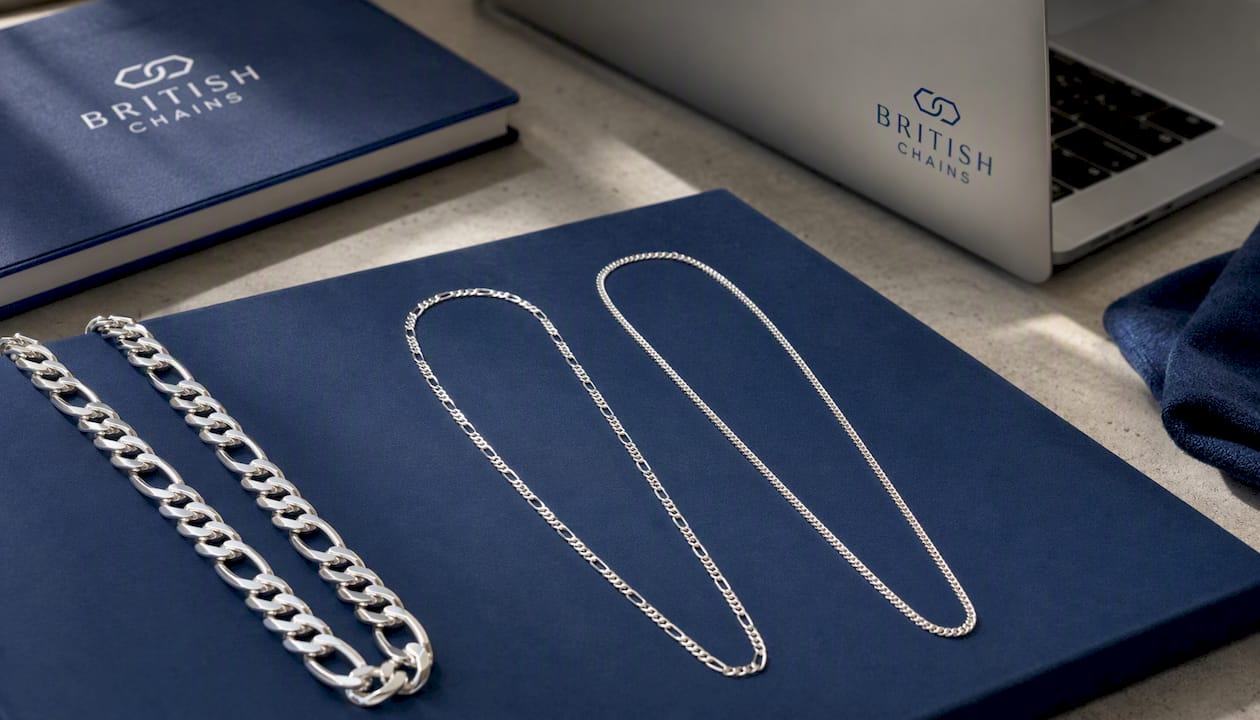
The 8mm Sterling Silver 925 Thick Figaro Chain Necklace suits exactly the heavy daily-wear case discussed above: more metal, more resistance to the wear that thins out delicate chains over years. For a lighter everyday piece or a pendant chain that won’t compete with a centrepiece charm, the 2mm Sterling Silver 925 Figaro Chain Necklace comes in multiple lengths and works equally well as a gift. If you’d rather have the classic interlocking look, the 2mm Sterling Silver 925 Curb Chain Necklace delivers the durability and hallmarked purity covered throughout this comparison, at a price sterling buyers expect. Pieces ship hallmarked, ensuring clarity about the silver quality. Browse the full range and check current lengths and pricing before you order.
Sources
- Argentium Sterling road testing - Ganoksin Jewelry Making Community
- Argentium Silver - Official Website | User Guides
- Silversmithing
FAQ
Is Argentium better than sterling silver?
Argentium beats sterling on tarnish resistance and firestain elimination, but sterling still wins on cost, availability, and the warm tone many buyers prefer. “Better” depends entirely on whether low maintenance or low price matters more to you.
Is 935 Argentium silver better than 925 sterling?
935 Argentium contains more silver by weight than 925 sterling and resists tarnish better, though both are legally sold as sterling once hallmarked. The purity edge is real, but it doesn’t make 925 sterling an inferior choice for most everyday jewellery.
Is Argentium silver worth anything?
Yes. Argentium’s silver content, at minimum 93.5%, gives it scrap and resale value in line with or slightly above standard sterling, since it contains more fine silver per gram.
What is the price difference between Argentium silver and sterling silver?
Argentium typically carries a moderate premium over sterling, driven by the cost of germanium and trademark licensing rather than the silver content alone. For finished chains and everyday pieces, well-made sterling generally remains the cheaper option.


