

Choose a 2mm Solid Box Chain, the Best Everyday Option for UK Shoppers
Yes. A box chain with solid, soldered links in at least 2mm width is strong enough for everyday wear and light-to-medium pendants, and its square-link structure actively resists the kinking that plagues thinner round-link chains. The caveat matters: go hollow or too fine, and that strength drops fast. Get the gauge and construction right, and a box chain will comfortably outlast the trends it’s currently on trend for.
TL;DR:
- A solid, 2mm or thicker box chain with soldered links provides reliable strength for everyday wear and medium-weight pendants.
- The square-link geometry limits twisting and rotational movement, resisting kinks, tangling, and deformation from impacts.
- Thinner or hollow box chains lose durability quickly, especially under stress, making solid construction essential for heavier pendants.
- For heavy or gemstone-set pendants over 3g, chains should be at least 3mm thick and solid to prevent crushing or denting.
- Regular care, such as removing the chain during physical activity and inspecting solder joints, significantly extends its lifespan.
Table of Contents
- Are box chains strong: what actually makes them resist wear?
- How does chain thickness affect box chain strength?
- What causes box chains to kink or break?
- Box chain vs other chain types: which wins on strength?
- How do you choose the right box chain for your pendant?
- How do you care for a box chain to make it last?
- Why trust this guidance on box chain strength?
- When is a box chain the right everyday choice?
- Which box chain should you actually buy?
- Sources
- FAQ
Are box chains strong: what actually makes them resist wear?
Box chains earn their reputation from geometry, not just mass. Each link is a small square or cube, and when you connect one to the next, the flat faces butt up against each other rather than rolling freely the way round links do. That contact limits how far each link can rotate against its neighbour, which is exactly what stops a chain from twisting into a corkscrew in your pocket.
This isn’t a minor design footnote. Square link geometry limits rotation between links, producing genuine torsional resistance that round-wire chains simply don’t have. Picture a bicycle chain versus a length of curtain wire: one has built-in mechanical stops, the other twists at the slightest provocation.
The strength also comes from how load moves through the chain. The repeating square links distribute weight across flat contact surfaces instead of concentrating stress on a single curved point, which is part of why pendants tend to sit flat and face forward rather than twisting to one side during the day.
In practice, this geometry shows up in small, satisfying ways:
- A pendant stays centred after you’ve been driving, typing, or carrying bags all day.
- The chain resists the “birdcage” tangling you get when round-link chains are stored loose.
- Everyday knocks (a seatbelt catch, a jumper cuff) are absorbed across several links rather than concentrated on one weak point.
None of this makes a box chain indestructible. But the same square-link logic explains why jewellers reach for it whenever a pendant needs to hang still.
How does chain thickness affect box chain strength?
Gauge is the single biggest variable in box chain strength, more influential than the metal itself. Box chains offer moderate to high strength depending on gauge, and that range is wide: a fine 1mm box chain is a delicate accessory for a tiny charm, while a 4mm or 5mm version is closer to a statement piece that can carry real weight.
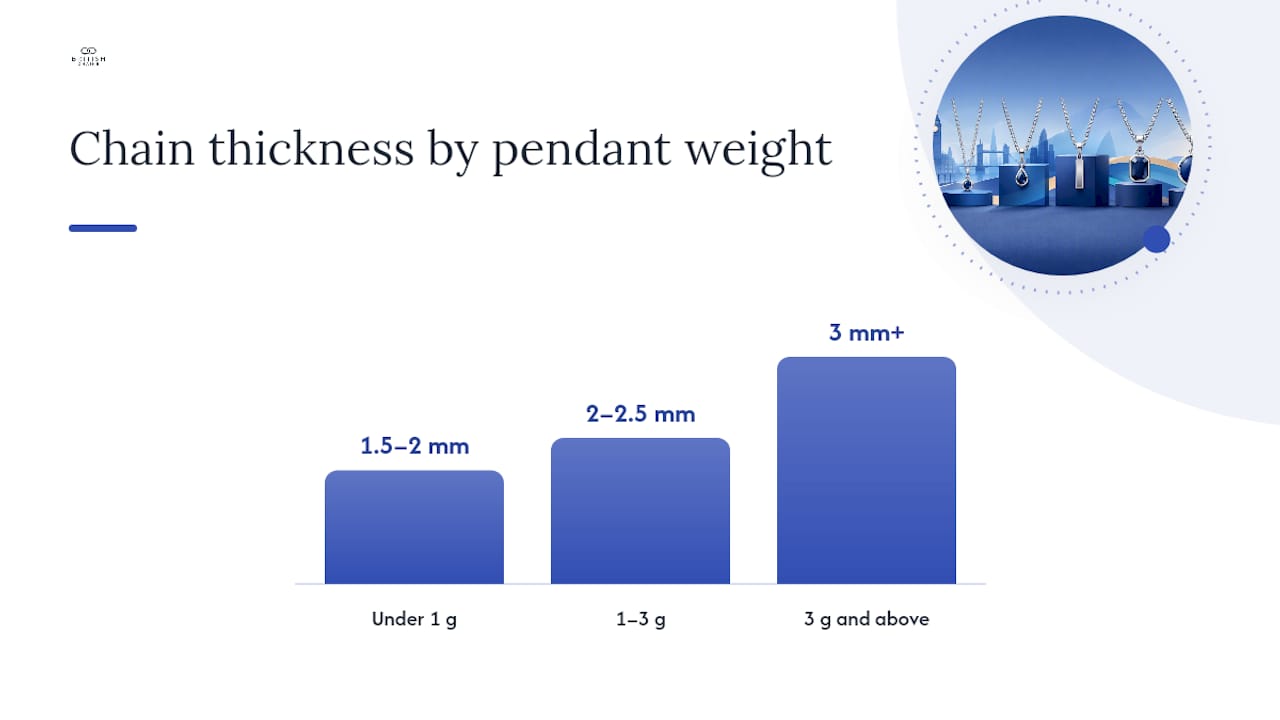
Jewellers commonly work to rough width-to-pendant rules, and while every pendant’s actual weight varies with metal and gemstone content, the pattern holds:
- Under 1g pendants (small initials, thin discs): a 1.5 to 2mm box chain is plenty.
- 1 to 3g pendants (lockets, medium charms): step up to 2 to 2.5mm.
- 3g and heavier pendants (chunky medallions, gemstone-set pieces): look at 3mm or above, and it is advisable to prioritise solid construction over hollow.
That last point matters more than most buyers realise. Solid box chains are substantially more durable than hollow versions, because hollow links save weight and cost by using less metal, but that thinner wall dents and crushes under pressure a solid link would simply shrug off. A hollow 4mm chain can look as substantial as a solid 3mm one on the shelf, while being considerably more fragile in daily use.
Pro Tip: If a listing doesn’t state “solid” outright, ask. Hollow construction isn’t dishonest, but it’s a trade-off you should choose knowingly, not discover after your first snag.
What causes box chains to kink or break?
Box chains resist twisting far better than most styles, but they aren’t immune to damage, and understanding how failure happens helps you catch a problem before it becomes a break.
- Sharp pulls create stiff zones. A sudden yank (a child’s grip, a seatbelt catch) can force a link past its normal range of motion, deforming the square shape into something closer to a diamond. That link no longer sits flush, and the chain often develops a visibly stiffer point right there.
- Deformed links rarely repair invisibly. A jeweller can sometimes reshape a bent link, but if the metal has stretched or the solder joint has stressed, the fix usually leaves a faint seam or a slightly different lustre at that spot.
- Clasps fail before chains do. A lobster clasp with a worn spring, or a spring ring that’s lost its tension, is a far more common cause of a “lost necklace” than the chain itself snapping.
- Bails matter as much as the chain. If a pendant’s bail is too tight or too loose for the chain’s width, it can wear a groove into the links at that one contact point, weakening the chain exactly where the pendant sits.
Box chain vs other chain types: which wins on strength?
No single chain style wins every category, and box chains sit in a specific, useful middle ground rather than at either extreme.
- Box vs cable and snake chains: box chains hold their shape and resist kinking noticeably better than snake chains, which can develop stiff bends once the segments deform, and better than basic cable chains, whose round links twist more freely under torsion.
- Box vs rope and curb chains: for very heavy pendants, thicker curb and rope styles typically handle more sustained load, simply because their interlocking or twisted structure carries mass differently across a bigger cross-section. If your pendant is very heavy, a thick curb chain may be a better choice than an equivalent box chain.
- Box vs woven styles (wheat, mariner): wheat and anchor-style chains outperform box chains for maximum tensile strength, because their interwoven or interlocked links spread tension across more contact points. These are the better call for heirloom pieces meant to carry serious weight for decades.
Where box chains win outright is pendant behaviour. Their structure keeps pendants facing forward and resists the twisting that round-link styles suffer from, which is why so many pendant necklaces are sold on a box chain by default rather than a snake or cable chain. If you’re torn between two similar options, our snake chain versus box chain comparison breaks down the practical differences further.
How do you choose the right box chain for your pendant?
Buying the right chain is mostly a process of elimination, and doing it in order saves you from re-ordering later.
- Weigh (or estimate) your pendant. Under 1g, go fine. Over 3g, go thick and solid.
- Match the width. A 2mm box chain suits lighter, everyday pendants; step up to 3mm or beyond for heavier or gemstone-set pieces. Our guide to best chain widths for pendants walks through this in more detail.
- Choose solid over hollow whenever the pendant has real weight. The cost difference is usually modest; the durability difference is not.
- Check the clasp. A lobster clasp with visible spring tension beats a flimsy spring ring for anything worn daily.
- Confirm the bail fits the chain’s width, not just its length, so the pendant doesn’t wear a groove into one spot.
- Look for a UK hallmark on sterling silver pieces and check the seller’s return policy before you buy.
Ask directly about link construction if it isn’t listed. Un-soldered links, visibly thin solder beads, or a lobster clasp that feels loose in the fingers are the three red flags worth walking away from.
Pro Tip: If you’re buying online and can’t handle the piece first, message the seller and ask specifically whether the links are soldered closed. A legitimate retailer will answer that question without hesitation.
For a broader look at matching thickness to how you actually wear jewellery day to day, see how to choose chain thickness.
How do you care for a box chain to make it last?
Good habits add years to a box chain, and most of them cost nothing.
- Take it off for anything physical. Showering, sleeping, gym sessions, and swimming all put unnecessary strain on links and clasps.
- Store it flat or hanging, never balled up in a drawer. A chain left tangled in a jewellery box is far more likely to develop the stiff, deformed links that lead to visible kinks.
- Inspect the solder joints and clasp every few months. A quick visual check under good light will show you if a link has started to open or a spring has weakened.
- Clean gently with a soft cloth, and avoid abrasive polishing that can wear down fine detail on diamond-cut finishes.
- Take genuine damage to a jeweller, don’t force it yourself. A jeweller can usually resolder an open link or replace a clasp; what they can’t always do is make a badly stretched or crushed link disappear without trace.
Choosing between a repair and a replacement usually comes down to how many links are affected. One or two damaged links near a clasp is a simple, inexpensive fix. Damage scattered across the chain, particularly on a hollow piece, is often a sign it’s more sensible to replace it. For pendant wearers specifically, our guide on choosing a sterling silver necklace for pendants covers bail and clasp considerations in more depth.
Pro Tip: Keep a spare, sturdy clasp in mind before your current one fails. A worn spring ring rarely announces itself. It just lets go.
Why trust this guidance on box chain strength?
Industry professionals work with hallmarked 925 sterling silver chains in curb, Figaro, rope, snake, and box styles, which is where the width and construction guidance above comes from in practice, not theory. Every full sterling silver piece sold carries the UK hallmark that confirms genuine silver content, a detail worth checking on any chain regardless of where you buy it.
The width recommendations here echo what jewellers commonly advise for matching gauge to pendant weight, and they line up with our own internal guides on chain widths for pendants and the strongest chain styles for heavy pendants, both worth a closer read if you’re still deciding between styles.
When is a box chain the right everyday choice?
Strength is rarely the only question worth asking. A box chain earns its place when you want a pendant that sits still and faces forward through a normal day of movement, more than when you’re chasing the absolute highest tensile rating a chain can offer. If your priority is a clean, low-profile chain that won’t twist while you work, exercise, or just live your life, box beats most alternatives on that specific job.
Where I’d push back on default advice: don’t assume bigger is always safer. A 2mm solid box chain, worn daily and cared for reasonably, will outlast a 4mm hollow one that looks tougher on a display card. Buy for the pendant you actually own, size conservatively, and let the geometry do the work it’s designed to do.
— British
Which box chain should you actually buy?
If the guidance above points you towards a solid, everyday chain that keeps a pendant sitting still, the 2mm Sterling Silver 925 Box Chain Necklace is built for exactly that brief. It’s diamond-cut, hallmarked, available in four lengths, and suits men, women, and unisex wear without any compromise on the solid construction this article keeps returning to.
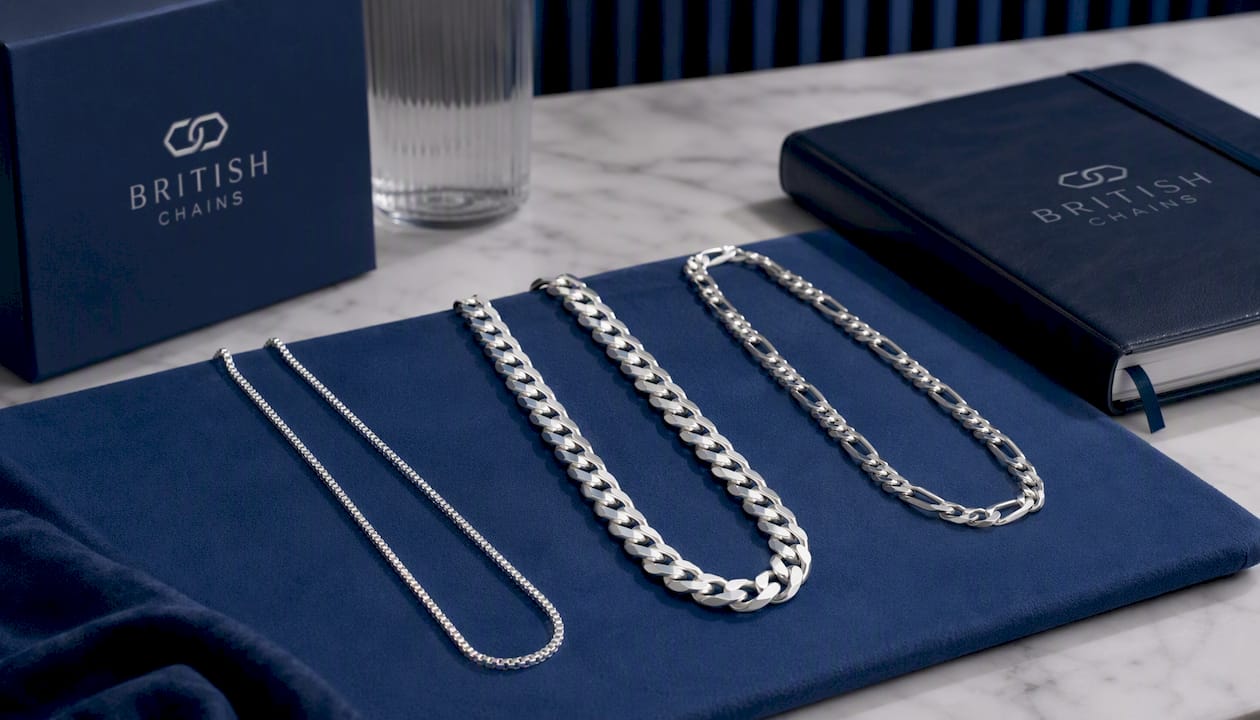
If your pendant runs heavier, or you simply want more presence on the chain itself, two thicker options are worth a look. The 12mm Sterling Silver 925 Thick Curb Chain suits readers who want maximum bulk and load-bearing capacity in a chunky, statement piece, while the 8mm Sterling Silver 925 Thick Figaro Chain offers a middle ground between the classic box profile and something noticeably bolder. These pieces are genuine 925 silver, hallmarked in Britain, and dispatched with packaging designed to be gift-ready. Browse the full necklace collection to compare widths side by side, or check the curb chain range if that 12mm piece has caught your eye.
Sources
- Box link torsional strength | Peelerie
- The box chain strength and design explained
- What is a box chain and why is it so durable?
- What Are the Strongest Necklace Chains? A Guide to Chains for Heavy Pendants
FAQ
Are box chains easy to break?
No, not under normal wear. Solid box chains in 2mm or above resist snapping well because their square link structure limits twisting and tangling, though hollow versions and very fine gauges are more vulnerable to denting or crushing under sharp impact.
What is stronger, curb or box chain?
For heavy, sustained loads, a thick curb chain typically edges out a box chain of similar width, since its interlocking structure spreads mass across a different profile. For pendant stability and resistance to twisting during daily movement, box chains generally perform better.
What is the strongest type of chain?
Woven and interlocked styles such as wheat and mariner chains generally offer the highest tensile strength for heavy or heirloom pendants, thanks to their structure spreading tension across more contact points than a standard box or curb link.
Do box chains kink easily?
Box chains kink far less easily than round-link styles like cable or snake chains, because their square geometry creates mechanical stops that limit how far each link can rotate. A sharp, sudden pull can still deform an individual link and create a stiff spot, so gentle handling still matters.


