

Men's jewellery minimalism: a practical guide
Men’s jewellery minimalism is a deliberate approach to adornment built on three principles: simple forms, restrained scale, and consistent metals. Nothing competes with the outfit; everything earns its place. If you’re starting from scratch, pick one focal piece — a slim chain or a narrow band — wear it daily, and build from there.
Key takeaways
Men’s jewellery minimalism works because it prioritises form, proportion, and consistency — one or two well-chosen pieces in a single metal family will always outperform a handful of mismatched ones.
| Point | Details |
|---|---|
| Core definition | Simple forms, restrained scale, consistent metals — pieces that complement an outfit rather than compete with it. |
| Starter piece | Begin with a 2mm sterling silver chain or a 4–6mm band ring; wear it daily before adding anything else. |
| 2-1-1 styling rule | Two items on one wrist, one necklace, one ring — that’s the ceiling for a minimalist look. |
| Care reminder | Store sterling silver in an airtight pouch; remove before showering, swimming, or applying fragrance. |
| Britishchains | UK-hallmarked sterling silver 925 chains and bracelets, with full sizing and purity detail on every product page. |
Table of Contents
- What does minimalist men’s jewellery actually mean?
- Which pieces should every man own?
- How do you wear minimalist jewellery well?
- What materials last, and how do you care for them?
- How do you build a minimalist collection over time?
- What mistakes do men most often make?
- A note from Britishchains
- Britishchains: hallmarked sterling silver for everyday wear
- Sources
What does minimalist men’s jewellery actually mean?
The term gets used loosely, so it’s worth pinning down. Minimalist men’s jewellery focuses on clean lines, small scale, and subtle finishes that blend with an outfit rather than dominate it. You’ll sometimes see it described as ‘barely-there’ or ‘naked jewellery’ — both phrases point at the same idea: the piece should feel like a natural extension of how you dress, not a focal point that pulls the eye away from everything else.
Visually, the cues are easy to spot once you know them:
- Form: geometric or organic shapes with no embellishment — a flat curb link, a plain round band, a smooth oval stud
- Scale: thin chains (typically a narrow range of thickness), rings in the 4–6mm width range, slim cuffs no wider than a finger
- Palette: one metal family per look — silver, gold, or oxidised black, not all three at once
- Finish: polished, brushed, or matte rather than heavily textured or stone-set
- Cohesion: the piece sits quietly alongside the outfit; it doesn’t announce itself
The philosophical grounding matters too. The Minimalists describe minimalism as removing the unnecessary to reveal purpose — in jewellery terms, that translates directly into choosing form and function over decoration.
Pro Tip: A brushed or matte finish can make a small piece read more substantial while keeping its scale minimal. If you want a little more presence without adding size, swap polished for brushed.
Which pieces should every man own?
Chains, bracelets, and rings are the fastest-growing men’s jewellery categories precisely because they integrate into everyday outfits without effort. Here’s what a solid minimalist starting point looks like, and what to look for when buying each.
-
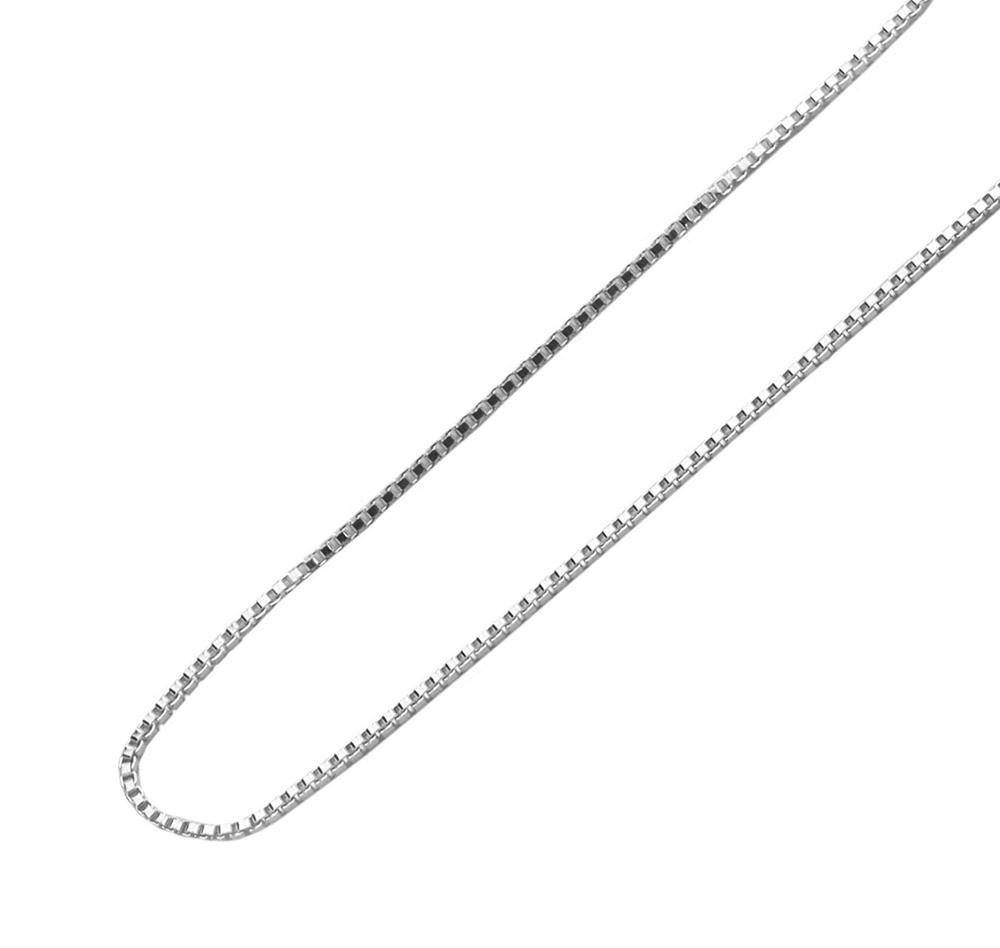
Slim chain necklace — the single most versatile piece. A 2mm width sits flat against the chest, works under a crew neck or open collar, and reads as intentional without being showy. Sterling silver 925 or stainless steel are the sensible material choices for daily wear. The 2mm sterling silver box chain and the 2mm sterling silver curb chain are both textbook examples: flat profile, polished diamond-cut finish, four and eight length options respectively.
-
Simple band ring — a single narrow ring is one of the most effective entry pieces because it delivers visible impact with almost no visual weight. Aim for 4–6mm width in sterling silver, stainless steel, or gold fill. Avoid anything with raised detailing or stones if you want to stay in minimalist territory.
-
Slim bracelet or cuff — a single chain bracelet or a plain flat cuff at around 4–6mm width. Sterling silver bracelets for everyday wear pair well with a watch on the opposite wrist, or sit beside a slim-case watch on the same wrist if proportions allow.
-
Minimalist watch — a slim case with a clean dial is the defining characteristic. The watch should slide under a shirt cuff without catching. Avoid oversized bezels or busy dials.
-
Small stud earring — a small flat disc or ball stud in silver or gold. Subtle enough for most professional settings, and it adds a considered detail without any layering complexity.
| Piece | Typical width | Best materials | Common occasions |
|---|---|---|---|
| Chain necklace | a narrow range of thickness | Sterling silver 925, stainless steel | Daily wear, casual, office |
| Band ring | 4–6mm | Sterling silver, stainless steel, gold fill | Daily wear, evening, office |
| Bracelet or cuff | 4–6mm | Sterling silver, stainless steel | Casual, weekend, evening |
| Watch | Slim case | Stainless steel, titanium | All occasions |
| Stud earring | 3–5mm | Sterling silver, gold fill | Daily wear, casual, evening |
How do you wear minimalist jewellery well?
The 2-1-1 guideline is the clearest rule of thumb: two items on one wrist (a watch plus a bracelet), one necklace, one ring. That’s your ceiling for a minimalist look. Go beyond it and you’re in statement territory, regardless of how small each individual piece is.
Here’s how that plays out across three settings:
- Office — one slim chain under a button-down collar, one ring. Watch counts as your wrist piece; no bracelet needed. Keep metals matched.
- Casual — chain visible over a crew neck, one ring, one slim bracelet on the opposite wrist to the watch. Three pieces total, all in the same metal family.
- Evening — you can push to the full 2-1-1. A slightly longer chain (50–55cm) worn over a plain shirt reads more intentional in low light than it does in daylight.
Dos and don’ts:
- Do match metals across all pieces in a single look — silver chain with a silver ring, not silver chain with a gold ring
- Do consider proportion relative to your build; a 1.5mm chain on a broad neck can disappear entirely
- Don’t layer more than two necklaces unless you’re deliberately stepping outside minimalist territory
- Don’t mix finishes dramatically — a matte ring with a high-polish chain creates visual noise at small scale
- Do let the watch anchor the wrist; a bracelet should complement it, not compete
Pro Tip: When wearing a watch and a bracelet on the same wrist, the bracelet should be no wider than the watch case. A 4mm chain bracelet beside a 38mm watch case keeps the proportions clean. Anything wider starts to look like the bracelet is fighting for attention.
Understated men’s accessories work best when they function as finishing touches rather than focal points. A slim chain under a well-fitted button-down, a plain band on the right hand — these details increase perceived polish without pulling the eye away from the clothes.
What materials last, and how do you care for them?
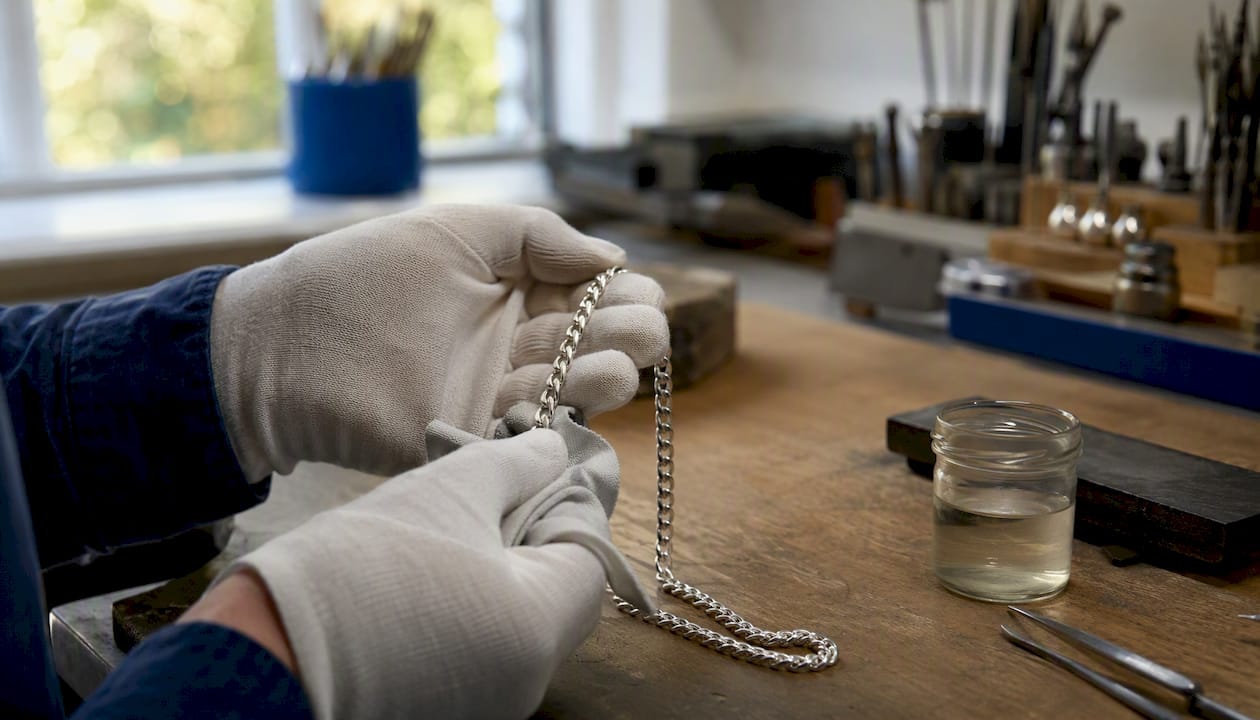
It’s the most common material for minimalist chains and rings in the UK, and it polishes to a bright finish that suits both casual and formal wear. The downside is tarnishing over time, particularly in humid conditions or around perfume and chlorine.
316L stainless steel is harder, tarnish-resistant, and hypoallergenic — a practical choice for rings and bracelets worn during physical activity. PVD-coated stainless steel adds colour (black, gold tone) while remaining water-safe.
Gold vermeil and gold fill offer the look of gold at a lower price point than solid gold. Vermeil is sterling silver with a thick gold plating (minimum 2.5 microns in the UK); gold fill bonds a layer of gold to a base metal under heat and pressure. Both require more careful handling than solid metals.
Titanium is the lightest option and completely hypoallergenic — useful for anyone with metal sensitivities.
Leather cord works for casual bracelets but degrades with water exposure and needs replacing more frequently than metal.
Finishes and what they do
Polished finishes reflect light and read as more formal. Brushed or matte finishes absorb light, making a piece look quieter and slightly more substantial — useful when you want presence without flash.
Care by material
- Sterling silver: clean with a soft cloth and mild soap; store in an airtight pouch to slow tarnishing; avoid perfume, chlorine, and showering with it on
- Stainless steel: wipe with a damp cloth; water-safe in most forms; avoid abrasive cleaners that scratch the finish
- Gold vermeil/fill: remove before swimming, showering, or applying products; the plating layer is durable but not indestructible
- Leather: keep dry; condition occasionally with leather balm; replace when the cord shows cracking
UK hallmarking
In the UK, sterling silver sold commercially above a certain weight threshold must carry a hallmark from one of the four UK assay offices (London, Birmingham, Edinburgh, Sheffield). The hallmark confirms metal purity and is the clearest trust signal when buying silver online. Britishchains publishes detailed chain style guidance and product descriptions that include hallmarking information — a useful reference when comparing pieces.
How do you build a minimalist collection over time?
Three stages, in order. Don’t skip ahead.
-
Starter (months 1–3): one piece only. A 2mm chain or a 4–6mm band ring. Wear it every day. This tells you whether you’re comfortable with jewellery as part of your routine before you spend more. Budget: entry level sits roughly under £50 for sterling silver chains and rings from UK retailers.
-
Anchor piece (months 3–6): add one complementary piece in the same metal. If you started with a chain, add a ring. If you started with a ring, add a slim bracelet. The rule: same metal family, similar finish. Mid-range budget for sterling silver sits roughly in the £50–£150 range for well-made pieces.
-
Refinement (6 months onwards): assess what you actually wear. Most men find they reach for two or three pieces consistently. At this stage you might upgrade the starter piece to a better-quality version, or add a watch that fits the aesthetic. Premium sterling silver and gold fill pieces typically sit above £150.
Cohesion checklist when adding a new piece:
- Does it share the same metal tone as everything else you wear?
- Is the scale similar — no single piece dramatically larger or heavier than the others?
- Does it work for the occasions you actually dress for?
- Can you wear it daily without thinking about it?
A versatile starter chain is often the right first buy because it works across casual and smart-casual contexts without adjustment.
What mistakes do men most often make?
- Wrong scale for their build. A 1.5mm chain on a broad neck reads as invisible; a 6mm chain on a slim neck reads as heavy. Match the chain width to your frame.
- Mixing too many metals. Silver ring, gold chain, and a rose-gold watch in one look creates visual noise that undermines the restraint minimalism depends on.
- Over-layering. Two necklaces of similar length and weight cancel each other out. If you layer, use different lengths (e.g. 45cm and 55cm) and keep both thin.
- Ignoring daily practicality. A ring that catches on fabric or a chain that tangles in chest hair will come off within a week. Comfort determines what you actually wear.
- Buying for the display case, not the wrist. A piece that looks striking in a photo but feels wrong on the body is a mistake at any price point.
Pro Tip: Before buying, put the piece on and go about a normal task for ten minutes — type, open a door, put on a jacket. If you notice it constantly, it’s not the right piece for daily wear. The best minimalist jewellery disappears into your routine.
A note from Britishchains
Minimalism in jewellery is not about spending less or owning less for its own sake. It’s about choosing pieces that are genuinely good — well-made, properly hallmarked, and proportioned to work with real clothes in real life. At Britishchains, that’s the starting point for everything we make: sterling silver 925, UK hallmarked, with clear product specifications so you know exactly what you’re buying. The minimalist luxury design principle — that quality of form matters more than quantity of decoration — runs through every chain and bracelet in the range. If you want to explore the full collection or read more about chain styles and sizing, the Britishchains sterling silver trends guide is a good place to start.
Britishchains: hallmarked sterling silver for everyday wear
If you’ve read this far and you’re ready to start, the simplest move is a single well-made chain. Britishchains offers UK-hallmarked sterling silver 925 chains in the exact widths and styles this guide recommends — no guesswork about purity, no ambiguity about sizing.
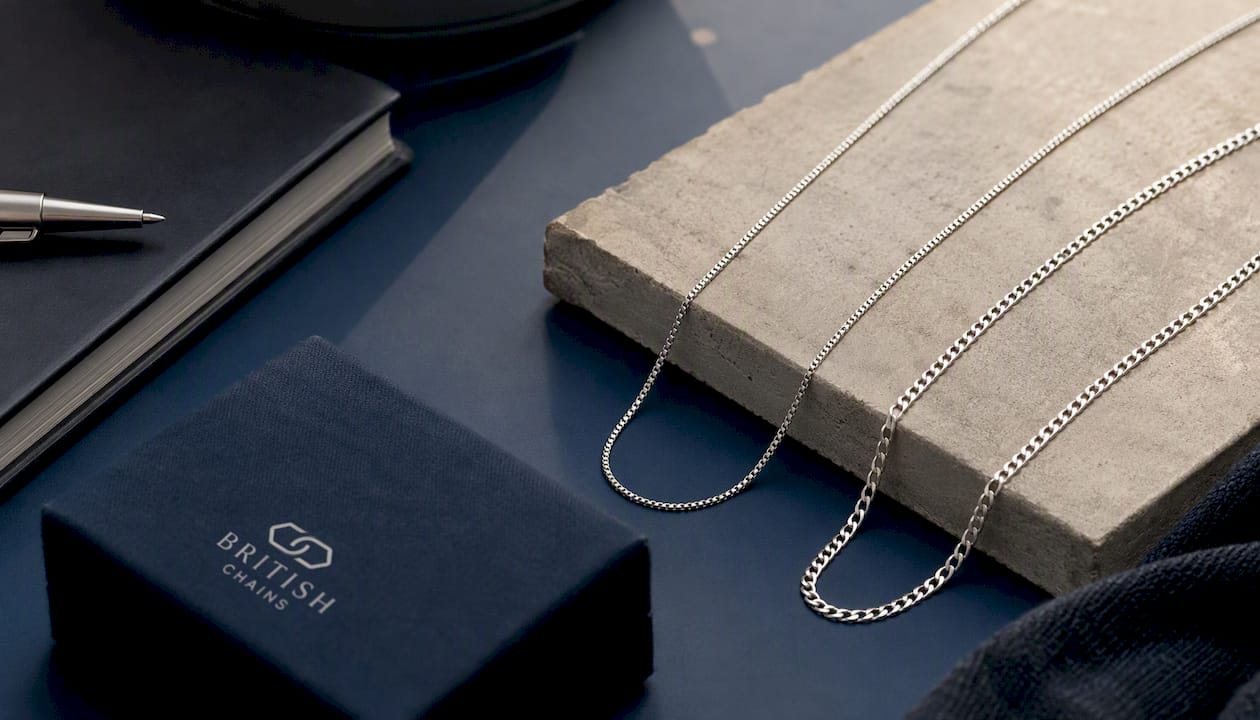
The 2mm box chain and the 2mm curb chain are both available in multiple lengths, polished diamond-cut finish, and come with full hallmarking detail on the product page. Both are built for daily wear and priced accessibly for a first purchase. Browse the full range at Britishchains and find the piece that fits your routine.
Sources
- The rise of minimalist men’s jewelry: a 2026 guide to elegant understatement
- Men’s Accessories: Top Trends for Men 2026
- Minimalist jewelry for men
- Minimalist Slim Three-Hand Black Stainless Steel Watch - FS5308 - Fossil


