

What £40–£250 Buys: Hallmarked Sterling Silver Chains in the UK
A hallmarked 925 sterling silver chain in the UK typically costs £40 to £250 or more, depending mainly on weight. A light 2mm chain sits near the bottom of that range; a chunky 4mm rope or curb chain sits nearer the top. Before you pay anything, check two things: whether the piece carries a genuine UK hallmark and whether it’s described as solid or hollow.
TL;DR:
- The price of a UK hallmarked sterling silver chain largely depends on weight, style, and construction, with heavier chains and intricate links costing more.
- Always verify if a chain is solid or hollow by checking its weight and description, as hollow chains are lighter and less durable but cheaper.
- Comparing the price per gram across listings helps identify genuine value, especially when weight and hallmark details are clearly disclosed.
- Chains over 7.78 grams must have a full UK hallmark, while lighter pieces can legally be sold with just a “925” stamp, which may not be independently verified.
- Delivery times typically range from two to five days in the UK, with extras like engraving or faster shipping adding to the total cost.
Table of Contents
- Sterling silver chain prices UK: ranges by weight and style
- What actually drives the price of a silver chain?
- How to compare offers and choose the right chain
- Does a silver chain need a UK hallmark?
- How long does delivery take and what does shipping cost?
- What’s the total cost once VAT and fees are added?
- Is it cheaper to buy online or in a shop?
- How do you spot a fake or substandard sterling silver chain?
- BritishChains.com’s recommended hallmarked chains
- Author perspective: buy on hallmark and grams, not brand name
- Sources
- FAQ
Sterling silver chain prices UK: ranges by weight and style
Weight is the single biggest lever on price, more than style or brand. A sterling silver chain under 10 grams is generally classed as lightweight, sits around 1mm to 2mm thick, and covers styles like box chains, thin curbs, and fine ropes. Medium chains run 10 to 25 grams, usually 2.5mm to 4mm, and include most everyday curb, Figaro, and rope designs. Heavyweight chains exceed 25 grams, start at 4.5mm and up, and this is where chunky curbs and Byzantine links live.
UK retail prices for hallmarked 925 chains generally track those bands closely. Lightweight chains typically run £40 to £80, medium pieces £70 to £120, and heavyweight chains £120 to £250 or more. Length matters too, though less dramatically than thickness: a 24-inch chain in the same width as an 18-inch chain might add 20 to 30% more silver, and therefore price.
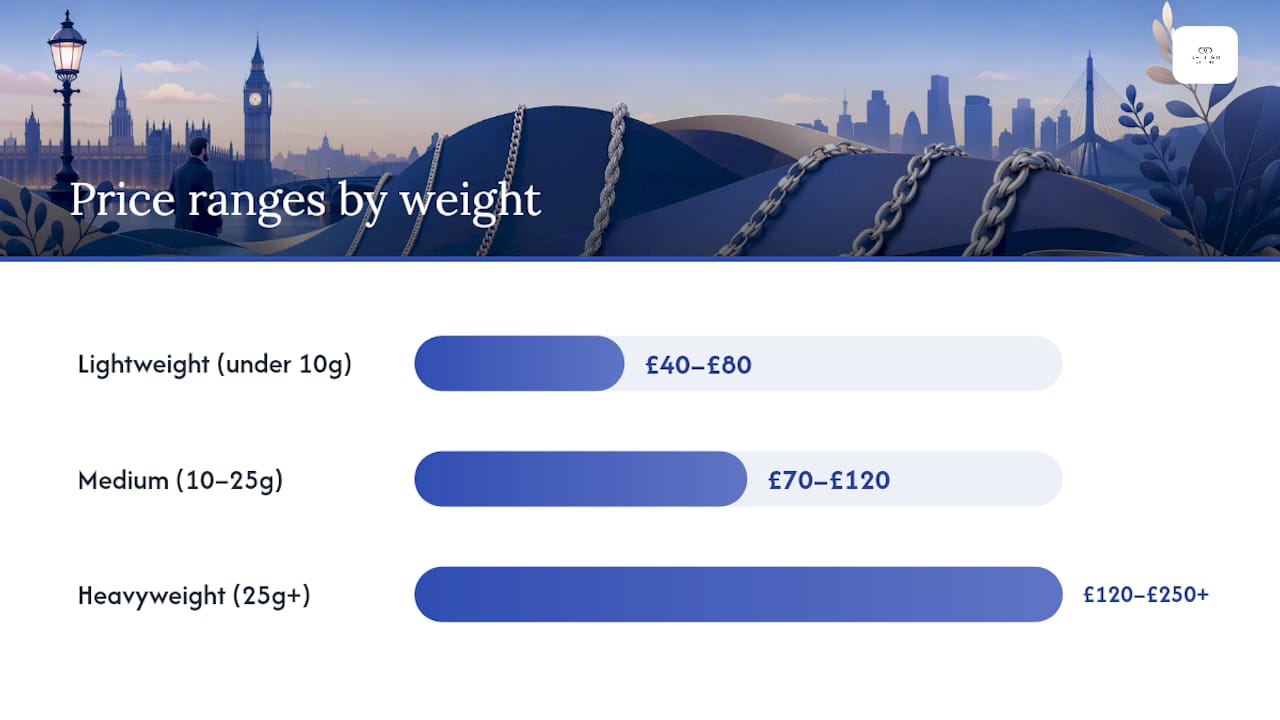
Thickness-based pricing tells a similar story. Fine 1.0mm to 2.0mm chains commonly retail from £15 to £45, mid-weight 2.5mm to 4.0mm chains from £35 to £95, and anything 4.5mm and above from £80 to £220 across UK retail marketplaces.
Typical styles by weight band:
- Lightweight (under 10g): slim box chains, fine curbs, delicate snake chains
- Medium (10 to 25g): standard curb chains, Figaro chains, medium rope chains
- Heavyweight (over 25g): chunky curb chains, thick rope chains, Byzantine and statement pieces
If a listing sits well below these bands for its stated weight, treat that as a prompt to check the hallmark and construction before buying, not as a bargain.
What actually drives the price of a silver chain?
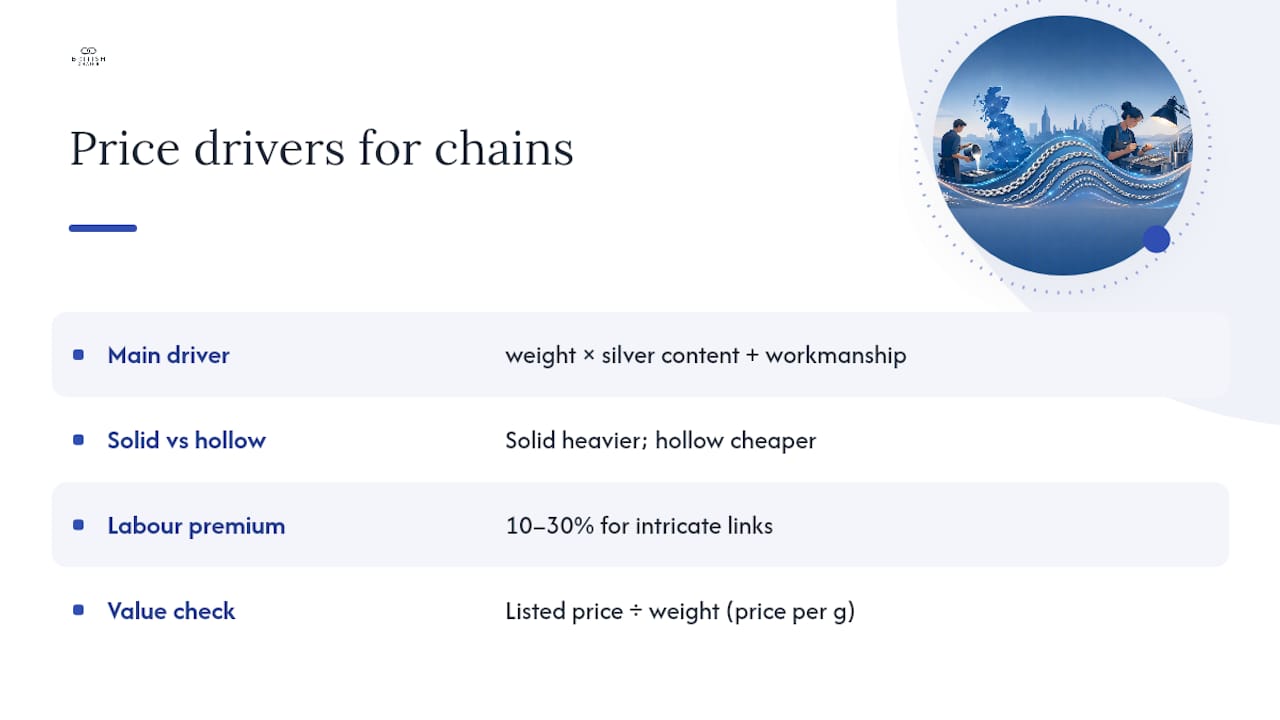
Grams of silver account for most of the cost difference between two chains of the same style. A jeweller weighs the finished piece, and that weight, multiplied by the silver content and workmanship, sets the baseline. Comparing price per gram across a few listings is the quickest way to spot which one is genuinely good value rather than just cheap.
Solid versus hollow construction changes the equation. Solid chains contain silver throughout their structure, run heavier, and last longer under daily wear; hollow chains use less silver, cost less, and dent or collapse more easily under pressure. Always check the product description for the word “solid” and the exact weight in grams. A chunky-looking chain that weighs surprisingly little is almost certainly hollow.
Link complexity adds labour cost on top of the raw silver. Twisted ropes, Byzantine weaves, and hand-finished pieces take longer to make than a plain curb, and craft premiums of 10 to 30% or more are common for handmade or intricate links. Retailer and brand premiums sit on top of that again, and they don’t always buy you more silver. Sometimes they buy a longer warranty or a smoother returns process, sometimes just a recognisable name.
Pro Tip: Divide the listed price by the stated weight in grams. If two chains in the same style are priced similarly but one weighs noticeably less, the lighter one is the worse deal, whatever the brand on the label says.
How to compare offers and choose the right chain
Comparing chains across several UK retailers gets much easier once you run the same short checklist every time:
- Confirm the hallmark or assay proof. Ask for a clear photo or description of the hallmark, not just a claim of “925.”
- Check the exact weight in grams. A vague “approx.” weight is a red flag on anything above a few grams.
- Check clasp type and finish. A lobster clasp or bolt ring generally outlasts a spring ring clasp, and clasp replacement is a common repair after a few years of wear.
- Confirm returns and warranty terms before you buy, especially for gifts that might need resizing or exchanging.
- Check delivery times, particularly for hallmarked or bespoke heavier pieces, which can take longer to dispatch.
Copy and paste these questions straight into a seller’s chat or email: “Can you confirm the hallmark and which assay office applied it?”, “What is the exact weight in grams?”, and “Is this chain solid or hollow?”
Red flags worth walking away from: no hallmark on anything over 7.78 grams, weight listed only as “approximate,” and a price that looks too low against the stated weight and thickness.
Pro Tip: If a seller can’t answer the weight question with a specific number in grams, that alone tells you they either don’t know their stock or are hoping you won’t ask.
Does a silver chain need a UK hallmark?
Any silver article weighing more than 7.78 grams must be sent to an assay office for hallmarking under UK law. Below that weight, a seller can legally sell a piece stamped only “925” without a full hallmark, which is why so many fine chains carry no assay mark at all.
The distinction matters. A “925” stamp only claims the alloy; a full UK hallmark from an assay office is independently verified proof of purity, and it’s the stronger signal if you ever want to sell the piece on or need to prove authenticity.
To verify a hallmark:
- Look for the assay office mark, a purity mark (925), and a sponsor’s mark stamped into the metal, usually near the clasp
- Ask the seller directly which assay office applied the mark if it isn’t visible in photos
- Walk away from any chain over 7.78 grams sold with no hallmark and no explanation
How long does delivery take and what does shipping cost?
Standard UK delivery on sterling silver chains from most online retailers runs two to five working days, with next-day options available from many sellers for an extra fee, typically £3 to £8. Free standard shipping is common above a certain order value, often somewhere between £30 and £75 depending on the retailer.
Heavier or hallmarked bespoke pieces sometimes take longer to reach you than a straightforward stock item. If a chain needs to go through additional quality checks or a made-to-order finishing process, add a few extra days to the quoted dispatch time, especially around Christmas or Valentine’s Day when order volumes spike.
If you’re buying for a specific date, ask the retailer directly for a guaranteed delivery window rather than trusting the generic shipping page. Most UK jewellers will confirm this in writing if you ask before ordering, and it’s worth doing for any gift with a hard deadline. International shipping, where offered, generally adds several days and a customs consideration that domestic UK orders never involve.
What’s the total cost once VAT and fees are added?
What catches people out isn’t VAT itself, but the extras stacked on top of it.
Shipping is the most common addition, and as covered above, it ranges from free to around £8 for standard delivery. Gift packaging is sometimes bundled free, sometimes charged separately at £2 to £10. Engraving, where offered, typically adds another £5 to £15. Insurance for higher-value pieces during transit is occasionally optional and occasionally baked into the price, so it’s worth checking before assuming you’re covered.
For a medium-weight chain priced at £90, a realistic total including a £4 shipping charge and no extras comes to roughly £94. For a heavier piece at £200 with next-day delivery and engraving, the real total could land closer to £220.
Is it cheaper to buy online or in a shop?
Online retailers generally offer lower prices than physical jewellers for equivalent hallmarked chains, mainly because they carry less overhead than a high-street shop with staff, rent, and display cabinets to fund. Independent specialists selling online can often offer better value per gram and clearer weight listings than large high-street brands carrying prestige markups.
The trade-off is tactile. In a shop, you can feel the weight, check the clasp action, and see the finish under proper light before paying. Online, you’re relying on photos, stated weight, and returns policy. That’s manageable, provided the retailer is transparent about grams and hallmarking, which most reputable specialists are.
In-store buying wins for anyone nervous about sizing or wanting to compare two or three pieces side by side on the day. Online wins on price, selection, and the ability to compare multiple retailers’ price-per-gram in the time it takes to open a few browser tabs. For most UK shoppers buying a standard chain style rather than something unusual, online shopping from a specialist retailer with clear weight listings tends to deliver the better price without sacrificing the hallmark assurance that matters most.
How do you spot a fake or substandard sterling silver chain?
The most reliable check is the hallmark itself. A genuine UK hallmark, applied for anything over 7.78 grams, is stamped by an independent assay office and can’t be faked without breaking the law. If a heavier chain has no hallmark, no explanation, and a seller who dodges the question, that’s your answer.
Weight inconsistency is the second giveaway. If a chain looks like a chunky 4mm curb but weighs what a fine 2mm chain should weigh, it’s hollow, and that’s fine only if the listing says so honestly. Problems arise when a hollow chain is photographed and marketed to look solid.
Watch for vague or missing weight figures altogether. Legitimate UK retailers state grams clearly because it’s the number buyers actually need. A price that looks dramatically lower than every comparable listing for the same weight and style is rarely a genuine bargain. It usually means thinner plating over a base metal core, silver-coated rather than solid 925, or a hollow build sold at a solid chain’s asking price.
A magnet test can catch the crudest fakes, since sterling silver isn’t magnetic, but it won’t catch a silver-plated base metal chain, which won’t react to a magnet either. The hallmark and stated weight remain the two checks that actually work.
BritishChains.com’s recommended hallmarked chains
If you want to put the checklist above into practice without trawling dozens of listings, three chains from Britishchains cover most of what UK shoppers are actually looking for.
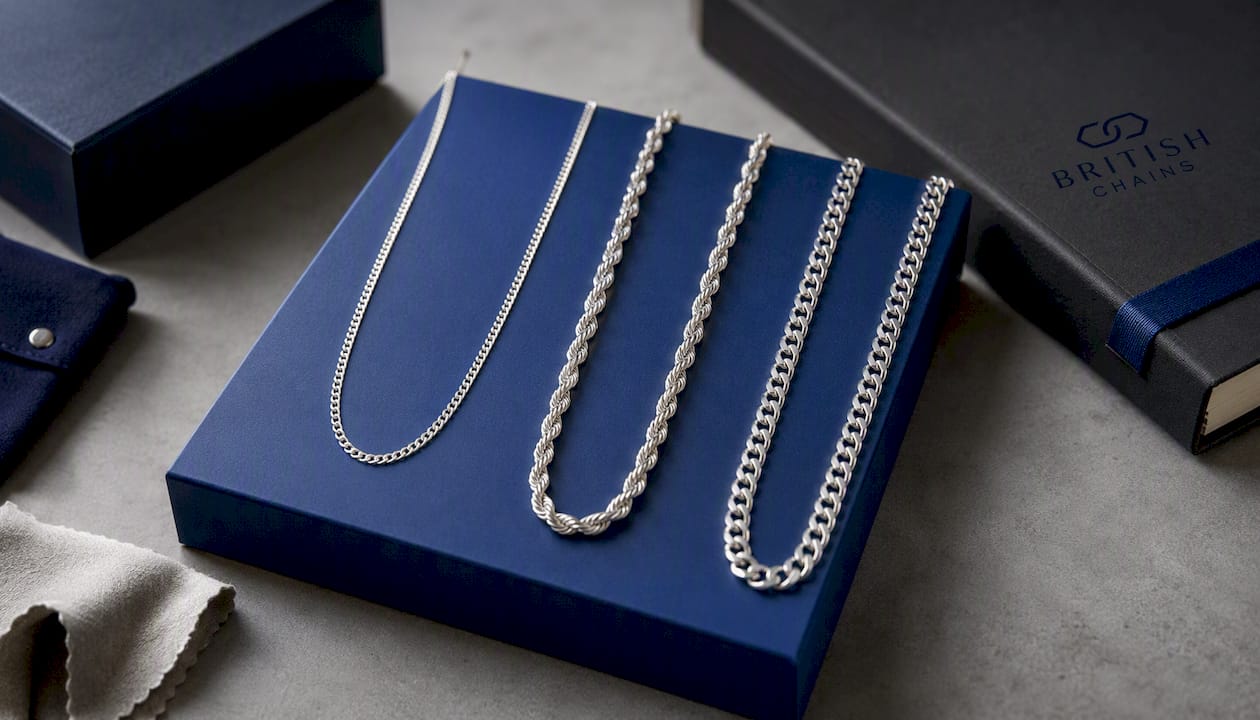
The 2mm curb chain necklace sits at the lightweight end, a polished, diamond cut design available across eight lengths, suited to everyday wear or a first silver chain that doesn’t demand a heavyweight price. Step up to the 4mm twisted rope chain for something with more visual presence, a diamond cut rope design offered in multiple lengths, and the kind of mid-weight balance that works equally as a daily piece or a considered gift. For a bolder, chunkier look, the 4mm curb chain necklace runs from 18 to 30 inches and delivers the statement-weight presence that heavier curb styles are known for.
Every piece is hallmarked sterling silver, and the retailer lists the exact specifications you need to compare against any other retailer, so you’re never guessing at grams or purity. Browse the full range of sterling silver chains to match a style against your budget before you decide.
Author perspective: buy on hallmark and grams, not brand name
The name on the box tells you nothing about what’s actually round your neck. Two chains can look identical and differ by 40% in weight, and that gap is where your money either goes into silver or into someone else’s margin. Buy from a specialist who states grams and hallmark plainly, because aftercare and honest answers to awkward questions matter more once the sale is done.
— British
Sources
Check the Assay Office London FAQs for hallmarking law, and the silver chain price guide for UK pricing context.
FAQ
How much should a real sterling silver chain cost?
A genuine hallmarked 925 chain typically costs £40 to £80 if lightweight, £70 to £120 at medium weight, and £120 to £250 or more if heavyweight, depending on thickness and length.
How much does 925 silver cost per gram in the UK?
Retail price per gram varies by style and labour involved, but dividing a chain’s total price by its stated weight is the quickest way to compare listings fairly, since fixed labour and finishing costs sit alongside the raw silver value.
How much can I sell my 925 silver chain for?
Resale value tracks the chain’s intrinsic silver content and condition rather than its original retail price, and a hallmarked, well-kept chain generally retains a higher resale value than an unhallmarked piece, though resale rarely matches what you originally paid.
What is 925 sterling silver worth right now?
Sterling silver’s value shifts with the wider silver market, but for everyday buying decisions, the more useful number is the price per gram you’re being charged at retail, which you can check by comparing weight and price across listings from a few UK retailers.
Does every silver chain need a UK hallmark?
No. Only silver items over 7.78 grams legally require a full UK hallmark; lighter chains can be sold with just a “925” stamp, which claims purity but isn’t independently verified.


