

Stop Polishing: Conservator Backed Anti Tarnish Strips Keep Silver Shiny
Yes, anti tarnish strips work. Sealed inside a bag or box, they neutralise the sulphur gases that cause silver to dull. Conservators back this up as an effective preventive measure. The catch is timing and placement: replace strips every several months depending on seal quality and use, keep the container properly sealed, and never expect a strip to lift tarnish that’s already there.
TL;DR:
- Anti tarnish strips effectively prevent silver tarnish by absorbing sulphur gases only when stored in airtight containers, not by lifting existing tarnish.
- Replacing strips every six to twelve months is recommended, with shorter intervals required in humid or frequently opened storage environments.
- Strips do not reverse tarnish; pieces must be cleaned thoroughly before storage to avoid trapping moisture or damaging plated jewelry.
- Combining strips with sealed pouches and moisture absorbers enhances protection and prevents tarnish buildup over months or years.
- Proper storage, including laid flat chains and sealed bags, extends jewelry lifespan far more than frequent polishing or chemical dips.
Table of Contents
- What anti tarnish strips for silver actually do
- How to use tarnish remover strips with your jewellery
- How long do anti tarnish strips actually last?
- What anti tarnish strips can’t do for your silver
- Beyond strips: other ways to protect your silver
- Buying anti tarnish strips: what actually matters
- Storing chains and small pieces the way we recommend at Britishchains
- Why we’d rather you store silver well than polish it often
- Protecting the pieces you’ve invested in
- Sources
What anti tarnish strips for silver actually do
Anti tarnish strips don’t clean anything. They work by absorbing hydrogen sulphide and other sulphur compounds from the air before those gases reach the metal surface, which is what causes the dull yellow-to-black discolouration you see on silver over time. The strips themselves usually contain activated carbon or a similar scavenging material bonded into paper or fabric.
Their performance depends almost entirely on how much air is moving through the storage space. Leave a drawer cracked open or a box lid loose, and fresh sulphur gas keeps arriving faster than the strip can mop it up.
- Strips scavenge gas; they do not polish or restore shine
- Effectiveness depends on how airtight the container is
- The Canadian Conservation Institute recommends replacing strips roughly every 6 to 12 months, depending on seal quality and use
- Passive scavengers work best paired with a genuinely sealed enclosure, not an open jewellery box
That last point matters more than most people assume. A conservator’s test isn’t measuring the strip in isolation. It’s measuring the strip inside a container that keeps the air still.
How to use tarnish remover strips with your jewellery
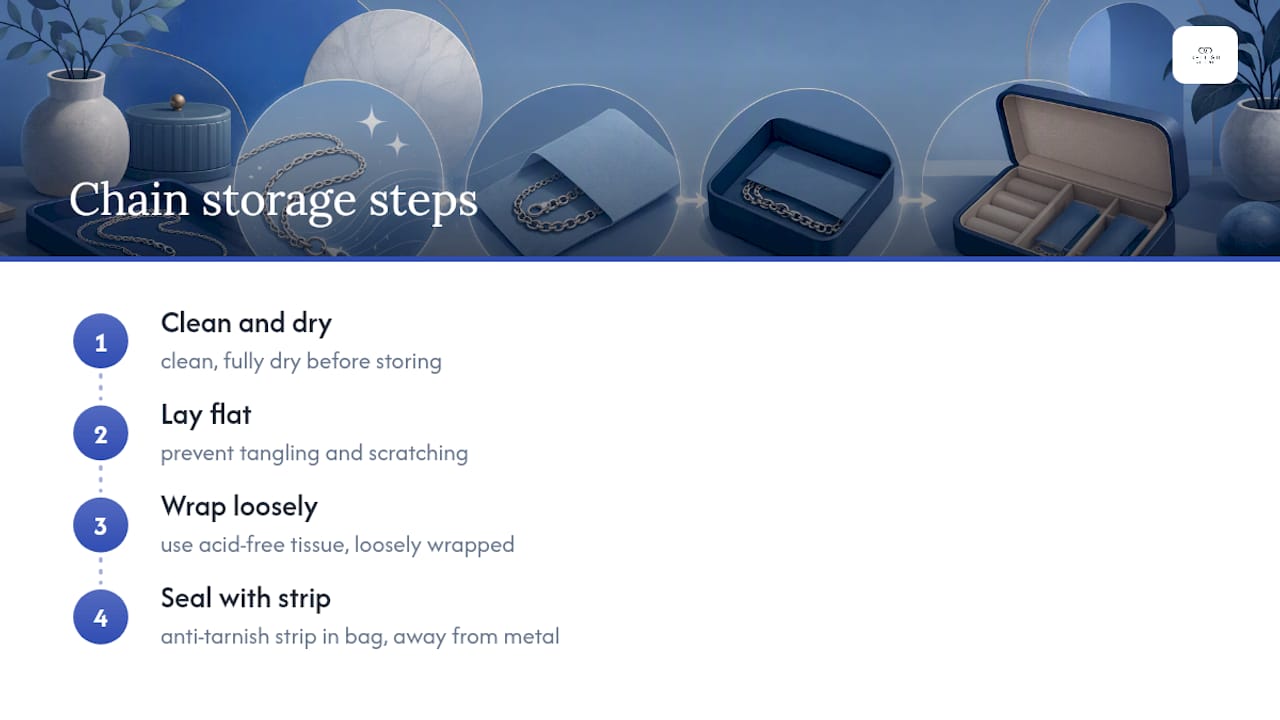
Strips protect clean silver. They don’t reverse existing tarnish, so give every piece a proper clean and dry it completely before it goes into storage.
- Clean and thoroughly dry each piece before storing it.
- Wrap chains or rings loosely in acid-free tissue if you’re worried about scratching.
- Place the strip inside the same sealed bag or box, but keep it away from direct contact with the metal.
- Seal the container fully. Zip-lock polyethylene bags or a tight-lidded box both work.
- Match strip size roughly to container volume. Manufacturer sizing charts, such as those from Intercept Jewelry Care, give a useful reference: one 2x7 inch strip is rated for a specific cubic volume.
- Open the container only when needed. Every opening lets fresh sulphur gas in and shortens the strip’s working life.
Pro Tip: Keep a spare strip in a sealed plastic sleeve so you always have a fresh one ready when the current one is due for replacement, rather than leaving jewellery unprotected while you order more.
A quick word on daily habits, too. Wearing your silver often, and drying it properly after it gets wet, does more to slow tarnish than people expect, according to Christie’s care guidance.
How long do anti tarnish strips actually last?
Most manufacturers put the working life around several months in a well-sealed container, and that guidance holds up whether you’re storing a single ring or a full jewellery box. Humidity, frequent opening, and general air pollution all shorten that window. A drawer in a coastal or industrial area saturates a strip faster than one in a dry inland home.
There’s no dramatic warning sign when a strip runs out. It simply stops absorbing. If you notice the first hint of dulling on stored pieces, or you can’t remember the last time you swapped the strip, treat that as your cue to replace it rather than waiting for visible tarnish to confirm it.
What anti tarnish strips can’t do for your silver
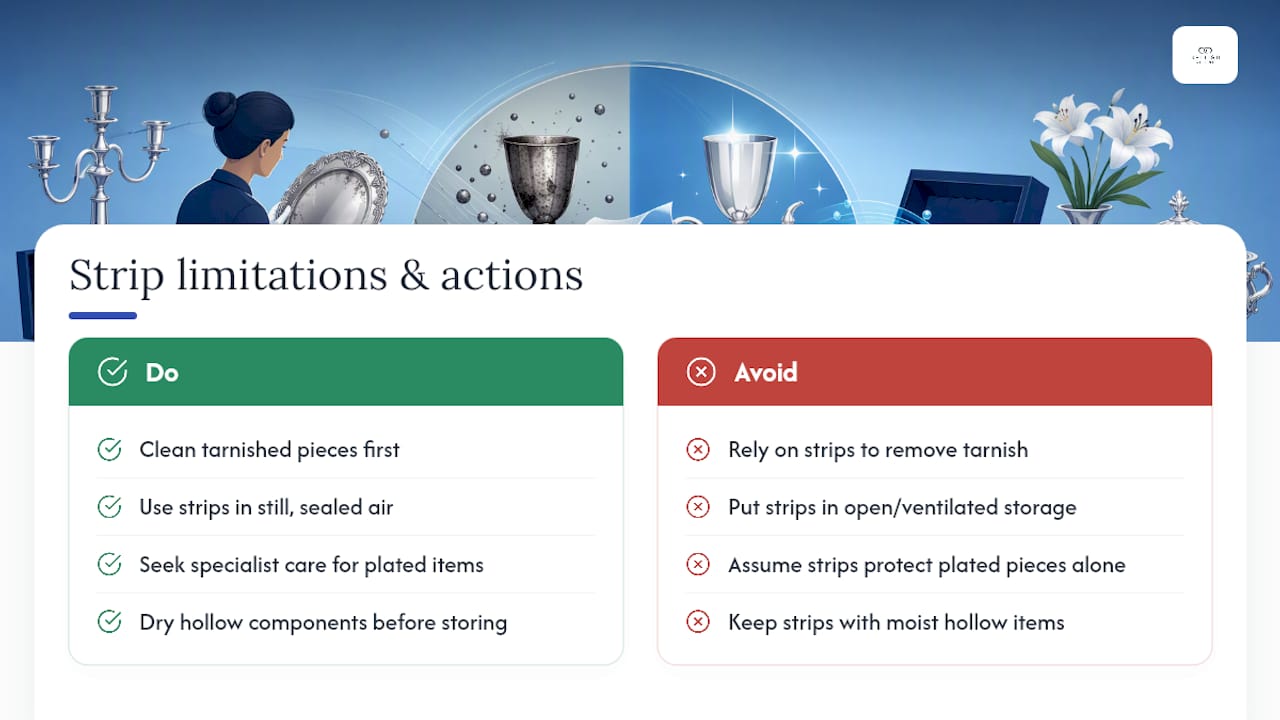
Strips are prevention, not repair. If a piece is already tarnished, a strip sitting next to it will do nothing to reverse the discolouration. You’ll need to clean it first, whether that’s a gentle polish, a mild soapy wash, or a specialist method, as outlined in Good Housekeeping’s testing.
Strips also lose most of their value the moment air moves freely. An open display case, an unsealed jewellery box, or a drawer that’s opened constantly won’t give a strip enough still air to work with.
Silver-plated pieces need a bit more caution. The plating layer is thin, and the Canadian Conservation Institute warns that repeated polishing wears away microscopic amounts of metal each time, which matters far more on plated items than solid sterling. Hollow components, like some bangles or lockets, can also trap moisture that strips alone won’t address.
Beyond strips: other ways to protect your silver
Strips work best as one layer in a small system, not a standalone fix. Combine them with a sealed polyethylene bag and a silica gel sachet or a length of Pacific Silvercloth for a setup that handles both sulphur gas and residual moisture.
- Strip plus sealed poly bag plus silica gel: a solid everyday combination for most jewellery collections
- Corrosion Intercept bags or heat-sealed Marvelseal pouches: worth the extra cost for long-term storage of pieces you rarely wear
- Consumer lacquers and repeated chemical dips: best avoided on jewellery, since inconsistent coverage can lead to patchy tarnish later and complicates future cleaning
Sealed, genuinely impermeable bags perform strikingly well on their own. Testing referenced by English Heritage found tarnish rates cut to near-undetectable levels inside suitable sealed bags, and some corrosion-intercept systems even removed light existing tarnish over months of storage. That’s the ceiling of what passive storage can achieve, though it still won’t undo years of neglect on a badly tarnished piece.
Buying anti tarnish strips: what actually matters
Before buying, estimate the volume of the space you’re protecting rather than guessing at pack size. A single strip covers a small jewellery pouch; a full drawer or a large box needs several, sized to the manufacturer’s own volume guidance.
- Check the stated lifespan on the packaging. Most sit in the 6 to 12 month range, and vague or missing guidance is a red flag.
- Avoid any product claiming to “remove” tarnish. A strip’s job is prevention, and a restorative claim usually signals marketing rather than accuracy.
- Look for strips sold alongside proper sealed storage, such as heavy-duty zip bags, rather than relying on the strip in an open box.
- Buy from a retailer with clear stock availability in your market so you’re not caught without a replacement when the current strip expires.
If you’re setting up storage for a mixed collection, jewellery boxes with multiple compartments make it easier to size each strip correctly, our guide to storing silver jewellery covers the layout side of this in more detail.
Storing chains and small pieces the way we recommend at Britishchains
Chains tangle, and tangled chains scratch each other in storage, so lay each one flat, cleaned and fully dry, before wrapping it loosely in acid-free tissue. Keep the anti tarnish strip in the same sealed bag, positioned away from direct contact with the metal, and you’ll cut down considerably on the polishing you’d otherwise need later.
Our own guide to cleaning sterling silver chains walks through the cleaning step in more detail, and it’s worth pairing with our notes on telling tarnish apart from patina before you decide a piece needs cleaning at all. Every chain we sell carries British hallmarking, so you know exactly what purity you’re protecting.
Why we’d rather you store silver well than polish it often
Every polish removes a whisper of metal from the surface, and conservators are blunt about it: repeated polishing shortens a piece’s life measurably faster than sensible prevention does. That’s the entire case for strips and sealed storage over reaching for the polishing cloth every few weeks. Our own storage guidance sets out the routine we’d follow ourselves.
Protecting the pieces you’ve invested in
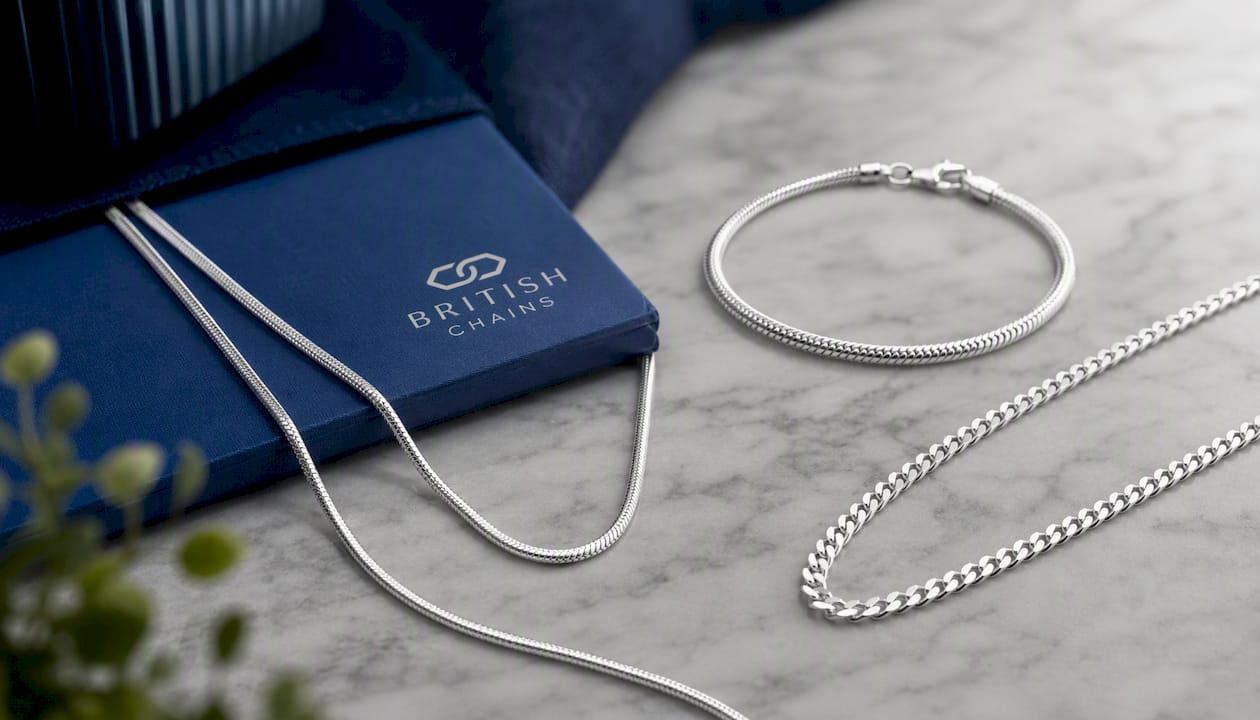
Every chain in our range, from a delicate snake chain necklace to a charm-ready snake bracelet or an everyday curb chain necklace, is hallmarked British sterling silver built to last generations, not just seasons.
None of that quality matters if a piece sits tarnishing in a drawer between wears. A sealed bag, a fresh strip, and five minutes of setup protect the finish far better than an occasional scrub with polish. Browse the full chain collection on our website, and when your next piece arrives, give it the sealed storage treatment from day one rather than waiting until it needs rescuing.


