

Slow Sterling Tarnish: Museum Backed Anti Tarnish Bags, 4x4 to 4x6 UK
Yes. Anti-tarnish bags with an active anti-corrosion film, such as Corrosion Intercept®, genuinely slow the chemical reaction that dulls sterling silver. A standard plastic zip-lock bag will not do the same job. The immediate fix is simple: put each clean, dry piece in its own treated bag rather than leaving chains loose in a drawer or jewellery box.
TL;DR:
- Anti-tarnish bags with active films like Corrosion Intercept® neutralise sulphur compounds, significantly slowing silver tarnishing compared to untreated plastic bags.
- Proper storage involves cleaning and drying jewelry first, packing each piece alone, and checking saturation indicators every few months to maintain protection.
- The effectiveness duration depends on usage frequency, air quality, and storage conditions, with most bags needing replacement after approximately one to two years.
- Bag size should match jewelry type: small 4x4 inch bags for rings, larger 4x6 inches for necklaces or bracelets, with thicker materials resisting punctures.
- Regular wearing, rather than long-term storage, helps prevent tarnish by maintaining natural skin oils that form a protective layer on silver jewelry.
Table of Contents
- What are anti tarnish bags and how do they differ from ordinary storage?
- How do these bags neutralise tarnish, and what are the real limits?
- How do you actually pack and store jewellery to get the protection you’re paying for?
- What size and thickness of anti tarnish bag should you buy?
- What do conservators and jewellers actually recommend day to day?
- The simplest routine that actually works
- Storing chains that suit anti tarnish bags perfectly
- Sources
- FAQ
What are anti tarnish bags and how do they differ from ordinary storage?
Not every bag sold as “anti-tarnish” works the same way, and the differences matter more than most shoppers realise.
Active anti-tarnish zip-lock bags use a film embedded with reactive material, often bonded copper particles, that chemically neutralises sulphur compounds in the surrounding air. Intercept describes its own Corrosion Intercept® technology this way, and it is the mechanism behind most branded anti-tarnish pouches on the market.
Velveteen drawstring pouches treated with a similar anti-tarnish compound suit delicate or single pieces you want to keep soft-wrapped and scratch-free, particularly rings and pendants.
Anti-tarnish strips or tabs go inside larger boxes, trays, or drawers, protecting several items at once without individually bagging each one.
Then there is the product that isn’t really a solution: an untreated freezer bag from the kitchen drawer. It has no reactive film, so it only slows air exposure a little. It does not neutralise anything.
- Treated zip-lock bags: best for individual chains, bracelets, and pendants
- Treated velveteen pouches: best for rings and delicate settings
- Strips or tabs: best for jewellery boxes, trays, and display cases
- Untreated plastic bags: minimal protection, not a genuine substitute
How do these bags neutralise tarnish, and what are the real limits?
Silver tarnishes when it reacts with sulphur compounds in the air, a chemical process, not dirt or neglect. Active anti-tarnish film works by absorbing and neutralising those compounds before they reach the metal surface.
Manufacturer claims of protection lasting multiple years are conditional, not guaranteed. How often you open the bag, the humidity in your storage spot, and general air pollution all affect how quickly the film saturates and stops working, according to Intercept’s own product guidance. Open a bag daily to admire the necklace inside and you will burn through that protection far faster than someone who checks it monthly.
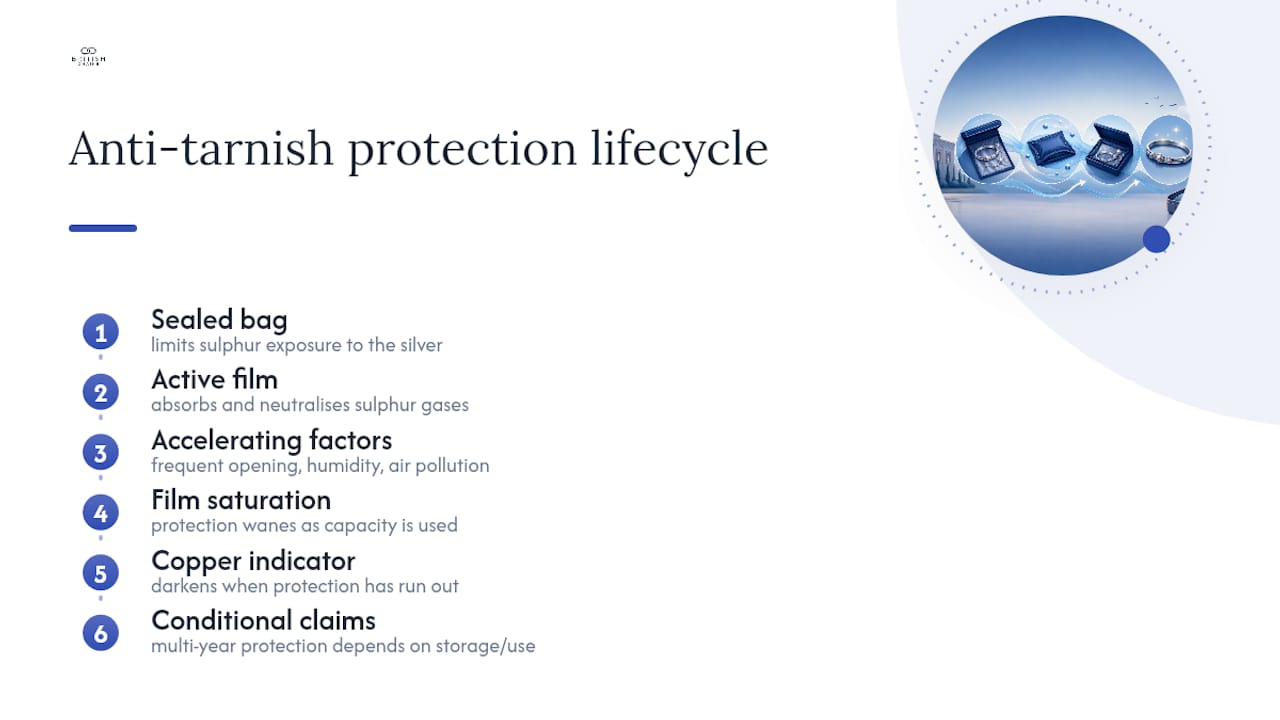
Conservators at Winterthur Museum put it bluntly: it is practically impossible to stop silver tarnishing entirely. Anti-tarnish bags slow the reaction; they do not switch it off permanently. That is why professional collections pair storage products with routine care rather than treating a bag as a one-off fix. Some bags also carry a built-in saturation indicator, a copper tint that visibly darkens as the film uses up its capacity, giving you a practical cue for when protection has run out.
How do you actually pack and store jewellery to get the protection you’re paying for?
Most tarnish problems trace back to storage habits, not faulty products. Get these steps right and any decent anti-tarnish bag will earn its keep.
- Clean and dry the piece first. Any moisture, skin oils, or residue sealed inside a bag accelerates the very reaction you’re trying to stop.
- Skip the pre-storage polish. Polishing wears away a microscopic layer of metal each time; save it for pieces that actually need it, not as a pre-storage ritual, per Winterthur’s conservation advice.
- One item per bag. This protects against scratching as much as tarnish, since chains and clasps tangling together causes as much damage as any chemical reaction.
- Separate pieces with acid-free tissue if you’re storing more than one item in a tray or box together.
- Never let anti-tarnish strips touch the metal directly. Wrap the strip in tissue or keep it isolated in its own compartment, following the same Winterthur guidance on avoiding direct surface contact.
- Store bags somewhere cool and dry, away from bathrooms, wooden drawers, and anywhere humidity swings. Our guide on how to store silver jewellery covers room-by-room placement in more detail.
- Watch for the colour-change indicator and replace the bag once it saturates, rather than assuming it works indefinitely.
Pro Tip: Wearing your silver regularly does more to prevent tarnish than any storage product alone. Skin oils create a light protective layer, and Good Housekeeping’s cleaning advice backs wearing pieces often as part of a proper prevention routine, alongside avoiding lotions and perfumes on jewellery.
What size and thickness of anti tarnish bag should you buy?
Buying the wrong size bag is the most common mistake, and it undermines the product before you’ve even used it.
- 4x4 inch bags suit rings, small pendants, and single chain links folded flat.
- 4x6 inch bags work better for full necklace lengths, bracelets, or a chain coiled with its clasp.
- Larger pouches or trays suit multiple pieces stored together, such as a jewellery box insert.
- Thicker mil ratings last longer and resist punctures better, though they cost slightly more per bag.
Look for bags described as non-abrasive and non-toxic, with a stated safety profile for gemstones such as opals and pearls, which are more reactive to certain chemicals than plain metal. Supplier specifications from Interplas list exactly this kind of sizing and safety detail, and it’s worth checking before you buy in bulk. A translucent bag with a proper zip-lock seal also lets you see the saturation indicator without opening it, which protects the film for longer.
What do conservators and jewellers actually recommend day to day?
Museum conservators and everyday jewellers land on the same core advice, even though they’re solving different problems.
Winterthur’s conservation guidance stresses avoiding unnecessary polishing and keeping storage dry above all else. Britishchains applies the same logic to everyday chains: match bag size to chain thickness, keep one piece per bag, and check bags every few months rather than leaving them untouched for years. Thin box chains fit neatly into small bags; thicker Figaro or curb chains need the larger sizes to avoid folding metal against metal. For more on avoiding the polish trap, our piece on anti-tarnish strips and conservator advice goes further into why less intervention often works better.
The simplest routine that actually works
Clean the piece, dry it fully, bag it alone in a proper anti-tarnish pouch, then store it somewhere cool and dark. Wear it often rather than leaving it sealed away for months. Use strips for boxes with several pieces, pouches for single delicate items, and check the colour indicator every few months rather than assuming the bag works forever.
— British
Storing chains that suit anti tarnish bags perfectly
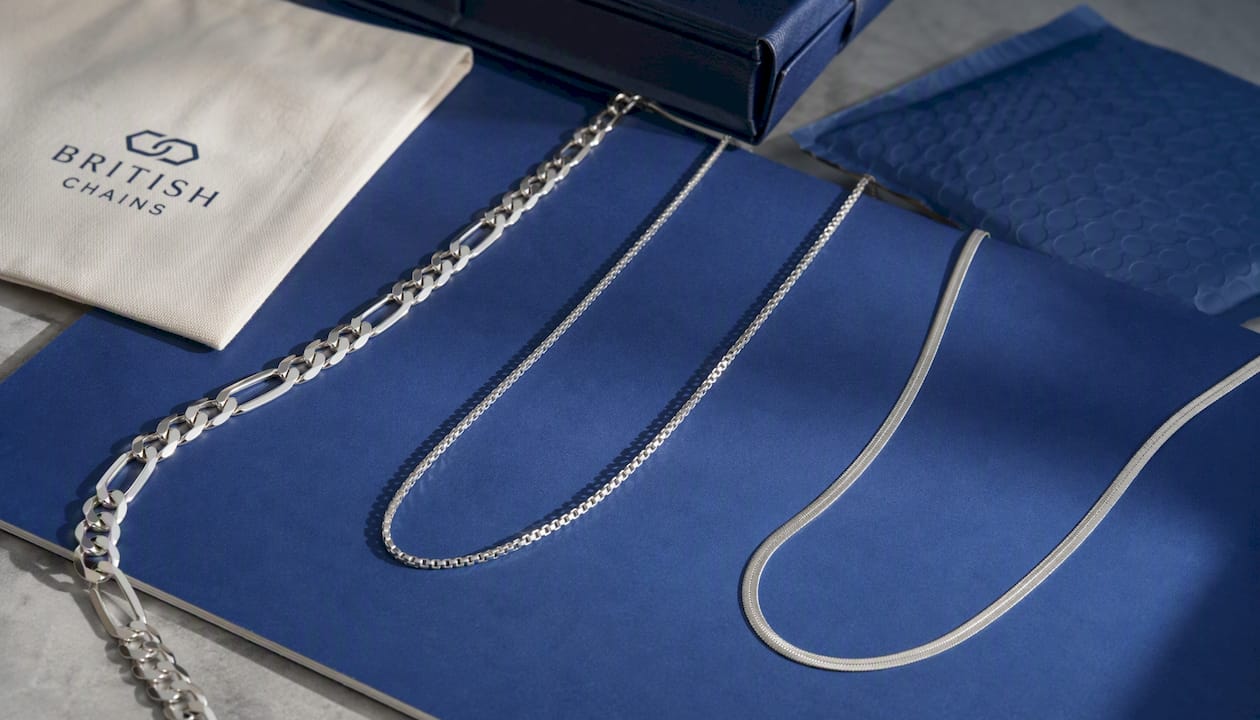
Slim chains and thick chains need different bag sizes, and getting that pairing right matters more than which brand of bag you buy. A 2mm sterling silver box chain folds flat into a small 4x4 bag with room to spare, while an 8mm thick Figaro chain needs the larger 4x6 size to avoid the links pressing against the seal.
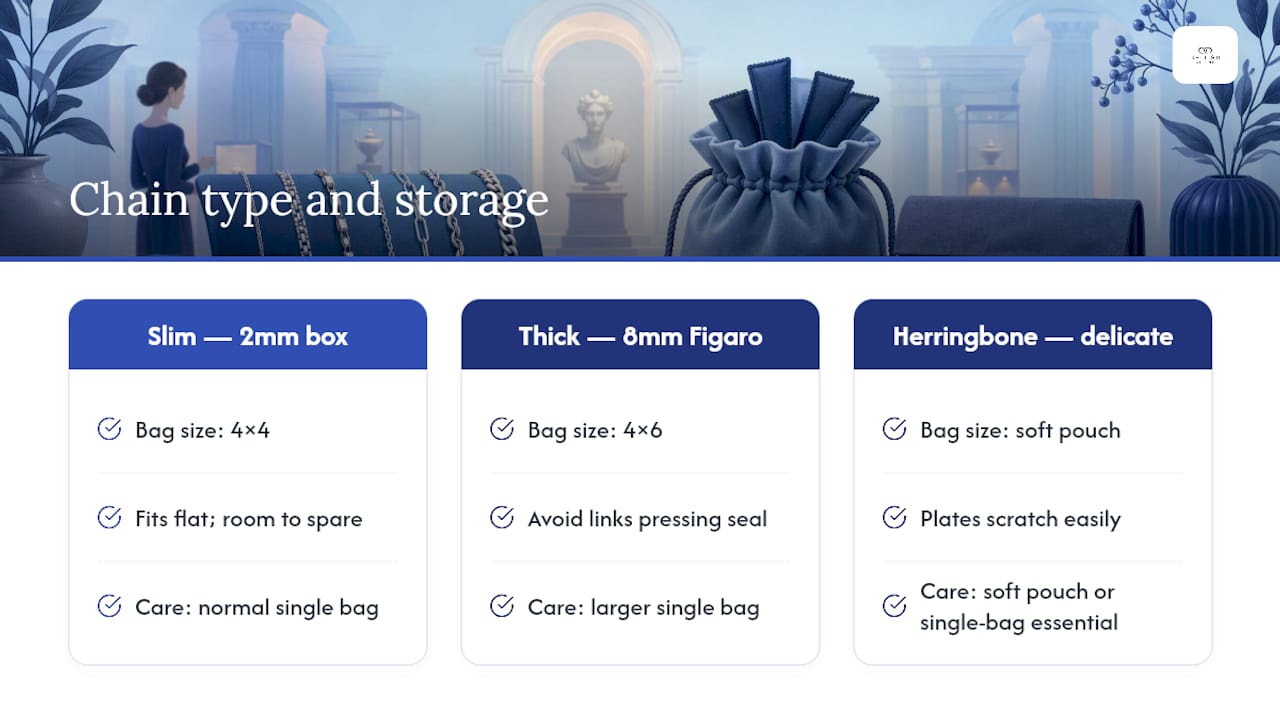
Delicate pieces deserve extra care too. A herringbone chain has flat, tightly linked plates that scratch easily against other metal, so a soft pouch or single-bag storage isn’t optional, it’s essential to keeping the polish intact. Every piece is genuine 925 sterling silver, hallmarked in the UK and hand finished with a diamond-cut polish that looks sharper for longer when it’s stored properly. Browse the full silver necklace collection or the curb chain range to find a piece that fits your everyday wear, then pair it with the right size anti-tarnish bag from day one.
Sources
- Caring for your collections: silver – Winterthur Museum (2026)
- How to make tarnished silver shine – Good Housekeeping (2026-08-19)
- 4 x 4 anti-tarnish zip lock bags – Interplas
FAQ
Do anti-tarnish bags actually work?
Yes, when they use an active film such as Corrosion Intercept®, which neutralises sulphur compounds rather than just physically blocking air. Manufacturer claims suggest protection lasting up to a few years, though humidity and how often you open the bag affect that lifespan.
What are the best anti-tarnish bags for jewellery?
The best options are treated zip-lock bags with a visible saturation indicator, sized to fit your piece without excess folding. Bags rated non-abrasive and safe for gemstones, as described in supplier specifications, suit rings, pendants, and delicate stones best.
Do plastic bags keep silver from tarnishing?
Ordinary plastic bags without an anti-tarnish film offer very little protection, since they don’t neutralise the sulphur compounds that cause tarnish. They only create a passive barrier that slows air exposure slightly, nowhere near the same effect as a treated bag.
What are the best bags for storing silver long term?
Treated anti-tarnish zip-lock bags, one piece per bag, stored in a cool, dry place away from bathrooms and wooden drawers. For pieces you rarely wear, pair the bag with a light wearing schedule anyway, since regular wear helps prevent tarnish more effectively than storage alone.
How often should I replace an anti-tarnish bag?
Replace it once the colour indicator darkens noticeably, which signals the film has saturated and stopped neutralising gases. Most bags need replacing roughly every year or two with regular use, though frequent opening shortens that window.


