

6 Rules to Keep Sterling Silver Safe in Water
Sterling silver isn’t waterproof, but it isn’t fragile either. A quick splash from washing up or a walk in the rain won’t harm a genuine 925 piece, provided you dry it afterwards. The real damage comes from chlorine, salt water and prolonged dampness, which speed up tarnishing in the copper alloy that gives silver its strength. Swim, shower for extended periods, or sit in a hot tub with it on, and you’re asking for trouble.
TL;DR:
- Brief contact with water, rain, or hand washing is generally safe if the jewelry is dried thoroughly afterward to prevent tarnish.
- Prolonged exposure to chlorine, salt water, hot tubs, or swimming pools accelerates tarnishing and can cause surface damage or pitting.
- Household chemicals, including bleach and strong cleaners, pose a high risk of irreversible damage to sterling silver.
- Proper storage in airtight pouches or boxes with anti-tarnish strips and regular maintenance extends jewelry life significantly.
- Checking for a clear 925 hallmark ensures the jewelry’s authenticity, which influences its durability and care requirements.
Table of Contents
- Is sterling silver waterproof? What ‘925’ actually means
- Waterproof vs water resistant: what the difference means for your jewellery
- How everyday water, sweat and chemicals affect sterling silver
- When to remove your silver, and how to dry and store it properly
- How to clean tarnished sterling silver without damaging it
- Why hallmarking and material quality still matter
- Why the “never get it wet” advice misses the point
- Hallmarked curb chains built for everyday wear
- Sources
Is sterling silver waterproof? What ‘925’ actually means
The “925” stamped inside a clasp or on a tag tells you the piece is 92.5% pure silver, alloyed with 7.5% other metal, almost always copper. Pure silver is too soft to hold its shape in a chain or bracelet, so the copper is there to add strength and structure. It’s a trade-off jewellers have used for centuries, and it works, but it comes with a catch.
Copper reacts with moisture, oxygen and sulphur compounds in the air. That reaction is what produces tarnish, the dull grey or yellowish film you’ll see creep across a piece left in a damp drawer. Humidity alone can trigger it. Add water, and the process speeds up.
A few things worth knowing about the alloy itself:
- The 925 hallmark confirms genuine sterling silver, not silver-plated base metal.
- Copper is the standard alloying metal, chosen for durability rather than cost.
- Higher humidity and warmth both accelerate the chemical reaction that causes tarnish.
- Some cheaper alloys use nickel instead, which can trigger skin reactions in sensitive wearers.
Waterproof vs water resistant: what the difference means for your jewellery
Nothing about sterling silver seals it against water. It won’t dissolve, corrode instantly or fall apart if it gets wet, but it also isn’t sealed the way a dive watch is. Think of it as tolerant rather than immune.
Sterling silver is not waterproof, and brief contact with clean water rarely causes visible harm. Repeated or prolonged exposure is where the tarnish accelerates, particularly once chlorine or salt gets involved.
A rough guide to where the line sits:
- Fine, low risk: a quick rinse of your hands, getting caught in light rain, washing dishes for a few minutes.
- Manageable with care: a shower, as long as you dry the piece properly afterwards.
- Risky, best avoided: swimming in a pool, sitting in a hot tub, or a day at the beach with the chain still on.
- Cumulative damage: daily showering for months without ever drying or removing the piece.
The rule of thumb: occasional, brief exposure followed by drying is fine. Regular, repeated exposure without care is where tarnish builds up fastest.
How everyday water, sweat and chemicals affect sterling silver
Not all water is equal, and knowing which scenarios carry real risk saves you from either being overly cautious or careless.
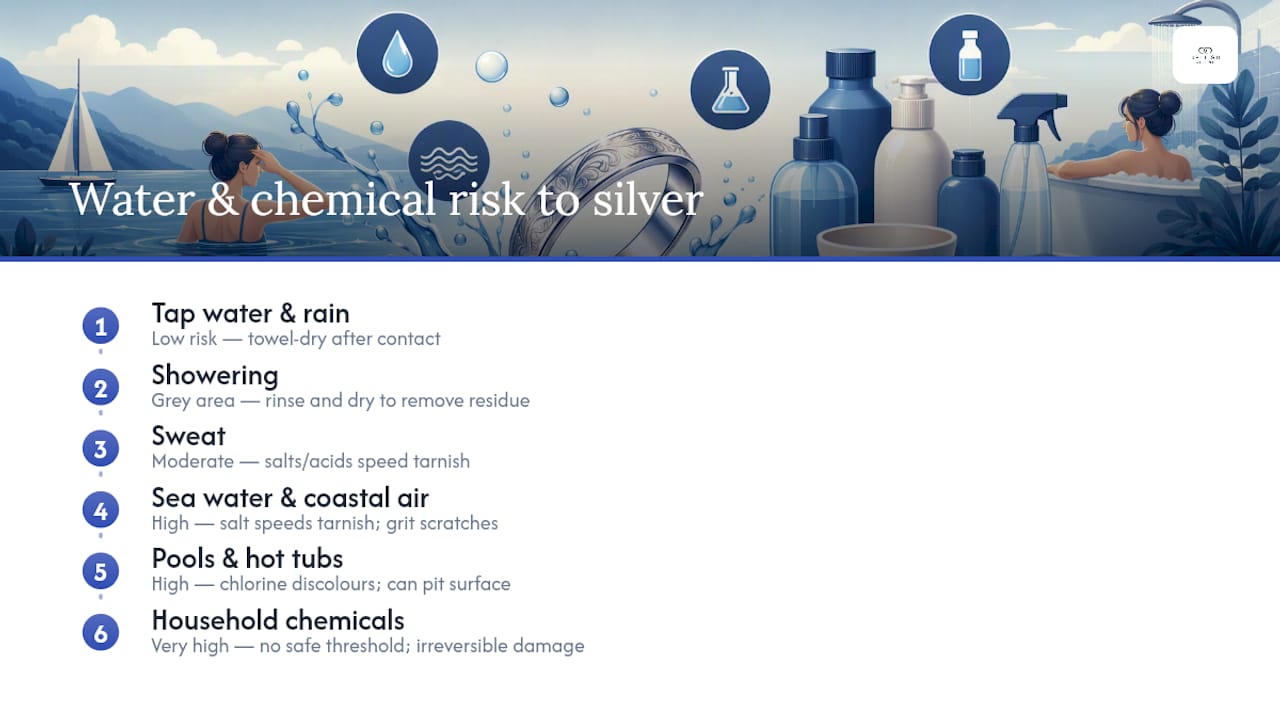
Tap water and rain carry low risk. A quick wash or a damp walk home won’t do lasting harm, as long as you towel-dry the piece rather than letting it air-dry against your skin or in a pocket.
Showering is more of a grey area. The water itself is mild, but soap and shampoo residues can coat the metal, leaving a film that speeds up tarnish. If you shower with sterling silver regularly, rinse and dry it afterwards rather than letting residue sit.
Pools and hot tubs are genuinely damaging. Chlorine reacts with the copper alloy and can cause visible discolouration or, over repeated exposure, pitting in the surface.
Sea water and coastal air work on silver in two ways at once: salt accelerates tarnish chemically, while sand and grit can physically scratch a polished finish.
Sweat is more corrosive than people expect. The salt and acids in perspiration during a workout speed up tarnishing just as effectively as pool water, only slower and less obviously.
Household chemicals are the one category with no safe threshold. Bleach, chlorine-based cleaners and some perfumes can cause damage that no amount of polishing reverses.
Pro Tip: If you’re not sure whether an activity counts as “high risk”, ask yourself if you’d want the water on your phone. If the answer’s no, take the silver off too.
When to remove your silver, and how to dry and store it properly
Most tarnish problems trace back to two habits: leaving jewellery on during the wrong activity, and putting it away damp. Fix those two things and you’ll rarely need aggressive cleaning.
- Remove before swimming, gym sessions, cleaning, or applying lotions and perfume. These are the situations where chemicals or sweat sit against the metal for extended periods.
- Rinse with fresh water if it’s been in the sea, a pool or sweat, then dry immediately with a soft, lint-free cloth. Never leave it to air-dry.
- Store in an airtight pouch or a lined jewellery box, ideally with an anti-tarnish strip inside. Silver left exposed to air tarnishes faster than silver kept sealed.
- Keep it out of the bathroom. Steam and humidity from showers and baths are exactly the conditions that trigger tarnish, even when the piece itself never gets wet.
- Give it a quick wipe after each wear with a soft cloth, and do a proper polish every few weeks depending on how often you wear it.
- Check clasps and jump rings periodically. Moisture can loosen fittings over time, and a weak clasp is how chains get lost.
Storage habits matter as much as any cleaning routine, and a five-second wipe-down after wear does more long-term good than an occasional deep clean. For a fuller breakdown of pouches, strips and humidity control, see this guide on storing silver jewellery properly.
How to clean tarnished sterling silver without damaging it
Light tarnish responds to the gentlest method available: warm water, a drop of mild soap, and a soft cloth. Rub gently, rinse thoroughly, and dry straight away. This handles the everyday dullness that builds up from normal wear.
For heavier tarnish, a baking soda paste works well. Mix baking soda with a small amount of water into a paste, apply it with a soft cloth, rub gently along the grain of the piece, then rinse and dry completely. Avoid this method on pieces with soft gemstones, as the mild abrasion can scratch certain stones.
Commercial silver dips can lift heavier tarnish quickly, but use them cautiously: brief contact only, followed by a thorough rinse, since prolonged soaking can strip more than tarnish.
What to avoid entirely:
- Household bleach or chlorine-based cleaners, which cause irreversible damage.
- Harsh abrasives like scouring pads or toothpaste with grit.
- Ultrasonic cleaners on pieces with set gemstones, which can loosen mountings.
If you’re dealing with deep pitting, discolouration that won’t lift, or delicate antique settings, a professional jeweller is the safer route than persisting with home methods. For step-by-step cleaning techniques specific to chains, this guide on cleaning sterling silver chains covers the process in more detail.
Why hallmarking and material quality still matter
A genuine 925 hallmark tells you exactly what you’re wearing, and that certainty is worth more than people realise. The site offers hallmarked sterling silver chains in popular styles like curb, rope, Figaro, and box chains.
That matters because care advice only works if the base material is what it claims to be. Plated pieces or unmarked alloys behave unpredictably around water and chemicals, and no cleaning routine fixes a piece that was never real silver to begin with.
A few things worth checking before you buy or care for a piece:
- Look for the 925 stamp on the clasp or tag as your first check.
- Heavier gauge chains, like an 8mm curb, tend to resist daily wear better than fine, delicate designs.
- Understanding why silver tarnishes in the first place makes prevention far easier than cure.
Good hallmarking and solid craftsmanship reduce the surprises. They don’t remove the need for a towel and a bit of common sense.
Why the “never get it wet” advice misses the point
Most care guides on this topic lean too hard on caution, treating sterling silver like something fragile that needs to live in a box. That’s overcorrection. The material has been worn daily by generations of people who showered, sweated and got caught in the rain without ruining a single piece.
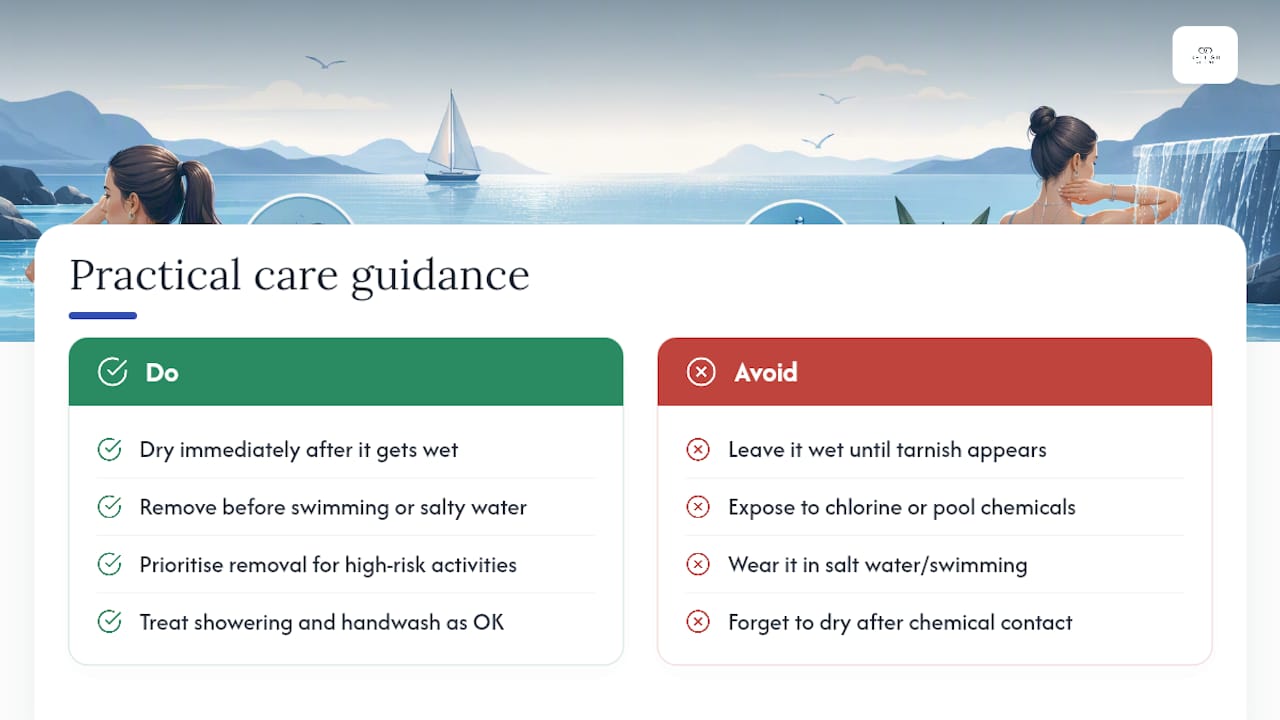
The advice that actually holds up is narrower and more useful: avoid chlorine, avoid salt water, avoid harsh chemicals, and dry the thing when it gets wet. That’s genuinely most of what matters. Everything else, tap water, rain, a quick handwash, falls well within what the alloy can tolerate.
Where people go wrong isn’t wearing silver in the shower. It’s leaving it on for a swim, then forgetting about it until the tarnish is already visible weeks later. Prioritise the removal habit for high-risk activities over obsessing about everyday contact, and you’ll spend far less time polishing.
— British
Hallmarked curb chains built for everyday wear
If you’re choosing a chain that can handle daily life without constant babying, thicker curb links are the sensible starting point. The 4mm Sterling Silver 925 Curb Chain offers a versatile, everyday weight in sizes from 18 to 30 inches, while the 8mm Sterling Silver 925 Curb Chain suits anyone who wants a bolder, sturdier piece that shrugs off daily knocks.
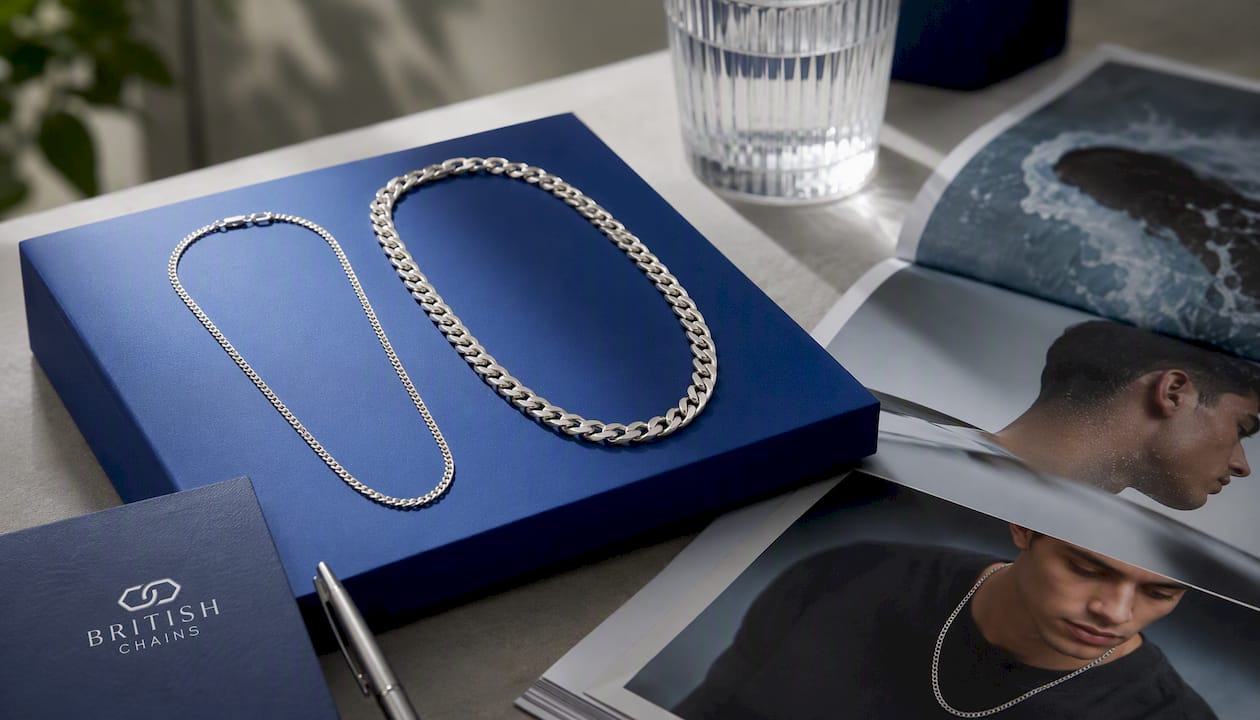
Both are hallmarked, polished with a diamond-cut finish, and made in curb styles that resist tangling better than finer chains, a genuine advantage if you’re taking jewellery on and off around showers or the gym. When choosing any piece for daily wear, check for a clear 925 stamp, confirm the clasp feels secure rather than flimsy, and favour a slightly heavier gauge if you know you’ll be careless about removing it before activities.
Browse the full curb chain range on Britishchains to find the size and thickness that suits how you actually live, then pair it with the care habits above to keep it looking new for years.
Sources
- Can Sterling Silver Get Wet? 12 Jewelry Care Do’s + Don’ts — Blue Nile
- Is 925 Sterling Silver Waterproof? Sterling Silver Care — Blake Bros


