

Necklace Fit Guide: How To Measure Necklace Length
You found a chain you love, the right style, the right width, the perfect silver finish. Then it arrives, and it sits too high on your neck or hangs lower than you wanted. Knowing how to measure necklace length before you buy saves you from that frustration. Whether you're measuring a chain you already own or figuring out your ideal length from scratch, the process is straightforward once you know what to do.
At British Chains, we sell sterling silver 925 chains in lengths ranging from 8 to 30 inches and widths from 2mm to 12mm. That's a lot of options, and picking the right one matters. A 20-inch curb chain looks completely different on a size small frame than it does on a broad chest. Your neck size, body type, and how you plan to wear the chain all factor into which length actually works for you. We've helped thousands of customers get this right, and we've built this guide from that experience.
Below, you'll find step-by-step methods for measuring both existing necklaces and your own neck, plus size charts broken down for men and women. By the end, you'll know exactly which length to order, no guesswork, no returns.
What necklace length means and what you need
When you see a necklace listed as "18 inches," that number refers to the total end-to-end measurement of the chain, including the clasp. It does not refer to the drop from your collarbone, and it does not describe where the chain will sit on your specific neck. This distinction matters a lot when you're learning how to measure necklace length, because the same 18-inch chain will rest in a completely different position on a person with a 12-inch neck versus someone with a 16-inch neck. The listed length and where it actually sits on your body are two separate things, and confusing them is the most common reason people order the wrong size.
What "necklace length" actually refers to
The measurement on any product page reflects the full length of the chain laid flat, from one end of the clasp mechanism to the other. When you put the chain on, that total length gets divided across both sides of your neck and down the front. So an 18-inch chain leaves roughly 9 inches running from the back clasp around each side, then down to the front center. Your neck circumference reduces the visible drop, which is why two people wearing the same chain length can look completely different.
The listed necklace length is the total chain measured flat from end to end, not the distance it hangs below your neck.
For reference, the average adult neck measures between 13 and 15 inches in circumference for women and 15 to 17 inches for men. A standard 18-inch chain on a woman with a 14-inch neck leaves roughly 4 inches of chain hanging below the base of the neck, placing it just below the collarbone. The same chain on a man with a 16-inch neck produces only about 2 inches of visible drop below the throat. Knowing your neck circumference is the starting point for every sizing decision you make after this.
What you need before you start
Getting accurate measurements requires just a few basic tools, most of which you already have at home. You do not need professional equipment or a trip to a jewelry store. Gather the following before you begin:
- Flexible measuring tape: the kind used for sewing or body measurements. It wraps around your neck cleanly and gives you an accurate circumference reading.
- A flat ruler: for measuring a piece of string after you've used it to trace your neck or an existing chain.
- A piece of string or thin cord: a reliable substitute if you don't own a flexible tape. Cotton kitchen string works well.
- An existing necklace (optional but useful): if you already own a chain that fits the way you want, measuring it gives you a reliable length to replicate.
- A mirror: so you can see where a string or chain sits on your neck while you hold it in place.
- A pen and paper: write your measurements down immediately. Relying on memory between measuring and placing an order leads to errors.
Keep your measuring tape lying flat and snug against your skin when you measure your neck, but never pulled tight. Tension shortens the reading and makes your neck appear smaller than it is, which causes you to underestimate how much chain length your neck uses up. Measuring loose gives you an inflated number, and measuring tight gives you a deflated one. Aim for the tape to sit the way a comfortable chain would, with light contact against the skin and no pinching. Take each measurement at least twice and use the consistent number.
Step 1. Measure an existing necklace correctly
If you already own a chain that sits exactly where you want it, measuring that chain gives you the most reliable size reference you can get. You skip the guesswork entirely and replicate something that already works on your body. This is the fastest and most accurate approach when learning how to measure necklace length, and it takes less than two minutes.
Lay the chain flat and measure end to end
Place your existing necklace on a flat, hard surface like a table or countertop. Straighten it out so the chain runs in a single line with no kinks, overlaps, or curves. Then lay your flexible measuring tape or ruler alongside it, starting at the very end of the clasp on one side and running to the very end on the other. That full number, tip to tip, is your necklace length.
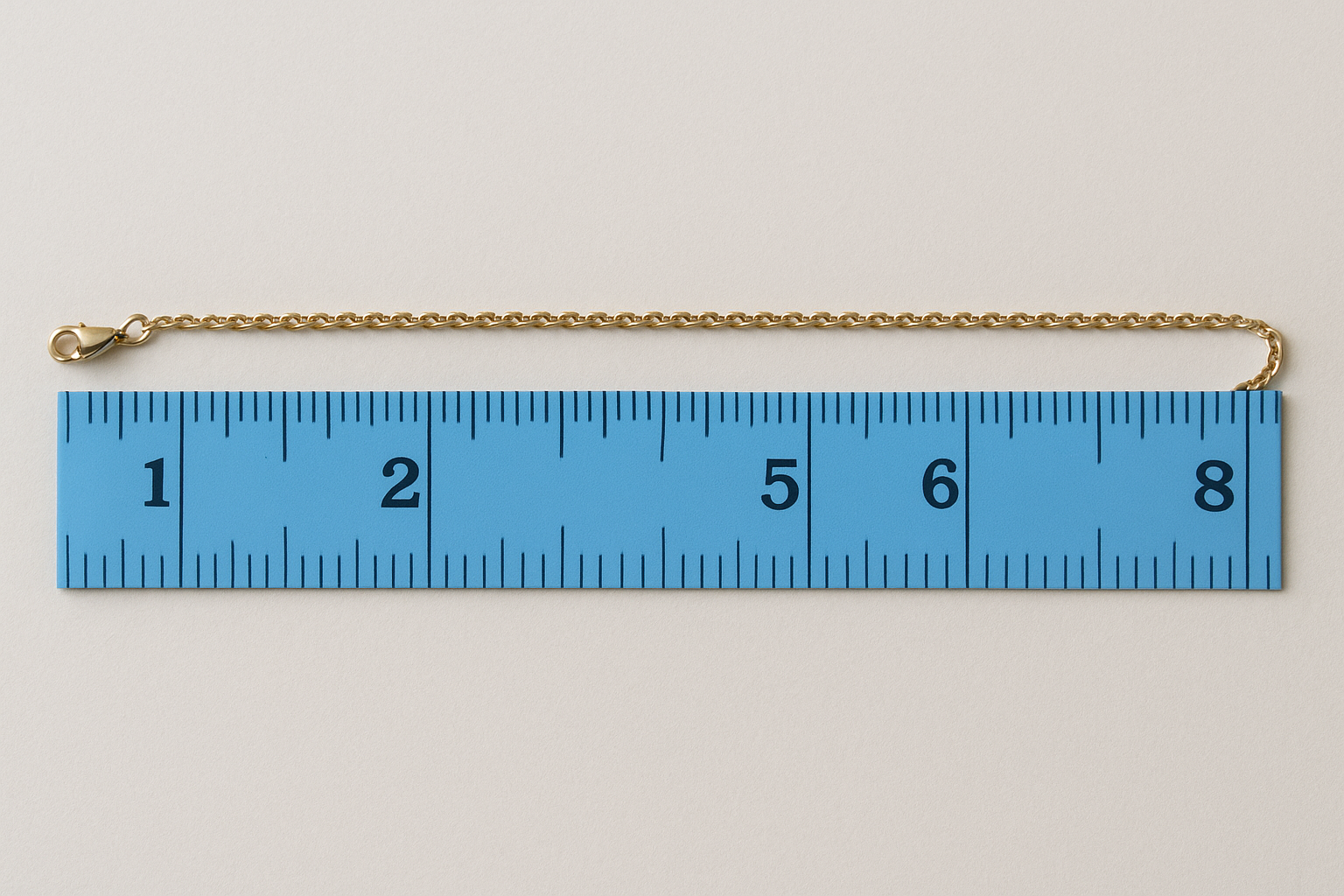
Measure from the outermost end of the clasp to the outermost end of the other side, not from the chain links alone.
Follow these steps exactly to avoid a common error:
- Lay the chain completely flat with no slack or bunching.
- Position the start of your tape at the end of the clasp hardware, not where the clasp meets the chain.
- Run the tape in a straight line to the opposite end.
- Read the measurement without lifting the tape off the surface.
- Write down the number immediately before you move anything.
What to do with different clasp types
Not every clasp adds the same amount of length, so the clasp style on your chain affects your total measurement. A standard lobster claw clasp adds roughly 10 to 12mm to the overall length. A spring ring clasp adds slightly less. A toggle clasp, where a bar slides through a ring, adds the most, sometimes 15mm or more depending on the ring diameter.
When you measure, always include the full clasp in your reading regardless of style. If you measure only the chain links and ignore the hardware, you'll end up ordering a chain that runs longer than the one you're trying to replicate. Capture the whole piece from end to end, and your replacement or upgrade will fit identically to the chain you already love.
Step 2. Measure your ideal length with tape or string
If you don't have a chain to reference, or you want to double-check your preference before ordering, measuring directly on your body gives you a reading specific to your frame. This method is the most reliable way to learn how to measure necklace length when starting from scratch, and you only need a flexible tape or a piece of string to get it done.
Measuring with a flexible tape
Stand in front of a mirror and hold one end of the measuring tape at the center back of your neck, right below the hairline. Wrap the tape around the front of your neck until the two ends meet at the center front. The point where they meet shows your base neck circumference. Write that number down. From there, let the tape drop further down your chest until it reaches the position where you want your chain to hang. That second reading, measured from the back of your neck to your chest point, is your ideal chain length.
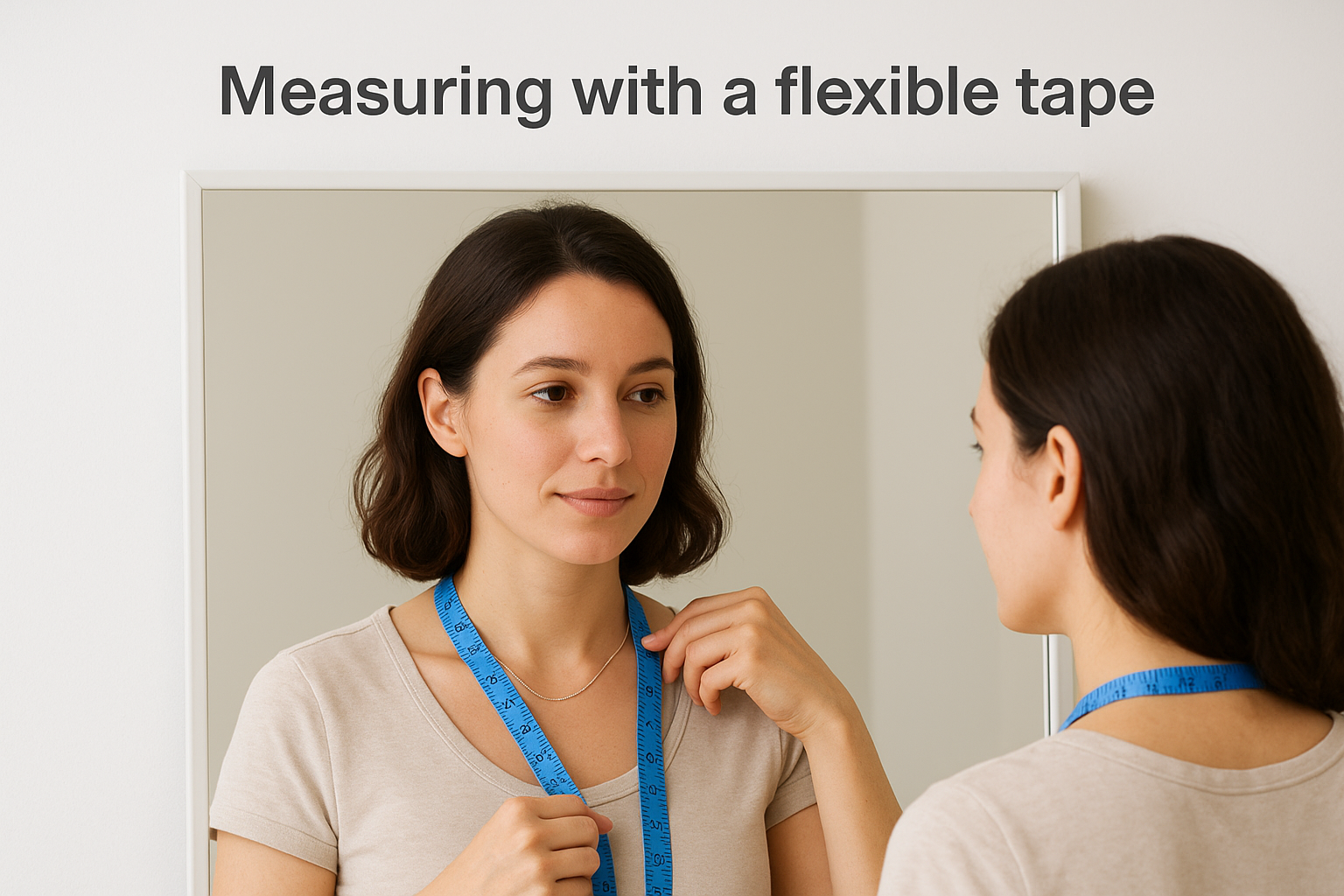
The position where you want the chain to sit on your chest, measured from the back of your neck, is the number you order.
Follow these steps to get a clean reading:
- Stand upright with your chin level, not tilted up or down.
- Hold the tape snug but not tight against your skin at the back of the neck.
- Bring both ends to the center front, keeping the tape flat against your skin.
- Note the circumference reading at your throat.
- Drop the front of the tape to where you want the chain to fall on your chest.
- Read the total length from the back of your neck to that point and write it down.
Measuring with string
Not everyone has a flexible measuring tape at home. A piece of thin cotton string or cord works just as well. Wrap it around your neck the same way you would a tape, then hold it or mark it at the point where the two ends meet at the front. From there, extend the string down your chest to the position you want, then pinch or mark that point with a pen. Lay the string flat against a ruler and read the measurement between the back-of-neck start point and the chest mark. That number is your target chain length.
Step 3. Account for pendants, chain width, and clasp size
When you learn how to measure necklace length for a chain you plan to wear with a pendant, the raw chain measurement alone won't give you the complete picture. Three factors beyond the chain length itself directly affect where your jewelry sits on your body and how it looks when worn: the weight and size of any pendant, the visual width of the chain, and the hardware contributed by the clasp.
How pendants affect your length choice
A pendant pulls the chain downward from the front, which means the chain sits lower than it would without any attachment. Heavier and larger pendants create a more noticeable drop, especially on thinner chains that have more give. If you plan to hang a pendant, order a chain that runs 1 to 2 inches shorter than your measured ideal. That adjustment compensates for the added drop and keeps the overall position where you intended.
If you wear a pendant, subtract 1 to 2 inches from your measured ideal length before ordering.
Use this table to match pendant size to the right adjustment:
| Pendant size | Adjustment |
|---|---|
| Small (under 15mm) | 0.5 to 1 inch shorter |
| Medium (15 to 30mm) | 1 to 1.5 inches shorter |
| Large (over 30mm) | 1.5 to 2 inches shorter |
How chain width changes the visual length
Chain width doesn't change the physical measurement, but it changes how a length reads visually on your body. A wide chain, such as a 10mm or 12mm curb, draws the eye and makes the same length look shorter and more concentrated near the neck. Thinner chains like a 2mm to 3mm box or snake chain appear longer because they don't occupy visual space the way a thick chain does.
If you're switching from a thin chain to a wide one at the same length, consider ordering 1 inch longer to maintain a similar visual effect. The extra inch restores the drop that the increased width absorbs visually.
How clasp size factors in
Every clasp adds hardware to your total chain length. A standard lobster claw clasp contributes around 10 to 12mm, which British Chains already includes in the length listed on each product page. You don't need to add extra length to account for our clasps. However, if you're comparing chains across different retailers, always confirm whether their listed length includes clasp hardware or measures chain links only, since that single detail can account for nearly an inch of difference in what actually arrives.
Step 4. Use the standard necklace length chart
Once you have your measurements, a standard necklace length chart gives you the vocabulary to match your numbers to specific chain positions. Knowing how to measure necklace length gets you the raw numbers, but a chart tells you what each number means in terms of where the chain actually lands on your body. Use the reference tables below to translate your measurement into a specific length before you order.
Your raw measurement only becomes useful once you know what position each standard length corresponds to on your body.
Standard length positions for women
Women's necklace lengths follow a consistent pattern across most chain styles. Each 2-inch increment drops the chain noticeably lower, and the style name attached to each position gives you a clear picture of the final look before the chain even arrives.
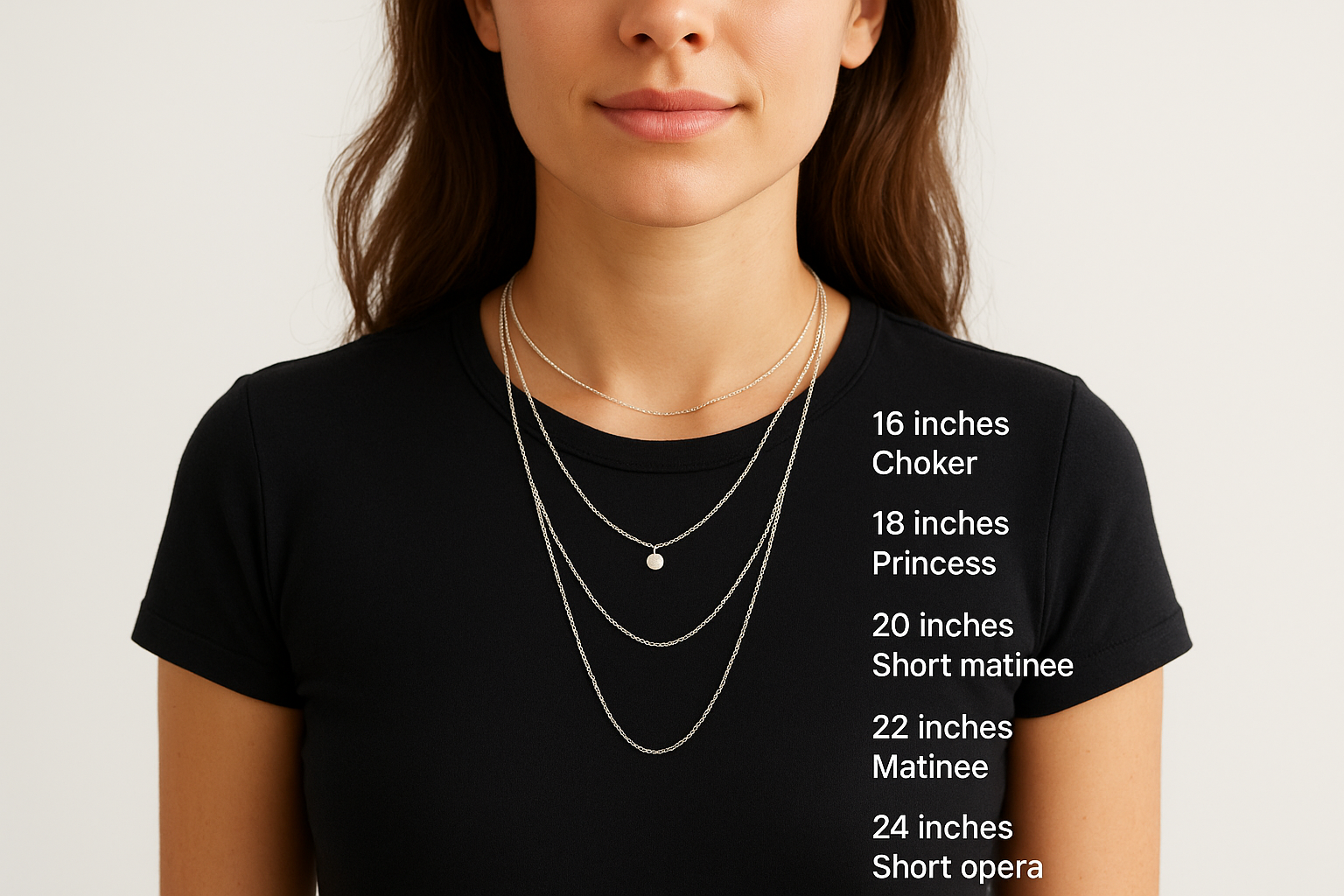
| Length | Position on the body | Common style name |
|---|---|---|
| 14 inches | Base of the throat | Collar |
| 16 inches | Just below the collarbone | Choker |
| 18 inches | At or just below the collarbone | Princess |
| 20 inches | Top of the chest | Short matinee |
| 22 inches | Mid-chest | Matinee |
| 24 inches | Just above the sternum | Short opera |
| 28 to 30 inches | At or below the bust line | Rope |
Thinner chains like a 2mm box or snake chain look proportional at 16 or 18 inches, while wider chains from 5mm upward tend to suit 20 inches and longer to balance their visual weight on the body.
Standard length positions for men
Men's chains typically run longer than women's because wider neck circumferences and broader chest proportions consume more of the total length. A chain that falls at mid-chest on a woman may sit at or above the collarbone on a man ordering the same size.
| Length | Position on the body | Common use |
|---|---|---|
| 18 inches | Just below the throat | Short or understated wear |
| 20 inches | Base of the neck | Everyday casual wear |
| 22 inches | Just below the collarbone | Standard statement chain |
| 24 inches | Mid-chest | Pendant base or layering |
| 26 to 28 inches | Lower chest | Bold or streetwear styling |
| 30 inches | Upper abdomen | Long statement chain |
Start in the 20 to 24 inch range if you haven't worn chains before. Most men find their preferred fit somewhere in that window and only adjust once they have a clearer sense of how width and pendant size shift the final position.
Step 5. Pick the best length for men and women
The charts in the previous step show you where each length falls on the body, but knowing how to measure necklace length is only part of the decision. The other part is matching that measurement to your specific body proportions, since the same chain length reads differently depending on your height, build, and neck size. A 20-inch chain on a 5'2" woman sits much lower than on a 5'8" woman, and the visual effect shifts significantly between body types even within the same gender.
Choosing length by body type for women
Your height and torso length matter most when picking a length. Shorter frames benefit from chains in the 16 to 18 inch range because longer chains can visually split a shorter torso and throw off the overall balance. Taller frames carry 20 to 24 inch chains well, and the extra drop adds proportion rather than pulling the eye down awkwardly.
If you're between sizes, go longer rather than shorter: a chain that hangs slightly below your target point looks intentional, while one that sits too high looks restrictive.
Use this guide to match your height to a starting length:
| Height | Recommended starting length |
|---|---|
| Under 5'3" | 16 to 18 inches |
| 5'3" to 5'6" | 18 to 20 inches |
| 5'7" and above | 20 to 24 inches |
Adjust one inch up or down based on how far below the collarbone you prefer the chain to fall, and factor in whether you plan to wear a pendant using the adjustment guidance from Step 3.
Choosing length by body type for men
Men's sizing depends on neck circumference and shoulder width. A broader frame absorbs chain length quickly, so most men with a neck over 16 inches find that 20-inch chains sit at the base of the neck rather than dropping visibly to the chest. Starting at 22 inches gives a broader-framed man a clear drop below the collarbone without going so long that the chain swings freely during movement.
Slim frames carry shorter lengths proportionally well. A 20-inch chain on a narrower build produces a clean, close-fitting look that reads as intentional rather than tight. Use the table below as your starting reference and adjust one inch at a time based on where you want the chain to fall:
| Neck circumference | Recommended starting length |
|---|---|
| Under 15 inches | 18 to 20 inches |
| 15 to 16 inches | 20 to 22 inches |
| Over 16 inches | 22 to 24 inches |
Step 6. Get the fit right for layering and styling
Layering multiple chains at once changes everything about how length behaves. When you wear two or three chains together, each one needs enough space between it and the next so they fall as distinct layers rather than bunching or tangling. Understanding how to measure necklace length for a layered look means thinking about your chains as a set, not as individual pieces, before you place any order.
Space each layer at least 2 inches apart from the next to keep them visually distinct and prevent tangling.
Space your layers with intention
The most common layering mistake is ordering chains that sit too close together in length. Two chains within an inch of each other will twist, overlap, and lose any layered effect entirely. Follow the 2-inch rule: each chain in your stack should sit at least 2 inches below the previous one. The starter chain should be your shortest, sitting at or just above the collarbone, with each subsequent chain dropping further down your chest.
Use this reference table to build a three-chain layered set:
| Layer | Women's suggested length | Men's suggested length |
|---|---|---|
| First (top) | 16 inches | 20 inches |
| Second (middle) | 18 to 20 inches | 22 to 24 inches |
| Third (bottom) | 22 to 24 inches | 26 to 28 inches |
Adjust each length by one inch up or down if you're also wearing a pendant on one of the chains, using the pendant adjustment from Step 3.
Match chain styles and widths when layering
Layering works best when the chains vary in width as well as length. A thick chain paired with two identical thin chains looks repetitive. Instead, lead with your widest chain in the middle or bottom layer and use slimmer styles above it. For example, a 2mm box chain at 16 inches, a 4mm curb chain at 20 inches, and a 6mm rope chain at 24 inches creates a clear visual progression without any single piece competing for attention.
For a styled set at British Chains, consider pairing chain styles from different cuts within the same metal finish. Mixing a diamond-cut curb with a smooth rope creates contrast in texture while maintaining a cohesive look. Keep all chains in sterling silver 925 to ensure the finish stays consistent across every layer, since mismatched metals at different tones undercut the layered effect immediately.
Step 7. Fix common fit problems and sizing mistakes
Even when you follow every step for how to measure necklace length carefully, the wrong result can still show up. A chain that sits higher than expected, a pendant that pulls off-center, or a clasp that keeps sliding to the front are all fixable problems. Identifying which issue you have points you directly to the right solution without needing to return the chain or start over.
The chain sits too high on your neck
This is the most common complaint, and it almost always comes from measuring neck circumference too tightly. When the tape pinches the skin even slightly, it reads smaller than your actual neck, which leads you to order a shorter chain than you need. Add 1.5 to 2 inches to your circumference reading before choosing a length, and the chain will sit below the throat rather than pressing against it.
If your chain feels uncomfortably snug, your circumference measurement was taken too tight.
The chain sits lower than you expected
A chain that drops further than your target position usually means one of two things: you measured your ideal drop without accounting for neck circumference, or you bought a wide chain that reads shorter but actually falls lower due to its weight. Recheck your measurements using the method in Step 2, and apply the width adjustment from Step 3 before your next order.
The pendant keeps pulling the chain sideways
This happens when the pendant bail, which is the loop that connects it to the chain, is too wide for the chain style you're using. A bail sized for a thick curb chain will slide and shift on a 2mm box chain. Match your bail opening to your chain link width so the pendant sits centered and stays in place during wear. If the pendant came with the chain and still pulls sideways, try a slightly shorter length to reduce the slack that allows movement.
The clasp keeps moving to the front
A clasp slides forward when the chain is too long relative to your neck size, giving it enough slack to shift with movement. The fix is straightforward: order the same style in a length that's 1 to 2 inches shorter. That tighter fit keeps the clasp at the back of the neck where it belongs, and the chain drapes evenly across the front.
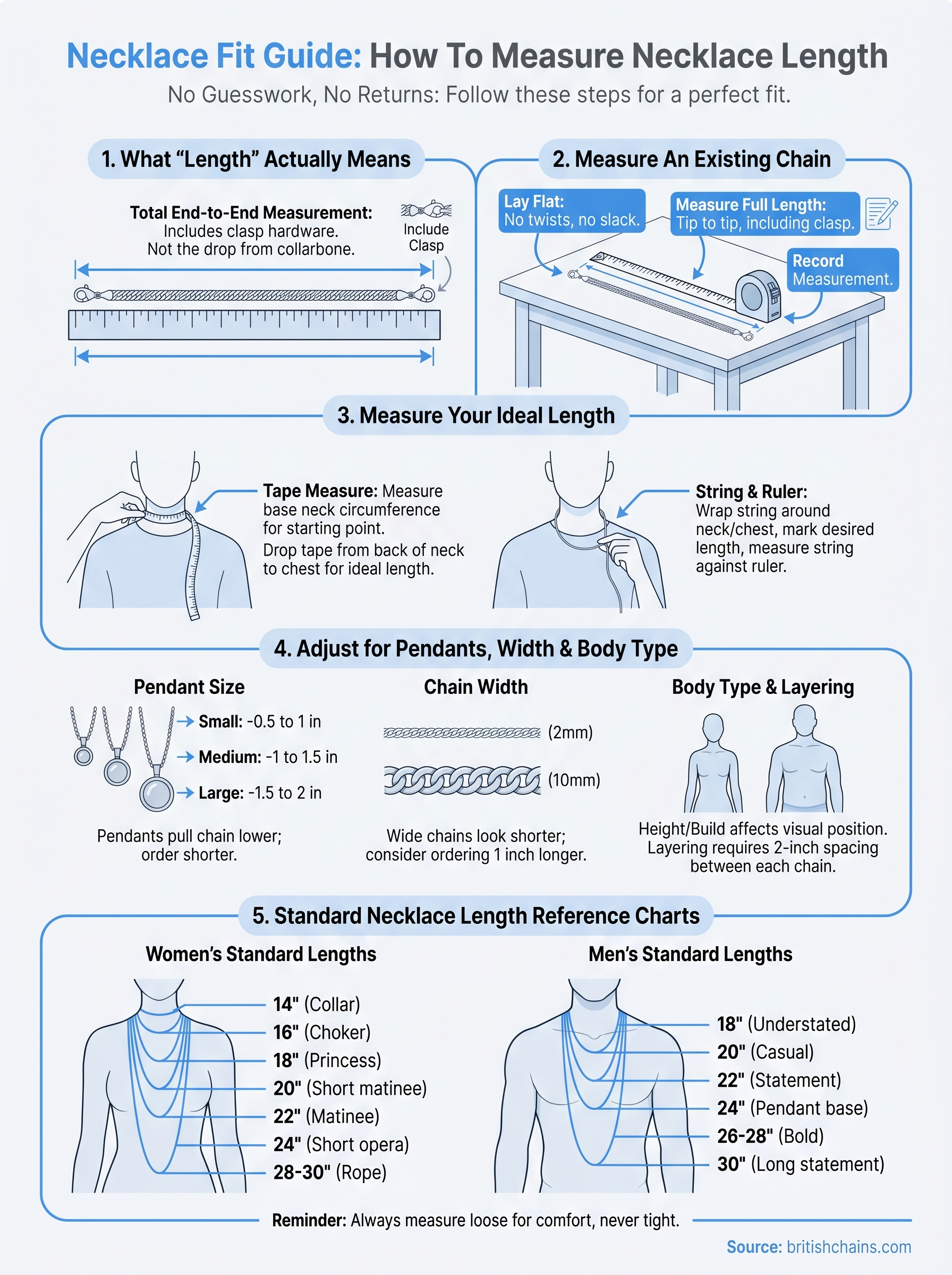
Wrap it up and choose your chain
You now have everything you need to get necklace sizing right the first time. Measuring an existing chain end to end, checking your neck circumference with a flexible tape, and applying the pendant and width adjustments from the steps above give you a complete picture before you order anything. Knowing how to measure necklace length means you're no longer guessing based on a single number on a product page; you're matching a specific measurement to your actual body and intended style.
Pick the chain that matches your measurements and the look you want. If you prefer a bold, classic piece that sits cleanly at the chest, browse the men's silver chains at British Chains for curb, rope, and figaro styles in a full range of widths and lengths. Every chain ships in genuine sterling silver 925, so the fit and finish both hold up long after your first wear.


