

How Long Does Sterling Silver Last? Wear, Tarnish & Care
You just spent good money on a sterling silver chain, or you're about to. Either way, the question how long does sterling silver last matters more than most jewelry sites let on. The short answer? With proper care, sterling silver 925 can last a lifetime and well beyond it. People pass down silver pieces through generations, and there's a reason for that.
But "lasting" doesn't mean it stays pristine on its own. Sterling silver tarnishes, scratches, and reacts to everything from your skin's chemistry to the humidity in your bathroom. That's not a flaw, it's just what real silver does. Understanding this upfront saves you from frustration and keeps your chains looking sharp. At British Chains, every piece we sell is genuine 925 sterling silver, so we know exactly how this metal behaves over months and years of daily wear.
Below, we'll break down what affects silver's longevity, how fast tarnish actually develops, whether sweat and water are dealbreakers, and the straightforward care habits that keep your chain looking new. No guesswork, just practical answers based on how sterling silver performs in real life.
What sterling silver is and how it holds up
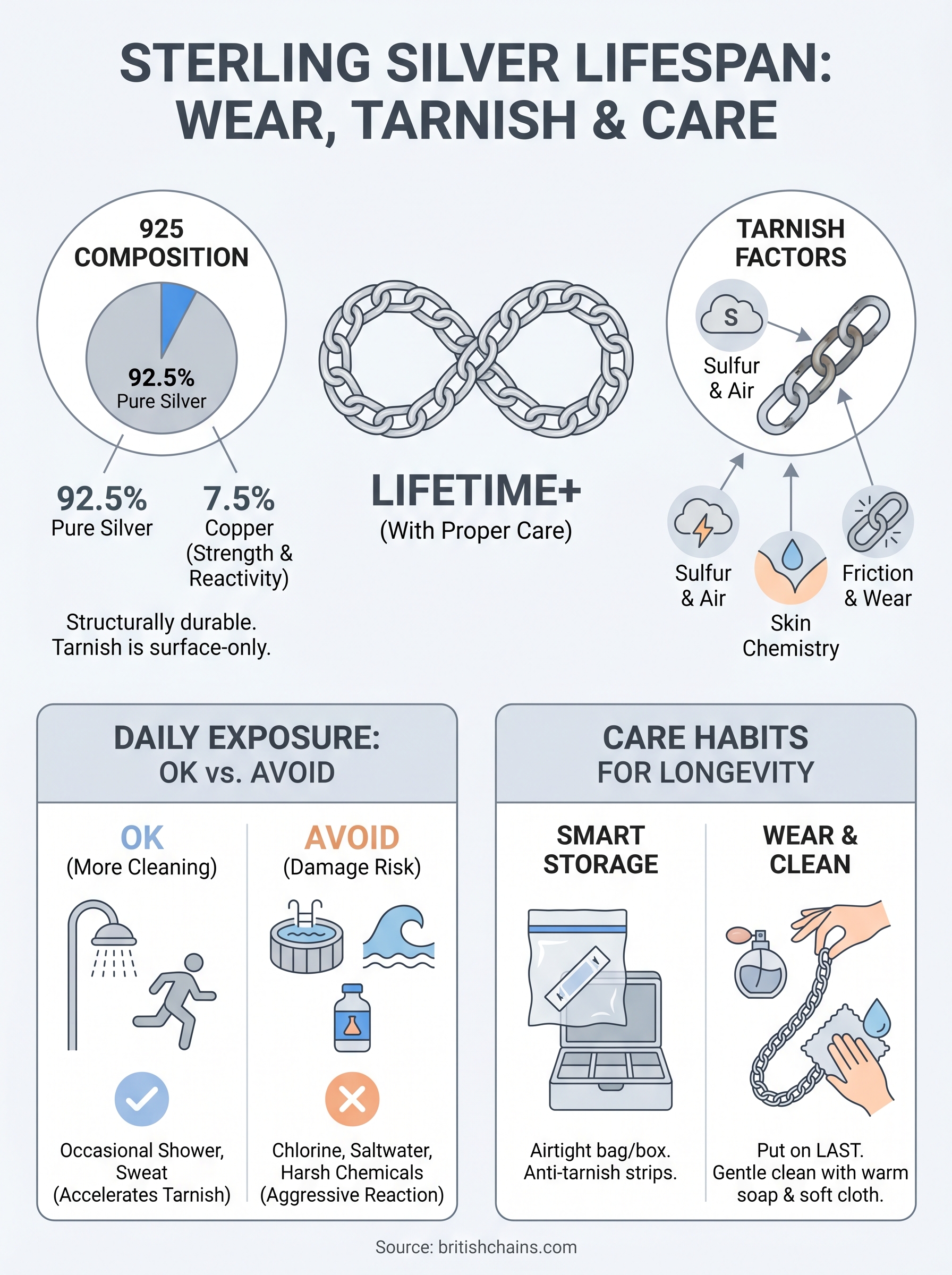
Sterling silver is not pure silver. Pure silver (99.9%) is too soft to hold a shape under daily wear, so jewelers alloy it with other metals, most commonly copper, to create a harder, more workable material. The result is sterling silver 925, named after its composition: 92.5% silver and 7.5% alloying metals. That small percentage of added metal is what gives your chain its structural strength.
The 92.5% composition and what it means for durability
The 925 stamp on your chain is a legal hallmark that confirms the metal content. Genuine 925 sterling silver is durable enough for daily wear, including being shaped into fine chain links without breaking under normal use. The copper in the alloy hardens the silver, but it also introduces the one well-known downside: reactivity. Copper oxidizes when it contacts moisture, oxygen, and sulfur compounds, and that oxidation is exactly what causes tarnish, the dark or yellowish discoloration you'll eventually notice on any sterling silver piece.
Sterling silver 925 is built to last a lifetime, but it requires occasional maintenance because the copper content reacts to the environment around it.
That reaction is not damage in the permanent sense. Unlike base metals that corrode and degrade structurally, tarnish on sterling silver sits on the surface and comes off with cleaning. The underlying metal stays sound. This is why you can find century-old sterling silver pieces that still polish up to a bright finish.
How thick and well-made chains hold up differently
Chain construction quality plays a large role in how long does sterling silver last in practical, everyday terms. Thicker chains with more robust links resist kinking and breaking far better than ultra-fine designs. A 2mm to 12mm sterling silver chain made with solid links handles daily wear, light tugging, and layering without stress fractures. Thinner chains need more careful handling but still last for years when worn and stored correctly.
What makes sterling silver tarnish or wear out
Two separate processes affect how long does sterling silver last in wearable condition: chemical tarnishing and physical wear. Both are predictable, and both are manageable once you know what triggers them.
Oxidation, sulfur, and skin chemistry
Tarnish forms when the copper in sterling silver reacts with sulfur and oxygen in the air. Sulfur compounds are everywhere: in the air, in certain foods, in rubber, and in some cosmetics and perfumes. When these compounds contact your chain, they bond with the copper at the surface and create silver sulfide, the dark, dull film you recognize as tarnish. Your skin chemistry matters too. Some people produce higher concentrations of acids and sulfur in their sweat, which means their chains tarnish faster than someone else's identical chain worn in the same conditions.
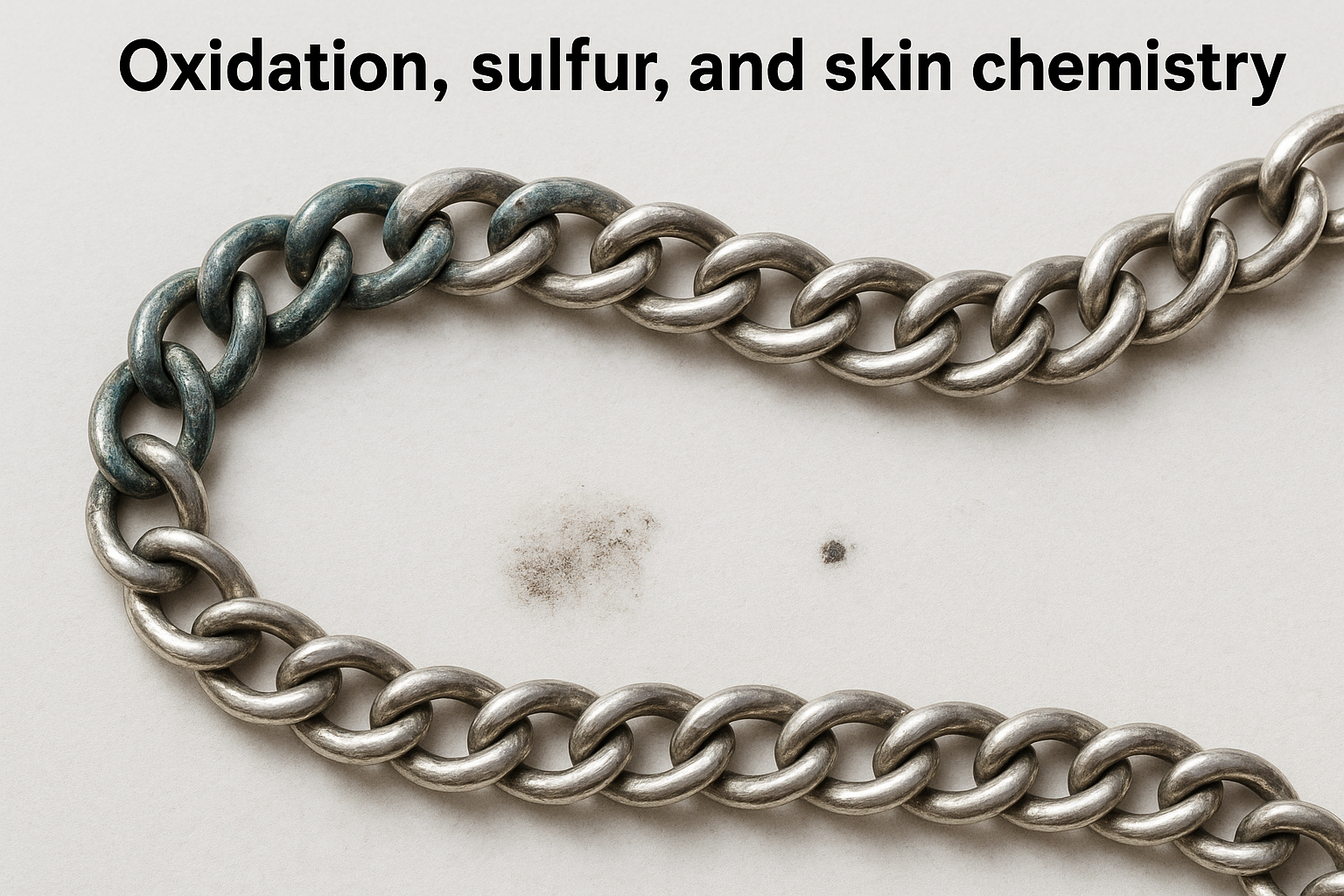
The speed of tarnish depends heavily on your environment and skin chemistry, not just the quality of the silver itself.
Physical wear from friction and daily use
Friction gradually removes tiny amounts of metal from the chain's surface, which is why frequently worn pieces develop a softer, matte appearance over time rather than a sharp polish. Links that rub against each other or against your skin slowly round off at the edges. Thicker, heavier chains resist this surface loss far better than fine, lightweight designs, which is worth considering before you buy.
Daily wear: showering, sweat, pool, and ocean
Understanding how daily exposure affects how long does sterling silver last helps you make smarter decisions about when to wear your chain and when to take it off. Not every environment carries the same risk, so knowing the difference saves you extra cleaning work.
Showering and sweat
Showering occasionally with your sterling silver chain won't ruin it, but doing it every day accelerates tarnish. Soap residue builds up in chain links and traps moisture against the metal, which speeds up oxidation. Sweat is a bigger concern than plain water because it contains salt, acids, and sulfur compounds that react directly with the copper in the alloy. If you work out regularly with your chain on, expect tarnish to develop faster than average.
Consistent exposure to moisture and sweat doesn't destroy sterling silver, but it shortens the gap between each cleaning.
Pools, hot tubs, and the ocean
Chlorinated water is genuinely harmful to sterling silver because chlorine reacts aggressively with the copper in the alloy, causing accelerated surface discoloration and potential pitting over time. Hot tubs are worse than pools because the chemical concentration is higher and the heat speeds up the reaction. Saltwater from the ocean strips the polished finish faster than freshwater, so remove your chain before swimming in the sea. A few exposures won't destroy your chain, but repeated contact causes noticeable and entirely preventable damage.
How to make sterling silver last longer
The biggest factor in how long does sterling silver last comes down to simple habits you build around wearing and storing it. Most tarnish and wear damage is preventable, not inevitable, and the steps involved take less than a minute of your time.
Storage habits that prevent tarnish
Air exposure drives tarnish, so how you store your chain matters significantly. Keep your chain in a sealed zip-lock bag or an airtight jewelry box when you're not wearing it. This limits contact with sulfur compounds in the air and slows oxidation. Anti-tarnish strips placed inside the bag or box absorb sulfur before it reaches your chain, extending the time between cleanings noticeably.
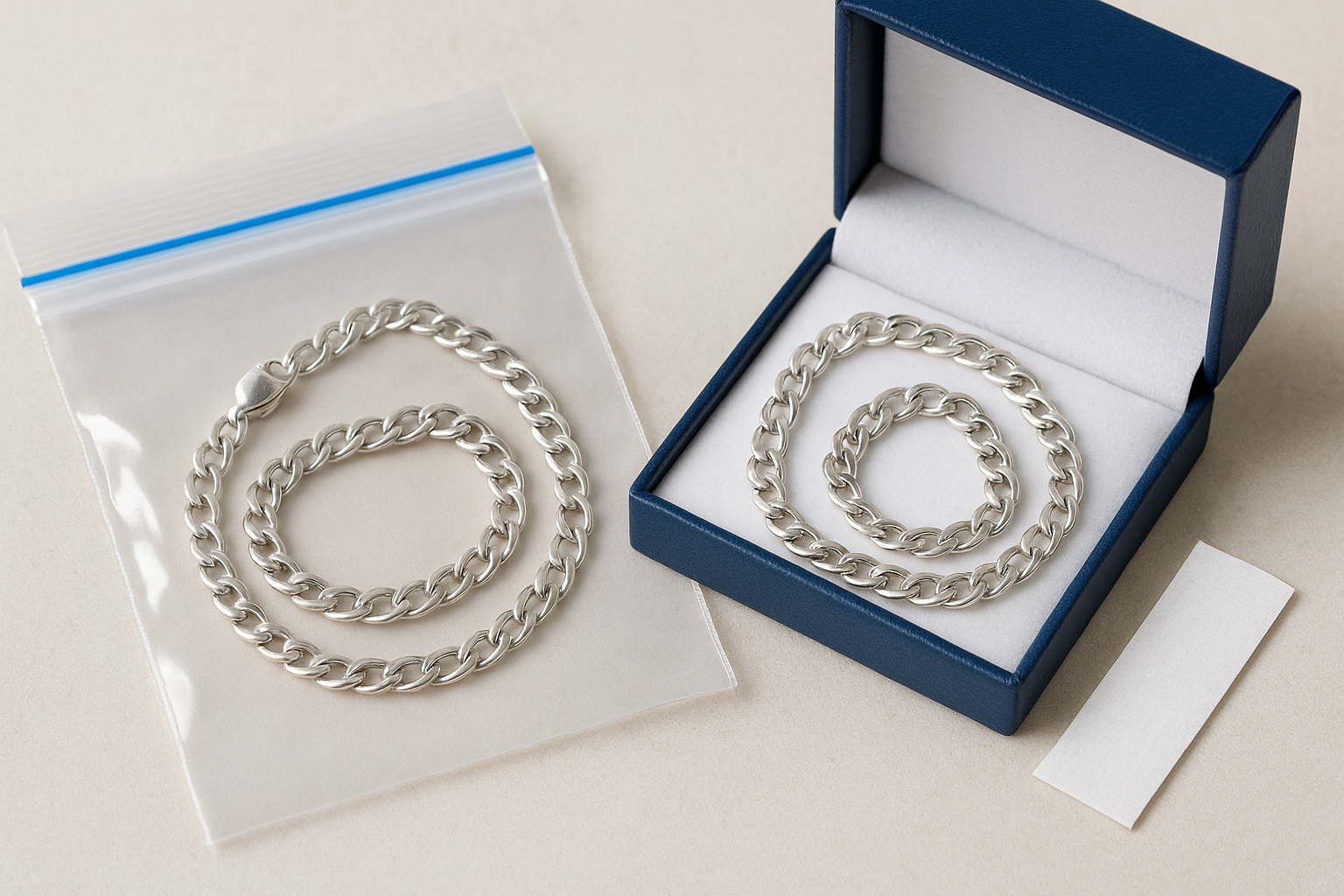
Proper storage alone can cut your tarnish rate significantly compared to leaving your chain out on a dresser.
Cleaning and wearing routines
Put your chain on last when getting ready, after applying perfume, lotion, or hair products. These products contain chemicals that react with the copper in the alloy and accelerate tarnish noticeably over time.
Take your chain off before workouts, swimming, or handling harsh cleaning chemicals. When you do clean it, a soft cloth with warm water and a small drop of dish soap removes surface tarnish without scratching the links.
When to clean, repair, or replace your chain
Knowing the right timing for maintenance is part of understanding how long does sterling silver last in real everyday use. Your chain will signal what it needs if you pay attention to a few clear indicators.
Signs it needs cleaning
Surface tarnish shows up as a dull yellow, brown, or dark gray film across the links. If your chain no longer reflects light the way it did when you bought it, that's your cue to clean it. A short soak in warm soapy water followed by gentle scrubbing with a soft toothbrush removes most tarnish at this stage without any specialized products or harsh chemicals.
Don't wait until tarnish turns black and heavy before cleaning, because lighter tarnish takes far less effort to remove.
When to repair or replace
A broken clasp or a single snapped link is worth repairing, particularly on a thicker chain where the rest of the metal remains structurally sound. A local jeweler can re-solder a broken link for a modest fee, and the underlying 925 sterling silver holds repairs well because the alloy is genuinely durable. If multiple links show stress fractures or the chain feels brittle in several spots, replacing it makes more practical sense than repeated repairs. Quality construction matters here, which is why starting with a well-made, properly hallmarked chain reduces the likelihood of reaching that point in the first place.
Final takeaways
How long does sterling silver last depends almost entirely on how you treat it, not on some fixed expiration built into the metal. Genuine 925 sterling silver is structurally durable enough to outlast most jewelry trends, and with basic care, it holds up for decades. Tarnish is temporary. Scratches are surface-level. Broken links are fixable. None of these are reasons to write off a well-made chain.
Your two most effective habits are storing your chain in a sealed bag when you're not wearing it and removing it before swimming or exercising. Do those two things consistently, and you'll clean your chain far less often. Avoid pools, hot tubs, and heavy chemical exposure, and your chain holds its finish noticeably longer than one worn without any thought. If you're ready to invest in a piece built to go the distance, browse the men's silver chains collection and find your next chain.


