

What is wheat chain style? Your complete UK buyer's guide
A wheat chain, also called a spiga chain, is a rounded, braided necklace built from four interwoven strands of oval links that together resemble a stalk of wheat. The finished profile is fluid and cylindrical rather than flat, which gives it a distinctive textile-like surface you can feel as much as see.
Two things to know immediately:
- Visual cue: The forward-facing braid creates a rippling, stalk-like texture that catches light evenly across its surface, unlike the flat glint of a curb or the spiral shimmer of a rope chain.
- Practical verdict: The rounded, braided construction makes it one of the better everyday chains for pendant wear — it resists kinking, sits comfortably against the neck, and allows pendants to move freely without snagging.
The rest of this guide covers how a wheat chain is constructed, how it compares with rope, franco, curb, and Figaro styles, what sizes and thicknesses to choose for pendant use, and what hallmark checks to run before buying in the UK.
Table of Contents
- How is a wheat chain actually made?
- How does a wheat chain differ from rope, franco, and curb styles?
- What sizes and thicknesses work best for pendants?
- Will a wheat chain hold up to daily wear?
- How to check wheat chain quality and hallmarks in the UK
- How to clean and care for a wheat chain
- How to style a wheat chain for different occasions
- Key takeaways
- Why wheat chains deserve more credit than they get
- Britishchains: hallmarked sterling silver chains for every style
- Useful sources and further reading
How is a wheat chain actually made?
The construction is what separates a wheat chain from every other braided style. Four strands of oval or figure-of-eight links are woven together in a forward-facing pattern, each strand interlocking with its neighbours so that no single link bears the full load of the chain. The result is a rounded, rope-like profile that is both flexible and structurally sound.
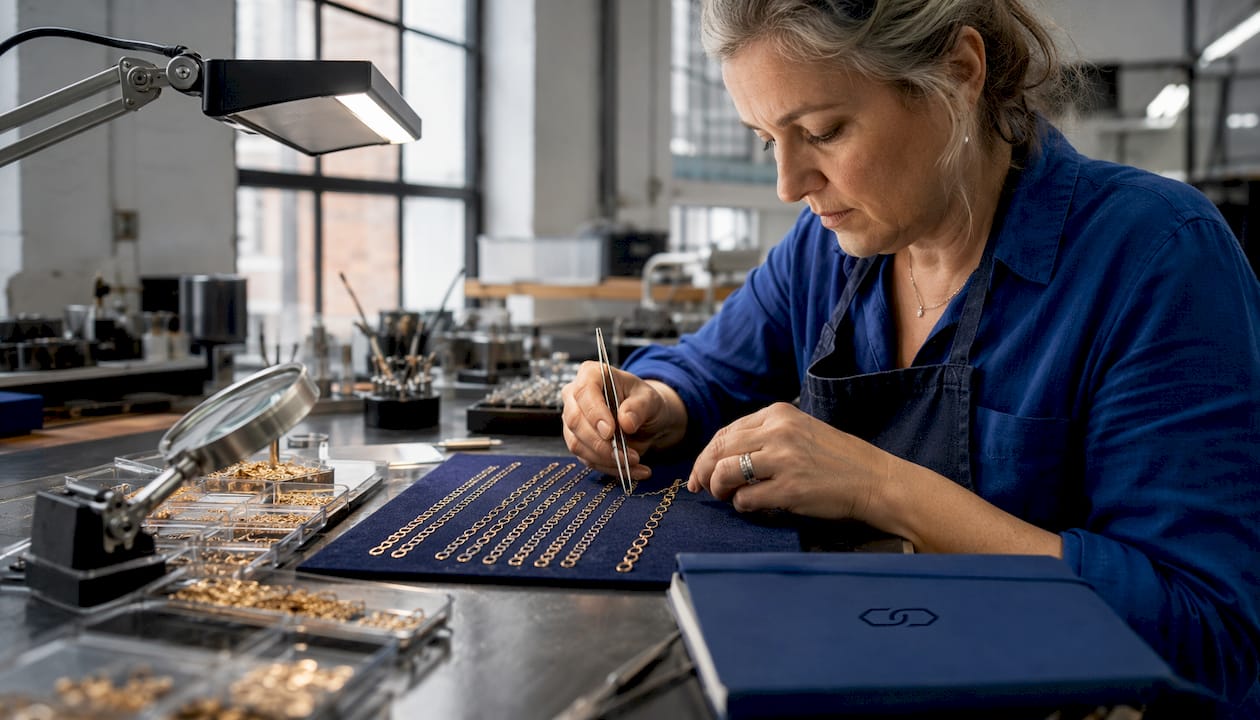
Figure-of-eight or tear-drop shaped links are the defining construction detail. They create the textile-like surface that distinguishes a wheat chain from a rope chain, which achieves its look through a spiral twist rather than a forward-facing braid. Run your finger along a wheat chain and you feel a series of smooth ridges; run it along a rope chain and you feel a helical groove.
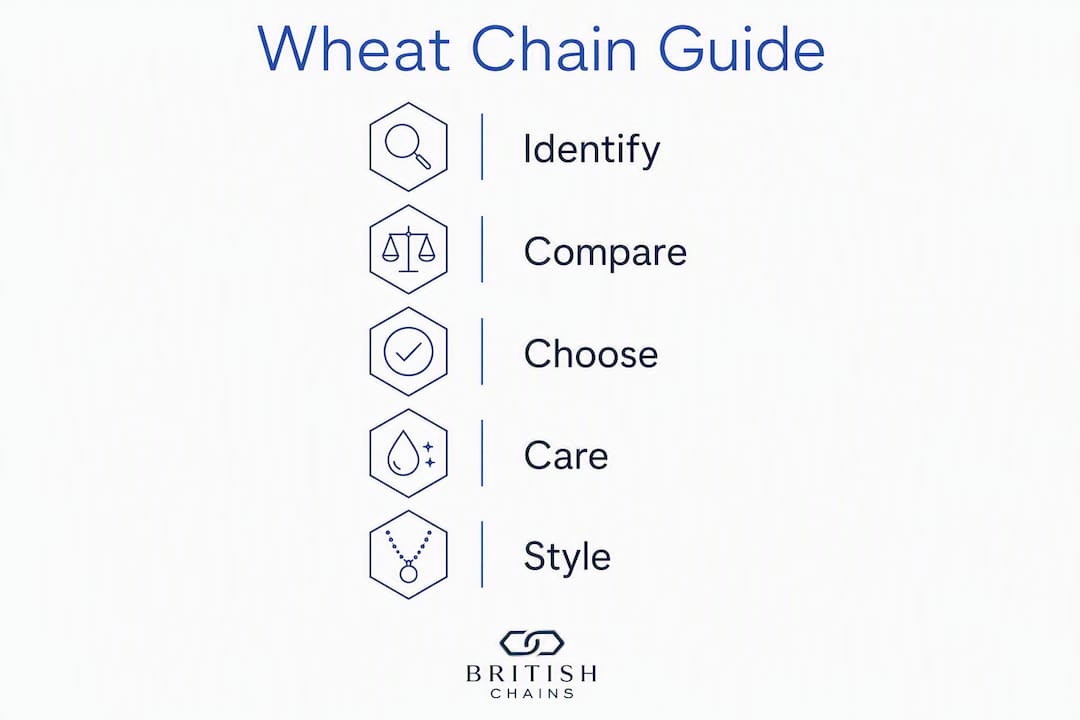
Common metals include 14k and 18k yellow or white gold, sterling silver (925), and platinum. Typical widths vary to suit delicate pieces and statement wear. The typical length near the collarbone is a popular choice for everyday pendant wear.
What to look for in a close-up image or in person:
- Uniform link shaping: Each link should be consistent in size and angle, with no flattened or misshapen sections.
- Smooth solder joints: Quality workmanship shows in even, barely-visible joins; rough or lumpy solder is a sign of a machine-stamped piece.
- Even polish: The finish should be consistent across the entire length, with no dull patches where links meet.
- Flexibility: A well-made wheat chain drapes naturally; a stiff one suggests fused or poorly formed links.
How does a wheat chain differ from rope, franco, and curb styles?
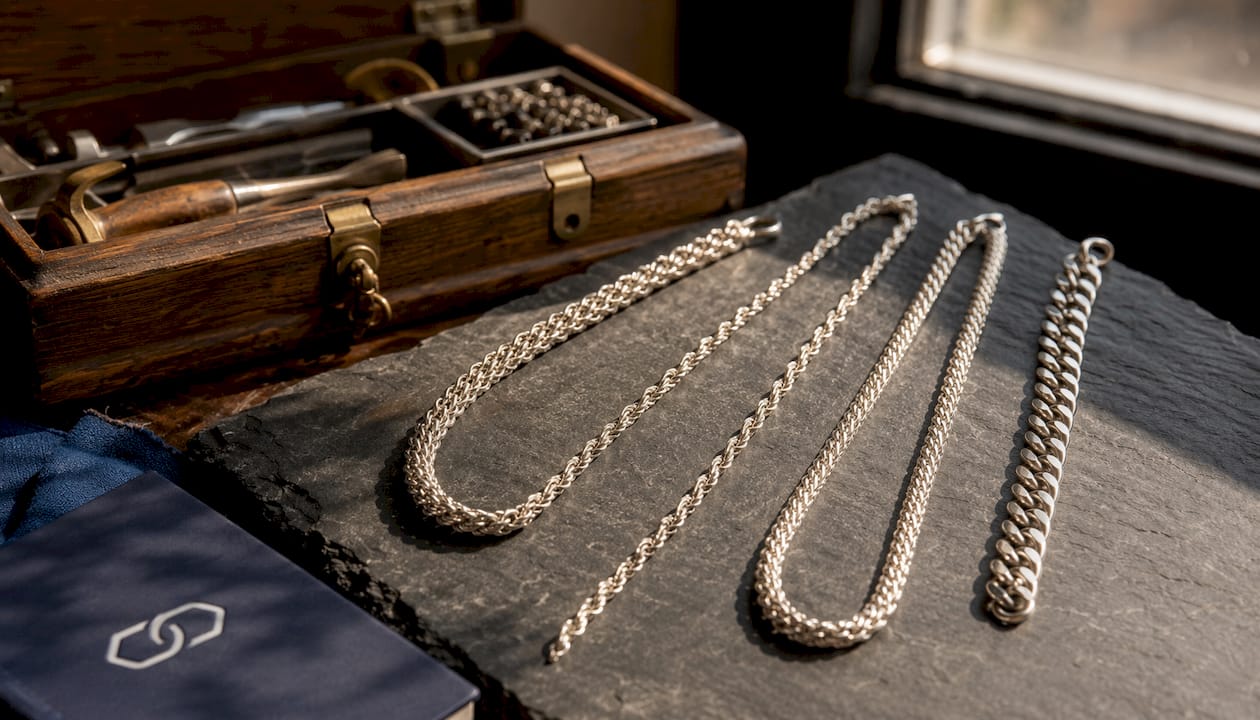
The wheat chain is frequently confused with rope and franco chains because all three have a braided or twisted appearance. The differences matter when you are choosing a chain for a pendant or a specific look.
| Chain type | Link construction | Profile | Typical stiffness | Pendant suitability | Common widths |
|---|---|---|---|---|---|
| Wheat (spiga) | Four interlocked oval/figure-of-eight strands | Rounded, fluid | Flexible | Excellent | Various widths |
| Rope | Spiral-twisted oval links | Rounded, helical | Moderate | Good | Various widths |
| Franco | Square links in a V-pattern | Boxy, squared | Firm | Good | Various widths |
| Curb | Flat, interlocking oval links | Flat | Flexible | Good | Various widths |
| Figaro | Alternating long and short curb links | Flat | Flexible | Good | Various widths |
| Box | Square links in a grid | Flat, geometric | Moderate | Moderate | Various widths |
Wheat vs rope: Both are rounded, but a rope chain achieves its look through a spiral twist, giving it a helical groove along its length. A wheat chain’s forward-facing braid produces a smoother, more uniform surface. The rope chain tends to feel slightly stiffer at the same width.
Wheat vs franco: A franco chain uses squared links arranged in a V-pattern, producing a boxy, firmer profile. It sits more rigidly on the neck. The wheat chain is softer in drape and more comfortable for all-day wear.
Wheat vs curb and Figaro: Curb and Figaro chains are flat, with open, interlocking oval links that lie flush against the skin. They show more of the metal’s surface and have a bolder, more graphic look at the same width. A wheat chain at 3mm reads as more textured and understated than a curb chain at the same measurement.
For pendant use, the wheat chain’s rounded profile and flexibility make it compatible with most pendant bails and with other chain textures when layering. For a statement-only piece with no pendant, a wider curb or franco chain delivers more visual impact per millimetre.
What sizes and thicknesses work best for pendants?
Thickness is the single most important variable. Too thin and the chain looks overwhelmed by the pendant; too thick and the pendant gets lost against the chain’s own texture.
| Length | Where it sits | Best use | Recommended thickness |
|---|---|---|---|
| Short lengths | Base of throat | Choker-style, no pendant | Suitable for delicate chains |
| Medium lengths | Collarbone to upper chest | Everyday to medium pendant wear | 2–3mm for small to medium pendants |
| Longer lengths | Mid-chest and below | Larger pendants, statement wear | Suitable for statement pieces |
Delicate wheat chains around 1mm suit layering and minimalist looks. A 2–3mm width is the most practical range for carrying small to medium pendants safely, giving the chain enough structural mass without dominating the pendant itself. For chain width guidance beyond wheat chains, the same principles apply across most styles.
Practical checks before attaching a pendant:
- Bail width: The pendant’s bail (the loop that slides onto the chain) should fit the chain’s width comfortably, with a little room to move.
- Clasp strength: A lobster-claw clasp is the most secure for pendant use; spring-ring clasps are adequate for lighter pieces only.
- Jump ring: If the pendant uses an open jump ring, ask a jeweller to solder it closed. An open ring is the most common point of pendant loss.
Pro Tip: For heavier pendants, consider a wider wheat chain and confirm the clasp’s strength for the combined weight. A soldered jump ring at the bail connection adds meaningful security for pieces you wear daily.
Will a wheat chain hold up to daily wear?
The braided structure is genuinely one of its strengths. Because the load is distributed across multiple interlocking link junctions rather than concentrated on a single strand, a wheat chain resists kinking far better than cable or box styles of comparable weight.
Comfort attributes worth noting:
- The rounded profile sits smoothly against the neck and does not catch on clothing the way flat-link chains sometimes do.
- Flexibility is consistent along the full length, so the chain moves with the wearer rather than pulling at one point.
- Low snag risk compared with open-link styles such as cable or oval chains.
For sterling silver chain durability in general, the alloy’s hardness matters as much as the link pattern. Sterling silver (925) is harder than fine silver and holds its shape well under daily use.
When a wheat chain does break, it typically fails at the clasp or jump ring rather than at an individual chain link. That is actually good news: clasp and jump-ring repairs are straightforward for any competent jeweller, and the chain body itself usually remains intact. Machine-made wheat chains with stamped or fused links are more prone to kinking over time than hand-woven pieces, so construction quality matters for longevity.
How to check wheat chain quality and hallmarks in the UK
In the UK, any item of precious metal sold as sterling silver must carry a hallmark from one of the four recognised assay offices: the London Assay Office, Birmingham Assay Office, Edinburgh Assay Office, or Sheffield Assay Office. For a sterling silver wheat chain, look for:
- 925 stamp: Confirms the metal is 92.5% pure silver (sterling standard).
- Assay office mark: A specific symbol for each office (anchor for Birmingham, leopard’s head for London, castle for Edinburgh, rose for Sheffield).
- Maker’s mark: The manufacturer or sponsor’s registered mark, usually two or three letters.
- Date letter (optional): Some pieces carry a letter indicating the year of assay; not mandatory but a sign of thorough hallmarking.
For gold wheat chains, look for the carat mark (375 for 9k, 585 for 14k, 750 for 18k) alongside the assay office symbol.
Workmanship checklist when buying online or in person:
- Request close-up images of the full length, the clasp, and the hallmark stamp.
- Check that links are uniform in size and that the braid pattern is consistent from end to end.
- Confirm solder joints are smooth and that the clasp opens and closes cleanly.
- Prefer hallmarked pieces for resale value and for jewellers’ repairability — an unmarked chain is harder to assess and harder to sell on.
A partner like Keir Fine Jewellery can advise on reading hallmarks and assessing workmanship if you are buying a higher-value piece and want an independent opinion.
How to clean and care for a wheat chain
The braided crevices trap oils, skin debris, and product residue more readily than open-link chains. Routine cleaning with a soft brush is the single most effective way to keep a wheat chain looking its best.
Daily care:
- Remove the chain before sleeping, showering, and swimming.
- Keep it away from perfume, hairspray, and lotions — apply these first, then put the chain on once products have dried.
- Wipe with a soft, lint-free cloth after wearing to remove surface oils.
Deep clean (monthly or as needed):
- Fill a small bowl with warm water and a drop of mild washing-up liquid.
- Submerge the chain and leave for 5–10 minutes to loosen debris.
- Use a soft toothbrush to work gently into the crevices along the braid, using short strokes.
- Rinse thoroughly under clean, lukewarm running water.
- Pat dry with a soft cloth, then leave flat on a clean surface to air-dry fully before storing.
- Store in a soft pouch or lined box, ideally separated from other chains to prevent tangling.
Safety notes: Avoid abrasive cloths or silver-dip solutions on plated pieces — these strip the surface coating. For heavily tarnished sterling silver, a jeweller’s ultrasonic cleaner is effective, but confirm the piece is solid sterling (not plated) before using one.
How to style a wheat chain for different occasions
The wheat chain’s texture and rounded profile make it one of the more versatile styles for layering. Its surface catches light differently from flat chains, so pairing it with a curb or box chain at a contrasting length creates visual interest without the two chains competing.
Practical styling combinations:
- Layered look: Wear a 1–2mm wheat chain at 16 inches alongside a 3mm curb at 20 inches. The contrast in texture and length reads as deliberate rather than accidental.
- Pendant everyday wear: An 18-inch, 2–3mm wheat chain with a small pendant (a disc, a letter, a simple stone setting) is the most wearable daily combination. It works under a collar or over a crew neck equally well.
- Gender-neutral and office-appropriate: A 2mm wheat chain at 18–20 inches worn alone reads as understated and polished. It suits open-collar shirts, fine-knit jumpers, and smart-casual dressing without reading as overtly formal or overtly streetwear.
- Smart evening: A wider wheat chain (3–4mm) in sterling silver or white gold at 20 inches, worn without a pendant, works well against a dark shirt or dress for an evening look that is textured rather than flashy.
For matching chain styles across different outfits and layering combinations, the same length-and-texture principles apply to most chain types.
Key takeaways
A wheat (spiga) chain is one of the most pendant-friendly and kink-resistant chain styles available, and checking for a UK hallmark stamp is the single most reliable quality indicator when buying in sterling silver or gold.
| Point | Details |
|---|---|
| Visual identification | Look for a rounded, braided profile with a rippling, stalk-like texture — not flat, not spiralled. |
| Pendant suitability | 2–3mm width at 18–20 inches is best for carrying most small to medium pendants; solder the jump ring for security. |
| Durability | The four-strand braid distributes tension across multiple junctions, making it more kink-resistant than single-strand styles. |
| UK quality checks | Look for the 925 stamp plus an assay office mark (anchor, leopard’s head, castle, or rose) on any sterling silver piece. |
| Britishchains | Britishchains stocks hallmarked sterling silver chains in curb, Figaro, rope, and related styles with UK quality assurance. |
Why wheat chains deserve more credit than they get
The wheat chain sits in an odd position in the market. It is technically demanding to produce well, historically significant (Mediterranean goldsmiths were making spiga-style chains in antiquity as a mark of craft skill), and genuinely more comfortable for daily wear than most flat-link alternatives. Yet it rarely gets the attention that curb and rope chains attract.
Part of that is marketing. Curb chains photograph well in flat lay shots; wheat chains need a close-up or a worn shot to show what makes them special. The texture and rounded profile only become apparent when you see the chain against skin or in motion.
The other underappreciated point is longevity. A well-made wheat chain is a considered long-term piece precisely because the braided structure holds up where simpler chains fail, and because the design is genuinely timeless. It does not read as a trend piece from a particular decade the way some chain styles do. Wearers tend to keep them.
If you are building a collection rather than chasing a moment, a hallmarked sterling silver wheat chain at a practical width is one of the more defensible purchases you can make.
Britishchains: hallmarked sterling silver chains for every style
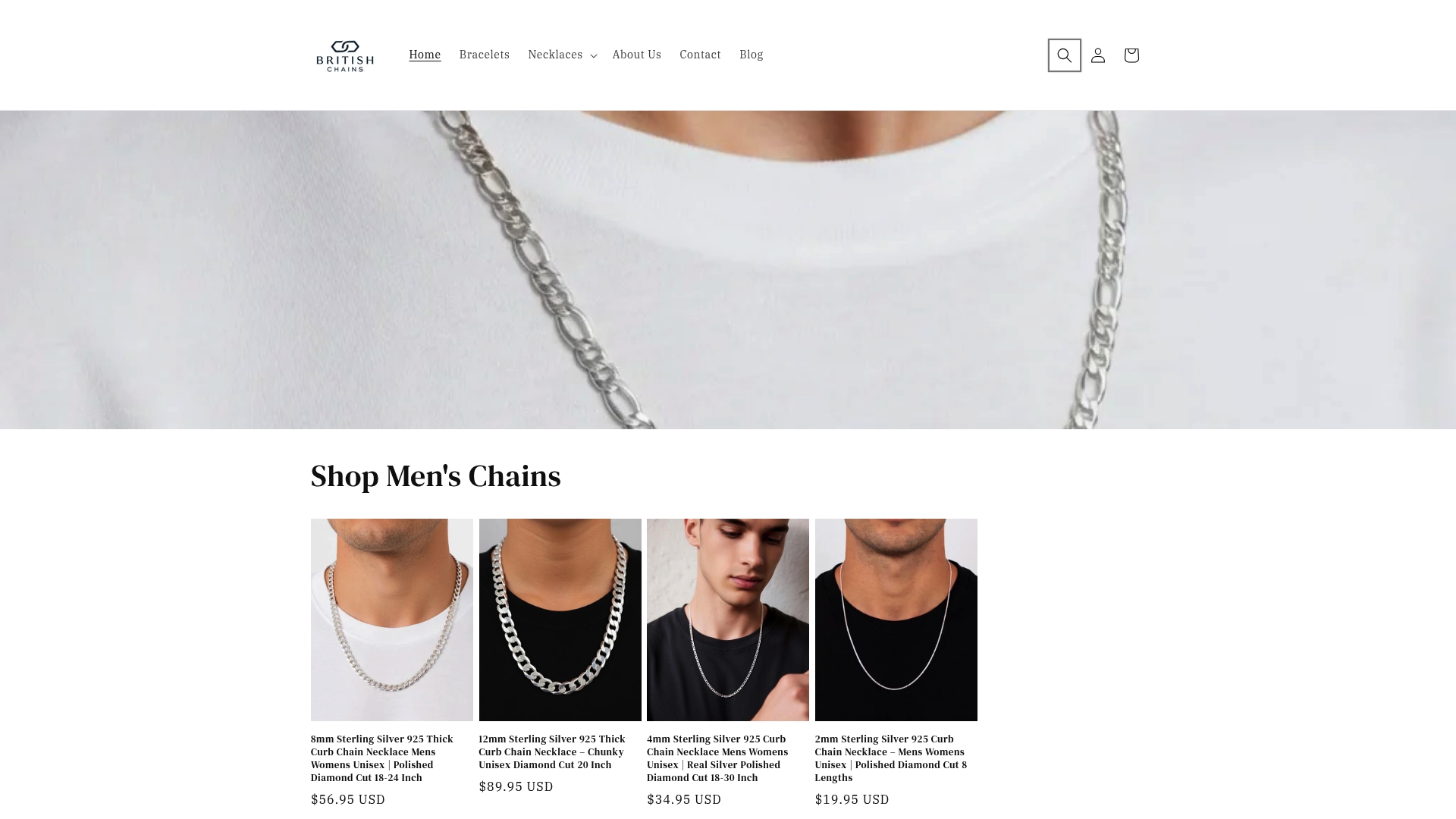
Britishchains carries a range of hallmarked sterling silver chains suited to the styles and pendant combinations covered in this guide. The collection includes slim curb chains for delicate pendant work, chunky Figaro options for those who prefer alternating link patterns, and twisted rope chains for buyers who want a rounded braided profile in a well-established style. Every piece carries the 925 hallmark and is available in multiple lengths and widths. Browse the full collection at Britishchains.com and use the size and thickness guidance in this article to find the right fit for your pendant or layering combination.
Useful sources and further reading
- UK Assay Offices: The four recognised UK assay offices (London, Birmingham, Edinburgh, Sheffield) publish guidance on hallmarking standards and what marks to expect on precious metal jewellery. The Birmingham Assay Office at bac.co.uk and the London Assay Office at theassayoffice.com are the most comprehensive starting points.
- GOV.UK hallmarking guidance: The UK government’s official hallmarking information is available at gov.uk/guidance/hallmarking, covering legal requirements for precious metal articles sold in the UK.
- Types of necklace chains — Arden Jewelers (mygemologist): A clear visual reference for identifying chain types including wheat, rope, and franco styles.
- The art of wheat chain necklaces — Quantum Qarat: Covers construction, historical context, and durability in detail.
- About jewelry chain — WireJewelry.com: Practical notes on workmanship cues and the difference between hand-woven and machine-made wheat chains.


