

Magnetic Clasps Safe for Jewellery Buyers: 4–8mm Sizing & Hybrids
Yes, magnetic clasps are safe for the vast majority of wearers, provided the magnet strength matches the weight of the piece and you fasten it correctly. The main exceptions are people with pacemakers or other implanted medical devices, who should keep magnets at a safe distance or avoid them entirely, and heavier statement pieces, which fare better with a mechanical clasp or a hybrid locking design. Accessibility gains make magnetic fastenings genuinely useful for anyone with limited dexterity.
TL;DR:
- Magnetic clasps are suitable for light to medium jewelry and are ideal for individuals with limited hand strength or dexterity.
- They should be avoided by people with pacemakers or implantable devices unless instructed to keep magnets at a safe distance by a medical professional.
- Properly fitted magnetic clasps include locking pins or secondary safety chains to prevent accidental opening or loss.
- Magnetic strength and size must match the jewelry’s weight, with small magnets for delicate chains and larger or hybrid designs for heavier pieces.
- Regular cleaning and simple tug tests can maintain clasp reliability, but heavy or high-friction jewelry may require a mechanical clasp for added security.
Table of Contents
- Who should use magnetic clasps (and who should avoid them)
- How magnetic clasps work and the common designs
- Health and electronic risks: pacemakers, cards and watches
- How secure are magnetic clasps in practice and their failure modes
- How to choose the right magnetic clasp for your chain or bracelet
- Simple maintenance and the checks to make magnetic clasps reliable
- Author perspective: balancing accessibility and security
- Recommended chain styles and retrofit options
- Sources
Who should use magnetic clasps (and who should avoid them)
Magnetic clasps suit specific people and specific jewellery far better than others, and knowing which camp you fall into saves a lot of frustration later.
- Good fit: anyone with arthritis, tremor, or reduced hand strength who struggles with tiny lobster clasps or spring rings.
- Good fit: light-to-medium chains, thin bracelets, and pendants worn away from crowded or high-friction environments.
- Avoid without medical advice: anyone with a pacemaker, implantable cardioverter-defibrillator, or similar device.
- Avoid or reinforce: heavy curb chains, chunky bracelets, or anything you’d hate to lose in a crowd.
- Consider a hybrid: locking-pin or vertical-lock designs when you want magnetic ease but can’t accept the risk of a chain sliding open.
If you handle magnetic-stripe cards constantly for work, a safety chain or a hybrid clasp is worth the small extra cost.
How magnetic clasps work and the common designs
Nearly every magnetic clasp on the market uses neodymium magnets, a rare-earth alloy chosen because it delivers strong holding force from a tiny, lightweight disc. That’s what lets a clasp barely bigger than a grain of rice hold a full chain around your neck all day.
Three broad designs exist, and they don’t behave the same way under stress:
- Side-to-side (flat) magnets: the two halves snap together face to face. Simple and cheap, but vulnerable to lateral sliding if snagged.
- Vertical or barrel designs: the magnets align along the length of the clasp, which resists sideways pull better than a flat pairing.
- Locking-pin hybrids: a hidden mechanical pin or latch engages once the magnets pull the halves together, described in patent filings such as US7073232B1 as a way to combine magnetic convenience with a physical lock.
As a rough sizing rule: small (around 4mm to 5mm) magnets suit thin chains and delicate bracelets, medium magnets (6mm to 8mm) handle everyday necklaces, and anything heavier really wants a locking-pin design rather than a bigger magnet alone.
Health and electronic risks: pacemakers, cards and watches
Pacemaker interference is the one risk that genuinely matters here. Manufacturer safety notices routinely warn that the small neodymium magnets inside clasps can alter how a pacemaker or implantable defibrillator behaves if brought too close.
A commonly recommended safe distance is a small gap between the magnet and the device, though this is general guidance rather than a personal clearance, so anyone with an implanted cardiac device should check with their cardiologist or device manufacturer before wearing one at all.
Away from medical devices, the everyday risks are smaller but still worth planning around:
- Magnetic-stripe cards (older bank cards, hotel keycards, some travel passes) can demagnetise if left pressed against a clasp for extended periods.
- Mechanical watches can suffer timing interference from close, prolonged contact with strong magnets.
- Encased magnets, where the metal sits inside a sealed housing rather than exposed, reduce both risks by keeping direct contact to a minimum.
Read the safety notice that comes with any magnetic clasp before you wear it daily, and keep it away from card wallets, watch faces, and hospital settings where equipment sensitivity matters.
How secure are magnetic clasps in practice and their failure modes
Magnetic clasps hold well in normal wear, but they fail in predictable ways. The most common is lateral sliding: a bag strap, seatbelt, or a child’s grabbing hand pulls the two halves sideways rather than straight apart, and a basic flat magnet has little resistance to that motion. Snagging on clothing and gradual wear on the magnet housing are the other two causes worth watching for.
Three features consistently reduce these risks:
- Locking pins that engage mechanically once the magnet halves meet.
- Vertical or barrel alignment, which resists sideways pull better than flat magnets.
- A secondary safety chain, fitted as a backup in case the main clasp does open.
If you’re buying something you genuinely could not bear to lose, such as an heirloom pendant or a solid gold-weight chain, a traditional mechanical clasp still beats any magnet on pure holding force.
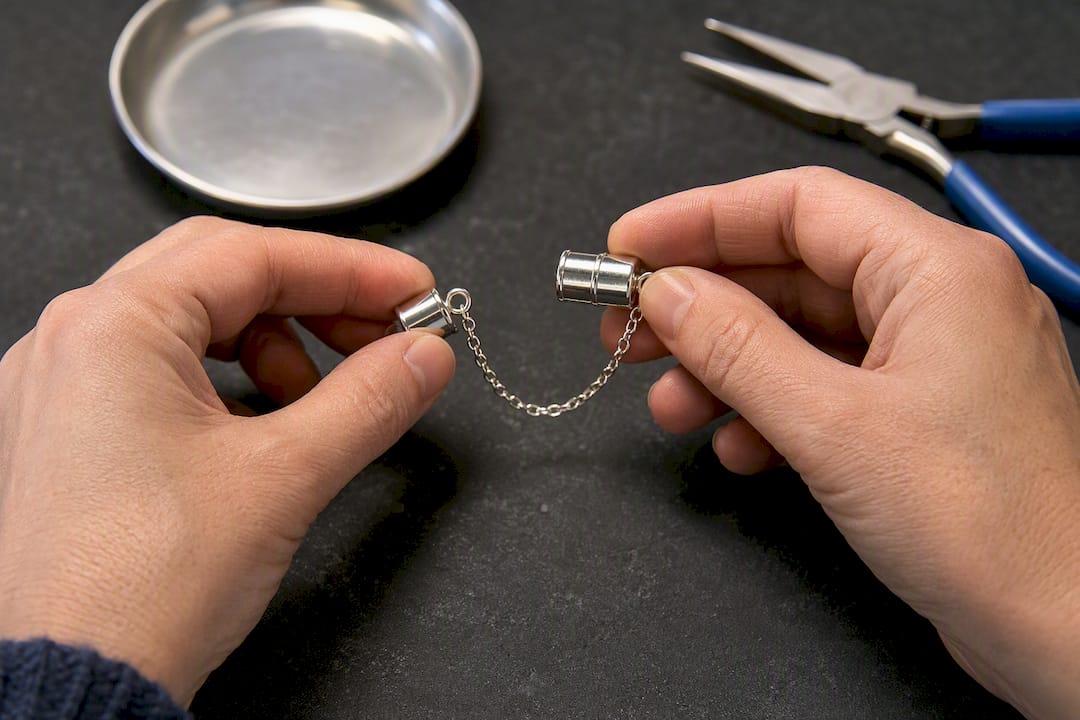
Pro Tip: Fit a short safety chain on any magnetic piece you wear to work, on public transport, or anywhere crowded. It costs almost nothing and turns a “might come loose” risk into a non-issue.
How to choose the right magnetic clasp for your chain or bracelet
Getting this right comes down to matching magnet strength to weight, not to buying the strongest magnet you can find.
- Weigh the piece mentally, not literally. Thin chains and pendants under a few grams suit small magnets; anything chunkier needs medium or a hybrid.
- Check the finish. Sterling silver clasps should match the rest of the chain’s finish so the metal doesn’t tarnish at a different rate.
- Ask about encasing. On plated pieces especially, an encased magnet protects both the magnet and the plating from wear.
- Ask your jeweller about hybrid options. Locking-pin or vertical-lock clasps can often be fitted to an existing chain, not just bought new.
- Ask whether a safety chain can be retrofitted. Most jewellers can add one to an existing piece in minutes.
If you’re choosing a bracelet specifically, weight matters even more because wrists knock against things all day; our 925 silver bracelet guide covers sizing in more detail.
Simple maintenance and the checks to make magnetic clasps reliable
Keep magnetic faces clean with a soft, dry cloth once a week and skip anything abrasive or chlorine-based, since saltwater and chlorine degrade the casing over time. Take the piece off before swimming or showering as a matter of habit.
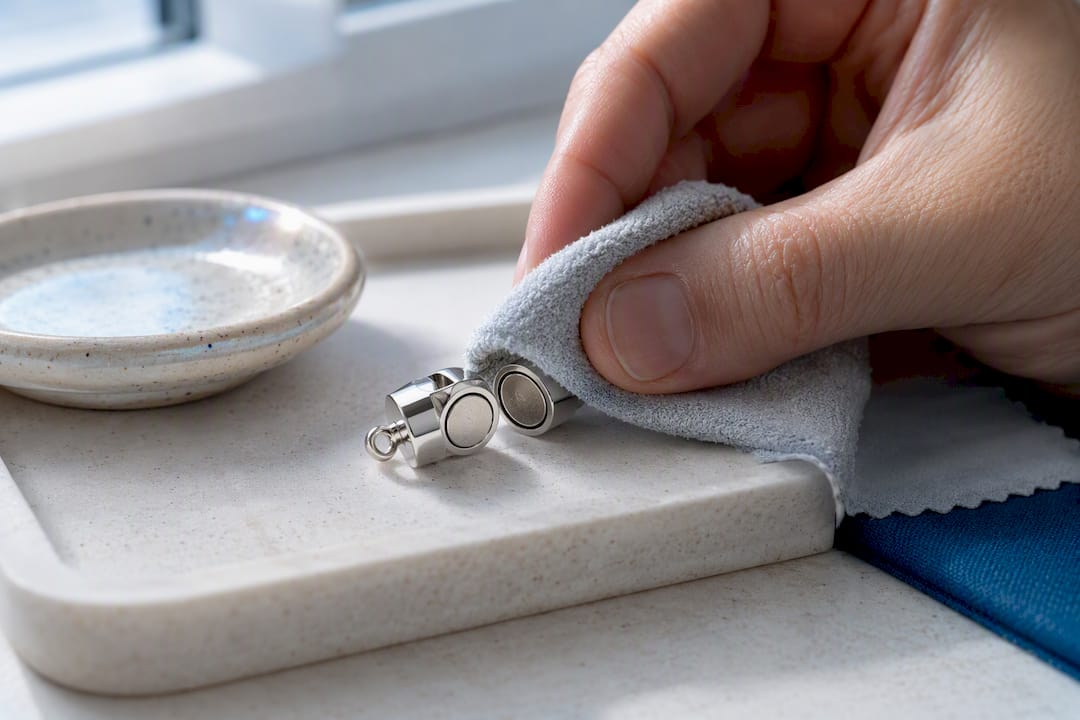
The tug test is the quickest health check: fasten the clasp, then gently pull straight and sideways. A properly fitted clasp gives a crisp snap and resists sideways movement; a wobble or a faint give is a sign to replace it.
Pro Tip: If the tug test feels weaker than it did a month ago, the magnet itself may be degrading rather than the chain. Replace the clasp rather than the whole piece.
Author perspective: balancing accessibility and security
The debate around magnetic clasps often gets framed as security versus convenience, and that’s a false choice. The real answer is matching the design to the piece and the wearer, not picking a side. A locking-pin clasp on a lightweight chain gives you nearly all the ease of a magnet with none of the sideways-slide worry that gives magnets a bad reputation.
Working across sterling silver hallmarking and chain construction day to day makes one thing obvious: most magnetic clasp complaints trace back to a magnet that was simply too weak for the chain it was holding, not a flaw in the concept itself.
— British
Recommended chain styles and retrofit options
If you’re leaning towards a magnetic or hybrid clasp, the chain you pair it with matters as much as the clasp itself. Lighter styles carry magnetic fastenings without complaint, while heavier pieces need either a stronger hybrid lock or a traditional clasp instead.
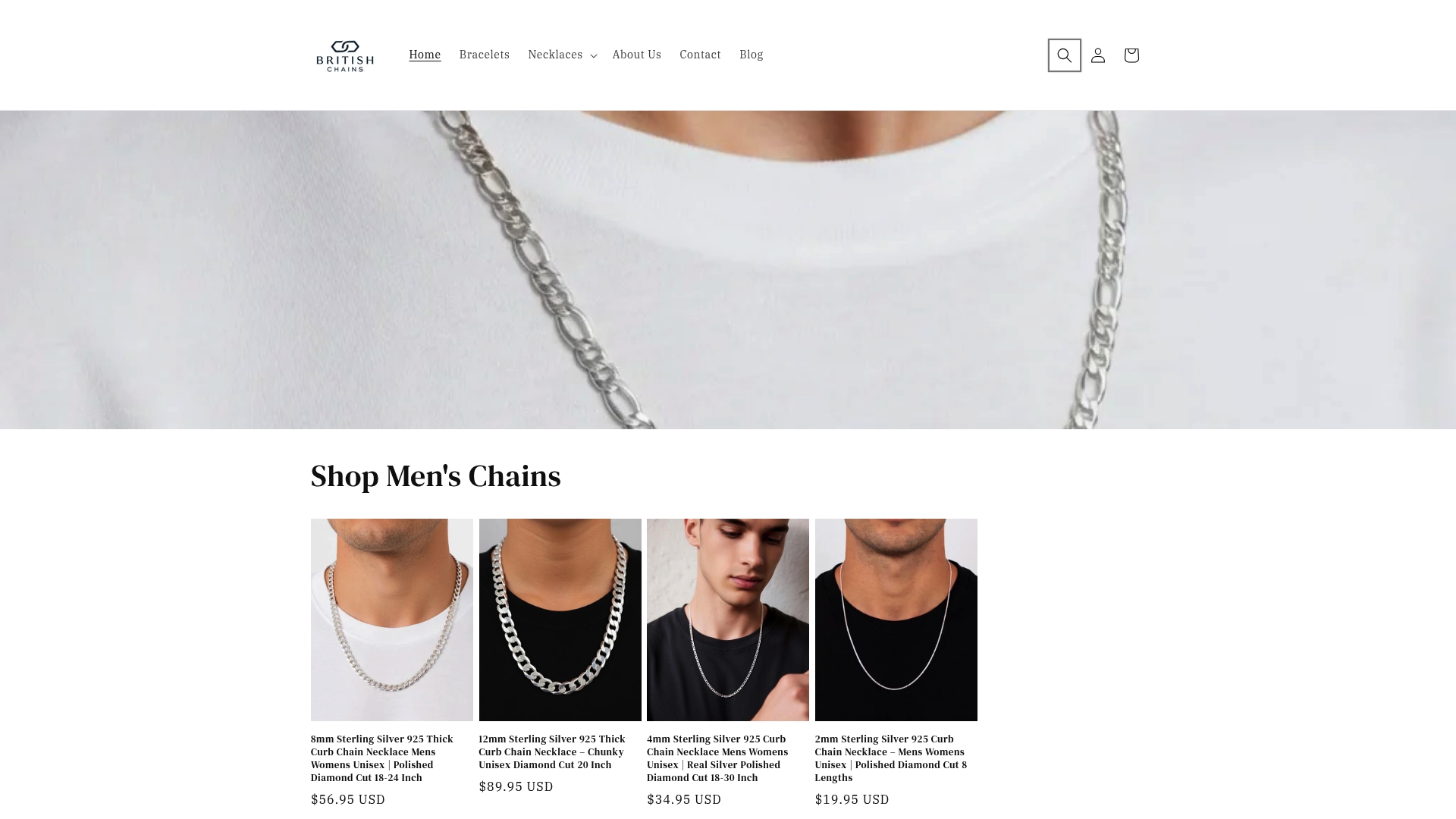
For everyday wear, a 2mm curb chain or a 2mm Figaro chain sits comfortably within the weight range most magnetic clasps handle well, and the same goes for a 2mm snake chain, a herringbone chain, or a slim twisted rope chain. If you’ve got your eye on something heavier, such as an 8mm curb chain or a 12mm curb chain, talk to us about a hybrid locking clasp rather than a standard magnetic one. Every chain leaves hallmarked and ready for a clasp swap or retrofit if you already own the piece. Browse the sterling silver chain buying guide or head straight to the product range to find the right pairing for your next piece.
Sources
- Magnetic Clasp Safety — NOTCH
- Magnetic clasps: Do they work — Martin Busch Jewelers
- US Patent US7073232B1 — magnetic clasp with safety catch


