

Chain Length Necklace: How To Measure It For The Right Fit
Ordering a chain online and realizing it sits too high on your neck, or hangs way too low, is frustrating. The fix is simple: learn how to measure chain length necklace style before you buy. A couple of minutes with a tape measure (or even a piece of string) saves you the hassle of returns and gets you a chain that actually fits the way you want it to.
At British Chains, we sell sterling silver 925 chains in lengths ranging from 8 to 30 inches, so we hear this question constantly. Whether you're measuring your neck for the first time, sizing an existing necklace you love, or picking the right length as a gift, the process is straightforward once you know what to do.
This guide walks you through every method step by step, from measuring your bare neck to using a chain you already own as a reference. You'll also find size charts broken down by gender and body type, plus tips on how different chain styles (curb, rope, figaro, and others) can affect where a necklace actually falls. By the end, you'll know exactly which length to pick without second-guessing yourself.
What necklace chain length means
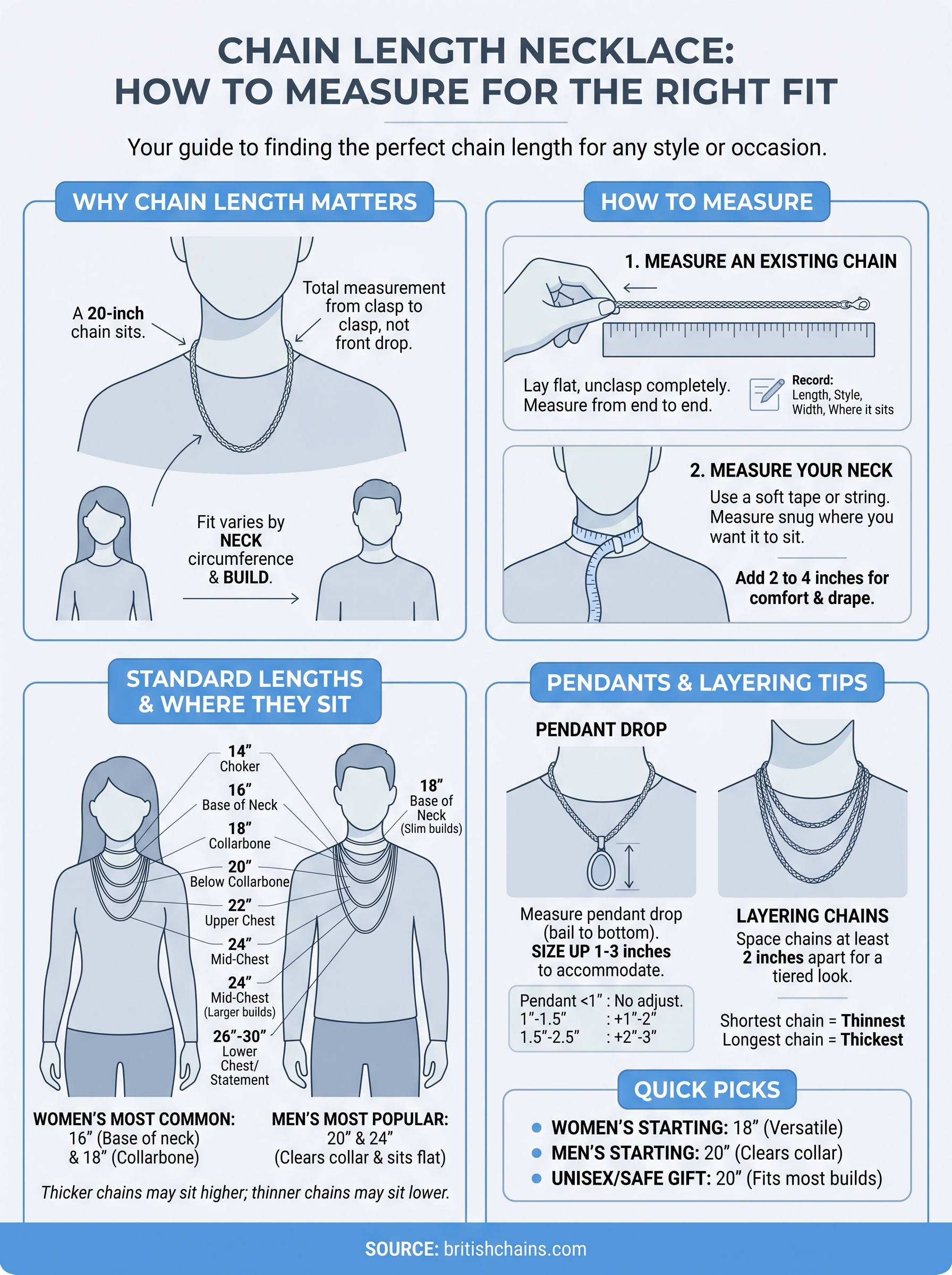
Chain length is the total measurement of a necklace from one end of the clasp to the other, measured flat in a straight line. When a product listing says "20 inches," that number tells you the full length of the chain, not the distance from the back of your neck to the front. This distinction matters because where a chain actually sits on your body depends on how that total length distributes around your neck and chest, which varies from person to person based on neck circumference and build.
How the measurement works
Manufacturers measure chain length by laying the necklace flat on a surface and measuring from one end of the clasp to the other end. You get the same result when you measure a chain you already own using a ruler or soft tape measure. Most chains sold in the US are measured in inches, though some European retailers list measurements in centimeters. For reference, 1 inch equals 2.54 centimeters, so a 45cm chain is roughly 18 inches and a 50cm chain is roughly 20 inches. Knowing this conversion prevents confusion when you're comparing products across different retailers.
If a listing shows a single length measurement, that number represents the full circumference of the chain when worn, not the pendant drop or the visible front portion.
Where each length sits on your body
The same chain length can sit at very different points depending on your neck circumference and overall body frame. The table below gives you a reliable starting reference based on average proportions, but your own neck measurement always takes priority over any general guide.
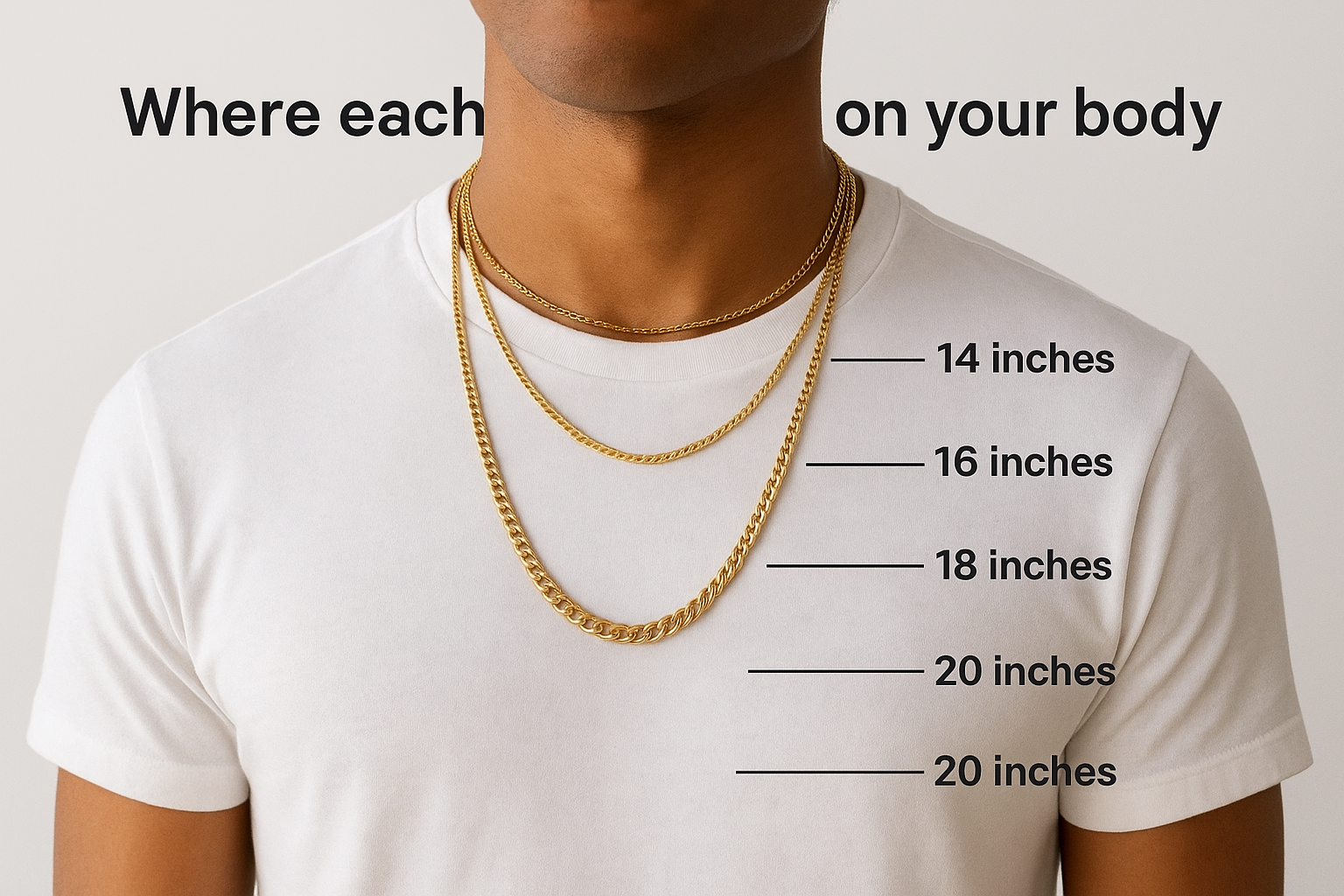
| Length | Where it typically sits |
|---|---|
| 14 inches | Very close to the throat, choker position |
| 16 inches | At the base of the neck |
| 18 inches | Collarbone level |
| 20 inches | Just below the collarbone |
| 22 inches | Upper chest |
| 24 inches | Mid-chest |
| 28-30 inches | Lower chest or stomach area |
Knowing these reference points helps you picture how a chain will actually look before you order. A 16-inch chain sits close to the neck and works well for a minimal, layered look worn against the skin, while a 24-inch chain falls across the chest and functions better as a standalone statement piece or a pendant holder. If you have a larger neck circumference, each of these positions shifts slightly lower, which is exactly why measuring your own neck is the most reliable step you can take.
Why chain style affects how a length looks
Two chains both labeled 20 inches will not always look the same on your neck. Thicker chains, like a wide curb or a bold rope chain, create more visual weight at the chest and can appear shorter than they actually are because your eye focuses on the mass rather than the drop. Thinner chains, like a fine box or snake chain, visually elongate and often appear to hang lower than the measurement suggests.
This is one of the core reasons understanding how to measure chain length necklace style is more useful than relying on a generic size chart alone. Width and style both influence how the final piece reads on your body. A 4mm curb chain at 20 inches sits and looks very differently from a 1.5mm snake chain at 20 inches, even though the length is identical. Factoring in chain style alongside the raw measurement gives you a much clearer picture of what you'll actually be wearing.
What you need before you measure
Before you start working out how to measure chain length necklace style, pull together a few basic items. You don't need anything specialized or expensive. A soft measuring tape, a piece of string, and a ruler cover every method in this guide. Getting these ready before you begin means you capture an accurate number on the first try rather than estimating and ending up with a chain that sits in the wrong place.
Spending two minutes gathering the right tools before you measure prevents the most common sizing mistakes people make when ordering chains online.
The right measuring tools
A soft measuring tape, the type used for sewing or body measurements, is your best option for measuring around your neck directly. It bends naturally with the curve of your neck without slipping or buckling. If you don't own one, a non-stretchy piece of string paired with a flat ruler works just as reliably. Cut or hold the string at the point where it meets your target position on your neck, then lay it flat against a ruler to read the measurement.
Avoid using a rigid metal tape measure for neck measurements. It won't conform to your neck shape and tends to produce a reading that's off by half an inch or more, which is enough to put a chain at the wrong position on your chest. For measuring a necklace you already own, a metal tape measure or a flat ruler on a hard surface works perfectly since you're measuring a flat, stationary object.
What to note down before you start
Writing a few things down before you take any measurement keeps the process straightforward, especially if you're comparing multiple chain lengths or buying for someone else.
| Item to note | Why it matters |
|---|---|
| Your neck circumference | Your baseline for choosing a chain length |
| Your preferred fit position (choker, collarbone, chest) | Narrows down the length range immediately |
| Pendant plans | Pendants shift where the chain appears to fall visually |
| Chain style and width | Thicker chains read shorter, thinner chains read longer |
If you're purchasing a chain as a gift, note the recipient's approximate neck size or shirt collar size. A men's medium shirt collar typically corresponds to a 16 to 18-inch neck circumference, which translates directly into a recommended chain length range you can use in the steps ahead.
Step 1. Measure an existing necklace
If you already own a necklace that fits the way you want, that chain is your most reliable reference point. Measuring an existing piece is the fastest approach when you already know which position you prefer on your chest or neck and want to match that fit with a new chain. This method requires zero guesswork and gives you an exact number you can apply directly to a size chart or product listing.
Lay the chain flat and unclasp it
Start by unclasping the necklace completely and laying it out in a straight line on a flat, hard surface like a table or countertop. Smooth out any kinks or tangles so the chain lies fully extended without overlapping. If the chain has a lobster clasp or spring ring, make sure the clasp is fully open and counted within the total length, because that hardware contributes to the measurement.
Always measure with the clasp unhooked and the chain stretched into a single straight line, not a loop, to capture the correct total length.
Place your ruler or soft tape measure at the very tip of one end of the clasp and extend it to the opposite end. Read the number in inches. That figure is the chain's total length and matches directly to the sizing in product listings. If your measurement reads 18 inches, any chain listed at 18 inches will sit at the same position on your neck.
Record the measurement and the chain details
Write down the measurement alongside a few details about the necklace you just measured. Knowing how to measure chain length necklace style is not just about capturing a single number; context makes that number useful when you shop for a different style or width.
Use this template to record your reference chain details:
| Detail | Your notes |
|---|---|
| Measured length | e.g., 20 inches |
| Chain style | e.g., curb, rope, snake |
| Chain width | e.g., 3mm |
| Where it sits on your body | e.g., just below the collarbone |
| Would you size up or down? | e.g., half an inch longer |
These notes matter most when you're ordering a different chain style than the one you measured. A thicker replacement at the same length can sit slightly higher on your chest, so noting whether you'd prefer a small adjustment helps you avoid a repeat sizing issue.
Step 2. Measure on your neck with tape or string
When you don't have a reference necklace to work from, measuring your own neck gives you the most personalized starting point for picking the right chain length. This is the go-to method when you're buying your first chain or experimenting with a new fit position. It works equally well when you're purchasing as a gift and can't access the recipient's existing jewelry.
How to use a soft tape measure
Wrap a soft measuring tape around your neck at the height where you want the chain to sit, whether that's close to the throat, at the collarbone, or across the upper chest. Keep the tape snug but not pressing into the skin, the same way the chain itself would rest when worn. Read the number at the point where the tape meets itself. That reading is your bare neck circumference at your chosen position, and it's your baseline for every step that follows.
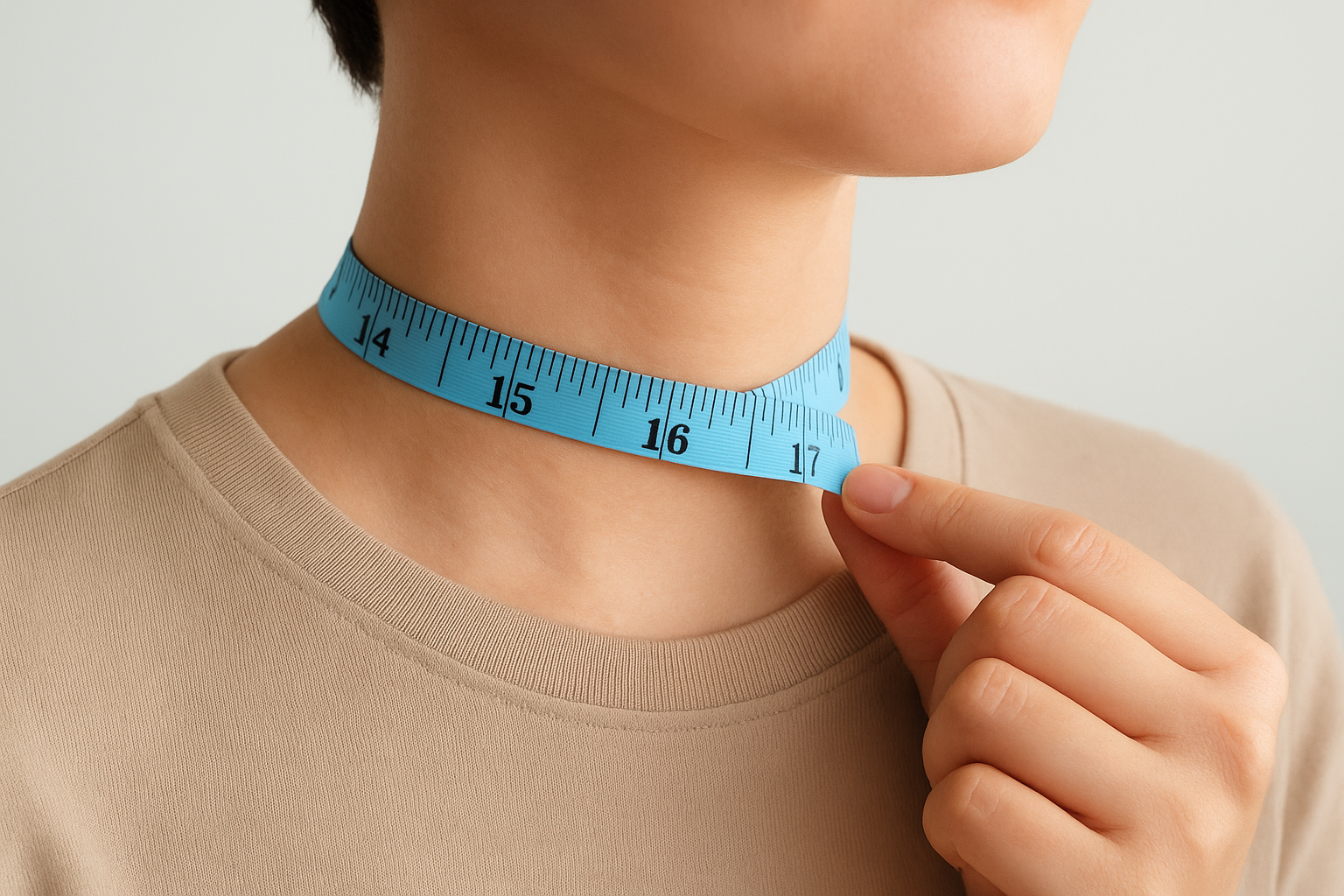
Add 2 to 4 inches to your bare neck measurement to account for comfort and the natural drape of the chain when worn.
The addition after that is straightforward. If your neck measures 14 inches at the collarbone and you want the chain to rest at that level with natural movement, a 16 to 18-inch chain gives you the right clearance without pulling tight or creeping up toward your throat.
How to use string if you don't have a tape measure
Cut a non-stretchy piece of string, such as kitchen twine or a strip of ribbon, and wrap it around your neck at your preferred position. Mark the point where the string meets itself with a pen, or hold it with your fingers. Lay the string flat on a ruler or hard surface and read the measurement from the cut end to your mark. This method works just as reliably as a tape measure for how to measure chain length necklace style when you're working with standard household materials.
Use the table below to convert your bare neck measurement into a recommended starting chain length:
| Bare neck measurement | Recommended chain length |
|---|---|
| 12-13 inches | 14-16 inches |
| 13-14 inches | 16-18 inches |
| 14-15 inches | 18-20 inches |
| 15-16 inches | 20-22 inches |
| 16-18 inches | 22-24 inches |
These ranges account for normal drape and movement. If you prefer a closer fit similar to a choker, stay at the lower end of the range. If you want more drop and clearance, move toward the upper end.
Step 3. Check standard necklace lengths
Once you have your neck measurement from Step 1 or Step 2, cross-referencing it against industry-standard chain lengths helps you confirm your choice and spot whether you're at the edge of a size range. Standard lengths exist because most chain necklaces are produced in fixed increments, and knowing where each one falls lets you pick with confidence rather than guesswork. This step is especially useful when shopping online and trying to picture how a chain will sit without being able to try it on.
Standard lengths for women
Women's chain necklaces follow a fairly consistent sizing range across most retailers, with 16 and 18 inches being the most commonly purchased lengths because they sit at the base of the neck and collarbone respectively. Understanding how to measure chain length necklace style means using these standard benchmarks as a cross-check for your personal measurement, not a replacement for it. If your neck measurement puts you between two standard lengths, always round up for a more comfortable fit.
| Standard length | Where it sits | Best suited for |
|---|---|---|
| 14 inches | Choker, at the throat | Minimal styles, layering base |
| 16 inches | Base of the neck | Pendants, delicate chains |
| 18 inches | Collarbone | Most everyday styles |
| 20 inches | Just below the collarbone | Longer pendants, layering |
| 22-24 inches | Upper to mid-chest | Statement chains, standalone wear |
A 16-inch chain is the most versatile starting point for women because it works across most necklines and chain widths without sitting too close to the throat.
Standard lengths for men
Men's chains run longer across the board, with 20 and 24 inches being the most popular everyday lengths because they clear the collar and sit flat across the chest. Thicker chain styles like a wide curb or rope chain look most proportional in the 20 to 24-inch range for the average male build. If you're buying for a larger frame or planning to wear the chain over a shirt, move toward 26 or 30 inches so the chain doesn't pull tight against clothing.
| Standard length | Where it sits | Best suited for |
|---|---|---|
| 18 inches | Base of the neck | Slim builds, close-fit styles |
| 20 inches | Collarbone to upper chest | Most chain styles, everyday wear |
| 22-24 inches | Mid-chest | Pendants, layering, thicker chains |
| 26-30 inches | Lower chest | Statement pieces, worn over clothing |
Step 4. Account for pendants and layering
A bare neck measurement and a standard length chart only tell part of the story when you add a pendant or plan to wear multiple chains together. Pendants add visual weight below the clasp, and layering two or three chains requires spacing them apart so they don't tangle or compete visually. Knowing how to measure chain length necklace style for these situations saves you from ordering a length that works perfectly alone but looks off the moment you add anything to it.
How pendants affect where a chain sits
A pendant does not change the total measurement of your chain, but it changes how low the piece appears to sit on your chest. A large, heavy pendant pulls the chain down slightly and draws the eye to the lowest point of the drop, not to the chain itself. If you're attaching a pendant, factor in the pendant's own drop length from the bail to the bottom of the piece before finalizing your chain length.
Measure your pendant from the top of the bail to the bottom edge, then subtract that number from your target chest position to find the right chain length.
Here's a practical reference for adjusting chain length based on pendant size:
| Pendant drop length | Chain adjustment |
|---|---|
| Under 1 inch | No adjustment needed |
| 1 to 1.5 inches | Size up by 1 to 2 inches |
| 1.5 to 2.5 inches | Size up by 2 to 3 inches |
| Over 2.5 inches | Size up by 3 to 4 inches |
How to plan a layered look
Layering works best when each chain sits at a clearly different level, typically spaced at least 2 inches apart in length. A common starting point is pairing a 16-inch chain with an 18-inch and a 20-inch chain. This creates three distinct tiers that sit at the neck, collarbone, and just below it without overlapping.
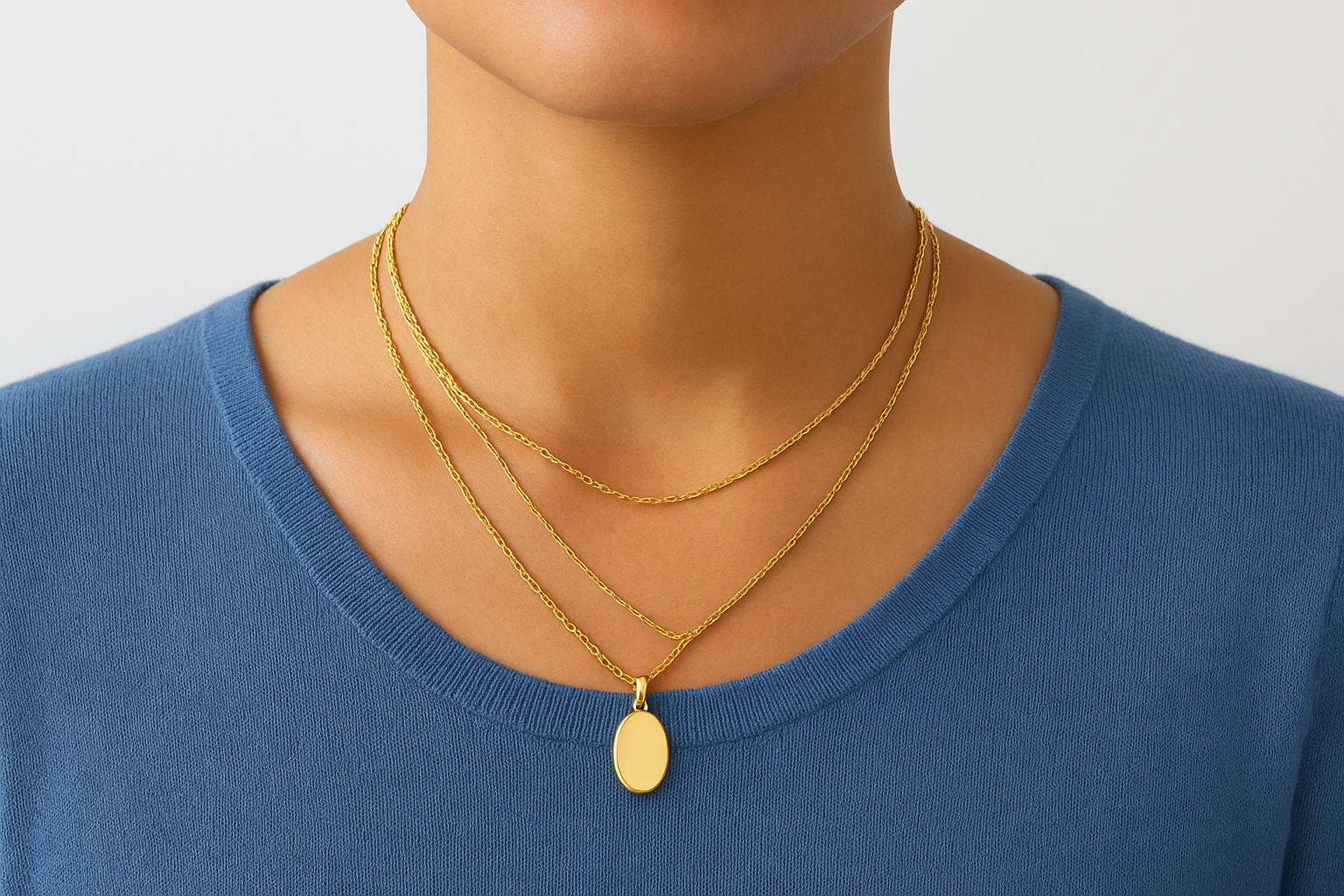
If you're mixing chain widths within a layered set, keep the thinnest chain at the shortest length and the thickest chain at the longest. This prevents heavier chains from visually crowding out the finer pieces above them and gives the overall look a natural, balanced weight distribution from top to bottom.
Step 5. Fix common sizing problems
Even after working through how to measure chain length necklace style carefully, you can still end up with a chain that doesn't sit where you expected. Most problems come down to one of three predictable mistakes: using the wrong measurement method, not accounting for neck shape, or buying for someone else without enough reference points. The fixes are direct and require only a small adjustment to your approach.
The chain sits too high or too tight
If a chain arrives and sits noticeably closer to your throat than you wanted, your bare neck measurement was too small to account for natural movement and drape. A chain needs clearance to move, and a measurement taken too snugly against the skin produces a final fit that feels tight and rides up when you turn your head.
Add a minimum of 2 inches to your bare neck measurement whenever you want a chain to sit comfortably at the base of the neck or below.
The fix is to size up by 2 inches from your current chain length. If your chain is 16 inches and sits too high, a replacement at 18 inches will clear the throat and rest at your collarbone with natural drape. Before reordering, retake your neck measurement while keeping the tape measure loose enough to slide one finger underneath it.
The chain is too long and looks out of proportion
A chain that falls lower than you intended usually signals that you sized up too aggressively when converting your neck measurement to a chain length, or that a thinner chain style is dropping further than expected. Thinner chains sit lower on the chest for the same listed length compared to thicker chains, which carry more weight and hold their position higher.
Check the chain's width and style against what you expected. If you ordered a fine snake chain at 22 inches expecting it to sit at the collarbone, sizing down to 18 or 20 inches brings it back to the right position. Use the length-to-position table in Step 3 as your correction reference.
You ordered the wrong length as a gift
Buying for someone else without a direct neck measurement is the most common source of sizing errors. Your best safeguard is to check the recipient's shirt collar size and convert it using a standard reference. A collar size of 15 inches corresponds to a recommended chain length of 18 to 20 inches for most fits, giving you a reliable middle-ground length that works across average builds without running too short or too long.
| Collar size | Recommended chain length |
|---|---|
| 14 inches | 16-18 inches |
| 15 inches | 18-20 inches |
| 16 inches | 20-22 inches |
| 17-18 inches | 22-24 inches |
If you're genuinely unsure, a 20-inch chain is the safest universal gift length because it clears most necklines, works on a range of body types, and sits at a position that reads naturally for both pendants and standalone wear.
Quick picks for men, women, and unisex
Once you've worked through how to measure chain length necklace style using your own neck measurement, these quick picks give you a direct starting point based on body type and gender. Rather than sorting through every available length, use this section to narrow down your choice to one or two options and then confirm against your personal measurement from the earlier steps.
Best chain lengths for women
Most women find their ideal everyday chain falls between 16 and 20 inches, with 18 inches being the most versatile single length across necklines and chain styles. If you wear a lot of V-necks or open collars, a 20-inch chain sits at a flattering position just below the collarbone and works equally well with or without a pendant.
A 16-inch chain is the best starting length for layering because it gives you enough room to add an 18-inch and 20-inch chain beneath it without any of the three tangling.
| Chain style | Recommended length | Why it works |
|---|---|---|
| Fine box or snake chain | 16-18 inches | Sits close to the neck without pulling |
| Curb or figaro chain | 18-20 inches | Width reads proportional at collarbone level |
| Rope chain | 20-22 inches | Drop compensates for the chain's visual weight |
Best chain lengths for men
Men typically wear chains in the 20 to 24-inch range because those lengths clear the collar and sit flat across the chest without disappearing under a shirt. If you prefer a thicker curb or rope chain, 22 to 24 inches gives the chain enough drop to look intentional rather than crowded against the neck.
For men with larger builds or broader shoulders, starting at 24 inches and working upward produces a more balanced proportion between chain width and chest area. A 20-inch chain on a wider frame can look shorter than the measurement suggests because the chest fills more of the visual space.
Best unisex lengths
Two lengths work reliably across all genders and most body types: 18 inches and 20 inches. An 18-inch chain sits at the collarbone for most adults and works as both a standalone piece and a pendant holder for small to medium-sized charms. A 20-inch chain drops just below the collarbone and suits thicker chain styles that need a bit more space to read clearly on the body.
If you're buying a chain as a gift without access to a neck measurement, a 20-inch unisex chain is the safest choice because it avoids both extremes and fits the broadest range of recipients comfortably.
Final check before you buy
Before you place your order, run through three quick confirmations. First, verify that your chain length matches your bare neck measurement plus at least 2 inches of clearance. Second, check that the chain style and width you're ordering match the proportions you've seen in this guide for your body type. Third, if you're adding a pendant, confirm you've sized up to account for the pendant's drop. That covers every variable that knowing how to measure chain length necklace style is designed to address.
Your measurement is only as useful as the product selection you apply it to. British Chains carries sterling silver 925 chains across every major style and length, so you can match your exact number to a chain that fits well and holds up over time. Browse the full men's silver chains collection to find the right length and style for your build.


