

Chain Width vs Length for UK Buyers: Fit First, Check 925
Length decides how a necklace sits and styles with your outfit, while width decides how strong and visually bold it looks, so prioritise length for fit and width for durability or statement impact. As a quick rule, think “length for placement, width for strength.” Whichever you choose, check the hallmark and 925 fineness stamp before buying.
TL;DR:
- An 18 inch chain usually rests at or below the collarbone, but neck circumference changes the drop, so test a similar length before ordering.
- For a heavy pendant or continuous wear, choose a medium or chunky curb or rope chain; delicate snake and herringbone links suit lighter use.
- For layering, combine slim or medium chains at 16, 18, and 20 inches; varied lengths keep the pieces visible and reduce bunching.
- A 925 stamp confirms at least 92.5% silver, while UK items above 7.78 grams require a full hallmark, with exemptions for very fine chains.
- For a gift without exact measurements, a 4 millimeter chain at 18 to 20 inches offers a moderate width and length that suits many recipients.
Table of Contents
- How chain width affects strength, wear and visual presence
- How chain length affects fit, proportion and styling
- Choosing between width and length for your use case
- Common chain styles and how width and length change their behaviour
- Measuring, trying on and checking specifications before you buy
- Care and maintenance for different widths and lengths
- How width and length affect comfort and everyday wearability
- Why clear specs make the width and length decision easier
- Shop the widths and lengths covered in this guide
- FAQ
- Sources
How chain width affects strength, wear and visual presence
Width is measured in millimetres across the chain’s links, and it tells you far more about how a chain behaves day to day than most shoppers expect. Thin chains sit around 1 to 2mm, medium chains run 3 to 5mm, and chunky styles start at 6mm and climb past 12mm for the boldest pieces. The wider the wire, the more silver carries the load, which is why wider chains handle heavier pendants and daily knocks better than fine ones. Link design and soldering matter too: a tightly soldered curb link resists stretching far better than an open, delicate design, even at the same width, as the Birmingham Assay Office notes when comparing chain construction.
Before buying, check the product description for three things: the exact mm width, the link or chain type, and any clasp rating or weight listed.
- Thin chains (1-2mm): elegant and light, but better suited to small pendants and gentle wear.
- Medium chains (3-5mm): a practical middle ground for everyday pendants and solo wear.
- Chunky chains (6mm+): built for durability and visual presence, ideal for daily wear without a pendant.
Pro Tip: If you take your chain off rarely, such as for gym sessions or swimming, lean towards a medium or chunky width rather than a delicate one.
How chain length affects fit, proportion and styling
Length is the single biggest factor in how a necklace actually looks on you, because it decides where the chain sits relative to your collarbone, neckline and any pendant you add. A 16 inch (40cm) chain sits high, close to the throat, and suits crew necks or collared shirts. An 18 inch (45cm) length rests at or just below the collarbone, which is the most versatile option for most necklines. A 20 inch (50cm) chain drops lower, working well with open collars or when layering under a scoop neck. Neck circumference changes how these lengths read: a slender neck will show more drop at 18 inches than a broader neck will.
To find your length before ordering:
- Tie a length of cord or string around your neck where you want the chain to sit, then measure it flat.
- Add your preferred drop, typically 1 to 2 inches, if you want the chain to hang rather than sit tight.
- Try on an existing necklace or scarf at a similar length to confirm the look in a mirror.
Pro Tip: If you’re adding a pendant, choose a length slightly longer than you’d pick for a plain chain, so the pendant has room to sit naturally rather than crowding the collarbone.
Choosing between width and length for your use case
Once you know your fit preference, match it against what you actually need the chain to do. A chain for everyday minimalist wear has different priorities to one bought as a statement piece or for layering.
- Everyday wear: favour length for comfort, around 16 to 18in, paired with a modest 1.5 to 3mm width.
- Statement piece: favour width, 8 to 12mm, with a shorter to mid-length (18 to 24in) so the chain reads as bold rather than heavy.
- Layering: choose varied lengths (16in, 18in, 20in) in slim to medium widths so each chain stays visible without crowding the others.
- Gifting: a mid-width, mid-length piece such as 4mm at 18 to 20in suits most recipients without needing exact measurements.
- Pendant preservation: prioritise width and link strength over length, since a sturdy link protects an heirloom or heavy pendant better than a thin one.
Budget and maintenance play a part too: wider chains use more silver and cost more, and a reinforced clasp is worth checking regardless of width.
Common chain styles and how width and length change their behaviour
Different link constructions carry width and length differently, which is why the same mm figure can look and wear very differently across styles.
Curb chains have flattened, twisted links that lie flat and resist kinking, making them well suited to both subtle and chunky widths. A 4mm Sterling Silver 925 Curb Chain Necklace works as an everyday unisex piece, while an 8mm Sterling Silver 925 Thick Curb Chain Necklace or a 12mm Sterling Silver 925 Thick Curb Chain Necklace reads as a genuine statement piece built for daily wear.
Figaro chains alternate short and long links, giving a distinctive rhythm that suits both slim and bold widths, as seen in the 2mm Sterling Silver 925 Figaro Chain Necklace through to the 8mm Sterling Silver 925 Thick Figaro Chain Necklace.

Rope chains, such as the 3mm Sterling Silver 925 Twisted Rope Chain Necklace, twist multiple strands together for strength that outperforms their width, making them a good load-bearing option for pendants.
Snake and herringbone chains are smooth and flexible but more delicate by design. A 2mm Sterling Silver 925 Herringbone Chain Necklace suits decorative, lighter wear rather than a heavy daily-use pendant.
- Curb and rope: best for pendant support and daily wear across widths.
- Figaro: versatile for both slim everyday and bold statement looks.
- Snake and herringbone: best for delicate styling, not heavy load-bearing use.
A 925 stamp confirms at least 92.5% silver content, but it isn’t automatically a full UK hallmark on its own, according to the Birmingham Assay Office, so check for the full set of hallmark symbols when purity matters to you.
Measuring, trying on and checking specifications before you buy
Start with your neck circumference, then add your preferred clearance (snug, standard or draped) to translate that into a necklace length. A soft tape measure or a piece of string against a ruler both work well for this.
When reading a product listing, look for the exact mm width, the available length options, the clasp type and any hallmark or fineness marking. The hallmarking guidance from Gov confirms that a UK hallmark is legally required on silver items above 7.78 grams, so most necklaces and bracelets of meaningful weight should carry one.
Before purchasing, run through this checklist:
- Confirm the return policy in case the length or width doesn’t suit you once worn.
- Check the clasp type and whether it’s rated for daily opening and closing.
- Look for the hallmark or 925 stamp, and read the fineness description.
- Check product reviews for notes on actual fit or durability.
Very fine chains, where the wire is under 0.9mm and jump rings are under 5mm, may be exempt from hallmarking requirements, as explained in guidance on fine chain bracelets and necklets, which is worth knowing if you’re comparing a very delicate chain against a standard one.
Care and maintenance for different widths and lengths
Thinner chains need gentler handling than chunkier ones, since a 2mm link has less metal to absorb knocks or resist kinking compared with a 6mm or wider curb link. Store delicate chains flat or hanging separately, rather than tangled with heavier pieces, to avoid stretching fine links.
Longer chains are more prone to tangling in storage simply because there’s more length to coil, so a jewellery tray with separate compartments or small hooks helps keep them ready to wear. Wider, chunkier chains tolerate being coiled in a pouch without much risk.
Across all widths, a soft polishing cloth designed for silver keeps the surface bright, and avoiding prolonged contact with perfume, chlorine or saltwater reduces tarnish. Wider chains with diamond-cut facets show tarnish less obviously in the grooves, while plain, thin chains can look dull more quickly if left unpolished.
Clasp wear is worth checking periodically regardless of length or width: a spring ring or lobster clasp that feels loose is the first sign a chain needs attention before a link gives way. Rinsing in lukewarm water and drying thoroughly after wear, rather than daily chemical cleaning, is usually enough to keep most sterling silver chains looking right for years.
How width and length affect comfort and everyday wearability
A chain you forget you’re wearing is usually one where width and length have been matched to how you actually move through your day. A thin, short chain sits close and light, which suits those who find anything heavier irritating against the throat or collarbone. A longer, wider chain carries more weight and drapes rather than sits snug, which some people find more comfortable precisely because it doesn’t tighten against the skin during movement.
Chunkier chains, from 8mm upward, distribute their weight across a wider link, so they often feel more stable during activity than a thin chain carrying the same overall mass concentrated in a narrow wire. That said, a very heavy, wide chain at a short length can feel restrictive, especially at the back of the neck, so pairing bold width with a slightly longer length, such as 20 to 24 inches, tends to sit more comfortably for continuous daily wear.
Skin sensitivity and layering habits matter too. If you wear a chain under clothing, a flatter link style such as curb or Figaro sits less obtrusively than a rounder snake or rope chain. If you’re combining multiple chains, slightly varied lengths prevent them bunching and pulling at the same point on the neck, which is as much a comfort issue as a styling one.

Why clear specs make the width and length decision easier
Every product listing includes the two numbers that decide fit and feel: width in millimetres and length in inches or centimetres, alongside the hallmark and 925 fineness details buyers need to shop with confidence. Rather than vague size labels, we show the exact mm and length options for each style, so matching a chain to your neckline or pendant takes a minute, not guesswork. Check collections from trusted sellers for the widths and lengths discussed here before you decide.
— British
Shop the widths and lengths covered in this guide
If a chunky statement piece appeals, our Silver Curb Chains collection covers widths from medium to extra chunky, hallmarked and ready to wear. For a slimmer everyday option, the Silver Figaro Chains range includes 2mm and 4mm widths across multiple lengths. Anyone building a layered look can browse the full Silver Necklaces collection for varied lengths in one place, and a Silver Rope Chains piece is worth considering for a pendant that needs genuine strength behind it.
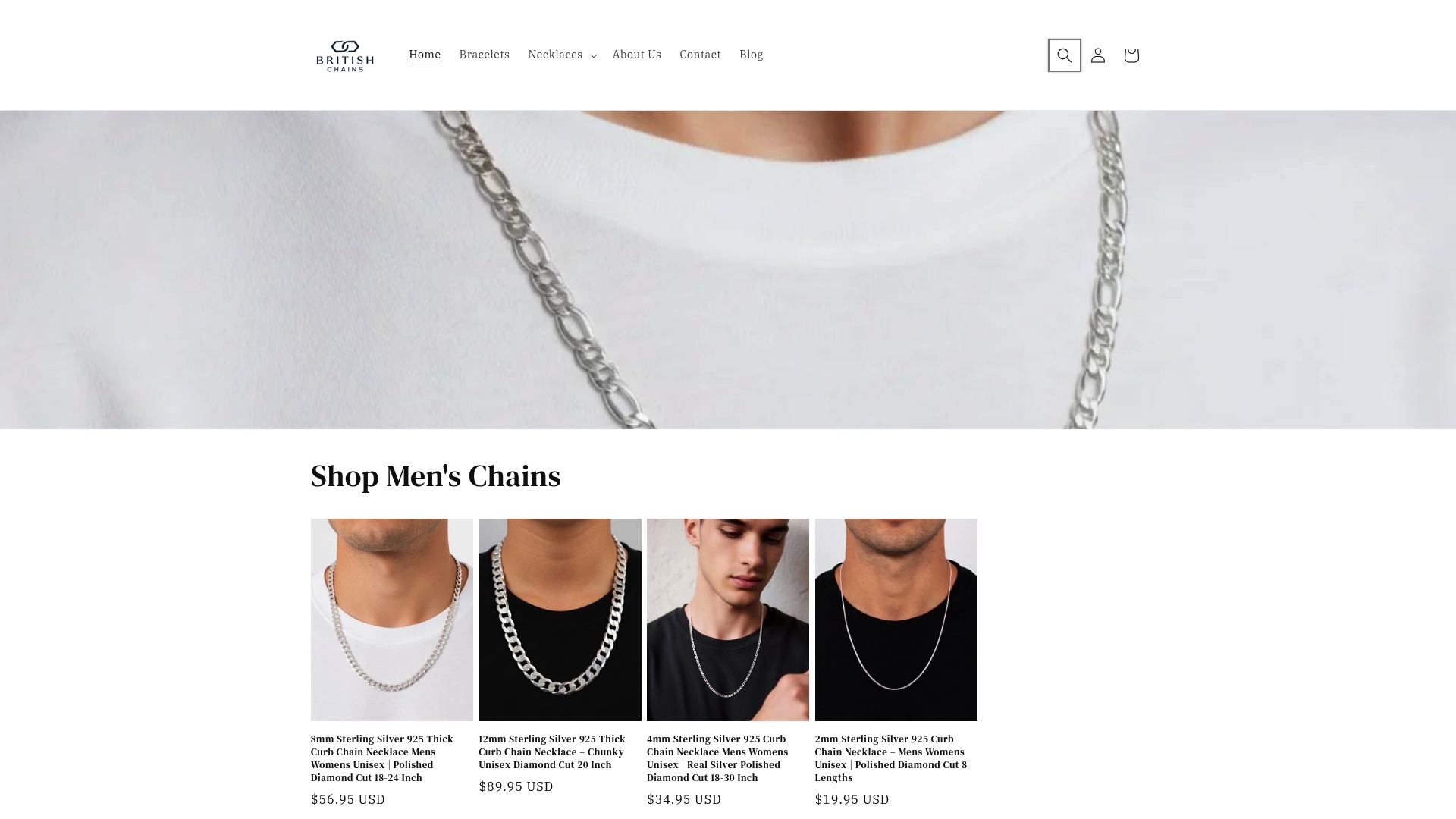
- Every chain ships hallmarked where required, with clear mm and length specs listed on the product page.
- Orders are packaged in presentation packaging and dispatched promptly.
- Browse by style or width to find the pairing that suits your fit and durability needs.
If you’re buying jewellery as a gift alongside something more personal, a thoughtfully chosen jewellery feature can help round out the occasion.
FAQ
Should I choose chain width or length first?
Choose length first if fit and how the chain sits matters most to you, since that decides where it falls relative to your collarbone and neckline. Choose width first if durability or a bold look is the priority, particularly for daily wear or a heavier pendant.
What chain width is best for everyday wear?
A width of 1.5mm to 3mm suits most everyday wear, offering a light feel without sacrificing durability for occasional pendants. Thicker options from 4mm upward are worth considering if you wear the chain daily without removing it.
What length chain sits at the collarbone?
An 18 inch (45cm) chain typically sits at or just below the collarbone for most adults, making it the most versatile standard length. Neck circumference changes this slightly, so trying on a similar length before buying is worth doing.
Do thin chains need a hallmark?
UK hallmarking law requires a hallmark on silver items above 7.78 grams, as confirmed by GOV.UK guidance. Some very fine chains with wire under 0.9mm may fall under a recognised exemption, detailed in guidance on fine chain hallmarking.
Does a 925 stamp mean the chain is fully hallmarked?
The Birmingham Assay Office notes that a full hallmark includes additional marks such as the sponsor and assay office symbols.


